





You can maximize your StarCraft II gameplay by mastering build order scouting and utilizing live pricing tools. Understanding your opponent’s strategies and adapting your in-game economy can dramatically enhance your performance and overall success in matches.
Fundamentals of StarCraft II Scouting
Worker Scouting Timings and Pathing
Worker scouting is vital for gathering early game information. Scouting with your worker at around 13 supply allows you to identify your opponent’s strategy by arriving before critical tech decisions are made. Maintaining a strategic path helps reveal expansions, unit compositions, and potential all-ins.
Tracking the opponent’s base requires a delicate balance of timing and positioning. Workers can scout for enemy buildings, but they should prioritize safe routes that reduce the risk of getting intercepted. Pathing through areas with known units increases the potential for successful intel gathering.
Vision Control via Xel’Naga Towers and Map Presence
Capturing Xel’Naga Towers offers crucial vision across the map. Holding these towers provides invaluable information about enemy movement while ensuring awareness of potential flanks or attacks. Maintaining map presence allows better decision-making and can provide opportunities for counterattacks.
Controlling Xel’Naga Towers not only reveals enemy paths but also provides a psychological edge. Opponents often play defensively when they know you have eyes on their units, limiting their strategic options and allowing you to dictate the pace of the game. This vision control can sway the outcome of engagements by enabling preemptive strikes or ambushes.
Early-Game Build Order Identification
Recognizing Proxy Structures and Early Aggression
Proxy structures often indicate an opponent’s intent to apply early pressure. Identifying these placements can shift your defensive strategy significantly. Look for buildings positioned near your base or in unconventional locations that allow for rapid unit production.
Anticipating early aggression demands keen observation of your opponent’s unit composition. Watch for scout movement and respond accordingly, fortifying defenses before any attack materializes. Awareness of external units also aids in determining whether a player aims to disrupt your economy.
Gas Timing Analysis for Tech Pathing
Gas timing is a pivotal element in understanding an opponent’s tech choices. Early gas extraction suggests a focus on specialized units or rapid upgrades, signaling an aggressive or tech-heavy strategy. Comparison with your own gas timings can reveal discrepancies in build efficiency.
Evaluating gas timings can provide insights into which tech paths your opponent favors. For instance, a quick second gas may indicate a shift towards higher-tier units. Analyzing these patterns allows you to prepare adequate counter-strategies enhancing your chances of success.
Monitoring gas timings extends beyond just the amount extracted; timing and quantity reveal deeper strategies. A player prioritizing gas early will likely have plans for advanced units, impacting your own build decisions. Keeping these insights in mind can make all the difference in adapting your gameplay strategy effectively.
Expansion Timings and Economic Greedy Openings
Expansion timings are critical indicators of economic strategies. Players opting for fast expansions are often betting on maintaining a superior economy. This tactic requires precise timing and a solid defense against early aggression to succeed.
Executing economically greedy openings entails balancing risk and reward. A player focusing on rapid outposts may be vulnerable if pressure is applied early. Therefore, scouting for expansion timings can help you assess whether to adopt an aggressive stance or bolster your defenses.
Understanding expansion timings allows you to gauge how much risk your opponent is willing to take. If you spot rapid expansions, consider applying pressure to exploit their weaker defense. Conversely, if they play defensively, you can safely extend your own economy for long-term advantages.
Structural Placement and Wall-In Indicators
Structural placement reveals much about an opponent’s defensive approach. Certain placements can indicate their intentions, whether it’s to fortify against early attacks or to create specific unit pathways. A well-placed wall-in can slow down initial aggression, giving the player time to tech up.
Observing how structures are arranged allows for quicker decisions on your part. If walls appear incomplete or rushed, it might signify a hasty expansion or vulnerability. This information can guide your scouting and help you decide on your own tactical maneuvers.
Analyzing structural placement includes looking for potential gaps and entry points that could be exploited. Players often prioritize walling off important areas to control map flow. Recognizing these patterns can inform your strategies for both offense and defense, optimizing your approach in crucial moments.
Mid-Game Transitions and Reactive Scouting
Utilizing Aerial Reconnaissance and Spellcasters
Deploying aerial units allows players to gather intelligence on enemy movements and tech choices. Units like Observers or Overseers can provide critical information, leading to informed decisions during mid-game transitions. They also serve as valuable assets for flanking or scouting enemy expansions.
Spellcasters add another layer of depth to your reactive scouting strategy. Their abilities can reveal enemy locations or disrupt enemy builds, making it important to utilize them effectively. Observing how your opponent responds to psychic and technological threats can guide your own build transitions.
Identifying Tech Switches and Production Spikes
Reacting to changes in enemy tech is important for maintaining an advantage. Spotting a tech switch can signal the need for a counter-strategy, such as transitioning to anti-air or upgrading specific units. This awareness allows players to adapt and formulate an effective response.
Production spikes often occur before major pushes or during tech switches, indicating an upcoming threat. Scouting for increased unit production facilities can alert you to these shifts and offer insight into your opponent’s intentions, ensuring you are prepared for their next move.
Identifying tech switches and production spikes is instrumental in shaping your game plan. Watching for rapid changes in unit production or unexpected upgrades can provide you with the information needed to pivot your strategy. Reacting promptly to these indicators can shift the momentum of the game in your favor, allowing you to preemptively counter your opponent’s moves.

Live Pricing: The Economics of Unit Production
Real-time Mineral and Vespene Expenditure Tracking
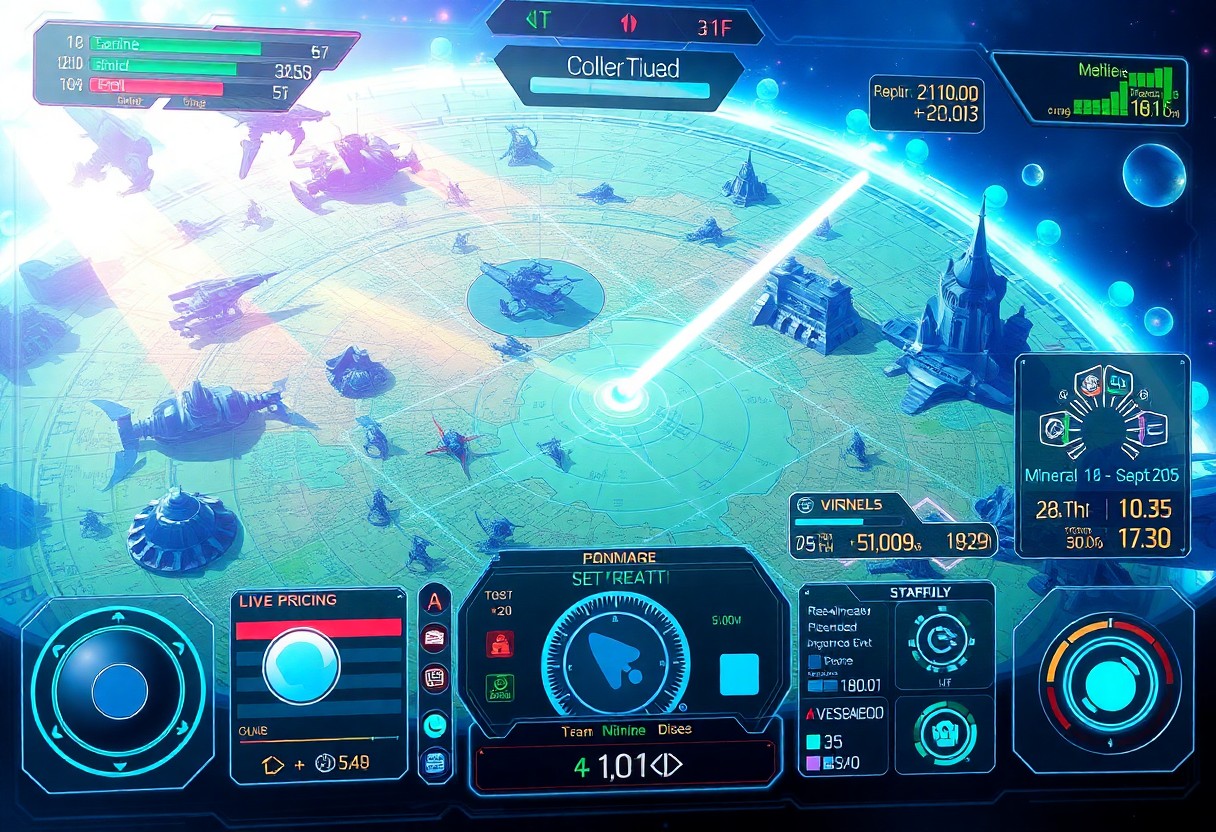
Tracking resource expenditure in real-time allows players to understand their economic status. As units are produced, the constant depletion of minerals and Vespene gas informs tactical decisions and long-term strategy. Observing these metrics can reveal inefficiencies in production or resource allocation.
Unit production costs fluctuate depending on the chosen tech upgrades and unit types. Accurate monitoring is crucial, as it helps players to anticipate future resource needs and adjust their strategies promptly. Awareness of these expenditures can be the difference between victory and defeat.
Supply Block Penalties and Efficiency Ratios
Supply blocks can severely hinder unit production, leading to lost opportunities during critical moments. Tracking how often a player gets supply blocked, alongside their efficiency ratios, can reveal areas for improvement. Each delay in production can be quantified and analyzed for better future performance.
Efficiency ratios, calculated as units produced divided by supply used, provide insights into overall production capabilities. High ratios indicate effective use of resources, while low ratios signal potential issues. Identifying these patterns helps refine strategies and enhance unit deployment.
In competitive play, avoiding supply block penalties is as important as managing resource expenditures. An efficient economy supports unit production expansion, while a supply block can stall growth. Players must consistently monitor their supply limits and engage in proactive management to maximize output. Understanding these dynamics fosters an environment where effective unit deployment is more achievable, enhancing the overall performance in matches.
Resource Trade-offs and Opportunity Costs
Evaluating Static Defense vs. Mobile Army Investment
Static defense structures can provide a reliable buffer against early aggression, allowing players to focus on economic growth. Investing resources in fortifications may, however, delay the development of a more versatile mobile army, impacting late-game adaptability.
Mobile armies offer flexible responses to enemy movements, potentially exploiting weaknesses in an opponent’s strategy. Yet, this approach demands consistent resource input for unit production, often at the expense of building statically defensive infrastructure necessary for long-term sustainability.
Economic Impact of Harassment and Worker Attrition
Targeting worker units through harassment can hinder resource gathering, directly impacting the opponent’s economy. Loss of workers not only stalls production but also escalates the economic gap between players.
Consistent pressure forces opponents to allocate resources defensively rather than expanding or upgrading tech, skewing their economic strategy. This disruption can create significant advantages and pave the way for a decisive victory.
Ultimately, honing in on an opponent’s workers magnifies the impact of each harassing unit. Losses in production capabilities can lead to unbalanced resource allocation and inefficiencies in unit composition, thereby compounding long-term disadvantages.
Cost-Benefit Analysis of High-Yield Expansions
Investing in high-yield expansions increases resource income but carries risks such as overextension and vulnerability. Players must weigh the potential income against the likelihood of losing these expansions to enemy aggression.
Effective management of these expansions can propel a player into a strong economic position, allowing for more advanced unit compositions and tech upgrades. However, the costs associated with defending these sites can drain resources meant for other critical areas.
High-yield expansions require careful planning and execution. Striking a balance between defensive investments and offensive capabilities is crucial to maximizing the benefits while minimizing exposure to potential threats. Without this balance, the expansion can quickly become a liability rather than an asset.
Advanced Counter-Intelligence and Deception
- Employing misinformation to manipulate opponent strategies
- Creating scenarios that induce miscalculations and overreactions
- Utilizing advanced scouting techniques for intelligence gathering
- Counter-predicting enemy builds through strategic feints
- Managing resource allocation to mislead opponents
Information Denial through Map Superiority
| Objective | To limit enemy scouting and maintain control of critical areas. |
| Techniques | Establishing surveillance structures and denying vision. |
Controlling the map significantly hampers an opponent’s scouting efforts. Denying vision around key locations creates uncertainty, making it difficult for opponents to accurately assess your strategy. This lack of information enables more aggressive plays without the fear of immediate counteractions.
Fake Openings and Technical Misdirection
Creating an illusion through fake openings confuses the enemy about actual intentions. Many players utilize fake expansions or tech switches to lead their opponents astray, prompting them to misallocate resources. Such distractions can cost opponents in the long run.
Fake Openings and Technical Misdirection
Imitating successful build orders establishes an air of authenticity that can mislead enemies. Crafting a scenario where a player appears to pursue a particular strategy opens opportunities for surprise attacks. Executing fake expansions or unnecessary tech advancements forces opponents into defensive positions and can exploit their misjudgments effectively.
Conclusion
Conclusively, effective scouting in StarCraft II is crucial for adapting build orders to opponents’ strategies. Understanding your opponent’s unit composition allows for timely transitions and countermeasures. Accurate scouting informs both defensive and offensive maneuvers, leading to a significant advantage.
Live pricing integration complements scouting by providing up-to-date market insights for in-game resources. Players can optimize their economy and timing through real-time data, making informed decisions that enhance overall gameplay. Combining these tools maximizes competitive performance and strategic flexibility.