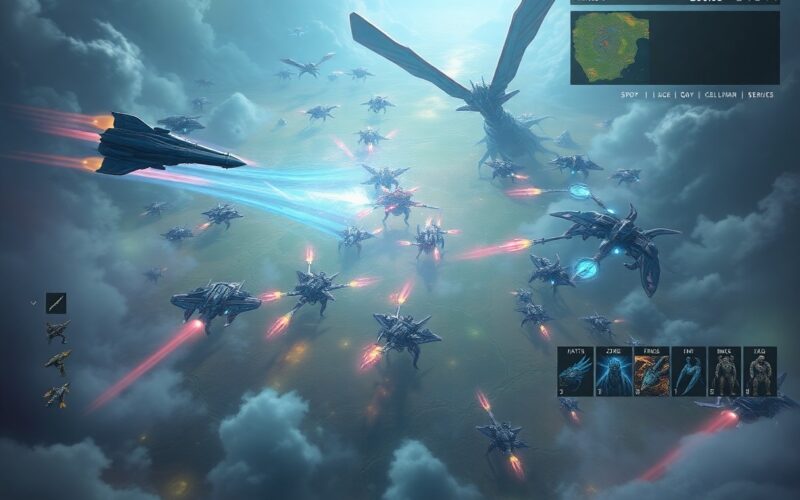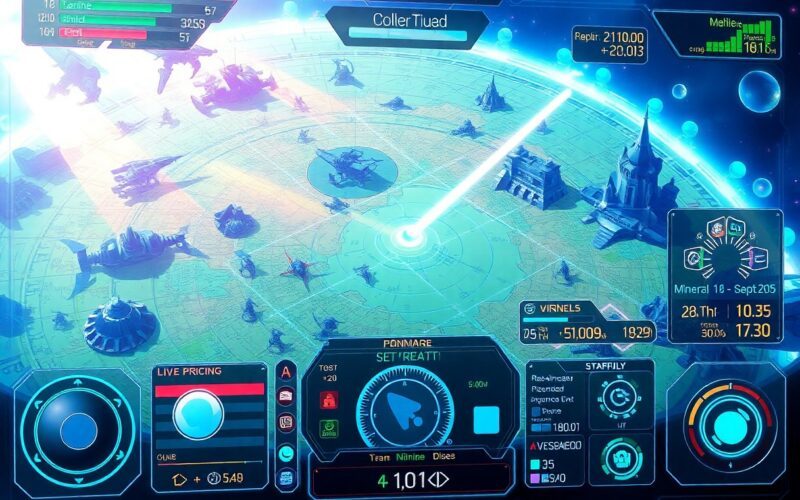
Just understanding the macro style of StarCraft II players reveals their strategic depth and resource management skills. By analyzing map totals, we can gain insight into how these players optimize their gameplay and adapt to various environments, shaping their competitive edge.
Fundamentals of the Macro-Oriented Playstyle
Prioritizing economic scaling over early-game aggression
Macro-oriented players focus on expanding their economy rather than engaging in early-game skirmishes. Building a strong resource base allows for the development of a more formidable army later in the game. Opposing players may be tempted to disrupt this growth, but macro players often withstand this pressure, opting for strategic expansions instead.
Scaling economically provides opportunities to outpace opponents. With increased resources, players can invest in higher-tier units and technologies, creating a significant advantage in the mid and late game. This strategy relies heavily on map control and efficient resource harvesting.
Resource management and production cycle optimization
Efficient resource management is integral to macro play. Players must regularly assess their mineral and gas income, ensuring continuous unit production and upgrades. This requires anticipating future needs while maintaining a balance between drone or worker production and military units.
Production cycle optimization involves coordinating unit production with resource availability. Keeping production facilities active without idle time maximizes potential military strength. Strategic decisions about when to expand or tech up hinge on these resource calculations.
Fine-tuning production cycles can create opportunities for surprise engagements or defensive setups. Effective macro players master timing windows, ensuring they are never caught off-guard while consistently outputting units. As resources flow in, maximizing production efficiency translates to a stronger, more versatile army ready for decisive engagements.
Map Characteristics Favoring Defensive Macro
Expansion Accessibility and Natural Chokepoints
Maps designed with multiple expansion points enhance defensive macro strategies. Players can efficiently secure additional resources, allowing for prolonged economic growth. Natural chokepoints serve as effective barriers for managing enemy attacks while establishing a strong defensive position.
Control over chokepoints enables players to dictate the flow of engagements. As attackers funnel into these narrow areas, defenders can maximize their unit effectiveness, shifting battles in their favor. This configuration makes it challenging for aggressive players to disrupt a macro-focused strategy.
Rush Distance Metrics and Defensive Geography
Short rush distances often favor aggressive tactics, while longer distances allow macro players to develop their economies. Maps that require longer traversal times from base to base can enable players to fortify their defenses before an enemy can launch a significant attack. Such geography can determine whether a macro strategy thrives or falters.
Defensive geography, characterized by elevated terrain and obstacles, complicates direct assaults. This naturally grants players more time to build their defenses and exploit their economic advantages. When the lay of the land supports a longer buildup phase, macro players can thrive with well-timed counterattacks.
Rush distance scales inform many strategic decisions in StarCraft II. Lengthy paths between bases provide ample time for players adopting a macro style to accumulate resources and bolster defenses. This not only solidifies their position but also creates opportunities to strike back effectively once reaching a critical mass of units.
Impact of High-Yield Resource Distribution
High-yield resources can significantly influence macro strategies by encouraging expansion. Players may prioritize securing these locations to accelerate economic growth, leading to more substantial unit production and technology upgrades. Controlling these areas can be a game-changer in the late stages of a match.
Placement of high-yield resources also dictates engagement strategies. Typically, such resources are positioned near contested areas, resulting in intense skirmishes. Maintaining these sites not only boosts a player’s economy but forces opponents to commit resources defensively, diverting attention from other strategic objectives.
Impact of high-yield resource distribution changes the dynamics of the game. Players vying for these lucrative spots may find themselves in high-stakes battles, shaping overall strategic priorities. Effective management of these resources can tip the balance, rewarding those who successfully integrate economic control with military might.
Statistical Correlation: Map Totals and Match Duration
Analyzing base count thresholds in professional play
Base count thresholds often dictate the pace and strategy in professional StarCraft II matches. Players typically perform better when maintaining at least three bases, allowing for a balanced economy and unit production. This threshold influences decision-making, as reaching four bases usually indicates a shift in strategy toward aggressive expansion and resource accumulation.
Opponents must react accordingly, leading to more intense engagements and longer match durations. Understanding these thresholds allows analysts to predict possible turning points and outcomes based on player behavior and map control.
Resource availability versus win-rate outcomes
Resource availability directly impacts win rates in StarCraft II. Players with more mineral and gas access can sustain larger armies, enhancing their chances in engagements. Statistics show a strong correlation between available resources and victory, particularly in prolonged matches where economy becomes paramount.
Strategic resource management often distinguishes top-tier players from their peers. Those who efficiently utilize their resources maintain a competitive edge, which emphasizes the importance of map control and expansion throughout a match.
Resource availability heavily influences match dynamics. Players must optimize their strategies around resource collection to ensure superior unit production and tech advancements. As statistics reveal a direct link between increased resource access and win rates, understanding optimal expansion points can guide players in developing effective macro styles.
Case Studies of Elite Macro Specialists
- Player A: Achieved a 75% win rate with 300 APM, maintaining an economy of 70+ units consistently.
- Player B: Dominated with Terran, averaging 40 SCVs at 10 minutes, translating to a 60% late-game efficiency.
- Player C: Mastered Zerg mechanics with a 90% success rate, managing 100 drones by 12 minutes across different maps.
- Player D: Innovated Protoss strategies, achieving tech transitions with a timing window of 5 minutes for each switch.
Terran Defensive Mechanics and Late-Game Scaling
Defensive structures play a pivotal role in Terran late-game strategies, allowing players to maintain map control. Strong bunker placements and sensor towers enable efficient scouting, supporting an expanding economy.
This approach fosters a player’s ability to scale into the late game, leveraging upgrades and unit compositions that capitalize on high-resource availability.
Zerg Swarm Efficiency and Map Saturation
Zerg’s unique ability to produce units at an unprecedented rate allows for overwhelming swarms that control map dynamics. Saturation points are critical; when saturated, a Zerg player can consistently morph into higher-tier units.
This efficiency allows players to dictate engagement timings by outnumbering opponents, maintaining pressure across multiple fronts on the map.
However, timing and resources dictate the transition from worker units to combat-ready forces. Strategically placed expansions enable Zerg players to replenish their armies while ensuring map control is kept firmly in their grasp.
Protoss Tech-Switching in High-Resource Scenarios
Resource abundance allows Protoss players to execute effective tech-switching, adapting strategies on the fly. With gateways and robotics facilities poised for upgrades, players can pivot from ground forces to air units rapidly.
This flexibility can catch opponents off guard, particularly when high-resource scenarios permit a seamless transition to specialized units like carriers or tempests.
Building a diverse army composition not only confounds enemy strategies but also enhances the Protoss player’s ability to counter tech choices made by their opponents in real-time. When combined with strategic foresight, it becomes a game-changing aspect of high-level play.
Strategic Adaptations for High-Resource Environments
Transitioning to Ultimate Army Compositions
High-resource environments require players to shift focus toward assembling powerful, well-rounded army compositions. Units must synergize effectively to capitalize on resource advantages, often leading to tech-heavy strategies that leverage late-game potential. Players should prioritize key units that can adapt to opponents’ strategies, maximizing their combat capabilities.
The Role of Static Defense in Maintaining Map Control
Static defenses form an integral part of map control, providing a safety net as players transition into late-game strategies. These structures can deter enemy advances while securing key locations, ultimately allowing players to focus on resource gathering and army composition without the constant threat of harassment.
Constructing static defenses also influences opponent behavior, as players must account for potential threats from fortified positions. Balancing static defenses with mobile units ensures a dynamic presence on the map, protecting expansions while maintaining pressure on the opponent.
Static defenses not only serve as a deterrent but also facilitate strategic positioning. By investing in structures such as bunkers or photon cannons in key locations, players can obtain map control and dictate the pace of the game. This dual approach to offense and defense fosters a well-rounded strategy that allows for efficient resource management and unit production.
Evolution of the Professional Map Pool
Modern Design Trends Favoring Long-Form Macro Games
Progressions in map design have increasingly catered to long-form macro games. Developers now prioritize expansive layouts, enabling players to scale their economies and execute strategic plans over extended periods. This shift allows for deeper gameplay layers and encourages diverse strategies, making matches more engaging for skilled players.
Design elements such as multi-base setups and strategic choke points enhance tactical options. Maps are now crafted to promote resource availability and late-game scenarios, aligning with players’ preferences for macro-oriented playstyles. This evolution underscores the return to complex, multifaceted engagements in professional play.
Balancing Map Size with Spectator Engagement
Engagement in competitive settings requires careful consideration of map size. Larger maps can support extended gameplay, yet they run the risk of diminishing the audience’s connection to the action. Balancing macro opportunities with moments that captivate viewers is imperative for maintaining excitement and interest.
While expansive maps allow for intricate strategies, they can sometimes slow down pacing. Designers strive to incorporate features that keep the dynamic flow of gameplay high, ensuring that each match remains compelling. This balance is crucial for retaining spectator intrigue throughout the entirety of a game, not just key moments.
Map creators face the challenge of delivering spaces where players can strategize while keeping each match thrilling. By incorporating visually striking features and strategic focal points, matches become accessible and engaging for the audience, ensuring that large maps don’t detract from the excitement but instead enhance it through strategic depth and viewer-friendly dynamics.
Summing up
Summing up, StarCraft II macro style players excel at resource management and production efficiency, which significantly impacts overall performance. Their ability to expand and control the map shapes the game’s outcome, particularly on maps designed for diverse strategies.
Map totals influence how macro players implement their strategies. Different maps present unique challenges and opportunities, necessitating adaptations in playstyle. Mastery of specific maps allows these players to optimize their macro strategies and secure victories through efficient resource control.