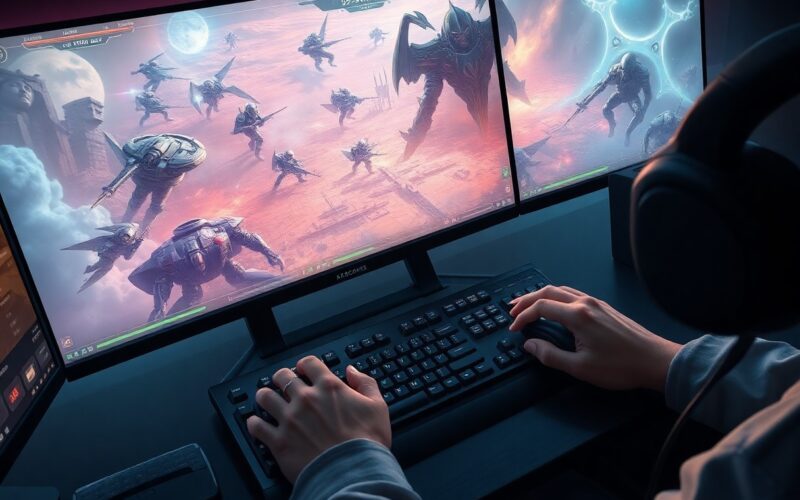
You need to understand key endurance factors in a best of five series in StarCraft II. This format tests players’ mental stamina, strategic adaptability, and physical reflexes over multiple games, making each match a battle of endurance as much as skill.
Physiological Demands of High-APM Performance
Maintaining Actions Per Minute (APM) consistency across multiple sets
Mastery of high APM demands not only skill but also physiological stamina. Players must train their muscle memory to perform complex sequences efficiently, ensuring that speed and accuracy do not wane throughout a best-of-five match. Regular simulations of long matches can build both mental acuity and physical efficiency, allowing players to sustain high performance levels even in extended series.
Consistency hinges on a player’s ability to manage fatigue during intense bouts. Limiting distractions, maintaining focus, and utilizing proper posture can significantly enhance overall APM. Players often establish routines between games to reset their focus, allowing them to begin each set fresh and retain optimal performance across all games.
Mitigating physical fatigue and repetitive strain during long series
Effective strategies for reducing physical fatigue include regular breaks and exercises that target commonly strained muscle groups. Stretching, ergonomic keyboards, and mousepads can reduce the risk of repetitive strain injuries. Establishing personal warm-up routines before tournaments can also prepare the body for prolonged gameplay challenges.
Recognizing the signs of fatigue is vital in managing performance. As fatigue sets in, muscle responsiveness and coordination can decline, leading to increased errors. Incorporating brief, structured breaks between games can allow players to recharge mentally and physically, minimizing the impact of strain and enhancing APM sustainability across the series.
Cognitive Endurance and Decision-Making Fatigue
The Impact of Prolonged Intense Focus on Strategic Accuracy
Extended periods of intense focus can lead to diminishing returns in decision-making accuracy. Players often experience a decline in their ability to evaluate the strategic landscape effectively, resulting in miscalculations or poor unit engagements.
This fatigue affects in-game choices, where even experienced players may misjudge enemy movements or resource priorities, ultimately impacting game outcomes. Maintaining clarity under pressure becomes increasingly challenging as the match progresses.
Managing Late-Series Macro-Management Degradation
Early-game advantage might fade as players struggle with the complexities of macro-management later in a series. Critical tasks like resource allocation and unit production can slip through the cracks, leading to missed opportunities.
This degradation often reflects mental fatigue, where sustained decision-making becomes less efficient. Proper strategies for pacing gameplay and momentary breaks can mitigate these effects, allowing players to recalibrate and regain focus.
Addressing late-series macro-management degradation requires balancing aggression and resource management. Players need to integrate systematic routines and shortcuts to streamline actions, reducing cognitive load and improving overall efficiency during critical phases of the match.
Information Processing Speed During High-Pressure Engagements
Fast-paced engagements challenge players’ ability to process information swiftly. Combat scenarios demand rapid assessment of opponent tactics, often resulting in split-second decisions that can turn the tide of battle.
As the pressure builds, cognitive overload can hinder a player’s ability to react, leading to mistakes in execution. Continuous practice and simulated high-stress scenarios can enhance processing speed, helping players remain competitive even in the most intense moments.
Improving information processing speed requires rigorous training under simulated high-stakes conditions. Players who engage in frequent practice matches focused on reaction time and decision-making can find significant improvements, enabling sharper responses during real-game tensions.
Psychological Resilience and Emotional Regulation
Strategies for recovering from momentum shifts and “reverse sweeps”
Identifying the turning points in a match helps players recalibrate their tactics. Emphasizing focus on individual performance rather than external factors can mitigate the effects of a sudden drop in momentum. By breaking down the game into smaller segments, players regain control and can strategically plan their next moves.
Establishing routines between games is beneficial for mental recovery. Engaging in mindfulness techniques or physical activity can restore a player’s composure. Acknowledging the setback without dwelling on it allows for a quicker resurgence in confidence and strategic clarity.
Tilt management and maintaining composure after critical losses
Managing tilt effectively hinges on recognizing when emotions disrupt focus. Players can benefit from self-assessment techniques, such as journaling or discussing feelings with trusted teammates. By processing emotions constructively, players maintain composure and reduce the risk of subsequent losses.
Maintaining a strong mental attitude is necessary for avoiding cascading failures. Practicing deep-breathing exercises during downtime can help reset emotional states. Practicing acceptance of losses as learning opportunities fosters growth rather than despair. A focus on the next game, not the last one, cultivates resilience.

Tactical Flexibility and Series-Long Meta Adaptation
Diversifying build orders to prevent opponent predictability
Diversifying build orders forces opponents to adapt continually, creating a guessing game that keeps them off balance. Relying on a single strategy can make players vulnerable, as their adversaries will become familiar with their tactics and plan counters. A varied approach not only enhances a player’s chances but also showcases their versatility across different matchups.
Employing unconventional strategies at key moments can catch opponents by surprise and disrupt their planned responses. Frequent shifts in build order maintain the psychological edge, making it challenging for the opponent to formulate effective counters. This constant adaptation is vital in long series, where players must outthink and outmaneuver each other.
In-series adjustments to counter enemy playstyle evolution
Adjustments made during a series are critical as players evolve their strategies in response to earlier games. Detecting shifts in the opponent’s playstyle allows for timely adaptations that can turn the tide. Quick recognition of changes, whether aggressive expansion or defensive posturing, is vital for maintaining competitive strength.
Tactical changes, like switching unit compositions or altering timings, are necessary as the match progresses. Effective players analyze past games and use them to exploit their opponent’s weaknesses in real-time. This proactive mindset can help maintain an upper hand and shift momentum throughout the series.
The role of surprise tactics in breaking endurance plateaus
Utilizing surprise tactics can break monotony and disrupt the rhythm of longer series. Implementing unexpected maneuvers, like all-ins or unconventional tech paths, keeps opponents guessing and can elicit mistakes. Surprise elements elevate the gameplay, providing opportunities to seize the initiative and capitalize on any hesitation.
Surprise tactics create windows for offensive plays that can decisively shift the game. Catching an opponent unprepared can lead to quick advantages, showcasing how crucial unpredictability is in series-long matches. Keeping the opponent off balance through these tactics is not just beneficial but often vital for success.
Environmental and Ergonomic Optimization
Impact of Posture and Peripheral Setup on Long-Term Comfort
Optimal posture significantly influences endurance during extended gaming sessions. Proper alignment of the spine and limbs can prevent fatigue, allowing players to maintain focus longer. Peripheral setup, including keyboard and mouse positioning, plays a crucial role in reducing strain on wrists and hands.
Adjusting chair height and monitor distance also impacts how comfortably players can engage with the game. Ergonomic furniture and accessories reduce the risk of developing chronic discomfort, promoting sustained performance throughout matches.
Hydration and Nutritional Pacing for Sustained Mental Clarity
Hydration levels directly affect cognitive function and reaction time in competitive gaming. Consuming water regularly helps maintain optimal focus and alertness while preventing fatigue-induced errors. Planning nutrient intake around match times can further support mental clarity.
Incorporating light snacks, such as fruits or nuts, provides steady energy without overwhelming the body. These foods help stabilize blood sugar levels, ensuring sustained mental agility throughout intense gameplay.
Staying hydrated contributes significantly to cognitive efficiency. Integrating electrolytes can enhance hydration’s effectiveness, especially during longer play periods. A proper balance of fluids and nutrients ensures players remain sharp and responsive, preventing cognitive decline that can result from dehydration.
Temperature Control and Its Effect on Hand Dexterity
Maintaining a comfortable temperature can greatly affect hand dexterity, important for precise movements in StarCraft II. Cooler environments often enhance focus while preventing overheating, which can lead to decreased coordination. Players should monitor their surroundings to maintain an optimal gaming experience.
Conversely, excessively cold conditions can impair blood flow, negatively impacting finger movements. Finding a balance helps players perform at their peak during critical moments in matches.
Temperature Control and Hand Dexterity
| Temperature Conditions | Potential Effects |
|---|---|
| Cool Environment | Enhances focus and coordination |
| Cold Environment | Reduces blood flow, impairs dexterity |
| Overheated Environment | Causes fatigue and distractibility |
Optimal temperature management greatly impacts a player’s ability to execute precise actions. Addressing environmental factors ensures hands remain agile, which is crucial for success in competitive scenarios. Players should experiment with their setups to discover the most effective conditions for their performance.
Preparatory Scouting and Map Pool Specialization
Pre-series opponent profiling and historical data analysis
Understanding an opponent’s tendencies and playstyle is necessary for success. Analyzing past matches reveals patterns, whether they prefer aggressive strategies or economic builds. Detailed profiling can expose weaknesses, allowing players to craft tailored strategies before the series starts.
Examining historical data also aids in making informed decisions regarding unit compositions and timings. Recognizing the preferred map choices of opponents can contribute to selecting the most advantageous strategies, optimizing every game played within the series.
Leveraging map-specific advantages in deciding games
Map characteristics can shift the balance of power during a series. Each map has unique features, such as chokes, expansion opportunities, and terrain advantages. Players should identify these elements and adapt their strategies to exploit them effectively, ensuring victory where the terrain favors specific units.
Adjustments in build order can maximize map strengths. For instance, certain maps may favor early aggression due to close spawn locations, while others encourage longer-term economic development. Adapting strategies based on map-specific nuances often proves decisive in clinching a series win.
Conclusion
Now, endurance in a best of five series in StarCraft II is impacted by mental stamina and strategic adaptability. Players must maintain focus and resilience through multiple intense matches, as fatigue can lead to poor decision-making.
Physical preparation, including proper nutrition and rest, plays a significant role in achieving peak performance. Successful players often develop routines that enhance their endurance, ensuring they remain competitive throughout the entire series.