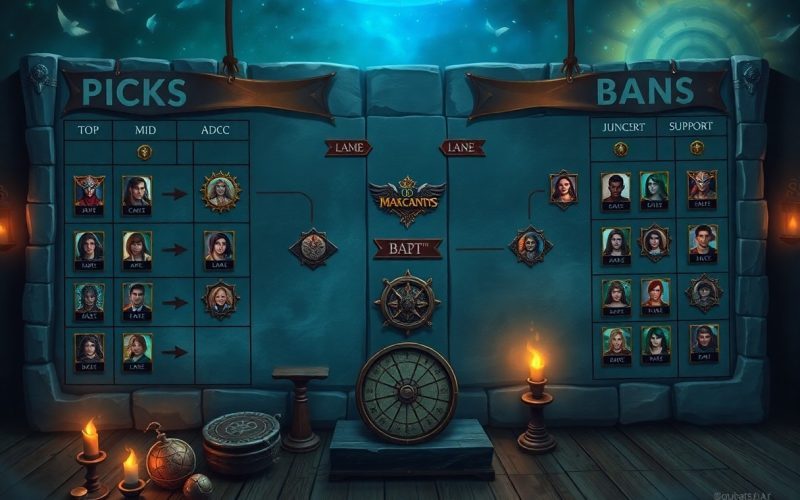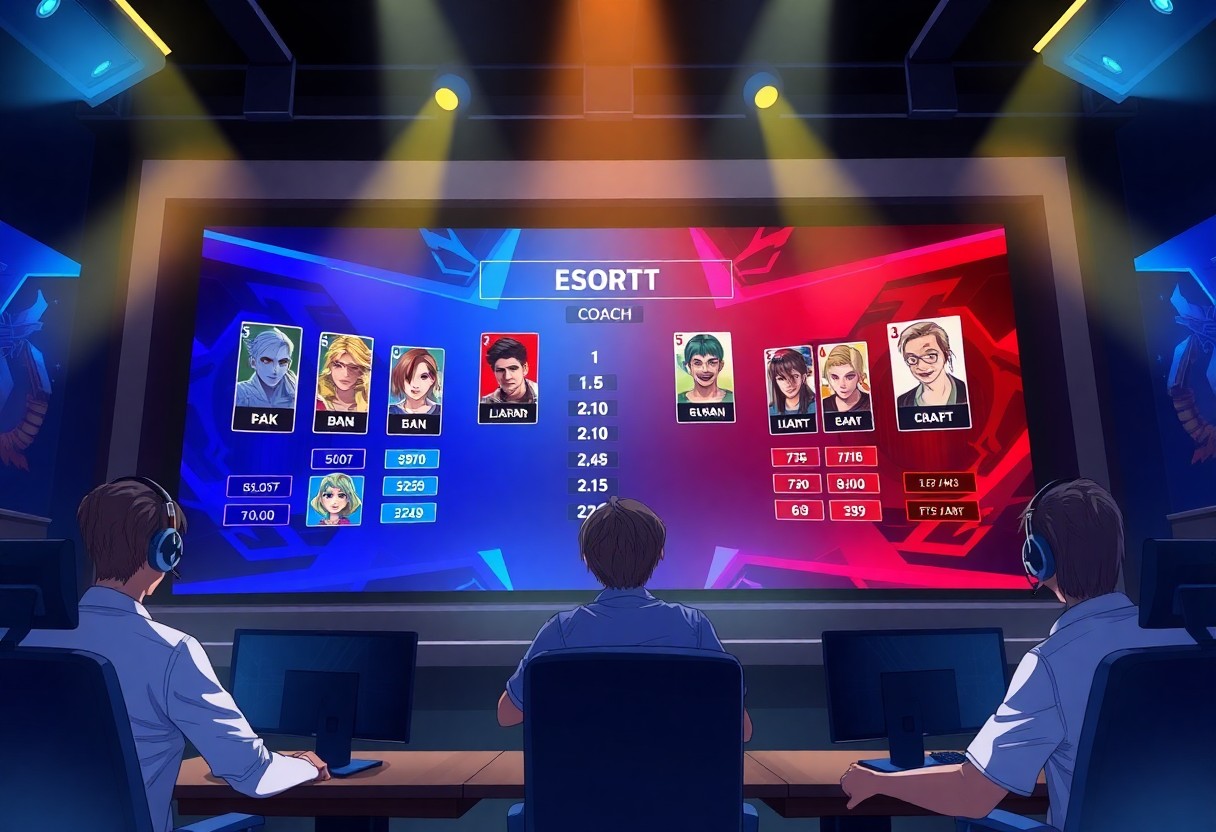
With strategic depth and complexity, drafting systems in League of Legends professional matches play a pivotal role in shaping game outcomes. Teams carefully select champions and employ tactics to counter opponents, highlighting the importance of adaptability and foresight in competitive play.
The Evolution of the Pick and Ban Phase
Transitioning from Global Bans to the Modern 10-Ban System
Global bans once dominated the pick and ban phase, providing a sweeping approach to eliminate powerful champions. Teams relied heavily on a few standout picks, leading to predictable strategies and limited diversity in champion choices.
The introduction of the modern 10-ban system revolutionized this phase. Each team could target specific threats while retaining options for their own picks, resulting in dynamic strategies and a wider array of champion selections in professional matches.
Historical Meta Shifts and the Birth of Strategic Drafting
Meta shifts in League of Legends have prompted teams to adapt their drafting strategies significantly. High-profile patches often redefine champion viability, pushing teams toward innovative tactics and flexible compositions.
During pivotal tournaments, certain champions may emerge as dominant picks, leading to a shift in priorities within the drafting phase. As teams recognize the strength of specific champions, they reshape their strategies to either accommodate or counter these choices, illustrating the relationship between meta evolution and drafting practices.
The Impact of Chronological Draft Phases on Tactical Depth
Chronological draft phases offer teams a structured method to build synergy and counter potential threats. This tactical framework allows for a more meticulous approach to champion selection, as each pick or ban influences the subsequent choices significantly.
With the addition of the chronological order, teams develop nuanced strategies that consider not only their own champion strengths but also the opposition’s capabilities. This stage requires players to think multiple steps ahead, enriching the complexity of the draft process.
Strategic Archetypes and Team Compositions
Successful teams heavily rely on diverse strategic archetypes that define their approach to drafting and gameplay. These configurations influence everything from early game aggression to late-game scaling, affecting how teams manage resources and objectives. Common strategies include:
- Front-to-Back Teamfighting
- 1-3-1 Split Push
- Pick-Oriented Compositions
- Global Presence Strategies
- Teamfight-Centric Structures
This collection determines the interactions within matches and shapes overall strategies.
Front-to-Back Teamfighting and Traditional Protection Logic
Front-to-back teamfighting emphasizes protecting key damage dealers while tanks absorb upfront damage. Teams ideally position frontline champions to shield carries and create space during engagements, enhancing overall effectiveness.
Assessing enemy threats becomes crucial as this approach leverages the synergy between utility and damage output. Proper execution hinges on communication and coordination to maintain formation throughout fights.
1-3-1 Split Push and Macro-Pressure Execution
1-3-1 split pushing allows teams to exert pressure across multiple lanes, forcing opponents to respond. Such a strategy enables efficient resource gathering, discouraging direct confrontations in favor of objective control.
Execution requires champions with mobility and wave-clear capabilities to manage waves efficiently. Flexibility becomes key as teams shift focus between lanes in response to enemy movements.
This strategy revolves around creating mismatches, as one team member applies pressure in a less defended lane while the others farm and contest objectives together. Mastery of this playstyle can lead to significant advantages as resources and map control tilt in favor of the split push team.
Pick-Oriented and Global Presence Strategies
Pick-oriented compositions target isolated enemy champions using crowd control and high burst damage. Coordination between champions with strong engage tools focuses on securing crucial kills, enabling clean team fights afterward.
Global presence strategies rely on champions who can influence multiple lanes, applying pressure and securing objectives effectively. This tactic often draws enemy resources away from critical areas on the map.
This method emphasizes map awareness and precision, as teams exploit positioning to create high-leverage scenarios where they can capitalize on missteps from opponents. Strategies evolve consistently to adapt to shifting game dynamics and opposition tactics.
The Role of the Coaching Staff in Draft Preparation
The Head Coach’s Vision vs. Player Champion Comfort
The head coach must balance the overall game strategy with each player’s comfort picks. A strong draft reflects the team’s identity, integrating both innovative strategies and reliable champions the players excel with. Finding this equilibrium can lead to a cohesive team performance during critical matches.
Player champion comfort significantly influences draft decisions. Champions that players are confident with can drive better performance in-game. If players are forced into unfamiliar territory, it may hinder their ability to execute strategies effectively, making the coach’s insight into player preferences equally important.
Scouting Opponent Tendencies and Targeted Ban Priorities
In-depth analysis of opponent tendencies is necessary in preparation. Coaches analyze past matches to identify key champions frequently used by their opponents, establishing critical bans that can disrupt enemy strategies. Each targeted ban is designed to limit the opponents’ chances of executing their game plans.
Effective scouting allows coaching staff to prioritize bans that directly counter specific strengths of the opposing team. By understanding player habits and preferred champions, teams can craft a draft strategy that not only enhances their own gameplay but also strategically dismantles the opponent’s drafts.
Scouting requires a meticulous approach to analyze match data and player performances. Coaches review specific champions, build patterns, and situational decision-making from previous games. This granular insight forms the backbone of targeted bans, ensuring opponents are restricted to less favorable champions while maximizing the team’s chances of drafting powerful picks.
Real-Time Adjustments and On-Stage Communication Dynamics
Real-time adjustments during the draft phase can define the outcome of a match. Coaches and players must communicate effectively under pressure, as unexpected picks or changes demand quick thinking and adaptability. An efficient communication system can enhance decision-making, allowing teams to respond to evolving draft scenarios.
On-stage dynamics often strain communication. Coaches must convey their strategies clearly while considering the mental state of players. This interaction balances authority with encouragement, ensuring players stay engaged and confident in the adjustments being made during the draft process.
Effective communication is paramount when unexpected picks challenge pre-game plans. Coaches utilize short, direct messages to maintain clarity, while players provide feedback regarding their champion comfort and counter-strategies. This collaborative atmosphere fosters a flexible drafting approach, enabling the team to adjust quickly while maintaining focus on the ultimate goal.
Player Champion Pools and Pocket Picks
The Impact of Specialized Mastery on Draft Pressure
Specializing in certain champions allows players to master mechanics and strategic nuances, placing immense pressure on opposing teams during the draft. Teams aware of a player’s deep champion pool often must consider potential counters, influencing their banning strategy significantly.
Depth in champion mastery can also lead to unexpected picks that challenge standard drafting assumptions. Players may showcase a unique champion, shifting the dynamics of pick priority and limiting choices for their opponents.
Forcing Bans through Targeted Champion Proficiency
Targeted champion proficiency directly affects banning strategies. By showcasing mastery over a small yet impactful champion pool, players can force opponents to consider bans based on effectiveness rather than popularity.
Effective teams exploit this by prioritizing the elimination of champions that pose threats based on prior performances, thereby constraining enemy options and creating a more favorable draft scenario.
Exemplifying proficiency in certain champions often leads to their ban in anticipation of potential dominance. When players consistently achieve success with specific picks, teams may prioritize banning those champions even if they don’t fit standard meta considerations.
The Burden of Versatility: Expanding the Multi-Role Threat
Versatile players can wield multiple champions across various roles, forcing teams to adjust their draft strategies accordingly. This expanded threat complicates the drafting process, as opponents must prepare for unexpected picks spanning positions and playstyles.
Teams with multi-role threats benefit from flexible compositions that adapt to the evolving metagame. A single player capable of fitting into different roles can influence bans and picks, often pulling attention away from their teammates.
Expanding champion pools across multiple roles presents an equal measure of opportunity and burden. While versatility can provide strategic flexibility, managing performance consistency across different roles can present challenges, as players may not perform equally well across their varied champion offerings.
Blue Side vs. Red Side: Positional Advantages
First Pick Priority: Securing S-Tier Power Picks
Blue Side often holds the advantage of the first pick, allowing them to secure the strongest champions in the current meta. This strategic positioning enables them to prioritize S-Tier picks, which can dictate the flow of the game. By selecting high-impact champions early, Blue Side establishes a foundational strength that can shape the entire draft process.
A key aspect of first pick priority is the flexibility it offers. Blue Side can choose champions that complement their team composition while countering potential Red Side selections. This adaptability provides a tactical edge, shaping the remaining picks and potentially forcing Red Side into a defensive stance.
The Red Side Counter-Pick: Securing the Final Matchup Advantage
Red Side’s ability to counter-pick serves as a powerful strategy in professional drafts. After Blue Side finalizes their composition, Red Side can select a champion designed to negate a specific threat, which can sway crucial matchups in their favor. This advantage is particularly pronounced in high-stakes environments where every choice can significantly impact the outcome.
Counter-picking is not merely reactive; it allows Red Side to exert influence over the game’s narratives. By choosing a champion that thrives against Blue Side’s final pick, Red Side can create favorable lanes and capitalize on matchups, ultimately breaking the trend set by Blue Side’s initial selections.
Map Symmetry and Neutral Objective Control Priority
Map symmetry plays a crucial role in the strategic positioning of both teams. Blue Side often has the advantage of controlling critical neutral objectives early due to their proximity. This can lead to better vision control and more efficient map rotations, setting the stage for securing Dragons and Rift Heralds.
By controlling these objectives, Blue Side can dictate the pace of the game, placing Red Side in a reactive position. Thus, understanding how to balance map control with draft advantages becomes imperative for both sides to maintain momentum and ensure long-term success throughout the match.
Power Spikes and Win Conditions
Early-Game Dominance and Snowball-Reliant Drafts
Teams prioritizing early-game dominance often draft champions that excel in the laning phase and can snowball their advantage rapidly. Picks like Lucian or Elise enable quick skirmishes and pressure, forcing opponents into unfavorable trades. Snowball-reliant drafts hinge on securing early objectives, which amplifies their lead exponentially.
An aggressive lane presence allows for early turret damage and jungle invades, creating a snowball effect that can be challenging for opponents to counteract. If executed successfully, these compositions can dictate pace and control over the game, often leading to a swift victory.
Scaling Compositions and the Late-Game Insurance Policy
Scaling compositions focus on champions that become increasingly powerful as the game progresses. Champions like Kog’Maw and Cassiopeia often serve as late-game insurance, allowing teams to withstand early pressure while building towards their item spikes. This strategy relies on surviving skirmishes and team fights until their damage thresholds are met.
Teams drafting scaling compositions must employ tactics that prioritize survival, ensuring they withstand early-game aggression. With patience, these teams can turn late-game team fights in their favor, leveraging their champions’ peak power to dominate as the match progresses.
Scaling compositions thrive on the idea that certain champions can outpace opponents in team fights during the late-game. They often maximize effectiveness through careful positioning and team coordination, leading to explosive engagements when their damage potential is fully realized. This style of play emphasizes the importance of resource management and objective control while waiting for the team’s true strength to emerge.
Mid-Game Mid-Range Power Spikes and Objective Contestation
Mid-game power spikes often present prime opportunities for teams to contest objectives. Champions that reach significant item thresholds during this phase can capitalize on their newfound strength, creating pressure around dragons and Baron Nashor. Identifying these windows is crucial for outmaneuvering opponents.
Mid-game is critical for establishing dominance, as it often dictates the flow of the rest of the match. Properly timed engages and coordinated efforts around objectives amplify a team’s chances of building a lead. Successful teams will use their power spikes to force engagements, thereby controlling the map and limiting the enemy’s options.
Counter-picking and Lane Matchup Dynamics
Top Lane Isolation and the Impact of the Final Pick
Top lane dynamics heavily rely on champion pool and matchup nuances. Isolated from team fights early on, champions can leverage matchups to snowball leads. The final pick introduces significant pressure on the opposing top laner, potentially dictating lane outcomes based on counter-pick strategies.
Shrewd teams exploit this phase for lane dominance. An unfavorable matchup can lead to deficits, affecting the jungler’s gank opportunities. Consequently, managing the final pick becomes a critical aspect of drafting, ensuring optimal conditions for challenging the opponent’s early game strategy.
Jungle-Mid Synergy and 2v2 Matchup Optimization
Synergy between the jungle and mid roles can greatly influence early skirmishes. Coordinated ganks or pressure from the jungler heighten the mid laner’s impact, allowing for aggressive plays. Optimizing this partnership typically defines the flow of the game beyond laning phase.
Targeting adverse mid-lane matchups ensures that players can capitalize on weaknesses. A potent combination not only secures kills but also enables map control, creating opportunities for securing objectives. Proper communication between these roles amplifies effectiveness.
Bot Lane Synergy: Pairing Marksmen with Optimal Supports
Bot lane success often hinges on the synergy between marksmen and support champions. A well-paired duo maximizes kill potential and lane control. Selecting supports that complement the marksman’s kit can enhance the overall performance throughout the game.
Optimal pairings allow for early aggression or sustained poke, adjusting strategies to match the enemy’s composition. Drafting the right support for the ADC not only cultivates synergy but also sets the tone for mid-game team plays and objectives, ultimately increasing the chances of victory.
Meta-Game Analysis and Patch Influence
Adapting to Patch Cycles and Champion Reworks
Each patch in League of Legends introduces subtle shifts in champion balance and item effectiveness, compelling teams to refine their strategies. Understanding these changes directly influences champion viability and team compositions, as professionals constantly assess the newly adjusted meta.
Teams proficient in analyzing patch notes can effectively pivot between strategies, capitalizing on champion buffs while avoiding nerfed selections. This adaptability is often the key to gaining an edge in draft phases, allowing teams to present unexpected compositions and counterplays.
The Rise and Fall of Item-Centric Metas
Item-centric metas shift the focus onto specific items that dictate champion build paths and strategies. Certain patches may elevate particular items to dominance, prompting teams to prioritize champions that synergize effectively with these game-changers.
Teams can benefit significantly by identifying item combinations that bolster win rates, leading to a cyclical rise in the popularity of champions built around these items. However, as balance changes roll out, these items may find themselves underwhelmed, prompting a shift in the meta once more.
The rise of item-centric metas can drastically alter the landscape of champion selection, forcing teams to adapt rapidly to ever-changing item impacts. For instance, the introduction of certain items might render previously underperforming champions exceptionally strong, leading to a narrow band of viable picks during that patch’s cycle.
Identifying Mandatory Bans and “Broken” Mechanics
Mandatory bans emerge during professional matches when specific champions exhibit overwhelming strength or exploit “broken” mechanics. Identifying these champions becomes crucial for teams aiming to maintain balance and competitiveness in their drafts.
Identifying mandatory bans requires in-depth analysis of both win rates and champion interactions within the current meta. Champions showcasing overbearing strengths or unexpected synergies often become focal points in draft strategies, shaping the course of entire matches.
Flex Picking and Draft Flexibility
Deceiving the Opponent through Multi-Role Champions
Multi-role champions provide a strategic advantage in the draft phase, enabling teams to create uncertainty among opponents. When a champion can function in multiple lanes or roles, it complicates the opposing team’s ability to finalize their picks.
Forcing Sub-Optimal Counter-Picks via Lane Swaps
Lane swaps have historically been a tactic to disrupt an enemy team’s draft strategy. By swapping champions early in the game, teams can create mismatches that lead their opponents to pick less favorable matchups.
This tactic not only inhibits the flow of the game but also pressures opponents into uncomfortable positions. When executed correctly, lane swaps can effectively nullify the enemy’s planned strategy.
Using lane swaps to force sub-optimal counter-picks can dramatically alter the course of a match. Opponents, caught off-guard, are often compelled to rethink their strategy mid-game. This element of surprise plays a crucial role in maintaining the upper hand, especially when teams exploit their flexibility by unpredictably shifting champions between lanes.
The Theoretical Limits of Triple-Flex and Quad-Flex Strategies
Theoretical discussions surrounding triple-flex and quad-flex strategies highlight the potential for significant disruption in the drafting process. These strategies revolve around using multiple champions that can be effectively played in various roles, pushing opponents into restrictive pick choices.
Exploring triple-flex and quad-flex strategies underscores the complexity and depth of drafting in professional play. These tactics can overwhelm opponents, but they require precise execution and coordination. Teams must ensure their players are proficient with selected champions across different roles to maximize the impact of this flexibility.
Objective-Based Drafting
Prioritizing Elemental Drake Control and Soul Win-Conditions
Teams that prioritize Elemental Drake control typically secure early advantages in the game, influencing team fight outcomes. Drafting champions that excel in skirmishing and have strong area-of-effect abilities can help in gathering the necessary resources for securing these objectives.
Choosing champions with high mobility or effective vision control can capitalize on Draco’s importance. Creating a lineup that synergizes around specific drake souls sets a clear win-condition, enabling the team to dictate the pace of the match and secure critical late-game power spikes.
Drafting for Baron Nashor Shred and Siege Potential
Building a composition that excels at shredding Baron Nashor enhances overall map control. Combining champions with sustained damage and objectives-centric abilities facilitates a quicker takedown, forcing enemy teams into reactive play.
Siege potential becomes crucial when aiming to increase pressure on towers post-Baron. Selecting champions with wave clear and poke can create opportunities for taking down structures, reinforcing the team’s lead and maintaining control over the game.
Teams should balance damage output with survivability during Baron fights. Champions who can sustain during these encounters while inflicting high burst damage will ace the challenge of securing the objective while maintaining pressure across the map.
Rift Herald Priority and Early Tower Plate Gold Accumulation
Focusing on early Rift Herald plays can set a team ahead economically through tower plate gold. Drafting champions with strong wave-clear capabilities aids in quicker control of this objective and creates opportunities for early turret damage, facilitating a gold advantage.
Selecting champions with roaming potential amplifies push pressure, allowing for a coordinated attack on enemy structures. Prioritizing early Rift Herald engagements ultimately accelerates power spikes and forces opponents into reactive positions.
Teams that emphasize early map control through the Rift Herald often find themselves in advantageous positions for mid-game transitions. Successful execution rewards champions with extra resources, enabling them to scale effectively into the later stages of the match.
Psychological Warfare and Mind Games in Draft
Baiting Specific Picks to Open Strategic Alternatives
Players often employ tactics to induce opponents into selecting certain champions, creating openings for unexpected strategies. By presenting alluring options, teams can manipulate their rivals into revealing their game plans prematurely.
Such baiting can lead to a cascading effect during the draft phase, where players feel compelled to pick conventional picks, potentially overlooking powerful alternatives. This strategy keeps opponents guessing and can lead to miscalculations under pressure.
The “Comfort vs. Meta” Dilemma in High-Stakes Matches
Balancing personal comfort with the current meta presents a challenging decision for players in critical matches. Relying on proven comfort champions can instill confidence but may fall short against optimized meta compositions.
Choosing between safe picks and adapting to the emerging meta often affects the team’s overall performance. High-stakes scenarios intensify these choices, revealing which teams adapt best under pressure.
A deeper understanding of this dilemma highlights how players weigh their comfort and meta relevance during the draft. Teams that embrace flexibility may secure an advantage, while those anchored in their preferences risk falling behind. This internal conflict can be telling of a team’s overall adaptability and mindset before the match even begins.
Disrupting Opponent Rhythm with Unexpected Ban Sequences
Strategically disrupting an opponent’s rhythm during the drafting stage can create an edge. Analyzing previous matches allows teams to ban key champions that may not seem obvious but target specific team compositions effectively.
Executing unexpected bans forces opponents into unfamiliar territory, potentially leading them to panic picks. This psychological play can result in misaligned strategies that the banning team can exploit during the game.
The effectiveness of unexpected ban sequences lies in their ability to skew opponents’ preparation. Teams that anticipate standard bans risk falling into predictable drafting patterns; therefore, by introducing surprise elements, they can dismantle the opposing team’s plan, effectively controlling the narrative from the get-go.
Data Analytics and Scout-Driven Drafting
Utilizing Win-Rate Statistics and Matchup Probability Data
Analyzing win-rate statistics provides teams with valuable insights into champion effectiveness within different roles. Coaches can gauge which champions have succeeded historically against specific opponents, guiding draft choices that maximize probability of victory.
Matchup probability data further refines these strategies. Teams can assess potential picks and bans by evaluating how champions perform against one another, shaping a more informed draft process that capitalizes on enemy vulnerabilities.
Tracking Scrim Results and Hidden “OP” Discoveries
Data from scrims serves as an crucial tool in determining champion viability beyond traditional metrics. Using internal match results can uncover unexpected strengths in champions, highlighting candidates that may not be prioritized in the standard meta.
These findings often transform the perception of certain champions. Identifying trends from scrimmage matches enables teams to adapt strategies, taking advantage of champions that opponents underestimate or overlook, thus gaining a competitive edge.
Tracking scrim results enables teams to build a nuanced understanding of champion performance that often transcends the known meta. Observing interactions and team dynamics within scrims may reveal off-meta picks that hold significant potential, allowing teams to capitalize on opponent biases during official matches.
Quantitative Assessment of Champion Synergy and Counters
Examining champion synergy quantitatively provides a clearer picture of team compositions. Metrics can reveal which champions complement each other, enhancing overall team strategy and effectiveness in fights.
Effective counterplay hinges on understanding champion interactions. Analyzing historical match data helps teams anticipate enemy picks and adjust their drafts to minimize risks while maximizing team strengths against opponents.
Quantitative assessments highlight the importance of specific champion interactions. Data-driven analysis enables teams to pinpoint combinations that excel together, ensuring a cohesive and powerful team strategy that effectively counters enemy compositions during matches.
Regional Drafting Styles and Philosophy
LPL Aggression: Drafting for Skirmishing and Early Leads
Chinese teams in the LPL often prioritize aggressive compositions that enable early skirmishes. Their drafts favor champions that excel in 2v2 scenarios, allowing for quick lead building. Heavy focus on jungle pressure and lane dominance shifts the game into a fast-paced battleground where snowballing becomes the norm.
A strong emphasis on crowd-control champions pairs with high-damage dealers to maximize effectiveness in chaotic team fights. This approach often results in quick games, where the team that executes its strategies better tends to secure a decisive victory.
LCK Precision: Drafting for Scaling and Macro Execution
In contrast, LCK teams exhibit a preference for compositions that thrive in the late game. Methodical drafting strategies emphasize champions with strong scaling potential, focusing on durability and late-game impact. Teams prioritize synergy between champions to create efficient macro strategies that control objectives.
This style promotes clear communication and execution, allowing teams to dictate the pace of the game. With less emphasis on early-game aggression, LCK teams often look to out-maneuver opponents rather than overpower them.
Strategies employed by LCK teams frequently revolve around securing key objectives and leveraging superior vision control. This careful balancing of champion selections ensures that the late-game transitions are smooth and effective, capitalizing on advantages gained through disciplined play and strategic use of resources.
Western Innovations: LEC and LCS Meta Deviations
In the West, both LEC and LCS have introduced innovative drafting styles that mix traditional approaches with experimental strategies. Teams in these leagues often blend early aggression with scaling picks, resulting in dynamic gameplay. This adaptability highlights a willingness to challenge the norm and explore unconventional champion selections.
Western teams display versatility in their drafts, frequently pivoting based on matchups and individual player strengths. This hybrid model encourages teams to remain unpredictable and can lead to unique approaches in the ever-evolving meta.
Particularly, LEC teams have pushed the boundaries with champion selections that defy prevailing trends, leading to unexpected compositions. This willingness to experiment not only shifts the meta but also forces adaptations from opponents, creating an exciting and unpredictable competitive environment.
To wrap up
With these considerations, drafting systems in League of Legends professional matches play a critical role in shaping strategies and outcomes. Teams analyze champion synergy, counter-picks, and individual player strengths to optimize their choices during the drafting phase.
Success hinges on effective communication and adaptability within the team. Understanding opponents’ tendencies and previous match performances enables squads to refine their strategies, paving the way for competitive advantages throughout each game.
Q: How does the drafting phase work in League of Legends professional matches?
A: The drafting phase consists of two parts: banning and selecting champions. Each team takes turns banning champions that they do not want their opponents to use. After banning, teams pick their champions in a specific order, allowing strategic counter-picks and synergies to be considered.
Q: What strategies do teams employ during the draft?
A: Teams analyze their opponents’ past performances and preferred champions. They aim for picks that create strong team compositions and counter opposing strategies. Flexibility in champion roles allows teams to adapt to their opponents’ picks effectively.
Q: How important is drafting compared to gameplay execution?
A: Drafting significantly influences the outcome of matches. A well-executed draft can set up a team for success by providing advantageous matchups and synergy. Nevertheless, gameplay execution remains critical; teams must effectively coordinate and adapt once the match begins.