





You can enhance your gameplay experience by understanding the ranking tiers and progression systems in Counter-Strike. This guide breaks down how the ranking system works, the significance of each tier, and tips to improve your rank effectively.
The Evolution of Competitive Matchmaking: From CS:GO to Counter-Strike 2
Transitioning from Hidden Elo to Transparent Numerical Ratings
This transition marks a significant change in player experience. Previously, players operated with a hidden Elo system, leaving them unsure of their matchmaking ratings and progress. Now, Counter-Strike 2’s transparent numerical ratings offer players clear metrics of skill, enhancing motivation and setting tangible goals.
This openness creates a more engaging competitive environment. Players can analyze their performance and understand the intricacies of their rankings, fostering a deeper connection with their progress in the game.
Structural Changes in Matchmaking Algorithms and Fairness
Algorithm updates have refined matchmaking processes significantly. Prior to these changes, players often faced mismatched skill levels, leading to frustrating experiences. Current adaptations focus on creating balanced matches, ensuring that players face opponents of equivalent skill.
Enhanced fairness reflects a commitment to improving competitive integrity. This adjustment allows for a more accurate representation of skill, enabling players to enjoy a more rewarding experience in each match.
Specific algorithms now consider multiple factors, such as player behavior and win/loss streaks, to create a more dynamic and equitable matchmaking environment. This ensures that players engage in games that both challenge and motivate them while preventing frustration from unbalanced pairings.
The Shift from Round-Based to Match-Based Progression Metrics
The change from round-based to match-based progression reflects a major shift in how players are evaluated. Round-based systems often emphasized individual performance in isolated instances, which could skew a player’s overall skill perception. The new match-based metrics focus on holistic gameplay, analyzing overall contributions to winning games.
This adjustment encourages teamwork and strategy as players understand that their performance across an entire match is critical. Such a perspective promotes a more collaborative gaming experience, which is imperative in team-oriented environments.
Match-based progression metrics foster a better understanding of overall contributions to victory, emphasizing team dynamics over individual accolades. This holistic approach not only improves player engagement but also enhances the competitive nature of the game, aligning player goals with team success.
Decoding the CS Rating System in Premier Mode
Color-Coded Tiers: Categorizing Skill from Common to Extraordinary
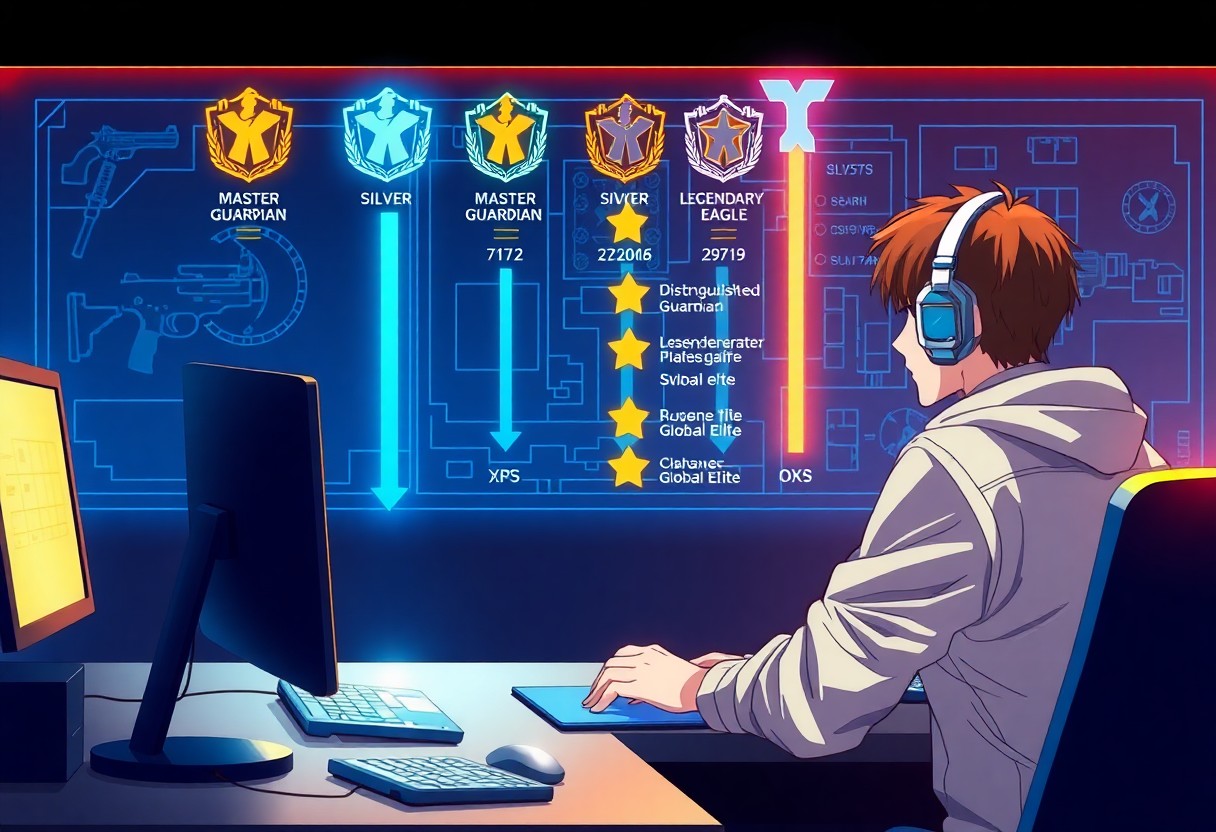
Each player’s skill is represented by a color-coded tier, ranging from Silver to Global Elite. This visual system makes it easy to identify someone’s proficiency at a glance, with hues reflecting the overall performance and consistency. Each tier serves as a benchmark, distinguishing players who are just starting from those who excel in high-stakes matches.
Understanding these colors helps players set realistic goals and appreciate their growth. Progression through these tiers signifies not only hard work but also adaptation to various gameplay scenarios and strategies vital for success in Premier Mode.
The Numerical Scale: Understanding the 0 to 30,000+ Spectrum
Ranking in CS:GO utilizes a numerical scale ranging from 0 to over 30,000, signifying varying levels of player performance. Each number correlates to specific factors, including win rates, kill-death ratios, and individual contributions to team success. Such a detailed scale allows for precise differentiation among players.
Achievement of a higher rating reflects consistent positive performance across multiple matches, giving players feedback on their skills and areas needing improvement. Engaging with this numerical system can reveal valuable insights into competitive standing and progression potential.
The progression through this numerical scale is pivotal for players aiming to climb ranks. As they continue to refine their skills, maintain win streaks, and enhance teamwork, their ratings naturally increase, reflecting their dedication and improvement in gameplay.
Mechanics of Promotion and Relegation Matches in Premier Play
Promotion and relegation matches play a significant role in CS:GO’s competitive scene. Players reaching certain thresholds engage in these matchups to either rise to a higher tier or face demotion. Winning these critical matches boosts a player’s standing, while losses can lead to a drop in rank, adding an exciting layer of challenge.
Success in promotion matches often requires not just individual skill but also effective teamwork and strategic planning. This creates an environment where players must perform under pressure, cementing their place within the ranking tiers.
Promotion and relegation matches are designed to ensure that players compete against opponents of similar skill levels. When players succeed in these matches, they demonstrate their readiness to tackle greater challenges in higher tiers, fostering continuous growth and competition within the community.
Traditional Competitive Skill Groups and Map-Specific Ranks
The Hierarchy of Silver, Gold Nova, and Master Guardian Tiers
Silver and Gold Nova tiers serve as foundational ranks for many players. Silver is characterized by varying skill levels, with players often learning necessary shooting mechanics and teamwork. Gold Nova offers slightly more consistency, as players begin to grasp game strategies and map awareness.
Master Guardian marks a transition into more skilled gameplay, focusing on tactical decision-making and advanced mechanics. Players in this tier often demonstrate better communication and teamwork, a vital aspect for climbing the ranks further.
Reaching the Pinnacle: From Legendary Eagle to Global Elite
Achieving Legendary Eagle is a significant milestone, indicating a high proficiency in gameplay mechanics. Players at this level exhibit impressive game sense, sharp reflexes, and effective teamwork. Progressing to Global Elite represents the apex of skill in Counter-Strike, showcasing unparalleled strategic thinking and execution.
Global Elite players possess a deep understanding of game dynamics and superior decision-making capabilities. Reaching this rank is not just about individual skill; teamwork and adaptability in various competitive scenarios become paramount.
Analyzing the Map-Specific Ranking System in Standard Competitive
Map-specific ranks add a distinctive layer to the overall ranking system. Each map requires unique strategies, making the ranking more nuanced. Players may excel on certain maps while struggling on others, leading to varied performance levels across the board.
This differentiation encourages players to diversify their skills and adapt their strategies. Mastering multiple maps ensures a balanced approach, significantly impacting a player’s overall ranking experience in Competitive mode.
Understanding this map-specific ranking system illuminates the importance of versatility in gameplay. As players enhance their skills on different maps, they not only improve their individual ranks but also become more valuable teammates in competitive play.
Regional and Global Leaderboards: The Pursuit of the Top 1,000
Qualification Criteria for World and Regional Standings
Achievements in matchmaking play a critical role in determining placements on the leaderboards. Players must consistently perform at a high level, achieving significant win rates and earning competitive points within a designated timeframe.
Ranked matches contribute to overall standings, emphasizing not just wins but also individual performance metrics. Engaging in higher-tier matches increases visibility and potential ranking advancement, highlighting the importance of dedication and skill.
Maintenance Requirements for Active Leaderboard Positioning
Consistency in performance is important for maintaining a leaderboard position. Players in the Top 1,000 must engage regularly in ranked play to avoid falling out of the standings due to inactivity, reinforcing the competitive nature of the game.
Continued success in matches is necessary as leaderboard placements can shift with each game played. An elevated win rate not only sustains a player’s position but also enhances their chances of climbing higher in the rankings.
Failure to play consistently can lead to de-ranking, which emphasizes the competitive nature of maintaining a spot in the Top 1,000. Players must balance their engagement with performance to remain relevant within the elite ranks.
Data Transparency and the Role of Public Profile Settings
Profile settings greatly influence how players are perceived within the community. Opting for a public profile allows others to view performance metrics, which can be a double-edged sword, as transparency fosters accountability but also invites scrutiny.
Public profiles can enhance social interactions within the game, creating opportunities for collaboration and competition. Conversely, privacy settings can protect players from unwanted attention while keeping their statistics and strategies under wraps.
Public profiles encourage an open exchange of information among players, promoting a culture of improvement. By sharing data, top players can attract potential teammates and showcase their accomplishments, which can ultimately impact their ranking and reputation in the competitive scene.
Mechanical Factors Influencing Rank Calibration and Adjustments
Understanding the mechanical factors that drive rank calibration and adjustments can provide players with insight into their competitive standing. Various elements contribute to how teams are ranked, including player performance metrics, match outcomes, and systems in place to ensure fairness in competition. Key factors include:
- Initial placement matches
- Win and loss streaks
- Round differentials
- Performance against higher or lower-ranked opponents
After establishing a player’s rank, the impact of initial placement matches cannot be overstated. These matches serve as a foundational assessment, determining a player’s starting position within the competitive system. A strong performance in these matches can lead to a favorable initial rank, while a subpar showing can hinder future progression.
The Weight of Initial Placement Matches on Long-Term Standing
Initial placement matches set the stage for long-term rank stability. If players perform well, they often start at a higher tier, aligning them with better teammates and opponents. Conversely, underwhelming performances can lock players into lower ranks, making it challenging to climb the ladder.
Impact of Win Streaks and Loss Streaks on Rating Velocity
Win streaks significantly impact rank progression, propelling players upward more rapidly. A series of victories enhances their rating, encouraging a sense of momentum. In contrast, loss streaks can dramatically slow movement in rankings and may even lead to a decrease in overall rating.
Contending with win and loss streaks shapes how players perceive their progress. A win streak not only boosts confidence but yields tangible rating benefits, while consecutive losses can lead to frustration and stagnation. The psychological impact of these streaks also influences future performance.
Influence of Round Differentials on Final Rating Point Allocation
Round differentials play a critical role in how ratings are adjusted after matches. Higher round differentials often translate to significant rating gains, as they indicate strength in gameplay. Conversely, close matches with slim margin differentials typically yield minimal rating adjustments.
Analyzing round differentials reveals important insights into match dynamics. A strong performance, even in a loss, can sometimes minimize rating drop-offs due to favorable round differentials. This mechanism incentivizes players to strive for broader margins of victory, impacting how both individual and team performances are assessed.
The Impact of Individual Performance vs. Team Success
Balancing individual performance against team success is central to understanding Counter-Strike’s ranking system. Players often focus on personal statistics, but victory hinges on teamwork and strategy. A stellar individual performance can stand out, yet without team coordination, it may not translate to winning rounds or matches.
Kill-Death Ratio (KDR) vs. High-Impact Fragging Analysis
KDR serves as a primary measure for individual contributions in matches, showcasing how many opponents a player eliminates compared to their own deaths. However, high-impact fragging transcends mere numbers, emphasizing crucial kills that turn the tide of a round, such as clutch plays and multi-kills.
Players showcasing high-impact frags may drive their team to success even if their KDR isn’t exceptional. This concept illustrates that contributing to imperative moments is often more impactful than merely maintaining a high percentage of kills.
Utility Usage and Support Statistics as Hidden Progression Drivers
Effective utility usage can greatly influence the outcome of a match. Players who deploy grenades and other equipment strategically create opportunities for their team, often as unheralded contributors. Support statistics, such as assist numbers and damage mitigated, also reveal players’ influence on victory.
Highlighting support roles in progression analyses can shed light on overall team dynamics. A player excelling in utility deployment may elevate their team’s effectiveness, even if their individual KDR is mediocre, showcasing an often overlooked aspect of performance in ranking calculations.
Utility usage not only supports the team but also aids individual players in achieving their own goals. Players proficient in item deployment help secure imperative map control, leading to better positioning for teammates and ultimately contributing to collective success. This indirect influence often goes unnoticed in traditional metrics yet plays a critical role in long-term ranking progression.
The Statistical Weight of MVP Stars in Rank Calculations
MVP stars reflect a player’s immediate impact in a match, serving as a significant factor in rank calculations. Accumulating MVP awards signals consistent performance and often showcases crucial contributions in key moments. These stars can elevate a player’s status within the ranking system, influencing future match placements.
Analyzing the role of MVP stars in comparison to standard performance metrics highlights their importance. A player might dominate in KDR, yet without MVP acknowledgments, their ranking may lag behind that of a teammate who excels in high-stakes scenarios.
MVP stars encapsulate critical moments that shape match outcomes, thus carrying weight in ranking mechanics. Essentially, these accolades bolster a player’s visibility and reputation within the community, further impacting their match-making experience and long-term progression within the game.
Understanding the “Elo Hell” Phenomenon and Rank Decay
Statistical Realities of Being Hardstuck in Lower Tiers
Players often experience stagnation in their ranks, commonly described as “Elo Hell.” Statistically, this phenomenon occurs due to factors like matchmaking constraints and varied skill levels within games. A player’s individual performance may not reflect their true skill, as inconsistent teammates often contribute to frustrating losses.
This inconsistency can create a cycle where struggling players find it difficult to break free from lower tiers. As they repeatedly face challenges, their confidence and performance may degrade, further entrenching them in the same rank despite their actual capabilities.
Mechanisms of Rank Decay During Periods of Player Inactivity
Rank decay is a direct consequence of inactivity in competitive play. Players who do not engage in matches for an extended period find their ranks deteriorating. This system is designed to keep the competitive environment fresh and ensures that active players maintain their positions based on current performance levels.
Returning after a break may lead to unexpected challenges, as players may need to re-acclimate to the game’s mechanics and community dynamics. When decay impacts rank, it can further complicate the quest for upward mobility in a game shaped by skill and cohesion.
Overcoming Negative Feedback Loops in the Solo Queue Environment
Players frequently encounter negative feedback loops in solo queue, where a series of losses can drastically impact psychological state and gameplay. The mental toll can reduce decision-making skills and overall team communication, perpetuating a cycle of dissatisfaction and poor performance.
Addressing this issue requires a focus on mindset and adaptation. Emphasizing personal improvement and setting realistic goals can help break the cycle, enabling players to regain momentum despite adversities faced in matches.
Third-Party Platforms: FACEIT and ESEA Ranking Hierarchies
Comparing FACEIT Levels 1-10 to Valve’s Internal Systems
FACEIT offers ten levels, each reflecting a player’s skill and consistency in gameplay. In contrast, Valve’s ranking system ranges from Silver to Global Elite, focusing primarily on match performance and wins.
| FACEIT Level | Valve Rank |
| 1 | Silver I |
| 5 | Gold III |
| 10 | Global Elite |
Players often find that FACEIT’s structure is more granular, allowing for a clearer representation of skill progression compared to Valve’s broader categories, which can lead to mismatches at higher ranks.
The Path to Professionalism: FPL and Challenger Divisions
FPL (Faceit Pro League) represents an elite level where top players compete for recognition and potential professional contracts. Challenger Divisions serve as a stepping stone for aspiring pros, providing competitive play against others aiming for the FPL.
Participation in either division enhances a player’s visibility and credibility in the professional scene. Success in these leagues can attract sponsorships and invitations to tournaments, significantly impacting a player’s career trajectory.
Why High-Level Players Prioritize External Ranking Services
External ranking services like FACEIT and ESEA provide a more accurate representation of skill, offering better matchmaking experiences that align closely with player capabilities. These platforms also track performance metrics extensively, giving players insights into their gameplay improvements.
Choosing these services allows players to compete against others of similar skill levels consistently. This focus on competitive integrity is particularly appealing to high-level players aiming to refine their skills and maintain a competitive edge.

Trust Factor and Prime Status: Their Role in Matchmaking Integrity
How Account Longevity and Behavior Affect Match Quality
Account longevity plays a significant role in determining matchmaking quality. Players with older accounts often exhibit better understanding of game mechanics and etiquette, leading to more cohesive team play. Furthermore, positive in-game behavior contributes to a higher Trust Factor, enhancing the likelihood of pairing with similarly responsible players.
Behavioral patterns, such as communication and gameplay choices, influence how the matchmaking system evaluates a player’s reliability. Toxic actions or frequent abandonments lead to a lower Trust Factor, severely diminishing match quality and potentially pairing users with disruptive players.
The Necessity of Prime Status for Competitive Rank Eligibility
Prime Status is vital for players aiming to compete at higher ranks. Without this status, players face restrictions that impede access to competitive matchmaking, limiting their experience and skill development. Prime accounts often match with others of similar status, ensuring a more balanced and competitive environment.
This requirement encourages players to maintain good gameplay habits and enhances overall game integrity. By tying rewards and privileges to account safety, Valve promotes a healthier competitive scene where skill, rather than illicit tactics, dictates match outcomes.
Identifying and Mitigating the Impact of Smurfing and Cheating
Identifying smurfing and cheating remains a challenge for the CS:GO community. Players creating secondary accounts to dominate lower-ranked matches disrupt fair competition and frustrate genuine newcomers. Cheating, through the use of unauthorized software, further exacerbates this issue, leading to a toxic environment.
Mitigation strategies involve better detection algorithms and reporting systems where players can flag suspicious behavior. Continued development in anti-cheat technologies aims to minimize unfair advantages, preserving the integrity of matchmaking and ensuring a fair gaming experience for all.
Seasonal Resets and the Dynamics of Rank Recalibration
The Purpose of Soft vs. Hard Resets in Competitive Seasons
Soft resets allow players to retain some of their prior ranking, giving them a sense of familiarity while still prompting a re-evaluation of skills. These resets create an environment conducive to gradual improvement, motivating players to refine their strategies without facing overwhelming losses.
Hard resets, on the other hand, wipe previous ranks, pushing players to start anew. This fosters a competitive atmosphere where even seasoned players must prove their worth again, ensuring that those who have fallen behind cannot remain in higher tiers simply based on past performance.
Meta Shifts and Their Influence on Tier Distribution Patterns
Meta shifts can dramatically alter player performance and tier placements as new strategies and weapons come into play. Adjustments in gameplay dynamics often lead to a reshuffling of rankings as players adapt to the changes.
Some might thrive in a new meta while others might struggle, causing fluctuations in tier distributions. Consequently, the rank recalibration process helps maintain a balanced competitive scene, reflecting the current state of the game.
As player strategies align with the evolving meta, those who adapt quickly can ascend the ranks more effectively. Conversely, players who resist change often experience a drop in performance, leading to further tier adjustments. The constant evolution ensures that tiers remain representative of players’ current capabilities rather than static past successes.
Re-establishing Skill Baselines After Major Game Updates
Major game updates necessitate a reevaluation of player skill baselines, as changes in mechanics or weapon balances influence overall performance. Resets serve as a means to realign ranks with current player abilities in response to these shifts.
Updates can introduce new maps or refine existing ones, creating opportunities for players to showcase different skills. This recalibration allows for a more accurate representation of what players can achieve under the latest conditions.
The recalibration process helps players reassess their strengths and weaknesses in the context of the new game environment. By resetting ranks, the system ensures that competitive integrity is preserved, allowing players to climb based on their current skills rather than past achievements.
Comparing Professional Circuit Standards to High-Level Public Ranks
| Professional Circuit Standards | High-Level Public Ranks |
| Rigorous training regimens. | Focused practice sessions. |
| Consistent team communication. | Variable teamwork dynamics. |
| Expert coaching staff. | Self-directed improvement. |
| Strategic match preparation. | Ad-hoc strategies during gameplay. |
Bridging the Gap Between Global Elite and Semi-Professional Play
Players ranked in the Global Elite tier often showcase remarkable skill and consistency, but many aspiring semi-professionals fall short due to a lack of structured training. Understanding the differences in practice routines and competitive mindset can help bridge this divide, making a significant impact on progression.
Dedicated efforts in team play and communication can elevate a semi-professional player to a higher level. This shift requires not just individual talent but also a commitment to team dynamics and discipline.
The Role of Organized Team Chemistry in High-Tier Progression
Successful teams rely on chemistry to achieve synergy in gameplay. Without effective communication and trust, even talented individuals may struggle to perform at their best in high-stakes environments.
Consistent practice and pre-game strategies enhance this chemistry, helping players anticipate each other’s movements and decisions, ultimately leading to improved overall performance.
Thriving in a high-tier environment necessitates that players invest time in building relationships both in and out of the game. This connection fosters a better understanding of each player’s strengths and weaknesses, creating opportunities for strategic advancements that are crucial during competitive play.
Analyzing Professional Player Statistics Against Public High-Elo Data
Statistics from professional players often reveal advanced techniques and game knowledge that transcend typical high-elo play. Comparing these metrics provides insights into skill gaps and areas of improvement for aspiring competitors.
Data analysis can uncover patterns in decision-making, positioning, and execution that separate professionals from casual players. Integrating these observations into practice routines allows players to refine their strategies and improve their own gameplay.
Evaluating professional gameplay against high-elo performance metrics demystifies the skill levels involved. Recognizing differences in situations and player reactions equips aspiring players with the knowledge needed to enhance their own strategies effectively.
Strategic Approaches to Consistent Rank Progression
Effective Communication and Utility Coordination Strategies
Effective communication between teammates boosts overall team performance and coordination. Sharing information about enemy positions, strategies, and utility usage leads to more effective plays and a higher chance of winning rounds.
Utility coordination, particularly the use of grenades, can turn the tide of engagements. Synchronizing smokes, flashes, and molotovs makes executing strategies much easier and can prevent opponents from gaining an upper hand.
The Importance of Demo Reviewing and Tactical Self-Analysis
Tactical self-analysis through demo reviewing helps players pinpoint mistakes and improve their gameplay. Observing past matches allows individuals to identify weaknesses and develop strategies to address them in future games.
Understanding positioning, crosshair placement, and decision-making is crucial. Players can analyze how different tactics work in various scenarios, refining their approach and improving overall performance.
In-depth demo reviewing involves taking notes on specific plays and decisions made throughout the match. This practice enables players to track progress over time, focusing on particular areas that need improvement and reinforcing successful strategies.
Mastering Map Pools to Minimize Rating Volatility and Losses
Mastery of map pools significantly reduces rating volatility. Knowing maps inside and out allows players to exploit angles and strategies effectively, leading to more consistent performances.
Map understanding encompasses not only familiarization with layout but also learning common hiding spots, bomb plant locations, and rotation routes. This knowledge translates into better decision-making, which is crucial for maintaining rank stability.
Prioritizing practice on specific maps ensures players encounter a variety of scenarios, preparing them for real-game situations. A strong comprehension of map dynamics allows players to adjust their playstyle according to circumstances, minimizing unnecessary losses.
The Psychological Aspect of Competitive Climbing and Burnout
Managing Ladder Anxiety and High-Stakes Performance Pressure
Ladder anxiety can significantly hinder performance, transforming competitive games into stressful experiences. Players often feel the weight of expectations, which can lead to poor decision-making and increased mistakes during matches.
Building a routine to manage anxiety is necessary for maintaining focus. Techniques such as deep breathing, visualization, and setting achievable goals can help mitigate pressure and create a healthier mindset toward competition.
Identifying Signs of Mental Fatigue and the “Tilt” Phenomenon
Mental fatigue manifests as diminished concentration, irritability, and decreased motivation, often leading to the so-called “tilt” phenomenon. When players lose control of their emotions, it affects their gameplay and decision-making abilities.
Recognizing the signs of tilt is vital for any competitive player. Symptoms such as frustration over minor mistakes or a sudden change in attitude can indicate that it’s time for a break to reset mental clarity.
Symptoms of mental fatigue vary among players; however, frequent encounters with tilt often signify deeper issues. Losing multiple matches in a row might provoke a negative spiral, where frustration compounds rather than diminishes, impacting both current performance and overall enjoyment of the game.
Developing a Growth Mindset for Sustainable Long-Term Improvement
A growth mindset enables players to view challenges as opportunities for learning rather than as insurmountable obstacles. Emphasizing skill development over ranking can foster resilience and persistence in competitive environments.
Setting aside time for self-reflection on gameplay and progress can help reinforce this mindset. Celebrating small achievements and embracing failures as learning experiences encourages continuous improvement and sustained engagement with the game.
Shifting focus from immediate ranking to long-term skill development creates a healthier relationship with competition. Players who prioritize learning and improvement can weather the ups and downs of the ranking system without sacrificing their well-being.
Final Words
From above, understanding Counter-Strike ranking tiers and progression systems is necessary for players aiming to improve their skills and experience. Each rank signifies a player’s ability and experience, providing a clearer pathway for growth within the game. Recognizing how matches impact rankings, as well as the roles of matchmaking and performance metrics, can significantly enhance a player’s journey.
Success in ranking up requires dedication and strategy. Players must grasp the nuances of the progression system while consistently honing their gameplay. Engaging with the community and analyzing performance can also lead to more informed decisions, thus facilitating advancement through the ranks.

Q: What are the different ranking tiers in Counter-Strike?
A: Counter-Strike features several ranking tiers including Silver, Gold, Platinum, Diamond, and Global Elite. Each rank represents a different skill level, with Silver being the entry-level and Global Elite being the highest. Players progress through ranks based on their performance in competitive matches.
Q: How does a player progress through the ranking system?
A: Progression occurs by winning matches, which increases the player’s matchmaking rating (MMR). A string of victories can lead to promotion to a higher rank. Losing matches may result in demotion. Consistent performance enhances MMR more significantly than occasional wins or losses.
Q: What factors influence ranking placements in Counter-Strike?
A: Several factors influence ranking, including individual performance metrics like kills, deaths, and assists. Team performance during matches also plays a role. Winning streaks can improve rank, while losing streaks can hinder progress. Matchmaking accounts for player skill and adjusts accordingly.