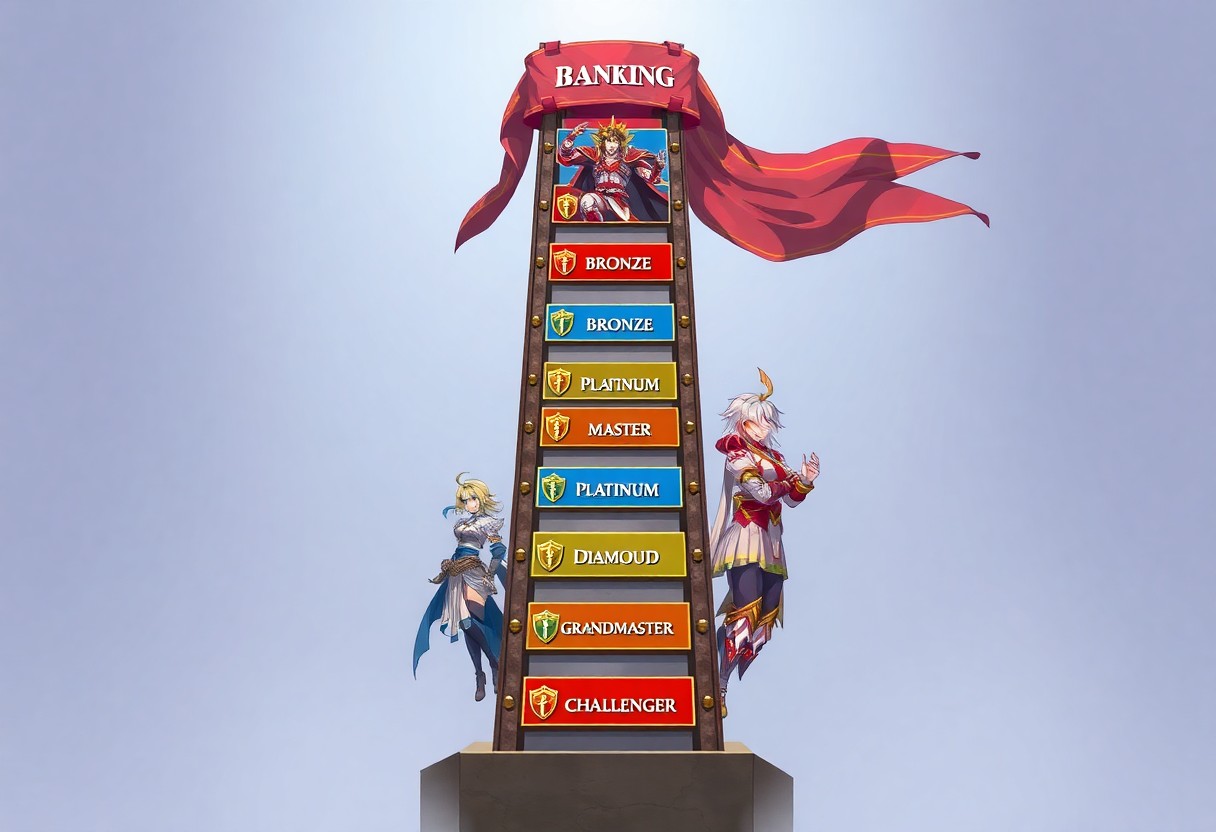
Just understanding the League of Legends ranking ladder is vital for players aiming to improve. Each division, from Iron to Challenger, presents unique challenges and requirements. This guide breaks down the ranking system, offering insights into how placements and divisions impact gameplay and progression.
The Core Mechanics of the Ranking Ladder
Understanding Matchmaking Rating (MMR) versus Visible Rank
Matchmaking Rating (MMR) operates behind the scenes, serving as the hidden numerical value representing a player’s skill. This metric influences matchmaking outcomes, determining which opponents and allies a player faces in ranked matches. Players may be unaware of their exact MMR, but it is pivotal in shaping their overall experience in the game.
Visible rank, on the other hand, reflects a player’s competitive standing in the game. Players climb the ladder through winning matches, impacting their visible rank. While MMR influences rank progression, the relationship isn’t direct, generating disparities between what players believe their skill level is versus what their MMR suggests.
How League Points (LP) are Calculated and Distributed
League Points (LP) reflect a player’s progress in the ranked system, allocated based on match outcomes. Wins yield LP, while losses deduct points, directly impacting a player’s rank and division. Various factors, including match duration and opponents’ MMR, can influence how much LP is gained or lost in each game.
Distribution of LP occurs after each match, with performance metrics also coming into play. Exceptional performance, even in a loss, can yield a minimal LP gain, while underperforming in a win might lead to a reduced LP increase. This dynamic ensures that both victories and individual contributions are recognized.
Winning or losing a match contributes significantly to LP distribution. Players gain LP for victories, while losses result in deductions. Additionally, performance metrics, such as KDA and objective control, can modify the points gained or lost, recognizing the impact of individual skill during matches.
The Role of Performance Consistency in Rank Progression
Performance consistency plays a critical role in achieving rank progression. Regularly performing well can lead to steady LP gains, enabling advancement through divisions and tiers. Irregular gameplay can result in frustrating plateaus or demotions, underscoring the importance of maintaining a positive win-loss record over time.
Consistency fosters trust within the matchmaking system, allowing players to face appropriately challenging opponents. Players who can sustain their performance over consecutive matches see favorable results, while erratic gameplay can stunt progress, emphasizing the need for stable performance in ranked settings.
Relying on consistent performance helps solidify rank progression. Players who maintain a steady win rate not only climb faster but also build a reliable track record within the game’s ecosystem. A strong focus on individual performance, team dynamics, and maintaining a positive attitude across multiple matches often yields the best long-term results in rank advancement.
The Structure of the Tier System
Breakdown of Divisions from IV to I
Each rank in League of Legends contains divisions that represent skill levels within that rank. Division IV marks the beginning of the climb, while Division I indicates a player’s upward momentum toward the next tier. Unlocking Division I requires consistent performance and synergy with teammates, showcasing a higher level of game understanding.
Progressing through these divisions demands not just mechanical skill but also strategic awareness. The shift from Division IV to III, then II, ultimately culminates in achieving Division I, where players often face more challenging opponents and intense competition.
The Significance of Regional Server Populations
Server populations directly influence matchmaking and overall competitiveness. Regions with larger player bases typically experience quicker matchmaking times and a more diverse pool of opponents, enhancing the competitive environment. Conversely, lower population servers may result in longer wait times and repeated encounters with the same players.
A smaller server also means a limited variety of playstyles, which can hinder player growth. Understanding these dynamics is imperative for aspiring challengers aiming to improve their rankings effectively.
Visual Indicators and Ranked Borders
Visual indicators, including ranked borders and profile icons, reflect a player’s achievements within the ranking system. These elements not only serve as a badge of honor but also provide instant recognition of skill level to others. Each tier showcases distinct designs, with a more ornate border signifying higher ranks.
Ranked borders evolve as players progress, making them a point of pride and motivation for improvement in competitive play. Distinct designs enhance the sense of accomplishment associated with climbing the ladder.
The Placement Process and Initial Seeding
The placement process in League of Legends serves as the starting point for ranking new players or those returning for a new season. This includes a series of placement matches that determine initial rankings based on performance. Factors such as individual skill, champion familiarity, and match results weigh heavily during this evaluation phase, ultimately influencing where players land on the ranked ladder.
How New Accounts are Evaluated in Ranked Play
New accounts undergo a thorough evaluation during their initial matches to ensure a fair introduction to ranked play. Performance metrics such as kill/death ratios, teamwork, and overall game impact are analyzed to assign a suitable rank. New players are placed not solely based on wins but also on the quality of their gameplay.
Clarity comes from the importance of each match during this process. Every action and decision made in early games contributes to forming a player’s ranked identity, leading to potential placement within higher or lower divisions based on the results and overall contribution to team victories.
The Impact of Previous Season Performance on Placements
Previous season performance plays a significant role when players rank their accounts at the beginning of a new season. Generally, higher ranks from the last season can lead to a more favorable placement, whereas lower ranks may require additional matches to adjust appropriately. This design encourages players to maintain or improve their skills over time.
A notable aspect involves the matchmaking system referencing past performances to adjust placements accordingly. Players accustomed to higher-tier gameplay could find themselves facing tougher opponents immediately, setting a challenging tone for their ranked journey from the get-go.
Maximizing LP Gains During the Initial Ten Games
Maximizing LP gains during the initial ten games is important for establishing momentum in ranked play. Focusing on teamwork, improving individual skill, and choosing champions that align with personal strengths can create better outcomes. The initial games often set the tone for future matches, making each win considerably impactful.
Understanding the matchmaking nuances can also heighten LP rewards. Winning against higher-ranked opponents yields more LP compared to victories over lower-ranked ones, making it imperative to focus on challenging matchups while leveraging strengths in-play strategies.
Navigating the Lower Tiers: Iron, Bronze, and Silver
Common Gameplay Characteristics and Pitfalls
Lower tiers are often characterized by chaotic team fights and inconsistent decision-making. Players frequently lack map awareness, leading to missed opportunities for objectives and coordination issues during skirmishes.
Miscommunication is rampant, resulting in solo plays that undermine team strategies. Many engage in overextending, creating unnecessary deaths and snowballing for opponents.
Skill Requirements to Transcend the Entry-Level Ranks
Transcending Iron, Bronze, and Silver requires mastering fundamental mechanics and understanding game objectives. Familiarity with champion abilities and jungle paths can provide a significant advantage.
Improving teamwork and communication is vital. Developing the ability to assess situations and adapt strategies can set a player apart from peers.
Gaining insights into champion matchups also enhances performance. Knowing when to engage or retreat based on team compositions can lead to higher win rates and better experiences in low-tier games.
The Psychological Aspect of the “Low Elo” Experience
Players often face frustration stemming from a lack of consistency and unpredictable teammates. This mindset can lead to burnout and affect overall enjoyment of the game.
Maintaining a positive outlook becomes crucial, as negativity can spiral into poor performance. Focusing on personal improvement rather than blame can create a healthier gaming environment.
Addressing emotional responses to losses plays a pivotal role in progression. Cultivating resilience helps players remain engaged, even amid setbacks, allowing for calm self-reflection and gradual skill enhancement.
The Mid-Ladder Experience: Gold, Platinum, and Emerald
The Introduction of the Emerald Tier and Its Impact
The introduction of the Emerald tier has created a distinctive shift in the mid-ladder experience. Players now have a clearer progression path between Platinum and Diamond, allowing for more nuanced matchmaking and skill differentiation.
This new tier helps players refine their abilities while fostering competition. By bridging the gap, it reduces the overwhelming jump in rank, making the climb feel more achievable and encouraging a broader player engagement.
Mechanical Proficiency vs. Strategic Macro Play
Mechanical proficiency remains imperative in mid-tier ranks, but strategic macro play often takes precedence. Players must balance their individual skills with an understanding of game flow, objectives, and team dynamics.
Success hinges not just on individual mechanics but also on maximizing team synergy and positioning during critical engagements. This duality requires players to develop both their technical prowess and their game sense.
That balance often defines the skill level within Gold, Platinum, and Emerald. Mastering mechanics allows players to execute their plans effectively, while strategic awareness ensures they adapt quickly to changing situations on the battlefield.
Overcoming the Plateau in Mid-Tier Divisions
Plateaus in mid-tier divisions can be frustrating, as players often find themselves stuck despite significant effort. Recognizing limitations and adjusting gameplay strategies can help break through these barriers.
Engaging with community resources, including coaching and gameplay analysis, enables players to identify weaknesses and implement effective strategies, making improvement more attainable.
These plateaus arise from repetitive play styles and a lack of adaptability. Focusing on learning from losses and remaining open to feedback fosters steady progression and ultimately enhances gameplay effectiveness.
Reaching the Elite: The Diamond Tier
The Significant Skill Gap Between Diamond IV and Diamond I
Achieving Diamond IV represents a commendable level of skill, but the journey towards Diamond I reveals a stark contrast in gameplay. Players at this stage display greater game knowledge, refined mechanics, and a deeper understanding of team dynamics. Differences in decision-making speed and adaptability become increasingly apparent, often determining the outcome of matches.
Transitioning through these divisions requires not only consistency but also an enhanced ability to synergize with teammates. Many players find themselves struggling as they face opponents with a more polished approach to play. This skill gap becomes the defining factor for those aspiring to reach the upper echelon of the Diamond tier.
Understanding LP Gains and Losses in High-Stakes Matches
LP, or League Points, dictates a player’s standing in ranked play. In high-stakes matches, LP gains and losses can vary significantly based on multiple factors, including match performance and the skill level of opponents. Winning against higher-ranked players often yields greater LP rewards, while losses can severely impact overall standings.
Consistency in performance becomes paramount, as volatility in LP can result in fluctuating divisions and heightened stress. Understanding how LP adjustments work is vital for players aiming to maintain their position in the Diamond tier.
High-stakes matches might also influence the way players approach their gameplay. With each battle affecting LP crucially, players must remain focused and adapt strategies tailored to maximize wins. Being aware of these dynamics can lead to more favorable outcomes.
Preparation for the Transition to Apex Tiers
Preparing for the transition to apex tiers requires a strategic mindset and a commitment to self-improvement. Many players need to analyze their weaknesses and develop plans to enhance skills, such as map awareness and champion mechanics. Observing and learning from higher-ranked players can yield valuable insights into advanced tactics and decision-making processes.
Practicing consistently in solo queue is vital for improving individual performance, while also cultivating a strong understanding of team play. Preparing comprehensively ensures players are equipped to face the heightened challenges of apex tiers.
Transitioning successfully demands not just mechanical skill but also mental fortitude. Players should consider crafting a routine that balances practice with analysis, helping them adapt to the strategic complexity found in the highest ranks effectively.
The Apex Tiers: Master, Grandmaster, and Challenger
The Ladder Update Frequency and Daily Cutoffs
Updates to the league rankings occur regularly, ensuring that player standings reflect current performance. Resetting daily, the cutoffs for each division can shift based on players’ activity and win rates.
Players need to stay active to maintain their ranks, as daily assessments influence who gets promoted or demoted. As a result, consistent gameplay becomes important for those aiming to reach higher tiers.
Regional Slot Limits for Grandmaster and Challenger
Grandmaster and Challenger tiers impose regional slot limits, restricting the number of players that can occupy those ranks in each region. Each region has a set number of slots based on player population and competitive participation.
This structure aims to ensure that the top players truly represent the best in their regions, maintaining competitive integrity within the ranks.
Regional slot limits add an extra layer of challenge, as aspiring players must not only focus on their win rates but also compete against a fixed number of slots, increasing the pressure to perform consistently.
The Professional and Semi-Professional Ecosystem
The apex tiers serve as a springboard into professional and semi-professional leagues. Players at these ranks are scouted for teams and tournaments, making their performance critical for career advancement.
Talent from these divisions significantly contributes to the competitive scene, where many seek to turn their passion into a profession, leveraging League of Legends as a viable career path.
The professional and semi-professional ecosystem relies heavily on the tension and achievement within the apex tiers. Success in ranked play often leads to invitations to tournaments and team tryouts, creating a direct link between solo queue performance and one’s potential career in esports.
Promotion Series and Demotion Mechanics
The Removal of Inter-Division Promos and Current System
Riot Games has streamlined the ranking system by eliminating inter-division promotion series. Players now move between divisions simply based on their Matchmaking Rating (MMR) rather than needing to complete a best-of-three or best-of-five series. This change creates a smoother progression experience, as players will find their ranks more accurately reflect their current skill level.
The focus shifts to maintaining a consistent MMR, where wins and losses directly influence rank changes. This approach alleviates the pressure that often surrounded promotion series, making climbing the ladder feel less daunting and more accessible for players of all skills.
Demotion Protection and Shielding Indicators
Demotion protection safeguards players from dropping tiers after achieving a rank. This feature typically prevents demotion for a set number of games following a promotion, allowing individuals to adapt without immediate penalties. Shielding indicators signal this protection, marking a player’s status during their lower-performance phases.
In conjunction with this, players can feel more secure within their rank, knowing that they won’t be instantly demoted after a few losses. This mechanic reinforces a more forgiving environment where improvement remains feasible, even amidst challenges.
Demotion protection encourages players to remain engaged, as they have a buffer against immediate rank loss. Shielding indicators act as reassuring reminders, highlighting that a player’s rank might still be supported despite recent struggles.
How Tier Demotions Impact Your MMR Long-Term
Tier demotions can significantly affect your MMR over time. Dropping a tier generally results in lower matchmaking ratings, leading to matches against less skilled opponents. This can create a perceived imbalance in gameplay experiences, as players adjust to new ranks.
Repeated demotions, if not managed, exacerbate issues with confidence and skill assessment. Maintaining a stable rank fosters consistent gameplay, allowing for growth without the setback associated with moving down tiers.
Understanding how tier demotions impact MMR clarifies the importance of consistent performance. Maintaining a stable rank helps players focus on improvement and skill acquisition, rather than merely avoiding demotion.
Ranked Decay and Inactivity Constraints
Decay Rules for Diamond and Above
High-ranking players in Diamond and above face strict decay rules to maintain competitive integrity. Inactive players will lose their rank if they don’t participate in ranked games over a set period. Specifically, inactivity for 28 days leads to a reduction, typically resulting in dropping one tier. This encourages players to stay engaged with the game.
Decay impacts can be particularly punishing for those who might be busy or unable to play consistently. A gradual demotion may occur every month of inactivity, incentivizing ongoing participation in ranked matches to avoid unwanted drops.
The Banked Games System in Apex Tiers
Players in Apex tiers can benefit from the Banked Games System designed to prevent decay. This system allows players to bank a certain number of matches they can use to offset inactivity without losing rank. If a player has banked games, these matches can be played when returning from a break to maintain their current rank.
Banked games provide an imperative buffer for active players, allowing them some breathing room during real-life commitments. This system promotes a balanced experience for dedicated players who might otherwise struggle with decay due to unavoidable absences.
Strategies to Maintain Rank During Periods of Absence
Maintaining rank during absences can be challenging, but certain strategies can mitigate the impact of inactivity. Scheduling regular game sessions, even if brief, helps keep your rank stable. Additionally, participating in normal games can keep skills sharp and reduce the impact of decay.
Regular game participation, even outside of ranked matches, contributes significantly to maintaining skills and awareness. Establishing a play routine not only preserves your rank but also enhances your gameplay when returning to competitive matches.
Seasonal Splits and Ranked Resets
The Transition Between Split 1, Split 2, and Split 3
Each split in League of Legends introduces new dynamics and challenges for players. Split 1 generally sets the tone for the season, while Split 2 brings adjustments based on player feedback and performance metrics. By Split 3, the rankings reflect both the player’s development and the evolving meta, often rewarding those who adapt successfully.
Adjustments to ranks occur between these splits, pushing players to reassess their strategies and prove their skills. Players often find that the competition becomes fiercer as the season progresses, requiring constant improvement to maintain or elevate their ranks.
Soft Resets versus Hard Resets Explained
Soft resets maintain players’ tiers but reset the LP (League Points) based on their performance in the previous split. This encourages players to refine their skills without losing their foundational progress. In contrast, hard resets can shift players down in rank, requiring them to rebuild their standing from a lower tier.
Both reset types impact the competitive environment differently; soft resets keep players engaged at their current skill level, while hard resets can create a more volatile ranking system. Understanding the nuances of these resets helps players plan their approach for each split.
Soft resets create a balanced competitive atmosphere, allowing players to strive for improvement without the risk of significant rank loss. Hard resets provide a clean slate, increasing the challenge as players must navigate through lower tiers before regaining their previous standings.
Seasonal Rewards: Victorious Skins and Honor Requirements
Seasonal rewards in League of Legends typically include victorious skins for players who achieve high ranks. Achieving these skins not only showcases a player’s skill but also serves as a badge of honor within the community. Honor requirements play a significant role in determining eligibility for these rewards, promoting positive behavior and teamwork.
Players must meet certain honor levels by maintaining a respectful attitude and demonstrating good sportsmanship. Securing a victorious skin becomes a mark of commitment, illustrating both skill and character in the competitive scene.
Victorious skins reward not just performance but also adherence to the game’s community standards, reinforcing the importance of both skill and positive gameplay. Meeting honor requirements ensures that players can proudly display their achievements while contributing to a healthier gaming environment.
Matchmaking Dynamics: Solo, Duo, and Flex Queue
Differences in Competitive Integrity Between Queues
Solo Queue emphasizes individual skill, as players rely solely on their own abilities to climb the ladder. This system fosters genuine competition, with every match reflecting a player’s true MMR. Players often face similar skill levels, leading to fairer outcomes and authentic experiences.
Duo Queue adds a layer of strategy through teamwork, allowing players to pair with friends. This dynamic creates variations in matchmaking, as the combined skills of two players can influence the overall balance of a match, sometimes skewing pure competitive integrity.
The Impact of Duo Queuing on MMR and Match Difficulty
Duo Queuing affects MMR significantly, as players frequently enjoy the synergy of coordinated play. Improved coordination often leads to greater win rates, propelling duo teams to higher ranks more rapidly than solo players. This acceleration can create disparities in match difficulty.
Higher-ranked duo teams may encounter opponents who are individually skilled but lack cohesive teamwork. This mismatch can frustrate players, leading to uneven competition and an experience that differs from solo play. Understanding these dynamics is imperative for anticipating the challenges each queue presents.
Understanding the Separate Ranking Systems for Flex Play
Flex Queue operates under distinct ranking criteria compared to Solo/Duo modes, allowing for a blend of competitive styles. Players can form teams of varying sizes, which introduces different strategies and synergy levels. This flexibility in composition may create unique matchups and challenges.
Understanding Flex Rankings means recognizing that performance is influenced not only by individual skill but also by team dynamics. Players may face opponents who excel in specific team compositions, altering how each match unfolds and ultimately affecting ranking progression.

Factors Influencing LP Velocity
LP velocity is affected by several key elements that determine how quickly players climb the ranks. Understanding these factors can be important for improving your rank. The primary influences on LP gains and losses include:
- Win/loss streaks
- Matchmaking Rating (MMR)
- Game performance and statistics
- Team composition
- Game mode and queue type
Recognizing these elements allows players to adjust their strategies accordingly and optimize their climb.
The Concept of “MMR Hell” and How to Correct It
“MMR hell” refers to a perceived stagnation where players feel trapped in a rank due to consistently matching with players of lower skill. Escaping this situation requires a focus on self-improvement rather than blaming teammates. Analyzing games for personal mistakes can provide insights into what needs to change.
Implementing changes in gameplay, such as focusing on objective control or mastering a specific champion, can break the cycle. Strengthening skills will not only improve individual performance but also contribute to better team outcomes.
Win Streaks, Loss Streaks, and Their Mathematical Impact
Streaks play a significant role in determining your LP changes. Winning several games in a row typically results in increased LP gains due to positive matchmaking adjustments. Conversely, a series of losses can heavily penalize LP accumulation, reflecting the matchmaking system’s responsiveness to player performance.
Mathematically, each streak impacts your MMR, which directly correlates with LP gains. A prolonged win streak can result in unexpectedly large LP boosts, while a loss streak can drop you out of favorable matchmaking brackets.
Evaluating your performance during streaks reveals patterns that can be addressed. Consistency in gameplay showcases the importance of maintaining focus and adapting strategies during both wins and losses.
The Relationship Between Game Length and Rank Gains
Game length can have a direct impact on LP gains. Shorter games often result in less influence on the overall MMR changes, while longer, intense matches might lead to more significant shifts in LP. This variance is influenced by the strategic depth and complexity of extended gameplay.
Players should be aware that longer games may provide more opportunities for impactful performance, which can contribute to greater LP rewards during well-executed matches.
Understanding how game duration affects LP changes can help players adjust their strategies. Engaging in lengthy, competitive games is not only about securing a win but also about how to maximize performance in the situation at hand.
Advanced Strategies for Ladder Climbing
- Focus on improving individual mechanics.
- Adapt playstyle based on matchup dynamics.
- Prioritize communication with your team.
- Maintain a consistent champion pool.
- Study the meta and adjust strategies accordingly.
| Key Strategy | Description |
| Champion Pool Optimization | Use a limited number of champions for mastery. |
| Role Specialization | Choose roles that complement your strengths. |
Champion Pool Optimization and Role Specialization
Choosing a small, versatile champion pool allows players to master their mechanics and strategies without getting overwhelmed. Focusing on champions that fit your preferred playstyle enhances decision-making and game awareness.
Specializing in a specific role deepens understanding of matchups and dynamics, leading to better positioning and teamwork. Committing to a role ensures proficiency, boosting confidence in high-pressure scenarios.
Utilizing Third-Party Analytical Tools for Meta Tracking
Third-party tools offer valuable insights into the current meta, allowing players to track champion win rates and overall effectiveness. Using these resources not only informs champion selection but also helps players identify emerging trends in builds and strategies.
While various tools exist, focusing on platforms that provide match histories and detailed analyses can dramatically improve gameplay. Many tools also feature community feedback, adding layers of knowledge to individual learning.
By regularly engaging with these analytical tools, players stay updated on shifts in the meta and can quickly adapt their strategies. Consistency in following meta changes can provide a competitive edge when climbing the ranks.
The Importance of Reviewing VODs and Mental Fortitude
Reviewing VODs helps players identify mistakes, improve decision-making, and refine mechanics. Analyzing past performances allows for understanding patterns and adjusting tactics in future games, leading to continual growth.
Building mental fortitude is equally vital. Maintaining focus during challenging matches and managing tilt can significantly enhance overall performance. Cultivating a strong mindset promotes resilience and adaptability in games.
Reviewing your VODs while committing to mental discipline is a multidimensional approach to climbing the ladder. By understanding your gameplay deeply and maintaining psychological stability, significant improvements are achieved over time.
Conclusion
Considering all points, the League of Legends ranking ladder serves as a structured system to categorize players from Bronze to Challenger. Each division reflects skill levels, with promotion and demotion depending on match performance. Understanding these tiers helps players recognize their standing and strive for improvement.
The ranking system encourages competition and personal development within the game. By setting clear benchmarks, players can track their progress and understand the expectations associated with each division, thereby motivating themselves to enhance their skills and strategy.
Q: What are the divisions in League of Legends ranked play?
A: League of Legends features nine divisions: Iron, Bronze, Silver, Gold, Platinum, Diamond, Master, Grandmaster, and Challenger. Each division, except for the highest tiers, is divided into four tiers, from IV (lowest) to I (highest). Players start in Iron and can rank up through matches based on their performance.
Q: How does Ranked LP (League Points) work?
A: Players earn or lose LP based on match outcomes. Winning increases LP, while losing decreases it. Accumulating enough LP allows players to promote to a higher division. Conversely, losing all LP in a division can result in demotion to a lower one. The amount of LP gained or lost depends on match performance and the rank of opponents.
Q: What factors determine a player’s rank in League of Legends?
A: Match performance is the primary factor influencing rank. Kills, deaths, assist ratios, and objectives completed impact LP gain. Winning consistently against higher-ranked opponents can lead to faster rank progression. A player’s matchmaking rating, which reflects skill, also plays a significant role in determining rank.