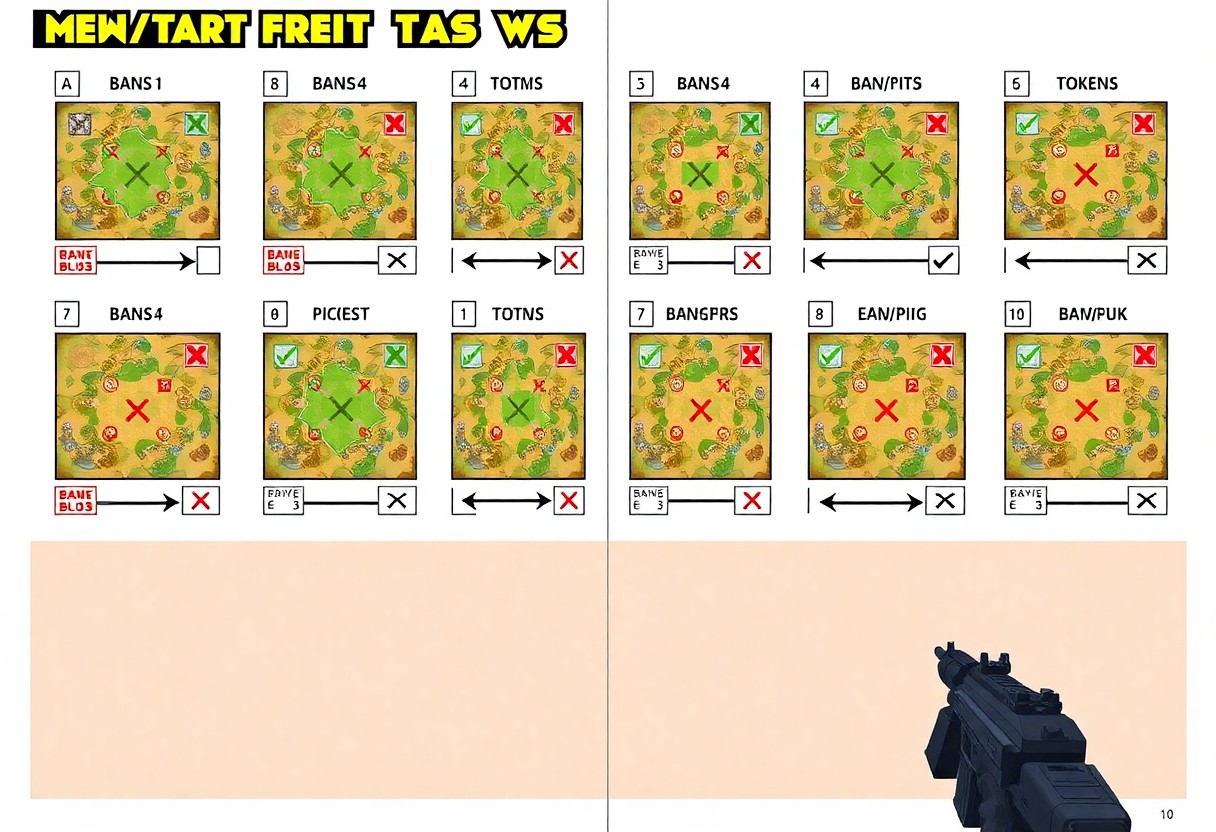
It’s important for teams to master map veto strategies in Counter-Strike to gain a competitive edge. This listical breaks down the top 10 effective tactics to enhance your team’s map selection process and optimize performance in crucial matches.
Ban Opponent’s Strongest Map
Analyze Win Rate Statistics
Examining a team’s win rate on specific maps provides insights into their strengths and weaknesses. High win percentages signal a team’s proficiency, making those maps prime candidates for bans. By analyzing historical data, teams can identify which maps boost their opponents’ performance substantially.
Data analysis should extend to relevant matchups and opponent strategies. Understanding how certain maps facilitate the enemy’s playstyle reveals critical information. This strategic knowledge allows teams to adjust their bans effectively, targeting the maps that contribute most to their opponent’s success.
Neutralize Star Player Comfort
Targeting a star player’s preferred maps reduces their impact on the game. Even top players depend on specific environments to excel. Forcing them into unfamiliar territory can disrupt their rhythm and overall team dynamic.
An effective ban places pressure on the opponent’s key player, forcing them to adapt to new strategies and playstyles. This strategy not only diminishes their effectiveness but also disrupts team cohesion. When star players are uncomfortable, their performance declines, providing a significant competitive edge to the banning team.
Pick Most Comfortable Map
Rely on Practiced Utility
Selecting a map where players are most familiar with their utility usage enhances performance. Practiced smokes, flashes, and molotovs can drastically change the game’s outcome, allowing teams to control areas more effectively. Familiarity with tosses and timings can also lead to surprising plays that opponents may not expect.
Focus on Team Synergy
Choosing a map that supports existing team dynamics enhances communication and strategy execution. Teams that regularly practice on certain maps develop a shared understanding, leading to quicker decision-making during matches. This synergy often translates into improved teamwork, allowing for more fluid coordination.
On maps where team members have previously played together, roles and responsibilities can be more effectively assigned. This understanding reduces confusion, fostering a collaborative environment that enhances both offense and defense. Teams able to anticipate each other’s movements often find themselves a step ahead of their opponents.
Target Opponent’s Permaban
Identify their weakest link
Every team has a map they struggle with, often reflected in their permaban. Analyzing opponent statistics can reveal patterns, indicating which maps lead to their losses. Focus on their performance trends and any consistently poor results against specific teams.
Targeting this weakness allows your team to gain an upper hand. By selecting a map they are uncomfortable with, you can exploit gaps in their strategy and player coordination. This can lead to significant advantages in match preparation and execution.
Force tactical discomfort
Forcing tactical discomfort involves choosing maps that disrupt an opponent’s preferred strategies. Utilizing maps that challenge their typical playstyle can lead to confusion and disarray on their part. When teams are forced into unfamiliar territory, they’re more likely to make mistakes.
This strategy hinges on understanding your opponent’s strengths. A map that favors vertical gameplay may force a team that typically excels in horizontal engagements into a defensive stance. This tactic creates openings for your team to capitalize on, shifting the match dynamics in your favor.

Influence Final Decider Map
Manipulate Final Ban Stage
Teams can influence their final map by strategically targeting maps that opponents prefer during the ban phase. This tactic not only limits the enemy’s options but also increases the likelihood of selecting a favorable map in the decider. Understanding opponent preferences based on previous matches can provide valuable insights for this strategy.
A targeted approach during the final ban stage often leads to a psychological advantage. When teams face unexpected bans, their comfort levels may decrease, opening opportunities for the opposing squad to exploit weaknesses effectively.
Prioritize Neutral Ground
Selecting maps that both teams consider neutral can balance competitive dynamics. Neutral maps reduce the advantage typically gained by one side, fostering an environment where skill, strategy, and teamwork become the deciding factors. Maintaining map veto integrity by avoiding highly favored picks can level the playing field.
Neutral maps, like Mirage or Dust II, often appeal to both teams due to their balanced layouts. This allows teams to rely more on their inherent skills rather than map-specific advantages. Such maps encourage adaptability and preparation, where a team’s performance hinges on execution rather than environmental familiarity. Focusing on these grounds can lead to greater consistency and unpredictability in outcomes.
Use Consistent Permaban Strategy
Optimize practice efficiency
Focusing on specific map bans allows teams to streamline their practice sessions. By consistently removing a particular map, players can concentrate on strengths rather than weaknesses. Dedicated practice on a reduced map pool enhances skill development in core strategies and executes game plans more effectively.
This method encourages players to become specialists in their remaining maps. Mastery over fewer maps leads to improved coordination and communication during matches. Efficiency in practice translates directly to performance, making every session more impactful.
Simplify strategic preparation
Consistent bans lead to straightforward strategic discussions. With a limited number of maps to prepare for, teams can refine their tactical approaches without the distraction of an ever-changing map pool. Focused preparation allows for deeper analysis of opponents’ tendencies and strengths.
Consistent map bans enable clear strategic frameworks, making it easier for players to understand their roles and responsibilities. This clarity fosters more effective teamwork, which is critical in high-stakes matches. By eliminating uncertainty, teams can develop targeted game plans that maximize their chances of success against specific opponents.
Bait Opponent Into Trap
Mislead through match history
Analyzing past match history can reveal patterns, but intentional misinformation can disrupt opponents’ expectations. Players often rely on previous encounters to gauge strategies. By altering playstyles or positions in subsequent games, teams can induce unnecessary risks from their adversaries. This approach creates opportunities to capitalize on misjudgments.
Using misleading statistics can enhance this strategy. Highlighting certain games where a team performed poorly can lead opponents to assume those weaknesses are consistent. Teams can then play against those assumptions, drawing opponents into traps they didn’t foresee.
Create strategic decoys
Strategic decoys serve as an effective method to mislead adversaries and create uncertainty. Deploying bait players to simulate activity in targeted locations can divert attention away from real objectives. By using grenades or sound cues, teams can amplify the illusion, leading enemies to misallocate resources and positioning.
Decoys can significantly affect opponents’ decision-making processes. Creating scenarios where visible distractions lure the enemy into vulnerable positions allows other teammates to exploit openings. Smartly timed and placed decoys can make a crucial difference, shifting momentum in favor of the baiting team. Understanding opponent psychology enhances the effectiveness of this strategy.
Prioritize Favorable Side Selection
Evaluate Defensive Advantages
Choosing the right side can heavily influence a team’s performance. Some maps favor the defensive side due to chokepoints and sightlines, allowing teams to set up advantageous positions. Assessing these defensive advantages helps in determining which side could provide a winning strategy.
Teams that focus on their defensive strengths often find success when they start on that side. Understanding map layouts and knowing when to fortify positions creates opportunities for holding off enemy advances effectively.
Consider Momentum Shifts
Momentum plays a significant role during matches, often shifting the game’s dynamics. A strong start on the favored side can lead to advantageous economic conditions that impact future rounds. If a team secures early rounds, psychological pressure mounts on the opposition, making it increasingly difficult for them to recover.
Recognizing patterns in momentum allows teams to capitalize on their advantages. When a team starts strong, it can exploit the enemy’s frustration, crafting strategies that maintain pressure and extend the lead. This understanding of momentum dynamics is vital for higher-level gameplay, where small advantages can dictate the outcome of entire matches.
Adapt To Current Meta
Study New Map Updates
Following map updates is crucial for maintaining an edge in competitive play. Changes can include terrain modifications, cover adjustments, and gameplay mechanics that can shift the map’s dynamics significantly. Regularly checking patch notes and engaging with community discussions helps players understand how these updates affect strategies.
Analyzing professional matches post-update allows players to observe how top teams adapt. Noticing new strategies and positioning can inform personal gameplay adjustments, ensuring a competitive approach remains aligned with current trends.
Master Fresh Utility Lineups
Utility plays a crucial role in Counter-Strike, and adapting to new lineups is important after map changes. Knowledge of modified terrain can open up new possibilities for smoke, flashbang, and molotov throws. Understanding these fresh lineups can disrupt enemy movements and control critical areas effectively.
Practicing utility lineups in offline modes allows players to solidify their understanding and execution without pressure. Players should record and memorize new trajectories, ensuring they can deploy their utility efficiently in high-stakes situations. Successful utility usage can turn the tide of a match, making mastery of these lineups crucial for competitive success.
Study Opponent’s Veto History
Predict Ban Sequences
Analyzing an opponent’s past veto patterns can reveal preferences in map bans. Teams often follow specific sequences based on strategies developed over multiple matches. By studying these sequences, one can anticipate which maps they are likely to ban or favor in upcoming matches.
Identifying trends in an opponent’s veto history highlights weak spots in their strategy. A team consistently banning certain maps might be vulnerable in others. Exploiting this knowledge can influence your own map selections, offering a strategic advantage.
Anticipate Primary Picks
Understanding an opponent’s primary picks aids in crafting effective counter-strategies. Familiar patterns in map selections often emerge, revealing favorites that align with their playstyle. Noting these preferences allows teams to prepare countermeasures, ensuring they are ready for the opposition’s strongest maps.
Teams tend to gravitate toward maps where they excel or feel most comfortable. Analyzing these tendencies can shift the balance of power in map selection. Fine-tuning strategies around anticipated picks not only enhances preparation but also destabilizes the opponent’s game plan, leading to critical advantages in the match.

Prepare Surprise Pocket Pick
Use hidden strategies
Utilizing hidden strategies can turn the tide in a match. Setting up unexpected positions or utilizing unconventional routes can catch opponents off guard. Effective communication within the team ensures these strategies are executed seamlessly, maximizing surprise elements.
Surprise high-tier opponents
High-tier opponents often rely on their experience and familiarity with common tactics. Employing an unconventional playstyle or unexpected strategies can undermine their confidence and disrupt their game plan. Taking calculated risks may yield significant rewards against skilled adversaries.
Surprising high-tier opponents requires careful planning and understanding of their playstyle. Analyze their common strategies and counter them with tailored approaches. This unpredictability can create opportunities for early picks and capitalizing on over-aggression, allowing a team to establish control and momentum in the match.
Final Words
Following this exploration of map veto strategies in Counter-Strike, players gain critical insights into the decision-making processes that shape competitive play. Understanding the nuances of map preferences can significantly influence match outcomes, transforming how teams approach both their strategies and their preparation.
Analyzing the top 10 veto strategies reveals patterns that can help teams optimize their performance. This knowledge not only prepares players for future matches but also cultivates a deeper understanding of their opponents’ tendencies, ultimately refining gameplay effectiveness.
Q: What are the most important factors to consider when creating a map veto strategy in Counter-Strike?
A: Players should assess team strengths and weaknesses, analyze opponent tendencies, and consider overall map statistics. Specific map experience can heavily influence choices, as well as the current meta-game trends. Understanding how certain maps favor specific strategies or playstyles is key.
Q: Which maps are commonly banned by top teams and why?
A: Commonly banned maps include Inferno, Mirage, and Overpass. Inferno may be banned due to its potential for overwhelming defensive setups. Mirage often faces bans because of its balanced nature favoring well-coordinated teams. Overpass can be too punishing for teams lacking confidence in executing tactics.
Q: How can teams effectively counter their opponents’ veto strategies?
A: Teams can research opponent map preferences and past matches to anticipate bans. Utilizing an unpredictable veto approach can leave opponents guessing. Selecting maps that force opponents out of their comfort zone can create advantageous positions, especially on lesser-played maps where both teams may have less experience.