Siege ranks are important for gameplay, influencing matchmaking and player experience. Understanding rank distribution and seasonal resets helps players strategize their performance and improve. This post breaks down how ranks are categorized and the implications of seasonal resets on player standings.
The Evolution of the Ranking System: Ranked 1.0 vs. Ranked 2.0
The transition from MMR-based matchmaking to the Hidden Skill system
Ranked 1.0 utilized a straightforward MMR system, which often led to unpredictable matchmaking and skewed player experiences. Players faced difficulties in determining their actual skill level due to frequent adjustments in MMR based on inconsistent performance.
The Hidden Skill system introduced in Ranked 2.0 addressed these issues by assessing player performance more discreetly. This allowed for a more tailored matchmaking experience, enabling players to compete against others of similar hidden skill levels while minimizing fluctuations in match quality.
Structural differences in visual progression and rank floor mechanics
Visual progression in Ranked 2.0 became more intuitive, showcasing ranks and divisions through clearer indicators. Players can now see both their current rank and the path to their next progression, enhancing motivation and engagement.
Rank floor mechanics also underwent a notable change, providing players with a safeguard against sudden rank drops. This ensures that players retain a sense of stability within their ranks, encouraging continued play without the fear of severe demotion.
By implementing these structural differences, Ubisoft created a more engaging ranking system. Players benefit from a clearer sense of achievement and a more stable competitive environment, reducing frustration associated with random rank demotions.
Why Ubisoft implemented the Ranked 2.0 overhaul for player retention
Player retention became a central focus for Ubisoft with the shift to Ranked 2.0. The revamped ranking system aimed to address the diminishing player base by offering a more rewarding and gratifying competitive experience.
Enhancements in matchmaking and progression instill a stronger sense of accomplishment among players. Positive feedback loops created through improved visual indicators and protection against rank drops encourage players to remain engaged over extended periods.
Understanding Hidden Skill and Rank Points (RP)
The distinction between your visual rank and your actual matchmaking value
Your visual rank in Rainbow Six Siege represents a player’s displayed status but often masks a deeper complexity. Actual matchmaking value (MMR) may differ significantly from the visible rank, impacting how matches are formed.
How the system calculates RP gains and losses based on match difficulty
Rank Points (RP) are adjusted based on the perceived difficulty of matches faced. Winning against higher-ranked opponents yields more RP compared to victories over lower-ranked players.
Defeats against tougher adversaries may result in smaller RP losses, whereas losing to lower-ranked opponents incurs steeper penalties. This adaptive system encourages players to take on challenging matches for more rewarding outcomes.
The algorithm uses player performance metrics, such as kills and deaths, alongside the ranks of opponents and teammates, to determine the appropriate RP adjustments. This ensures that players are rewarded consistently for challenging engagements, enhancing competitive integrity.
The role of the uncertainty factor in stabilizing your seasonal position
An uncertainty factor within the ranking system helps to stabilize a player’s seasonal position. This metric accounts for variable match performances, particularly in the early stages of a season.
As players establish consistency, the uncertainty diminishes, resulting in more predictable RP changes. This mechanism aims to prevent immediate fluctuations in rank based on sporadic performance.
Understanding the uncertainty factor’s implications allows players to see how initial performances can affect long-term ranking outcomes. A period of adjustment ensures fair evaluation, ultimately leading to a more accurate representation of skill over time.
The Rank Hierarchy: From Copper to Champion
Breakdown of the fundamental tiers: Copper, Bronze, Silver, Gold, and Platinum
Copper through Platinum ranks serve as the foundational tiers in Rainbow Six Siege. Each tier represents a player’s skill level, with Copper being the lowest and Platinum the highest before reaching the elite brackets. Players progress through these ranks by earning rank points through wins and consistently performing well in matches.
Navigating the elite brackets: The requirements for Emerald, Diamond, and Champion
Emerald, Diamond, and Champion ranks are for those who excel in gameplay and teamwork. Achieving Emerald requires significant skill and consistency, while Diamond tier demands a near-flawless approach to matches. Reaching Champion entails being in the top percentage of players based on both skill and performance metrics.
Elite rankings are not just about winning; players must maintain high win ratios and teamwork efficiency to climb these competitive brackets. Champion status is also subject to a leaderboard system, reflecting the top players globally.
The prestige of the Top 750: Understanding the global Champion leaderboard
Top 750 players gain recognition in the Champion leaderboard, showcasing the crème de la crème of Rainbow Six Siege. This leaderboard highlights the best of the best, creating a competitive atmosphere among players striving for ranking supremacy. Achieving a spot requires not only consistent victories but also exceptional individual performance.
Standing in the Top 750 can significantly enhance a player’s reputation within the community. It indicates a mastery of game mechanics, strategy, and adaptability, which are crucial for competing at the highest levels of Rainbow Six Siege.
Deep Dive into Rank Distribution: Analyzing the Bell Curve
Statistical analysis of where the majority of the player base resides
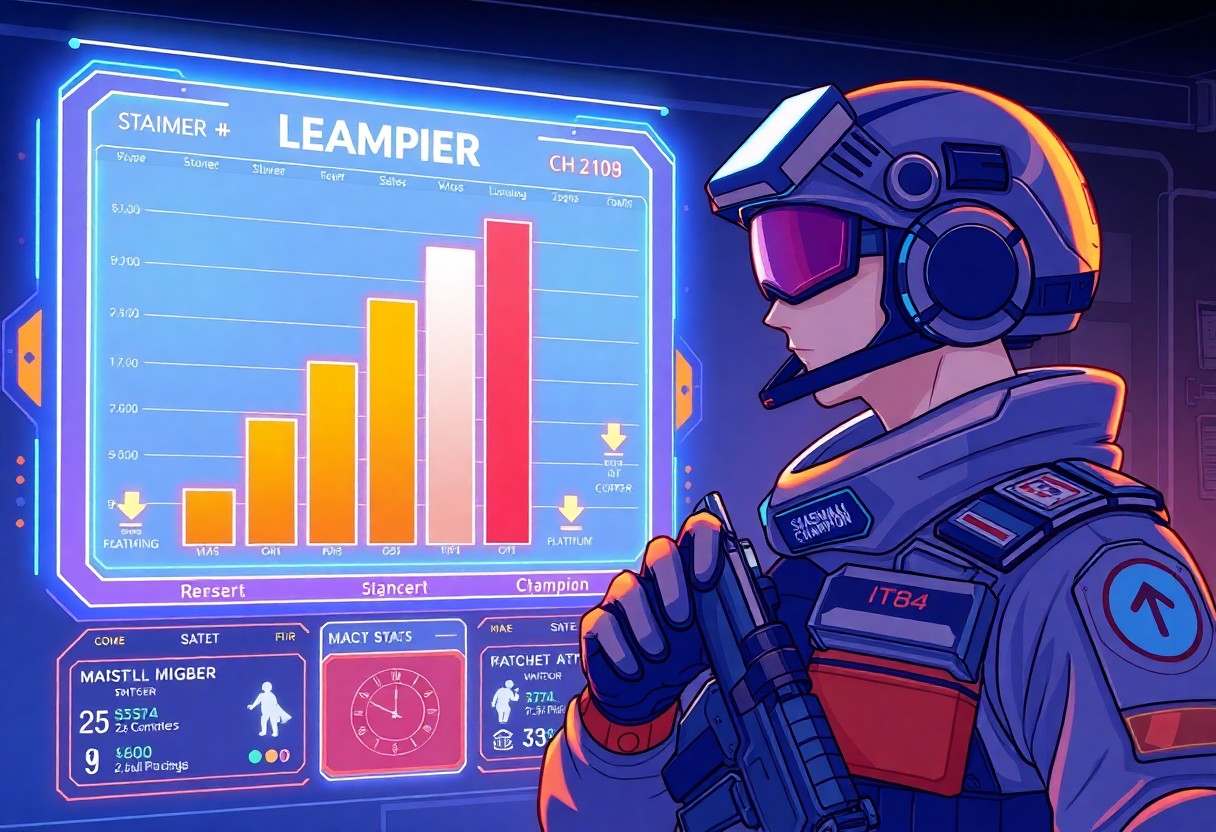
Most players in Rainbow Six Siege fall within the Gold and Silver ranks, creating a pronounced bell curve. This concentration highlights the game’s accessibility, as many players enjoy similar skill levels, leading to competitive matches.
Typically, a smaller percentage achieves higher ranks, with those in lower tiers contributing to the majority. This pattern showcases the game’s design, ensuring that casual players remain engaged without feeling overwhelmed by elite competition.
Comparing rank density between PC, PlayStation, and Xbox platforms
Examination of rank density reveals notable differences across platforms. PC players tend to dominate both the higher and lower tiers, reflecting distinct gameplay styles and skill engagement compared to console players.
PlayStation and Xbox users often converge around the mid-ranks, indicating a balanced distribution that might stem from shared competitive environments. These disparities offer insights into platform-specific player behavior and preferences.
Rank Density Comparison by Platform
| Platform | Player Distribution |
|---|---|
| PC | Higher density in Platinum and Diamond |
| PlayStation | Higher density in Gold and Silver |
| Xbox | Balanced distribution across mid-ranks |
Detailed analysis further illustrates how PC players frequently reach higher ranks through faster reaction times and improved mechanics. In contrast, the console experience often promotes teamwork and strategy, impacting rank densities differently across platforms.
Identifying the “Gold Plateau” and the rarity of the Champion tier
Noteworthy is the “Gold Plateau,” where a significant number of players stagnate due to skill challenges. This plateau acts as a barrier for many, as moving beyond Gold requires both refined skills and strategic understanding.
The Champion tier, conversely, remains an exclusive achievement, reflected in its sparse representation among the player base. Such rarity underscores the competitive nature of Rainbow Six Siege, making it a coveted goal for dedicated players.
Observing the distribution illustrates how the Champion tier attracts only the top players, emphasizing skill and commitment. The disparity between Gold and Champion highlights the game’s rigor, as only a few can consistently outperform the majority.
The Mechanics of the Seasonal Reset
Defining the “Soft Reset” and its Impact on Your Hidden Skill Rating
Seasonal resets utilize a “soft reset” mechanic, which slightly modifies player ranks without completely wiping progress. This approach prevents drastic changes in skill levels while providing an opportunity for recalibration. The hidden skill rating, determined by performance, continues to function behind the scenes, influencing matchmaking.
Such a system allows players to maintain a competitive edge while promoting fair matchups. By not resetting the hidden skill rating entirely, the game ensures that players are effectively matched against others with similar capabilities, even after the season change.
Why Every Player Begins the Visual Climb from Copper V Each Season
Beginning the season at Copper V creates a level playing field, allowing all players to earn their ranks anew. This methodology encourages everyone to prove their skill level afresh and fosters a sense of progression. As players advance through visible ranks, their performance becomes the primary focus.
This structure enhances the competitive nature of the game, as players must demonstrate their abilities to climb the ranks. Starting from a common baseline instills motivation, driving players to improve and achieve higher ranks while contributing to a more dynamic competitive environment.
How the System Preserves Competitive Integrity During the Transition Between Operations
Implementing seasonal resets helps maintain competitive integrity by creating an equitable environment for all players. Each season allows players to reassess their skills and adjust to any changes in gameplay dynamics. Through this mechanism, the game accommodates shifts in player performance with each operation’s unique context.
Seasonal transitions ensure that competitive play remains balanced and fair. This strategy assists in preventing disparities that may arise from previous rankings, promoting a healthy competitive climate where players can focus on skill development and consistent performance.
Matchmaking Algorithms and Fair Play Initiatives
How the algorithm balances squad averages to ensure competitive symmetry
Matchmaking algorithms use individual players’ Matchmaking Rating (MMR) to create balanced teams. By assessing the average MMR of each squad, the system ensures that players face opponents of similar skill levels. This approach prevents mismatches that could diminish the competitive experience and encourages fair play.
Each player’s recent performance contributes to their personal MMR, allowing the algorithm to dynamically adjust matchmaking. As a result, squads formed are designed to enhance competitive symmetry, making each match feel evenly matched and engaging for everyone involved.
The impact of MMR rollbacks on rank distribution and seasonal standing
MMR rollbacks can significantly alter rank distribution within a season. Players affected may find their ranks reset to lower tiers, impacting overall standings. This prevalence of rollbacks stems from measures aimed at restoring balance after disruptions like exploits or significant discrepancies in player performance.
When rollbacks occur, they create ripples across the matchmaking system, as players adjust their ranks in response to these changes. Understanding this impact helps clarify the shifting nature of rank distribution and the overall competitive environment.
Ubisoft’s approach to mitigating the influence of cheaters and boosters
Ubisoft actively works to reduce the impact of cheaters and boosters on the Rainbow Six Siege experience. Implementing strict anti-cheat measures, the developer monitors suspicious activity and penalizes players who break the rules. These initiatives serve to maintain a fair playing field for everyone.
Consistent updates and community feedback also drive improvements in these anti-cheat strategies. By fostering an environment where fair play is prioritized, Ubisoft aims to enhance player enjoyment and integrity within the game.
Squad Restrictions and Team-Based Matchmaking
The removal of MMR caps and its effect on playing with friends of different skill levels
Removing MMR caps allows players of varying skill levels to directly compete together without restrictions. This change promotes better social interactions, enabling friends to play together more freely, regardless of their individual ranks.
Consequently, players enjoy a more enjoyable experience, but this can also lead to challenges in matchmaking balance. Teams may face difficulties when trying to overcome disparities in skill, impacting overall performance in competitive matches.
How the system compensates for high-skill players queuing with lower-skill teammates
Matchmaking algorithms analyze player skill to create balanced teams. When a high-skill player teams up with lower-ranked players, the system adjusts parameters, placing them against similarly skilled opponents to maintain fairness.
This adjustment often results in the high-skill player facing tougher challenges, while lower-skill teammates benefit from the experience. Such mechanics aim to provide a competitive yet enjoyable atmosphere for all participants.
Adjustments typically include modifying the match’s overall MMR to better accommodate the team composition. By increasing the difficulty level for the higher-skilled player, the matchmaking attempts to ensure an engaging experience while still providing a fair challenge to all players on the team.
Strategies for optimizing squad composition to maximize Rank Point efficiency
Prioritizing a balanced squad that combines different roles can enhance Rank Point efficiency. Teams should consider incorporating individuals who excel in both support and damage-dealing roles to create synergy and cover various gameplay scenarios.
Coordinating playstyles and communication enhances tactical decision-making, which can significantly impact match outcomes. Establishing a diverse team composition leads to more effective execution of strategies, resulting in increased point gains.
Effective squad composition requires assessing each player’s strengths and weaknesses. By aligning players based on their preferred operators and roles, teams create an adaptable unit capable of responding to opponents’ tactics, further maximizing Rank Point efficiency.
The Role of Placement Matches in the Modern Era
The shift away from traditional ten-game placement sets
Players no longer rely solely on the traditional ten-game placement sets to position themselves accurately in the ranking system. Many seasons now feature a reduced number of matches, which reflects a faster onboarding for new players while allowing experienced ones to enter competitive play more swiftly. This shift promotes a more dynamic ranking experience, where skill can be assessed over fewer games, providing a clearer view of a player’s abilities from the outset.
Changing this structure encourages adaptability and quick strategic calibrations early in the season. As individual performance can fluctuate, the reduced placements seem to focus on more immediate metrics, rather than a lengthy preliminary evaluation. This transition injects a fresh urgency into early matchups, making each game critical for establishing a foothold in the ranks.
How early-season performance dictates the speed of your visual rank climb
Performance during the initial matches can dramatically influence rank progression in the early season. Winning significantly elevates a player’s visual rank much faster than consistent play later on, as these early victories are often weighted more heavily by the ranking algorithm. Consequently, an aggressive start sets the tone for the remainder of the season.
Players who excel during these crucial matches may find themselves climbing the ranks at an accelerated rate, while those falling short may feel the impact well into the season. Gaining momentum in the first few matches can lead to a much more favorable ranking trajectory, allowing for a more enjoyable experience overall.
This early performance can lead to significant discrepancies in rank visibility. Winning streaks not only boost a player’s rank quickly but also present the opportunity for immediate recognition and matchup advantages in subsequent games. Establishing a solid foundation can make the climb feel more manageable, reinforcing a player’s confidence and strategy as the season progresses.
Maintaining Hidden Skill consistency to avoid “hard-stuck” scenarios
Consistency in hidden skill plays a pivotal role in avoiding “hard-stuck” rank scenarios. Players must continually demonstrate their capabilities, translating raw skill into effective teamwork and gameplay strategies. Ensuring sustained performance helps mitigate the frustrations of being trapped at a particular rank, allowing for genuine progression based on evolving skills.
Failure to maintain this level can lead to stagnation, where a player finds themselves unable to break past certain ranks despite improving. By focusing on self-improvement and understanding one’s gameplay dynamics, players can navigate their ranks more effectively, steering clear of the pitfalls that lead to a perceived lack of advancement.
Seasonal Rewards and End-of-Season Incentives
Tier-based rewards: Exclusive Charms, Card Backgrounds, and Alpha Packs
Exclusive charms, card backgrounds, and Alpha Packs serve as incentives for players to strive for higher ranks. Each tier reached rewards players with unique items, enhancing their in-game identity and experience. These exclusive cosmetic items are a testament to a player’s skill and dedication throughout the season.
Players eagerly anticipate these seasonal rewards. The allure of obtaining rare charms and backgrounds often motivates them to push their limits, ensuring each match is both competitive and rewarding.
The accumulation of rewards: Receiving prizes for every rank passed
Advancing through the ranks comes with tangible benefits. Each rank reached grants specific rewards, creating a sense of achievement and driving players to keep climbing the competitive ladder. Players will appreciate the consistent reinforcement of their progress.
The psychological impact of seasonal rewards on player motivation
Seasonal rewards can significantly influence player engagement and motivation. The promise of unique cosmetics and prizes ignites a competitive spirit, pushing players to improve their skills. This ongoing pursuit of rewards fosters a dynamic gaming experience and encourages players to invest time in the game.
Incentives tied to rank progression create a positive feedback loop, where players feel accomplished with each rank-up. This feeling often leads to increased playtime and a stronger connection to the game, making seasonal resets an integral part of maintaining player interest.
Impact of Rank Distribution on the Meta and Gameplay
Rank distribution significantly shapes both the meta and gameplay dynamics in Rainbow Six Siege. As players climb through ranks, the overall skill level and strategies employed evolve, leading to varied gameplay experiences. Changes in operator accessibility and team coordination influence how matches unfold, emphasizing different tactics depending on the rank tier.
How Operator Pick and Ban Rates Fluctuate Across Different Rank Tiers
Operator pick and ban rates can vary greatly across ranks, reflecting diverse player strategies and preferences. In lower tiers, popular operators tend to dominate, while higher ranks showcase a more varied selection influenced by advanced team compositions and specific match needs.
The Difference Between “Low-Elo” Chaos and “High-Elo” Tactical Execution
Low-Elo gameplay often embodies chaos, characterized by disjointed strategies and individual plays overshadowing team coordination. Players frequently rely on personal skill rather than systematic approaches, leading to unpredictable match outcomes.
High-Elo matches, in contrast, emphasize tactical execution, where teamwork and strategy take precedence. Players engage in coordinated maneuvers, utilizing communication and established tactics to gain a competitive advantage. This structured approach often leads to more decisive victories, showcasing the evolution of player skill.
How Rank Distribution Data Influences Ubisoft’s Balancing and Patching Decisions
Rank distribution data serves as a critical reference for Ubisoft’s balancing and patching efforts. By analyzing trends in operator performance across ranks, developers can identify disparities and make informed adjustments to maintain competitive integrity. This data helps pinpoint which operators may require buffs or nerfs based on their effectiveness at various skill levels.
Analysis of rank distribution reveals patterns that highlight player preferences and challenges across the game’s ranks. Insights drawn from this data facilitate targeted improvements, ensuring that gameplay remains balanced and enjoyable for all players, regardless of their skill tier.
Strategies for Climbing the Ranks in Ranked 2.0
Maximizing the “Win Streak” bonus to accelerate Hidden Skill growth
Each match contributes towards your Hidden Skill, which directly affects your rank. To maximize this, aim for consecutive wins as they significantly boost your performance rating. Streaks not only result in higher MMR gains but also help establish a consistent skill level that aligns with your team’s capability.
Recording a series of victories creates a positive feedback loop that promotes further success in matchmaking. Focusing on teamwork and synergy during these streaks can provide a substantial edge, reinforcing advantageous play styles that benefit all team members.
The importance of communication, utility meta, and map knowledge
Effective communication is paramount in Rainbow Six Siege. Teams that share information about enemy positions, device placements, and strategic plans typically perform better. Understanding the utility meta maximizes your operator selections and allows for effective counterplay against the enemy team.
Map knowledge allows players to identify key entry points and strategic locations quickly. Familiarity with the terrain improves coordination and planning, making it easier to anticipate opponents’ movements and execute strategies successfully.
Communication isn’t just about calling out enemy locations; it involves discussing strategies and adjusting based on the flow of the game. Adapting operator choices to leverage the current meta enhances team effectiveness. Knowing maps well allows players to exploit their advantages and establish dominance through strategic positioning.
Analyzing personal match history to identify performance bottlenecks
Examining match history can reveal key insights into your gameplay weaknesses. By reviewing past performances, players can pinpoint specific patterns or errors that consistently hinder progress. Focusing on these areas results in targeted improvements that lead to better overall performance.
Data can help identify which operators or strategies yield the best results. Analyzing losses may uncover gaps in communication or teamwork that need addressing, guiding further practice and adjustment.
Verifying match history gives players a clear picture of their performance trends. By spotting recurring mistakes or unfavorable match-ups, players can develop more effective strategies moving forward. This reflective approach fosters a growth mindset, driving continuous improvement in skill and team dynamics.
Common Misconceptions and Troubleshooting Rank Issues
Debunking myths regarding “Hard-Stuck” accounts and RP stagnation
“Hard-stuck” accounts often spark confusion among players who believe their rank will never change despite their efforts. Many players assume that a lack of progression is due to skill, but the reality may involve external factors like matchmaking inconsistencies or lack of effective team synergy.
Some players think that losing streaks result in an irreversible decline in rank. In truth, matches’ outcomes can fluctuate based on various elements, and improvement can come with persistence and adaptation in gameplay strategies.
Addressing visual bugs and synchronization issues within the Ranked UI
Visual bugs can create misleading information about rank progression and performance. Players may notice discrepancies between their perceived and actual ranks due to these glitches. Troubleshooting often involves simple fixes like restarting the game, which sometimes resets the UI display.
Synchronization issues can lead to outdated information appearing in the Ranked UI. Players should ensure their game is updated to the latest version to minimize these discrepancies and enjoy a smoother experience in ranked matches.
Checking online forums or community resources helps pinpoint ongoing issues affecting the Ranked UI. Reporting any specific bugs through official channels ensures they are prioritized for fixes in future patches, promoting a fair competitive environment.
Understanding why you gain less RP as you approach your “true” skill level
Players find that as they near their “true” skill level, the rate of RP gain diminishes. This system is designed to calibrate rank closer to actual skill, ensuring that high-performing players do not dominate the lower tiers. Players may feel stuck, but this reflects their alignment with established skill brackets.
Competing against similarly ranked opponents leads to fewer RP gains because matches are more evenly matched. The ranking system rewards consistency rather than short bursts of performance, emphasizing long-term skill improvement over immediate results.
Commonly, the game’s design aims for balance, which involves a slower RP gain as players stabilize within their skill tier. Adjusting strategies or focusing on teamwork can boost progress, making the grind less daunting and more rewarding.
Future Outlook: Ubisoft’s Roadmap for Competitive Play
Potential adjustments to the RP algorithm for better transparency
Ubisoft plans to refine the RP algorithm to enhance player understanding of rank progression. Transparency in how rank points are calculated can demystify the ranking process, making it clearer for players to gauge their performance.
Increased clarity will likely lead to more player engagement in competitive modes. By openly sharing how factors such as match performance and team composition influence ranking, players can make more informed decisions in-game.
Enhancements to the Champion tier to increase competitive stakes
New features for the Champion tier are set to amplify the competitive atmosphere. Introducing seasonal tournaments and unique rewards in this elite category can encourage players to strive for a higher rank.
Creating exclusive challenges within the Champion tier will provide seasoned players additional motivation to enhance their skills. This not only promotes healthy competition but also draws new players into aiming for the top.
Long-term goals for maintaining a healthy and balanced rank distribution
Ubisoft’s strategy includes regular assessments of rank distribution to ensure a balanced player ecosystem. By analyzing data consistently, they can identify areas needing adjustment and prevent rank inflation, preserving competitive integrity.
Maintaining balance requires ongoing updates to matchmaking algorithms and seasonal resets. Through this approach, Ubisoft aims to create a dynamic environment where players can continually challenge themselves without overwhelming disparities in rank.
Summing up
To wrap up, Rainbow Six Siege’s rank distribution reflects player skill levels, affecting matchmaking and competitive balance. Seasonal resets introduce a new ranking system, prompting players to adjust strategies and recalibrate their performance to regain prior ranks.
The emphasis on skill tiers and seasonal transitions enhances the competitive environment, making achievements more rewarding. Understanding these dynamics helps players set realistic goals and engage more effectively in the game.

Q: How is the rank distribution structured in Rainbow Six Siege?
A: Rank distribution is divided into several tiers: Bronze, Silver, Gold, Platinum, Diamond, and Champion. Each rank has multiple divisions, with players progressing through these based on their match performance. The match outcome, individual contribution, and team performance will affect rank points earned or lost.
Q: What happens during seasonal resets in Rainbow Six Siege?
A: Seasonal resets occur at the start of each new season, impacting players’ ranks. Players typically lose a portion of their rank points, leading to a reset that encourages them to re-earn their rank. This process keeps the competitive environment fresh and challenges players to improve their skills.
Q: How do seasonal changes affect matchmaking in Rainbow Six Siege?
A: Matchmaking adjusts after a season reset, as players are placed according to their current rank, considering any changes in performance. New player distributions can lead to mixed skill levels in matches, making the early days of a season particularly varied in difficulty.