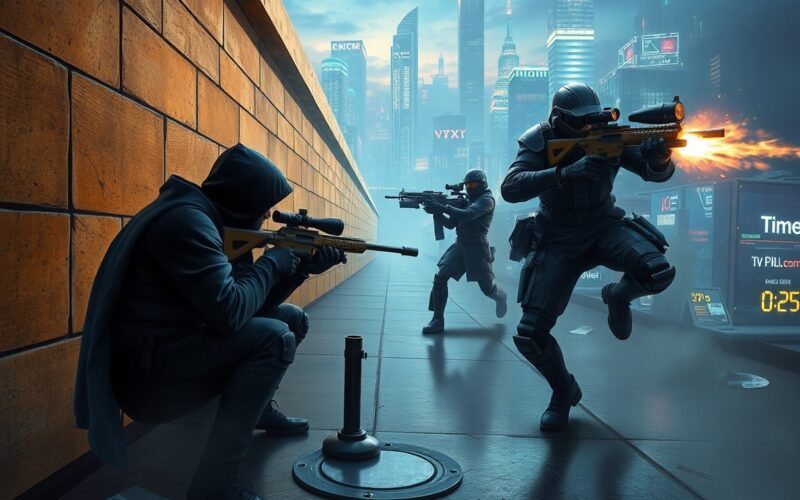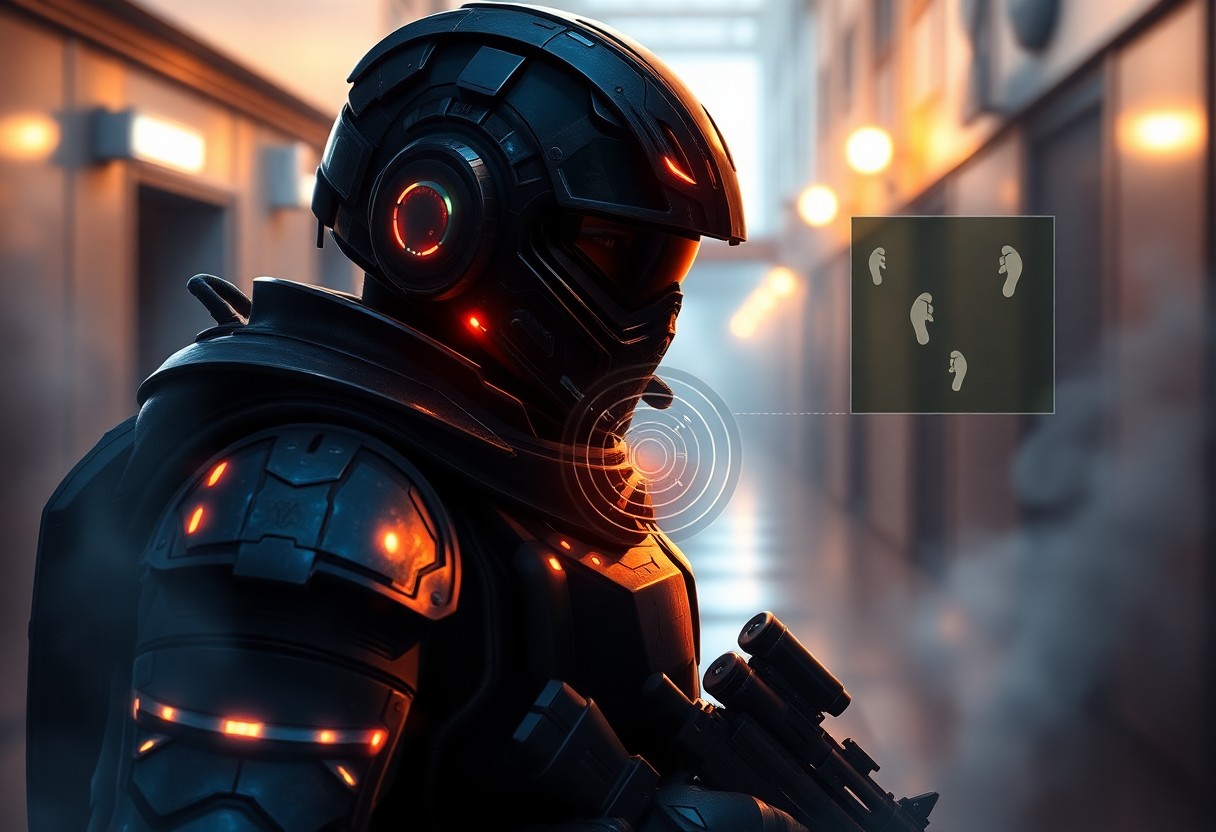
You can shape outcomes in Valorant by interpreting sound cues-footsteps, weapon switches, ability effects, and reloads-allowing players to predict enemy positions, timing, and intent. Systematic listening refines risk assessment, informs rotations, and optimizes utility usage; differentiating surfaces and audio priorities separates reactive players from proactive ones. Training focused on audio mapping and volume discipline increases situational awareness and supports higher-level decision making under pressure.
Understanding Sound Cues in Valorant
The Importance of Sound in Tactical Games
Sound shapes split-second choices: footsteps at roughly 20-30 meters reveal approach vectors, unsuppressed weapon fire pinpoints engagement direction within ~10-15 meters, and ability cues like Sova recon pings or Raze explosives give timing windows. Top players convert these inputs into pre-aims, utility reads, and rotations, often resolving engagements in under a second by layering audio with map knowledge and teammate callouts.
Types of Sound Cues
Common cues include footsteps, weapon discharge, ability activations, spike interactions, and environmental sounds; footsteps convey movement state and approximate distance, weapon type and suppression change localization clarity, and distinct ability sounds (e.g., Breach charge vs. Sage wall) identify agent and likely intent, enabling predictions about numbers and timing.
- Footsteps – walking vs running, surface type, approximate range.
- Weapon fire – caliber, suppressed vs unsuppressed, tracer information.
- Ability activations – unique signatures that reveal agent and action timing.
- Spike interactions – planting, defuse attempts, or accidental clicks give exact timing.
- After hearing overlapping cues, prioritize trades, crossfires, or safe retreats based on probability.
| Footsteps | Indicate approach vector, movement speed, and likely entry point. |
| Weapon Fire | Gives immediate direction; suppressed guns reduce localization accuracy. |
| Ability Sounds | Identify agent and ability cooldowns, allowing prediction of follow-up actions. |
| Spike Sounds | Plant/defuse noise provides exact timers for retake or delay plays. |
| Environment | Doors, glass, and ricochets reveal map-specific behaviors and potential angles. |
Deeper analysis shows layered cues are most actionable: for example, two rapid footsteps then a reload sound within 0.5-0.8 seconds often implies a single strafing opponent rather than two players, while staggered footsteps with separate directional origins usually mean multiple attackers; teams train to interpret these patterns into standard responses like clearing common corners or pre-aiming 45-degree angles.
- Count and time footsteps to estimate player count and separation.
- Match ability sounds to agent kits to predict post-ability windows (e.g., Reyna heal timing).
- Use weapon audio to decide between peeking wide or holding an off-angle.
- Correlate spike timings with likely smoke or flash usage during retakes.
- After combining audio with visual and radar inputs, execute the chosen tactical response quickly.
| Two rapid footsteps + reload | Likely one player strafing; favor single-angle holds or pre-aims. |
| Distinct ability sound (e.g., Sova arrow) | Expect immediate vision denial or information; delay aggressive peeks. |
| Spike planting audio | Start retake preparation and position utility to deny post-plant angles. |
| Suppressed shot | Harder to localize-lean on teammate crossfires or utility to flush. |
| Glass/door break | Indicates unconventional rotations or hidden flanks; adjust default holds. |
The Science Behind Sound Perception
How Humans Process Sound
Pressure waves enter the ear and are converted by the cochlea’s hair cells into neural signals, with humans sensitive roughly from 20 to 20,000 Hz; the auditory nerve routes those signals through the brainstem to the auditory cortex, where timing and spectral cues are parsed, and the system can resolve interaural timing differences on the order of tens of microseconds and temporal features at millisecond precision for event detection.
Spatial Awareness and Sound Directionality
Directional hearing depends on interaural time differences (ITD) for low frequencies and interaural level differences (ILD) for high frequencies, plus head-related transfer functions (HRTFs) that shape spectral cues; with good stereo headphones players can localize footsteps to within a few degrees horizontally, leveraging microsecond timing and frequency-dependent level changes to infer bearing and distance during rounds.
In practice, distance and occlusion alter those cues: sound intensity typically drops ~6 dB per doubling of distance in free field, high frequencies attenuate more through walls, and room reverberation blurs timing cues, so engine-side occlusion and reverb modeling matter – Valorant’s directional audio and HRTF-style processing plus high-quality headphones let players distinguish whether footsteps are inside a site, moving in a corridor, or behind a thin wall at separations of a couple meters in close engagements.
Hearing and Reaction Times
Auditory simple reaction times average about 140-160 ms, generally faster than visual simple reactions around 170-200 ms, giving players a typical 20-50 ms edge when acting on sounds alone; that gap translates to earlier peek timing, pre-aim adjustments, and split-second decisions like holding an angle or initiating a swing based on a footstep or reload noise.
More deeply, choice reaction time rises with decision complexity – each additional possible action can add tens to hundreds of milliseconds – and auditory signals often reach motor-preparatory circuits sooner via fast brainstem and thalamo-cortical routes; targeted training and anticipatory tactics can shave ~10-30 ms, which is why pro players use audio to set up prefire timings 100-200 ms before expected visual contact, converting small temporal advantages into round wins.
Sound Cues and Game Mechanics
How Sound Influences Player Behavior
Sound dictates aggression and caution: hearing footsteps, a Raze Boom Bot, or an Operator shot prompts immediate utility use, shoulder peeks, or full commits, while silence often induces slower, methodical clears. Pro players narrow search areas in under two seconds using audio alone, and predictable audible habits turn into exploitable patterns for opponents.
Importance of Sound in Communication
Team comms pair with audio cues to confirm or refute visual info-distinct sounds like recon darts, wall-bang hits, or defuse beeps serve as low-bandwidth confirmations. Clear, short callouts tied to these sounds stop unnecessary rotates and let teams allocate resources faster during clutch and execute situations.
In practice, squads train a sound-priority hierarchy: immediate threat (weapon fire, defuse), movement (footsteps, peek noise), then utility (smokes, ability deployments). Scrims focus on associating specific sounds with single-word calls so teammates can act within about one second; fake-step baiting and timed sprays are rehearsed to manipulate opponent rotations.
Analyzing Sound in Competitive Play
Coaches and analysts review demos with isolated audio tracks to identify tendencies: who walks vs. runs in late-round scenarios, habitual squeaky peeks, and timing windows after utility sounds. Marking these patterns across match samples reveals whether a player’s audio behavior increases trade risk or masks intended executes.
Methodologies include tagging 50-150 rounds per map, extracting audio clips into a DAW for waveform inspection, and correlating sound events with round outcomes and economy states. Concrete adjustments follow-alter walk/run rates, change rotation offsets after specific ability sounds, or assign a sound-masking player-to measurably reduce counterplay during executes.
Practical Application of Sound Cues
Listening Techniques for Players
Prioritize stereo, closed-back headphones and calibrate in-game volume so footsteps sit above ambient effects; train left-right panning by listening for steps at 5-10 m intervals in deathmatch. Compare walk versus run (shift toggle) to learn silent thresholds, and keep crosshair at likely angles-accurate localization can buy 0.5-1.0 seconds for rotation or peek timing.
Training Sound Awareness
Structure short, focused drills: 20-minute daily sessions with 15-minute audio-only deathmatch and 5-minute sound-ID rounds where you label ability sounds (Sova recon, Raze Boom Bot, Cypher camera), aiming to improve identification accuracy by measurable percentages each week.
Use partner exercises to quantify cues: have a teammate walk at set distances-3 m (near), 8 m (mid), 15 m (far)-so you learn volume thresholds; practice clutch scenarios with HUD muted and log missed versus correct calls, targeting fewer than two false rotations per ten rounds.
Integrating Sound into Strategy
Turn audio into tactical rules: treat clustered footsteps as a one-player rotate or preemptive utility usage rather than an all-in; pros commonly delay executes 2-3 seconds after hearing enemy utility to avoid walking into advantage. Use sound to time trades and small fakes instead of wholesale site commits.
For example, on Ascent, three footsteps in B main plus utility noise should prompt one rotator while two anchor the site; to force a shift, deploy a Boombot or short ability audio as a fake, then exploit the vacated space-track round-win rates to refine which audio triggers merit rotation.
Common Misconceptions about Sound in Valorant
Over-reliance on Visuals
Relying mainly on crosshair placement and on-screen information undermines decisions that audio could inform; pro-level play often hinges on a 200-300 ms gap where a faint footstep or ability cue changes whether you swing or fall back. Players who sprint into corners after seeing a tracer without listening for steps or a reload sound lose trades they could have avoided by pausing for a single audible confirmation.
Misjudging Sound Cues
Many players misattribute sound origin-thinking footsteps came from one corridor when they actually bounced off a wall or came through a rotation-leading to poor peeks and wasted utility. Differentiating between close, muffled steps and distant, clear steps is a learned skill that separates reactive players from predictive ones.
Delving deeper, specific sources trip most errors: agent abilities like Skye’s trail, Sova recon pings, or a planted spike can mask or mimic footsteps, and different surfaces change frequency content so the same step sounds different on metal versus wood. Using wired stereo headphones and practicing with sound-only warmups reveals patterns: a 1-2 step burst with high treble often equals a sprint nearby, while lower, thuddier hits indicate distance or an intervening wall-train mapping those timbres to locations to improve split-second calls.
The Myth of Sound Confusion
Sound isn’t inherently confusing; poor hardware, incorrect audio settings, and lack of exposure create that perception. Tournament teams standardize headset setups and audio presets so players can reliably map sound to space, which shows confusion is usually avoidable rather than inevitable.
More practically, switching Valorant’s audio to stereo, disabling Windows sound enhancements, and keeping master and effects volumes balanced gives clearer directionality; in addition, repetitive drills-walking around in custom lobbies, toggling walk/run, and listening through smoke-reduces false positives. Teams also log mistakes: if two rounds in a row were lost to misheard rotations, they review demos to isolate whether the issue was a soundscape problem, a headset fault, or a decision-making lapse, then correct the specific variable.
Innovations in Sound Design
Development of Sound Technology in Gaming
Middleware like FMOD and Wwise, plus SDKs such as Steam Audio and Microsoft Spatial Sound, moved games from stereo to binaural and object-based 3D audio; modern pipelines commonly use 48 kHz/24-bit mixes and virtual 5.1-7.1 rendering, while research-backed HRTF implementations can reduce azimuth localization error by up to ~30%, improving real-time player positioning and reducing ambiguous directional cues.
Future of Sound Cues in Esports
Low-latency wireless (<20 ms), AI-driven noise suppression (e.g., RTX Voice), and personalized HRTFs will let players receive cleaner, more accurate cues, while server-side object audio and per-spectator mixes enable broadcasters and analysts to highlight tactical audio events for viewers without altering competitive integrity.
As these systems roll out, expect measurable shifts: auditory reaction times-often 20-60 ms faster than visual responses in lab studies-will compound with better localization to change engagement windows, pushing teams to develop audio-first strategies and training regimens that exploit split-second sound information.
Enhancements in Valorant’s Audio Engine
Valorant’s audio has moved toward finer occlusion, per-surface reverb, and frequency-specific mixing that emphasizes mid-high bands for footsteps; engineering changes focus on cleaner transient rendering and priority-based event mixing so important cues-footsteps, ability noises, reloads-maintain clarity amid gunfire and explosions.
Practically, this means players and coaches tune UI and audio sliders to suppress music/ambient tracks and boost effects, and analysts can isolate sound events in demos more reliably; improved audio fidelity reduces false positives from occluded sources, sharpening decision windows in pro play and solo queue alike.
Summing up
Following this, Valorant players use sound cues-footsteps, ability activations, weapon switches and distinct sprays-to infer enemy location, intent and numbers, shaping rotations, utility usage and timing. Accurate audio interpretation accelerates risk assessment, informs whether to hold, flank or commit, and refines crosshair placement and resource economy. Teams that prioritize directional listening and concise callouts convert audio into tactical advantage by anticipating engagements and reducing uncertainty.
FAQ
Q: How do footsteps, gunfire and ability sounds change in-round choices?
A: Footsteps and weapon sounds provide immediate spatial and temporal data. Distinct footsteps let you estimate enemy count and approach angle (one set of steps = isolated peek, many = execute or rotation). Gunfire type and cadence indicate weapon class and likely economy, which affects whether you favor safe play or aggressive trades. Ability sounds (smoke, recon drones, Valkyrie ult, Sova arrow) reveal intent-early utility usually signals site take, late utility can mean retake or fake. Use this information to adjust crosshair placement, spacing between teammates, peek timing (delay or pre-fire), and whether to commit to a site or rotate; when audio implies numbers advantage, prioritize pinch or isolation plays, when it implies uncertain numbers, hold angles and request confirmation before swinging.
Q: How reliable is audio and how should you factor uncertainty into decisions?
A: Audio reliability depends on map geometry, surface echo, attenuation at distance, and client-side settings. Sounds can be misleading around corners or through thin walls; echoes may make direction estimation fuzzy. Treat audio as probabilistic intelligence: assign confidence levels (high if clear, close footsteps; low if muffled or echoed) and make decisions accordingly-high confidence justifies aggressive plays or commits, low confidence suggests gathering visual confirmation or using utility. Also calibrate your audio settings and use good headphones to reduce localization error; when unsure, prioritize safe spacing and trading rather than solo peeks based only on ambiguous sound.
Q: How do teams convert sound cues into coordinated tactics and communication?
A: Teams assign sound-based callouts (e.g., “two CT steps long A, one mid”) and pair them with planned responses: rotate timings, anchor repositioning, or utility saves. Good teams use audio to time utility-throwing a flash after hearing footsteps to deny a push, delaying smoke until footsteps stop to catch a plant. Sound informs trade setups: if an entry flashes and you hear a killshot, the teammate rotates to the trade angle. Teams can bait with created noise (knife runs, fake utility) to elicit reveals, then punish predictable rotations. Clear, concise audio calls with confidence levels allow teammates to commit or refrain quickly, improving reaction speed and minimizing wasted utility.