








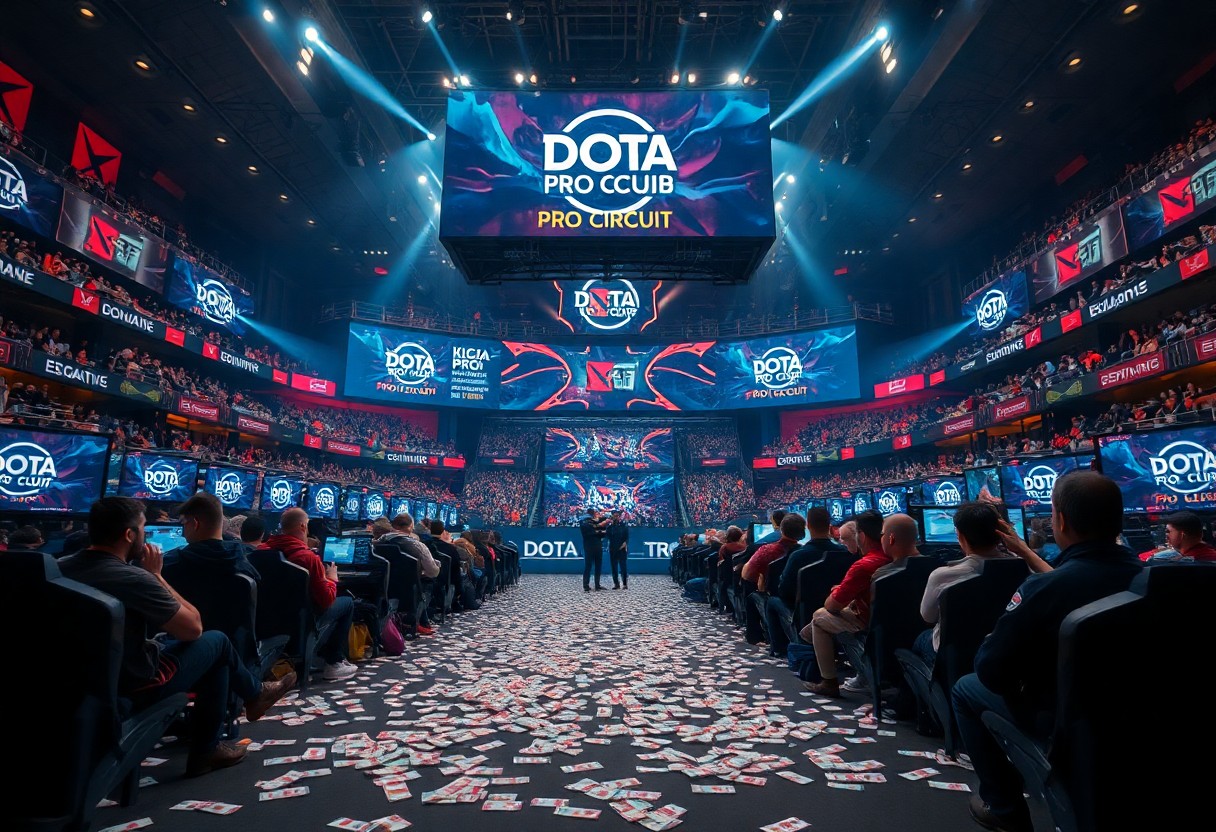
Many fans of competitive gaming have witnessed the rise and fall of professional esports leagues, and the Dota Pro Circuit (DPC) is no exception. Launched by Valve Corporation in 2017, the DPC aimed to create a structured format for competitive Dota 2, featuring a series of regional leagues leading to coveted international events like The International (TI). While the DPC’s intention was to unify the competitive scene and provide players with financial stability, it inadvertently led to a plethora of financial complications and market instabilities within the esports ecosystem.
The DPC’s structure includes numerous regional leagues that offer ranking points to teams based on their performance. These points not only determine qualification for major events but are also tied to significant financial rewards. However, the concentration of wealth and sponsorship within a few key teams and regions has created an unbalanced distribution of funds. While top-tier teams attract vast sponsorships and investment, lower-tier teams often struggle to find financial backing, leading to a stark divide in opportunities and earnings within the community.
Another aspect contributing to financial chaos is the short tournament life cycle and schedule. The demand for consistent content and high-stakes competition pushes teams to invest heavily in player salaries, training facilities, and overall infrastructure. For many organizations, these investments outpaced revenues generated from sponsorships and viewership. When players continuously sought to change teams or left for better-paying contracts, it intensified financial strain, causing some organizations to crumble under the pressure of maintaining competitiveness.
Additionally, with the popularity of streaming platforms, many players became influencers, rapidly generating their own income separate from traditional team contracts. As financial stability shifted towards individual branding, organizations found themselves in a tricky position where they had to compete not only against other teams but also against the financial allure of independent player careers. This has led to contracts being broken, players leaving mid-circuit, and a growing sense of instability that permeated the entire competitive landscape.
Valve’s top-down approach to the DPC, while innovative, introduced complications in governance. Teams and organizations found it challenging to navigate the changes, as Valve periodically altered rules, schedules, and prize distributions without substantial input from stakeholders. Such uncertainty led to organizations scrambling to adapt, often resulting in reckless financial decisions to ensure participation in the league or tournaments. When faced with a lack of clarity, many teams invested far more than they could afford, leading to increased rates of bankruptcy and attrition.
The community also has its role in this chaos. As fans become more passionate and engaged, this erroneously raises expectations around prizes, sponsorships, and overall player earnings. Organizations that promise high salaries to attract talent often find themselves in a precarious situation when they cannot deliver on those promises, adding to the instability. The perception that players deserve higher compensation can drive inflation in contracts, further amplifying the financial burden on struggling teams.
Lastly, while the Dota Pro Circuit aimed to cultivate a thriving competitive environment with financial sustainability, its impact has been mixed. The imbalance of wealth, player independence, frequent regulatory changes, and increased community expectations have created a complex web of financial chaos that continues to challenge the integrity and longevity of professional Dota 2.


