With the rise of competitive esports, organizations enforce specific coaching restrictions and defined roles. Understanding these regulations is vital for teams to maximize their performance while adhering to the guidelines set by governing bodies. This post outlines the key coaching roles and their limitations.
The Historical Evolution of Esports Coaching
The transition from volunteer mentors to salaried professionals
Initially, coaching in esports was often a volunteer effort, with seasoned players sharing their insights and experiences. These informal arrangements laid the groundwork for what would evolve into a structured coaching model.
As the industry matured, organizations began recognizing the value of dedicated coaching staff. This shift led to the emergence of salaried coaching roles, bringing professionalism and strategic depth to team dynamics.
Impact of the “Sixth Player” era on competitive integrity
During the “Sixth Player” era, teams experimented with incorporating a substitute player who could offer strategic insights and a flexible playstyle. This dynamic raised questions about the boundaries of coaching, blurring lines between in-game roles and coaching positions.
The inclusion of a sixth player often challenged traditional notions of competitive integrity. Debates arose regarding how much influence these players could exert on match strategies without crossing the line into direct coaching during games.
Confusion over the sixth player’s role led to guidelines aimed at clarifying permissible actions during competitions. Regulatory bodies sought to ensure that the integrity of esports remained intact, balancing innovation with adherence to fair play standards.
Institutionalization of coaching staff within Tier 1 organizations
Tier 1 organizations have increasingly invested in complex coaching staff structures, recognizing their impact on team success. Detailed roles such as analysts, strategic coaches, and mental performance experts have all emerged as integral parts of these organizations.
This institutionalization promotes a thorough understanding of team dynamics and opponent strategies. As coaching roles become more specialized, the depth of knowledge within teams significantly contributes to competitive performance.
With the integration of comprehensive coaching teams, Tier 1 organizations streamline their workflows and strategies. This professional approach not only enhances player development but also elevates the overall quality of competition within the esports ecosystem.

Defining the Head Coach: Primary Responsibilities
Strategic Drafting and Pick-Ban Phase Leadership
In competitive esports, the head coach steers the drafting strategy, directly influencing the outcome of matches. This role involves analysis of team strengths and weaknesses, as well as understanding the opponents’ strategies, ensuring optimal champion selections are made during the pick-ban phase.
Crafting a well-thought-out draft can lead to a pivotal advantage. The head coach collaborates closely with players to discuss potential picks and bans, considering in-game synergy and counter-strategies that can shape the game’s flow right from the beginning.
Macro-Management and High-Level Tactical Frameworks
Macro-management encompasses broader strategies that guide in-game behavior and decisions. The head coach establishes tactical frameworks that dictate team movement, resource management, and objective prioritization during matches.
By analyzing game footage and trends, the head coach devises strategies that optimize team performance. Adjustments are made based on opponent tendencies, ensuring the team adapts effectively throughout a series and remains competitive in dynamic scenarios.
Macro-management requires foresight and adaptability, allowing the head coach to refine strategies based on real-time developments. This oversight facilitates effective communication among players, promoting a unified approach to executing tactics, which can be instrumental in securing victories.
Roster Construction and Long-Term Player Development
Head coaches play a significant role in roster construction, assessing player abilities and compatibility. A strategic approach to forming a team not only focuses on immediate strengths but also considers long-term player development, ensuring sustainable success.
Through regular evaluations and personalized growth plans, head coaches help players improve their skills. This commitment to development aids in building a cohesive and high-performing roster, capable of competing at the highest levels over time.
Roster construction involves not only selecting skilled players but also envisioning their growth within the team framework. The head coach’s insights into each player’s potential significantly influence recruitment decisions, ensuring that talent aligns with the team’s philosophy and strategic objectives.
Specialized Coaching Roles and Permitted Personnel
Data Analysts and Statistical Modeling Specialists
Data analysts play a pivotal role in competitive esports by translating in-game statistics into actionable insights. Utilizing complex statistical models, these specialists help teams identify strengths and weaknesses, informing strategic decisions and gameplay adjustments.
Analyzing match data allows teams to adapt their strategies in real time, enhancing their competitive edge. Effective data use can lead to improved performance metrics, making analysts indispensable to team success.
Positional and Mechanical Skill Coaches
Positional coaches focus on refining specific roles within a team, ensuring players excel in their designated areas. Mechanical skill coaches concentrate on enhancing individual player abilities, providing tailored training to improve overall execution.
This specialized training fosters individual growth while aligning each player’s skills with the team’s strategic objectives. Coaches also implement drills that target mechanical precision, promoting synergy within the team dynamics.
VOD Reviewers and Opposition Scouting Departments
VOD reviewers meticulously analyze recorded match footage to extract strategic lessons and highlight areas for improvement. Scouting departments evaluate opposing teams, gathering intelligence on their strategies, player tendencies, and overall performance metrics.
This dual approach maximizes a team’s preparedness against opponents by uncovering patterns and trends. By dissecting previous games, teams can anticipate plays and adjust tactics accordingly, creating a more adaptive strategy for success.
Communication Protocols During Professional Play
Live round silence and the “no-talk” rule during active gameplay
During active gameplay, teams implement a strict “no-talk” rule, emphasizing silence to enhance focus and concentration. This protocol ensures players can react swiftly to in-game developments without auditory distractions from teammates.
Silence eliminates miscommunication risks, allowing players to rely on non-verbal cues and their understanding of game dynamics. Such discipline enhances overall team performance, as players maintain heightened awareness while executing strategies.
Tactical timeouts and designated communication windows
Tactical timeouts offer teams a brief opportunity to regroup and share insights. These moments are strictly regulated, ensuring that communication is strategic and concise, allowing teams to analyze gameplay effectively and adjust tactics.
Designated communication windows are vital for maintaining the flow of the game. Teams use these intervals to discuss strategies, offering clarity and direction while minimizing disruption to the competitive atmosphere.
Operational constraints dictate the length of tactical timeouts, often ranging from 30 to 60 seconds. Players must optimize this time to diagnose issues and pivot strategies, ensuring discussions directly address actionable gameplay changes.
Inter-map briefing regulations and time constraints
Inter-map briefings occur between matches, allowing teams to adjust tactics based on performance analysis. Regulations enforce structured communication, ensuring players present ideas efficiently without exceeding designated time limits.
Time constraints for these briefings are critical, typically lasting only a few minutes. Rigid adherence to schedules prevents delays, facilitating a smooth transition into subsequent matches while maintaining the competitive integrity required at high levels of play.
League-Specific Regulations: Riot Games (LoL and VALORANT)
Stage access protocols for the League of Legends Championship Series (LCS)
Regulations dictate strict protocols for accessing the stage during LCS events. Coaches must follow designated entry points and times, ensuring minimal disruption during matches. Compliance with these rules is monitored closely to maintain the integrity and flow of gameplay.
Pre-match and post-match scenarios allow limited access for coaches to interact with players. During gameplay, however, coaches must remain outside the immediate vicinity, emphasizing player autonomy in decision-making and strategy execution.
VALORANT Champions Tour (VCT) coach-slot limitations
The VCT enforces specific limitations on the number of coaches allowed per team. Teams can only register one head coach who oversees all tactical decisions during matches. This regulation fosters accountability and a more streamlined decision-making process.
Teams may opt to utilize substitute coaches or analysts, but such individuals cannot communicate with players during matches. This rule emphasizes the importance of clear lines of communication and strategy during critical moments.
Limitations extend beyond mere numbers, affecting how teams structure their coaching staff. With only one designated coach allowed during matches, teams are compelled to streamline strategies and ensure cohesive gameplay, enhancing competitive integrity.
Rules regarding physical proximity to players during LAN events
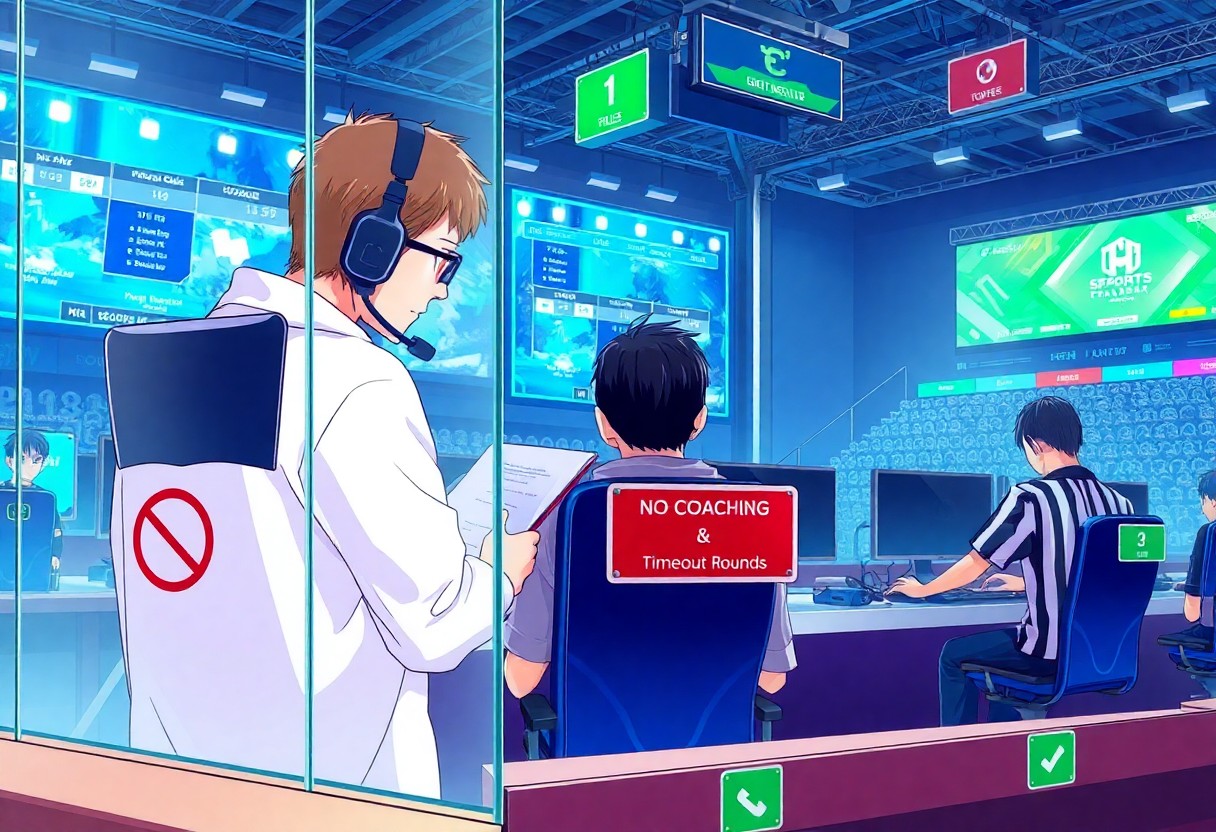
During LAN events, physical proximity rules dictate that coaches must maintain a specific distance from players to prevent interference. This separation enhances player focus and is designed to minimize external distractions while respecting the competitive atmosphere.
Designated areas are established for coaches to observe gameplay without direct interaction. These regulations reinforce the players’ responsibility for in-game decisions, allowing them to perform under pressure independently.
Physical proximity restrictions serve to uphold the competitive spirit, ensuring that players remain at the forefront of decision-making during high-stakes moments. Coaches can provide strategies and support at designated times, balancing guidance with player autonomy.
Valve’s Regulatory Framework: CS2 and Dota 2
The evolution of Valve’s stance on the “Sixth Man” coaching style
Valve’s initial approach to coaching in competitive play allowed for significant flexibility, enabling teams to use an additional player in the role of a “Sixth Man.” This arrangement permitted teams to adapt strategically during matches, obtaining real-time insights and adjustments. Over time, Valve recognized the potential for unequal advantages and began tightening restrictions, aiming to create a more level playing field.
Adjustments to regulations have since defined specific roles that coaches can play during matches, emphasizing the importance of clarity and fairness. The ongoing evolution has prompted teams to adapt their strategies, ensuring that the integrity of competitive play remains intact.
Regional Major Ranking (RMR) restrictions on coach interaction
RMR tournaments impose strict guidelines on how coaches can interact with players during matches. The primary aim of these restrictions is to maintain the competitive integrity by limiting outside influence. Coaches are typically confined to designated areas, often requiring them to communicate through pre-established channels, thereby minimizing direct input during crucial moments.
This regulatory framework has forced teams to develop their in-game communication systems, fostering a greater reliance on player decision-making. As a result, players are required to think independently under pressure, which ultimately enhances their competitive skills.
Coaches are restricted from providing real-time guidance or interference during matches, which emphasizes the importance of self-sufficiency among players. This dynamic not only tests individual capabilities but also pushes teams to prepare more extensively before matches begin.
The International (TI) drafting phase participation rules
During the TI drafting phase, coaches face specific participation limitations to preserve balance and fairness. Traditionally, these rules ensure that coaches can advise during the drafting process while maintaining an equal opportunity for all teams involved. Coaches may provide input on strategies but must do so without extensive direct engagement with players.
This model compels teams to establish clear communication protocols, enhancing overall synergy during the draft. The result is a focused strategy that allows for dynamic adjustments based on the competitive environment while respecting the tournament’s regulations.
By regulating coach involvement in the drafting phase, Valve intends to strike a balance between strategic planning and player autonomy. This approach encourages teams to invest in developing players’ decision-making skills without overly relying on coach guidance during critical moments of the tournament.
Technical Restrictions and Equipment Standards
Audio isolation and headset monitoring protocols
Audio isolation is imperative in competitive esports to minimize distractions and ensure clear communication among team members. Teams are required to utilize headsets that adhere to specific standards, allowing players to focus intently on in-game audio cues. Proper isolation helps maintain the integrity of gameplay, preventing outside noise from influencing critical decisions.
Headset monitoring protocols dictate how sound is managed both for players and audiences. Ensuring balanced audio levels allows competitors to hear team calls while not missing important game sounds. Adhering to these protocols enhances gameplay quality and engagement for both players and spectators.
Restricted use of electronic devices and external software on stage
Restrictions on the use of electronic devices during live matches are strictly enforced. Players are prohibited from accessing personal devices or software that could provide an unfair advantage or alter the game environment. This measure helps maintain fairness and integrity in competitions.
Event organizers implement rigorous checks to ensure compliance with these restrictions, including inspections before matches. This oversight minimizes the risk of cheating and promotes an equal playing field for all teams involved.
Electronic devices deemed unnecessary or potentially invasive, such as smartphones or tablets, are banned to preserve the focus and authenticity of the competition. Competing players must rely solely on the tools provided by the tournament organizers, fostering a fair contest of skill and strategy.
White noise requirements and spectator delay standards
White noise requirements are enforced to drown out potential distractions in the gaming environment. This consistent auditory backdrop assists players in maintaining concentration and separating in-game sounds from external disturbances. Such measures enhance performance and player focus during critical moments.
Observer delays for spectators aim to prevent issues like stream sniping or cheating. By implementing a slight delay in broadcasted game feeds, tournaments create a more level playing field, ensuring all participants compete fairly without external influences from real-time viewing.
Coaching restrictions and permitted roles in competitive esports
Distribution of authority during high-pressure scenarios
In high-pressure situations, the In-Game Leader (IGL) often assumes command, issuing directives that respond to the evolving dynamics of the game. This on-the-fly decision-making requires the IGL to analyze opponents’ strategies and team performance rapidly, ensuring tactical flexibility.
Conversely, the coach maintains a broader perspective, offering guidance from outside the fray. While the IGL manages in-game choices, the coach’s insights can be invaluable for reinforcing strategies or adjusting team morale during intense moments. This duality of authority can lead to both effective adaptation and strategic discord.
The Coach’s impact on IGL development and decision-making
Training sessions led by the coach play a significant role in shaping the IGL’s tactical awareness and strategic planning. By analyzing past matches together, the coach helps the IGL recognize areas for improvement, thus enhancing overall decision-making capabilities.
Direct feedback during practice allows the IGL to experiment with various strategies while receiving immediate guidance. This collaborative approach fosters growth in leadership skills, ensuring the IGL can perform effectively under pressure, making split-second decisions that can determine victory or defeat.
Investing time in one-on-one sessions cultivates a deeper understanding of team dynamics and game mechanics. The coach, through constructive criticism and tailored drills, equips the IGL with the necessary tools to make informed choices during actual matches. The resultant synergy can lead to a well-coordinated team that thrives under competitive stress.
Bridging the gap between mid-round calls and pre-game theory
Connecting mid-round strategies with pre-game theories is imperative for maintaining tactical coherence. The coach establishes fundamental game plans that serve as a foundation for in-game adjustments. However, the IGL must interpret these strategies in real-time, making swift decisions that align with the overarching plan.
During matches, the communication between the coach and IGL allows for fluid adaptation of strategies. The coach’s insights can inform in-game calls, reinforcing the team’s overall vision while also granting the IGL the authority to make necessary changes based on current performance indicators.
A solid framework employed during practice sessions equips the IGL to make informed mid-game adaptations that remain consistent with pre-established theories. By clarifying these connections, both roles can amplify team effectiveness, leading to a synchronized response in the heat of competition. This interplay ensures that strategy flows naturally from theory into practice, enhancing the team’s chances of success.
Integrity, Anti-Cheating, and Fair Play Standards
Prevention of “Stream Sniping” and External Information Leaks
Stream sniping presents a significant challenge in competitive esports, where players leverage live streams to gain an unfair advantage. Implementing strict protocols, such as delays in streaming and frequent checks of broadcast content, helps mitigate this issue effectively.
Developing secure communication channels is equally crucial to combat external leaks. Teams must employ encryption and secure practices to ensure sensitive strategies and information remain confidential, thus preserving the integrity of competitive matches.
The Legacy and Repercussions of the 2020 “Spectator Bug” Scandal
The 2020 “Spectator Bug” scandal exposed severe vulnerabilities in game mechanics, allowing viewers to provide players with real-time information. This incident led to widespread allegations of cheating and significantly undermined public trust in the competitive scene.
Following the scandal, many organizations revisited their anti-cheating measures, resulting in stricter regulations and oversight. The esports community recognized the need for enhanced transparency and a unified approach to prevent similar occurrences in future events.
ESIC (Esports Integrity Commission) Oversight and Sanctioning Power
ESIC plays a pivotal role in maintaining integrity within the esports ecosystem by investigating misconduct and enforcing compliance with standards. The commission’s authority extends across multiple titles, ensuring a consistent approach to integrity issues.
Sanctioning power allows ESIC to impose penalties on teams and players who violate established rules. This enforcement helps deter unethical behavior and reinforces a commitment to fair competition across the industry.
Understanding the weight of its responsibilities, ESIC has developed a framework that not only responds to incidents but also proactively establishes guidelines to foster integrity in esports. By collaborating with game publishers and tournament organizers, ESIC aims to create an environment where fair play is paramount and violations are swiftly addressed.
Support Staff: Performance and Mental Health Coaches
The integration of sports psychologists in high-stakes environments
Sports psychologists play a pivotal role in maintaining players’ mental resilience. In high-stakes competitions, the pressure can lead to anxiety and burnout, making psychological support necessary for peak performance.
Engaging with a sports psychologist often equips players with coping strategies to handle stressors. Techniques such as visualization and mindfulness can enhance focus and emotional regulation, necessary for success in competitive gaming scenarios.
Physical therapists and ergonomic specialists for injury prevention
Physical therapists focus on minimizing injury risk through tailored training and recovery methods. Ergonomic specialists analyze player setups to optimize posture and reduce strain during intense gaming sessions.
Integrating these professionals into esports teams ensures players maintain optimal physical health while performing at their best. Regular assessments and adjustments to gaming stations can significantly reduce the likelihood of injuries affecting performance.
Lifestyle and nutrition management within gaming houses
Proper lifestyle and nutrition management are fundamental for gamers’ sustained performance. Balanced diets enhance cognitive function, while structured routines promote better sleep and recovery. Creating a healthy environment within gaming houses helps players maintain their physical and mental well-being.
Meal plans tailored to individual needs establish energy balance crucial for long gaming sessions. Incorporating hydration strategies further supports overall health, ensuring players stay alert and focused throughout competitions.
Remote Coaching vs. LAN Environment Restrictions
Challenges of monitoring coach activity during online qualifiers
Monitoring coach activity during online qualifiers presents unique challenges. Without the physical presence of referees, ensuring that coaches adhere strictly to regulations becomes difficult. The lack of direct supervision opens doors for potential misconduct or unauthorized assistance, leading to unfair advantages.
Technical limitations further complicate oversight. Many teams utilize third-party communication tools, making real-time monitoring challenging. Inconsistent connectivity can hinder communication between referees and teams, hampering effective regulation of coaching behaviors.
Hardware and camera requirements for remote competitive play
Establishing hardware and camera requirements is vital for standardizing remote competitive play. High-definition webcams and reliable headsets ensure clear communication and visual oversight of players and coaches. These tools help verify compliance with coaching regulations during competitions.
Unified hardware specifications make it easier to monitor gameplay and coaching roles effectively. Teams must equip themselves with the necessary technology to meet competitive standards while minimizing potential for unfair advantages.
Physical verification and referee presence in home-office setups
Physical verification is critical in maintaining integrity during home-office setups. Teams must provide evidence of compliance through video feeds and room inspections, demonstrating that unauthorized coaching does not occur. Referee presence, however, is limited in remote environments, increasing reliance on digital verification methods.
Referees often conduct pre-match checks to ensure that setups adhere to regulations. Limiting the coaching staff’s interaction with players during matches requires diligence, as inconsistent enforcement can lead to disparities in competition fairness.
Developmental and Academy League Variations
Mentorship-focused coaching rules in collegiate and amateur circuits
Mentorship in collegiate and amateur esports emphasizes personal growth and skill development. Coaches often serve as guides, fostering a supportive environment for players to experiment and refine their skills without the pressure of immediate results.
Guidelines typically restrict direct gameplay involvement, allowing coaches to focus on strategy, psychological support, and fostering teamwork. This mentorship-oriented approach enhances players’ understanding of the game while preparing them for more competitive stages.
Hands-on versus hands-off regulatory differences in Tier 2 scenes
Regulatory frameworks differ significantly in Tier 2 esports, with some organizations endorsing hands-on coaching while others favor a more passive approach. Hands-on coaches can actively engage during matches, providing real-time feedback, while hands-off regulations limit their involvement to pre-game preparations.
This discrepancy influences team dynamics and growth opportunities, shaping the player-coach relationship uniquely depending on the regulatory structure adopted by each league.
Many argue that hands-on coaching may provide immediate tactical advantages, enhancing player performance during matches. In contrast, a hands-off philosophy encourages autonomy, promoting strategic thinking in players. These regulatory choices impact the overall development trajectory of teams competing in the Tier 2 scene.
Path-to-Pro coaching transition and certification standards
Certification processes for coaching roles in the Path-to-Pro system play a key role in establishing a professional standard. Aspiring coaches must often complete competency assessments, ensuring they possess the necessary skills and knowledge to guide players effectively.
Transitioning from amateur to professional environments requires coaches to adapt to new expectations and pressure. Adherence to standardized certification can streamline this transition, equipping coaches with insights into industry best practices and performance metrics.
Certification standards often emphasize both strategic acumen and interpersonal communication, reflecting the multifaceted demands of coaching in competitive environments. By upholding these standards, leagues ensure a consistent quality of coaching that can positively affect player performance and development in the Path-to-Pro journey.
Future Trends in Coaching Technology and Regulation
The Implementation of AI-Driven Real-Time Data Visualization
The rise of AI in esports coaching allows for immediate, actionable insights through real-time data visualization. Coaches can now track player performance metrics, game statistics, and strategy effectiveness, enabling informed decision-making during matches.
Utilizing advanced algorithms, AI-driven tools can process vast amounts of data while identifying patterns that human observers might miss. This technology transforms how teams analyze their performance, offering a competitive edge in training and live gameplay.
Biometric Monitoring and Its Role in Performance Optimization
Biometric monitoring has become a key component of performance optimization in esports, providing insights into players’ physical and mental states. Tools that track metrics such as heart rate variability and stress levels can inform coaches about overall team wellness, influencing how strategies are developed and executed.
Collecting real-time biometric data opens doors to personalized training regimens. By combining physical performance indicators with gameplay analytics, coaches can refine approaches tailored to individual needs, enhancing player efficiency and resilience.
Potential Shifts Toward Live Coach-to-Player Communication Channels
Live communication channels between coaches and players during matches are gaining traction, potentially transforming gameplay dynamics. Instant feedback can influence player decisions, allowing for tactical adjustments that reflect real-time conditions in the game.
Through tools like in-game communication software, coaches can offer guidance without compromising the competitive integrity of the match. Such innovations may redefine traditional coaching methods, enhancing adaptability and responsiveness during high-stakes situations.
Conclusion
Taking this into account, coaching restrictions within competitive esports ensure fair play and maintain the integrity of the competition. Defined roles for coaches, such as strategic advisors or analysts, help balance the dynamic between player autonomy and external guidance, allowing for both skill development and strategic growth.
Understanding these regulations is crucial for teams aiming for success in a highly competitive environment. Adapting to these coaching frameworks promotes not only compliance but also a more cohesive team atmosphere, where players can thrive without over-reliance on coaching during critical moments of play.
Q: What are the coaching restrictions in competitive esports tournaments?
A: Coaching restrictions vary by tournament organizer. Most require coaches to stay within designated areas during live matches, limiting their ability to communicate with players. Some events enforce time limits on coaching interventions during game pauses, ensuring that coaches do not provide excessive direction.
Q: Can coaches participate in gameplay discussions or decisions during matches?
A: Coaches are generally not allowed to participate in gameplay discussions once the match has begun. During match pauses, they may provide guidance, but it must be concise and within the allowed time. Coaches must follow specific rules laid out by the tournament organizer regarding their role during matches.
Q: What roles are permitted for coaches within a team’s strategy development?
A: Coaches can assist in strategy development before matches, analyzing opponents, and providing tactical insights. They can also help players improve skills through practice sessions, focusing on teamwork and communication. The extent of this involvement can vary based on the organization’s rules and the team’s agreements.