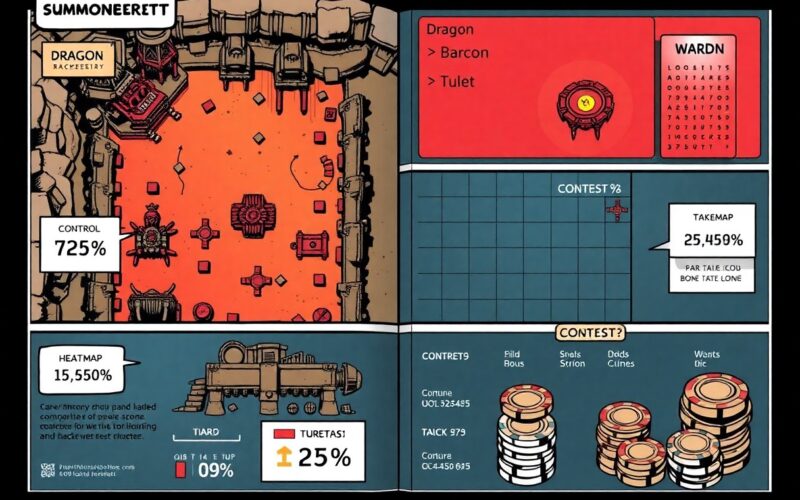







With precise dragon control metrics, teams in League of Legends gain a significant edge in odds modelling. Understanding how dragon ownership impacts game outcomes enables analysts to predict team performance and formulate strategies, thus influencing betting markets and fan engagement.
The Strategic Utility of Elemental Objectives
Win-Rate Variance Across Different Elemental Souls
Different elemental souls provide unique advantages that can significantly impact win rates. Variability in champions’ synergy with these souls creates diverse strategic opportunities during the game. Teams that capitalize on the strengths of specific elemental souls can experience dramatic improvements in performance, adjusting their playstyle accordingly.
Analyzing data reveals that certain souls, such as Infernal, tend to correlate with higher win rates compared to others like Cloud or Ocean. This variance highlights the importance of prioritizing objectives that align with a team’s composition and strategy, leading to better odds in competitive play.
The Elder Dragon as a Deterministic Win Condition
Elder Dragon often acts as a significant turning point within the match. Successfully securing this powerful objective grants teams a substantial buff that can sway momentum instantly. Teams that prioritize the Elder Dragon not only gain a powerful edge but can also dictate the pace of the game post-acquisition, making it a focal point in strategic discussions.
Many games demonstrate that the buff provided by the Elder Dragon allows teams to execute decisive plays. With enhanced damage and execution capabilities, the team that controls the Elder Dragon shifts from a reactive role to an aggressive position, often prompting a chain reaction of team fights that can lead to victory.
Defining Core Dragon Control Metrics
Dragon Control Rate (DCR) and Objective Secure Efficiency
Dragon Control Rate (DCR) measures a team’s success in securing dragons relative to the total number available. High DCR signifies effective coordination and map control, enabling teams to prioritize dragons over other objectives. Objective Secure Efficiency further refines this metric by assessing the ratio of secured dragons per attempted attempts, providing insights into a team’s decision-making and execution skills.
Combining DCR with Objective Secure Efficiency offers a comprehensive view of a team’s performance in securing critical resources. An efficient jungle presence, consistent pressure, and tactical executions are vital for maximizing these metrics, which can translate into overall success in matches.
Early Game Priority vs. Late Game Scaling Trade-offs
Early game priority emphasizes securing dragons to gain immediate advantages, while late game scaling focuses on maximizing team compositions. Balancing these strategies presents a challenge; teams devoted to early dragon control may sacrifice scaling potential, leading to potential weaknesses in team fights later in the game.
Pockets of mismatched strategies might occur as teams weigh short-term dragon benefits against long-term scaling capabilities. Effectively assessing when to prioritize dragon control often hinges on team composition and opponent strategies, influencing the level of investment toward dragon engagements.
Jungler Proximity and Smite Success Probability
Jungler proximity plays a significant role in securing dragons through Smite. The closer a jungler is to the dragon pit during engagements, the higher the likelihood of a successful steal or secure. Understanding the timelines for dragon spawns and jungler paths can dramatically increase a team’s odds of successful control.
Analyzing jungler proximity metrics enables teams to create advantage plays and coordinate more effectively around dragon timings, promoting a disciplined approach to Smite usage. Mastering these dynamics can streamline decision-making processes and enhance objective control strategies.
Incorporating Objective Metrics into Odds Algorithms
Weighting Historical Objective Dominance in Pre-Match Pricing
Using historical data on dragon control provides insight into team performance and allows for more nuanced pre-match pricing. Teams that consistently secure dragons demonstrate a strategic advantage that can influence their odds. This historical dominance serves as a baseline metric, helping analysts predict outcomes based on past behaviors in objective control.
Evaluating performance against various opponents adds another layer of depth. Strong dragon control against top-tier teams exemplifies a squad’s competitive edge, while struggles against weaker teams might suggest vulnerabilities. Odds algorithms can adjust pricing dynamically, reflecting these complex interactions.
Real-Time Win Probability Shifts During Neutral Objective Contests
In-game moments surrounding neutral objectives, such as dragon or Baron fights, can trigger significant shifts in win probability. Teams either capitalize on their initial positioning or falter under pressure, directly impacting their odds in real time. Tracking these fluctuations allows for rapid adjustments within odds models, creating a responsive system.
Win probability assessments hinge on various factors, including team composition, itemization, and the current state of vision control. Analysts rely on predictive metrics during contested objectives to evaluate changing scenarios, ensuring that odds reflect the evolving dynamics of the match.
Real-time adjustments during neutral objective contests highlight the significance of immediate data analysis. As teams initiate fights or secure objectives, metrics must account for these critical moments, impacting overall win probabilities. Teams that execute well under pressure often experience favorable swings in odds, underscoring the necessity for live data integration in betting algorithms to accurately capture the unfolding game state.
Correlation Between Vision Control and Objective Acquisition
Vision Score as a Lead Indicator for Dragon Priority
Vision score offers a quantifiable measure of a team’s control over the map, directly correlating with their ability to secure dragons. Higher vision scores generally indicate better ward placement and awareness, increasing the likelihood of objective acquisition. Teams prioritizing vision are often more prepared to contest these key objectives, reflecting in their overall performance metrics.
Statistical analysis of past matches shows that teams achieving higher vision scores frequently claim dragons more effectively. This metric serves as an early indicator for bettors examining dragon priority, reinforcing the link between vision control and success in objective contests.
Jungle Pathing Transparency and its Impact on Betting Lines
Jungle pathing significantly influences team strategy and objective control, altering betting dynamics. Transparency in jungle movements allows teams to anticipate ganks and counterplays, thereby impacting decisions regarding dragon engagement. Analysts often consider jungle paths when adjusting betting lines as they reveal the likelihood of successful dragon attempts.
Mapping jungle routes not only helps teams strategize but also informs bettors about potential shifts in game balance. As teams showcase predictable paths, odds may favor those with stronger jungle control. Understanding these patterns provides bettors with a clearer perspective, making jungle pathing a critical factor in betting strategies.
Predictive Modeling for Objective Sequencing
Forecasting First Dragon Capture Through Lane State Analysis
Analyzing lane states provides insight into the likely timing and location of the first dragon capture. Factors such as wave management, champion matchups, and jungle presence contribute to predicting which team will secure this early objective. Lane states can shift quickly, highlighting the importance of timely analysis to capitalize on advantages.
Game scenarios can vary significantly, affecting dragon opportunities. Observing the dynamics between champions allows for a deeper understanding of aggression and safety, which directly influences the likelihood of a successful capture. Keeping track of these elements enhances predictive accuracy.
Machine Learning Approaches to Objective Stacking Trends
Utilizing machine learning can uncover patterns in objective stacking that traditional analysis might miss. By processing historical data from numerous matches, models can identify key indicators that lead to successful objectives. Such insights can drastically improve strategic planning.
Various algorithms can adapt to predict outcomes based on real-time in-game conditions. Concepts like reinforcement learning further refine models by continuously updating predictions as new data comes in, leading to a more dynamic understanding of objective control.
Machine learning has the potential to transform objective stacking analysis by automating data processing and refining predictive accuracy. Advanced algorithms can recognize subtle shifts in player behavior and team dynamics, enabling a proactive approach to game strategy. This adaptability ensures that insights remain relevant across various game patches and meta changes.
Quantifying the Economic Value of Elemental Buffs in Combat
Economic analysis of elemental buffs illustrates their significant impact on team fights and overall game strategy. Different buffs provide unique advantages that can skew battle outcomes. Understanding this can help teams prioritize dragon captures based on their composition and strategy.
Evaluating the trade-offs associated with securing these buffs reveals their true worth. Decision-making around when to contest or prioritize dragons becomes clearer when economic benefits are quantified against risk factors like enemy positioning and resource availability.
Quantifying the economic value of elemental buffs emphasizes their importance in combat scenarios. By analyzing metrics such as damage output increases, crowd control benefits, and healing effects, teams can better assess the potential gains from securing dragons. This economic perspective allows for more informed decision-making during crucial moments in the game, ultimately driving performance and strategic depth.

Model Sensitivity and Risk Assessment
Accounting for High-Variance Steal Events in Probability Distributions
High-variance steal events can dramatically skew dragon control metrics, necessitating careful integration into probability models. These unexpected plays often lead to drastic shifts in win rates, affecting both teams’ strategies. Acknowledging such events improves predictive accuracy by accommodating the unpredictability inherently present in competitive gameplay.
Incorporating these events into analysis helps teams assess risk more effectively. Statistical models must account for potential heist scenarios, allowing for a more nuanced understanding of dragon significance in various match contexts. Doing so equips analysts with insights on when to prioritize control or play conservatively.
Impact of Patch Cycles and Meta Shifts on Dragon Priority
Patch cycles frequently alter champion strengths and strategies, directly influencing dragon control priorities across seasons. These shifts result in varying valuation of dragon benefits, prompting teams to adapt their gameplay. Factors such as champion reworks or new items can significantly increase or decrease the importance of dragon objectives.
The meta becomes increasingly complex as patches roll out, influencing team compositions and playstyles. Staying informed about these changes is imperative for effective odds modeling, ensuring accurate predictions regarding dragon control and overall game dynamics.
Regional Variance in Objective-Focused Playstyles
Regional variance in playing styles impacts how teams prioritize dragon objectives. Different leagues showcase unique approaches based on cultural and historical preferences. For instance, teams in the LPL may emphasize aggressive plays and early-game dragon control, while LCS teams might adopt a more cautious, late-game focused strategy.
Understanding these regional differences assists in modeling probability distributions for dragon objectives. Analysts must tailor their approaches based on playstyle tendencies, improving the efficacy of odds assessments and predictions in various competitive environments.
Final Words
As a reminder, dragon control is a significant metric in odds modeling for League of Legends. Teams that consistently secure dragons often gain substantial advantages, impacting their win probability and overall strategy. Analyzing historical data on dragon captures can provide insights into team strengths and weaknesses, informing betting models and predictions.
Effective integration of dragon control metrics into odds modeling enhances accuracy. Teams that prioritize objective control tend to perform better, particularly in high-stakes matches. Understanding this correlation not only aids in predicting outcomes but also equips analysts with tools to evaluate team strategies more comprehensively.