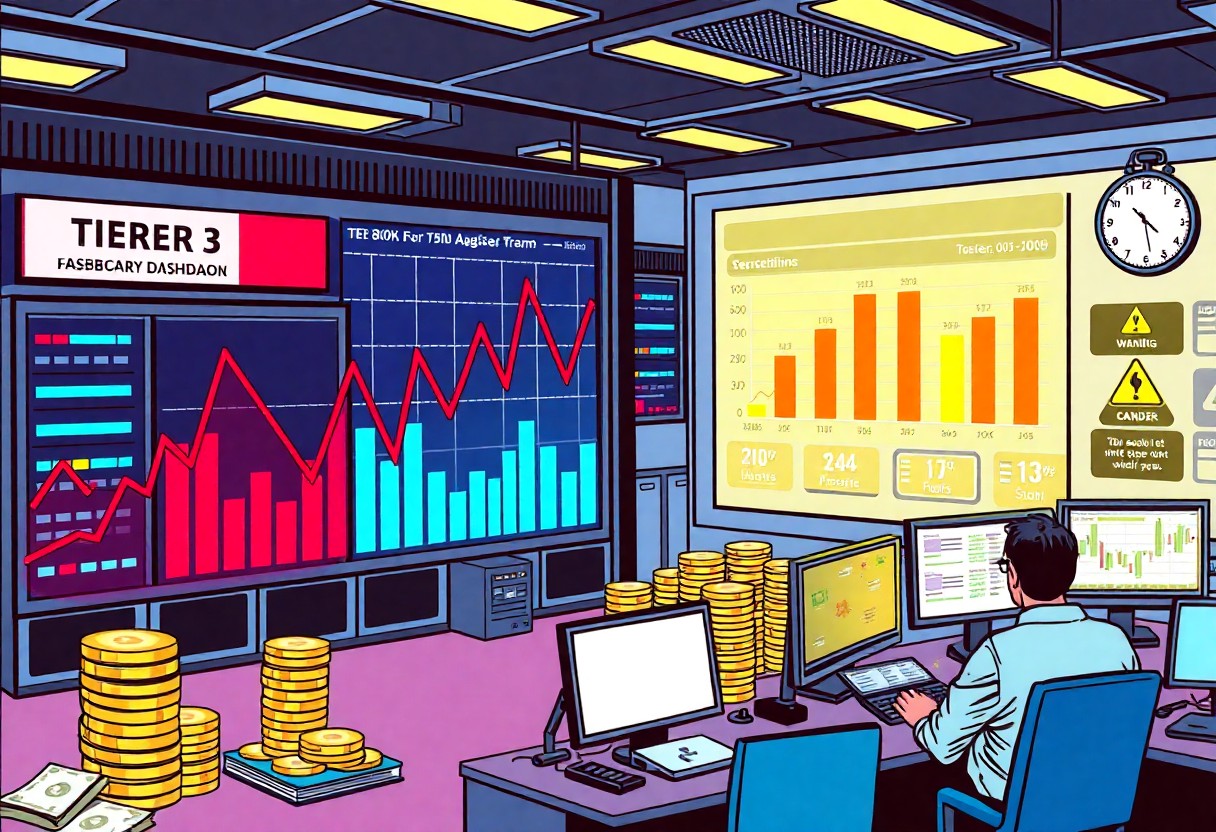
Over the past few years, tier three event liquidity risk modelling has become crucial for financial institutions. This approach effectively quantifies the potential impacts of rare liquidity events, helping organizations prepare for and mitigate financial risks associated with market stress and unexpected disruptions.
Conceptual Framework of Tier Three Liquidity Events
Defining the Tier Three liquidity threshold and tail risk parameters
Tier Three liquidity thresholds represent the breaking point for institutions facing extreme funding pressures, where access to cash becomes significantly constrained. Tail risk parameters quantify the potential for rare but severe funding disruptions, emphasizing the need for heightened awareness in liquidity management strategies.
Understanding these thresholds is imperative for risk assessment, guiding financial institutions in preparing for worst-case scenarios. By establishing these metrics, organizations can better mitigate the adverse effects posed by sudden liquidity constraints.
Distinction between market-wide and idiosyncratic funding shocks
Market-wide funding shocks impact multiple institutions simultaneously, often triggered by systemic issues such as economic downturns or geopolitical events. In contrast, idiosyncratic shocks affect individual institutions due to internal circumstances, such as management failures or significant losses.
Recognizing these distinctions helps institutions prepare more effectively for potential risks. Organizational strategies can then be tailored to address both types of shocks, ensuring resilience in various scenarios.
Analyses of market-wide funding shocks reveal patterns and correlations among institutions, stressing the importance of contingency planning. By contrast, idiosyncratic shocks demand a closer examination of the unique vulnerabilities of specific entities, allowing for targeted risk mitigation techniques and internal governance improvements.
Historical analysis of systemic liquidity crises and “Black Swan” events
Historical crises illustrate the unpredictability of systemic liquidity events, highlighting “Black Swan” occurrences that have caused financial turmoil. Analyzing past failures, such as the 2008 financial crisis, reveals how lack of liquidity can spiral, affecting global markets.
Understanding these historical contexts guides current policy-making and risk modeling practices. Each event provides insights into the nature of funding shortages, enhancing preparedness for similar possibilities in the future.
Research into systemic liquidity crises uncovers commonalities in triggering factors-rapid asset devaluation, sudden shifts in investor sentiment, and reliance on short-term funding markets. These elements contribute to the understanding of how and why “Black Swan” events occur, underscoring the necessity for proactive and dynamic liquidity risk management strategies.
Regulatory Landscape and Global Compliance Standards
Evolution of Basel III and IV liquidity coverage requirements
Basel III introduced a stringent framework for liquidity coverage, emphasizing the need for banks to maintain a higher quality of liquid assets. These regulations aimed to ensure financial institutions could withstand short-term disruptions. Basel IV further refined these requirements, incorporating additional factors that dictate how liquidity buffers should be calculated in various scenarios.
Financial institutions must now adapt to the evolving metrics set forth by these guidelines, focusing not only on quantitative standards but also on qualitative aspects of liquidity management. Compliance requires a thorough assessment of cash flow projections and liquidity risk across multiple time horizons.
Jurisdictional nuances in Pillar 2 liquidity stress testing
Pillar 2 stress testing varies significantly across jurisdictions, reflecting differing regulatory priorities and economic conditions. Each country’s supervisory authority may impose unique requirements for liquidity assessments, leading to a diverse range of modeling practices. Such disparities can complicate compliance for multinational banks seeking to establish uniform standards.
Variability in data availability, economic indicators, and financial system resilience further contribute to the complexities involved in conducting effective stress tests. Understanding these differences is vital for accurate risk modeling and establishing adequate liquidity buffers.
Reporting obligations and transparency under extreme stress scenarios
Reporting obligations have intensified as regulators demand greater transparency from financial institutions during periods of extreme stress. Accurate reporting not only aids in assessing liquidity positions but also enhances stakeholder confidence. Institutions must ensure that their reporting frameworks are agile enough to adapt to rapidly changing market dynamics.
Information dissemination during crises must be timely and comprehensive, allowing regulators to make informed decisions. Organizations that invest in dynamic reporting systems will likely find themselves better positioned to demonstrate compliance and maintain trust amidst uncertainty.
Data Acquisition and Quality Management for Tail Risks
Data acquisition and quality management are central to effectively modeling liquidity risks associated with tier three events. Parsing through existent datasets requires precision, especially in low-frequency scenarios where historical information may be limited. Ensuring data integrity helps mitigate the uncertainties that accompany tail risks, providing a clearer picture for decision-makers.
Strategies for handling sparse data in low-frequency high-impact events
Handling sparse data necessitates innovative approaches. Implementing statistical techniques, such as Bayesian methods, can help infer missing information and bolster predictive models. Combining data from various sources enhances the reliability of these inferences, offering deeper insights into infrequent occurrences.
Employing expert judgment alongside quantitative models offers another layer of validation. Engaging knowledgeable analysts to assess scenarios can fill gaps that raw data may leave uncaptured. This blend of qualitative insights with quantitative methods accommodates the complexity of low-frequency, high-impact events.
Utilizing synthetic data generation and proxy variables for illiquid markets
Synthetic data generation offers a pathway to enrich datasets in illiquid markets. By mimicking real data patterns, this technique allows for the simulation of rare event scenarios that otherwise lack sufficient historical evidence. Proxy variables can also serve as reliable indicators, representing underlying market dynamics and filling data voids.
Generating synthetic datasets involves algorithms that model relationships and distributions present in real markets. This process aids in the creation of scenarios for stress testing, enhancing risk assessments without relying solely on scarce market data. Proxy variables enable analysts to derive insights from related markets, expanding the breadth of risk evaluation.
Establishing data integrity and lineage for regulatory audit trails
Establishing data integrity involves crafting meticulous processes that ensure accuracy and consistency in data throughout its lifecycle. Documenting data lineage is vital for regulatory compliance, allowing stakeholders to trace information origins and transformations. These practices enhance transparency and accountability in liquidity risk modeling.
Models strengthened by reliable data integrity frameworks help mitigate compliance risks. Regulatory bodies demand clear audit trails, which demonstrate that data management protocols are followed. Regular audits and documentation not only adhere to regulations but also bolster confidence among investors and stakeholders in risk management strategies.
Mathematical Foundations of Liquidity Risk Modelling
Application of Extreme Value Theory (EVT) to liquidity gaps
Extreme Value Theory (EVT) offers a framework for evaluating rare, significant liquidity gaps that occur during market stress. By focusing on the tails of the distribution, EVT identifies the probability of extreme market movements, important for understanding catastrophic liquidity events.
Market participants utilize EVT to quantify the severity and frequency of potential losses arising from these gaps. Statistical methods enable analysts to estimate potential future liquidity shortfalls, enhancing risk management strategies aimed at protecting against sharp declines in market stability.
Copula models for capturing tail dependency and cross-asset correlation
Copula models effectively capture the relationship between different assets during extreme market conditions. By defining the joint distribution of asset returns, these models reveal tail dependencies that standard correlation measures often miss, improving the understanding of systemic risks.
Utilizing copulas allows for more nuanced assessments of how liquidity risks are interrelated across asset classes. As correlations change, particularly under stress, robust copula frameworks provide insights into potential risk concentrations that can arise unexpectedly.
Applying copula models in liquidity risk assessment helps in identifying vulnerabilities across interconnected markets. By discerning how asset behaviors shift during turbulent periods, practitioners can better forecast how liquidity events might magnify risks, thereby improving overall risk management practices.
Stochastic processes and mean-reverting liquidity recovery phases
Stochastic processes model the inherent randomness of liquidity movements in financial markets. These processes capture the dynamic nature of liquidity, which often exhibits mean-reverting characteristics following shocks. Such behavior indicates that liquidity levels tend to return to a baseline after periods of stress.
Incorporating mean-reverting principles into liquidity models aids in understanding how quickly and effectively markets recover from disruptions. As conditions stabilize, liquidity typically rebounds, providing important insights for developing proactive risk management frameworks.
Identifying Tier Three Triggers and Early Warning Indicators
Macroeconomic volatility and systemic credit contraction signals
Macroeconomic volatility often serves as a precursor to wider financial instability. Signs of rising inflation or fluctuating GDP growth can indicate that liquidity constraints may arise, compelling institutions to reassess their risk exposure.
Systemic credit contraction signals reveal shifts in lending behavior, typically marked by tightening credit spreads or increasing default rates. These indicators suggest a deteriorating economic environment, reinforcing the need for proactive liquidity risk management.
Microstructure signals and the measurement of order flow toxicity
Order flow toxicity assesses the quality of executed trades and reveals underlying liquidity conditions. High levels of toxic order flow often signal adverse market movements and potential liquidity shortages.
Using microstructure signals, analysts can better understand trading behavior and detect anomalies that precede liquidity crises. Identifying these patterns enables timely responses to mitigate risk exposure.
Order flow toxicity can manifest in various forms, including sharp price movements that fail to stabilize or increased bid-ask spreads. Analyzing these metrics allows institutions to gauge the health of the market and adjust their strategies accordingly to maintain liquidity.
Monitoring cross-asset contagion and spillover effect coefficients
Monitoring cross-asset contagion helps professionals identify relationships between markets that could lead to broader financial distress. Tracking spillover coefficients provides insight into how shocks in one asset class can impact others.
By assessing spillover effects, risk managers can anticipate potential crises that spread beyond isolated markets. This approach not only protects individual portfolios but also contributes to systemic stability.
Effective monitoring of spillover effect coefficients allows institutions to proactively detect vulnerabilities in interconnected markets. Understanding these dynamics is crucial for creating strategies that minimize the impact of external shocks, thereby safeguarding liquidity across assets.
Modelling Asset Liquidity under Extreme Market Stress
Non-linear decay of market depth and widening bid-ask spreads
Market depth often deteriorates non-linearly in periods of extreme stress, leading to significant challenges for liquidity management. As trading volume decreases, the number of buy and sell orders diminishes, resulting in pronounced widening of bid-ask spreads. This phenomenon can create situations where price discovery becomes erratic and inefficient.
At such times, the ability to execute large trades without substantial price slippage diminishes sharply. Participants may find themselves facing inflated costs just to enter or exit positions, complicating strategies aimed at mitigating liquidity risk and amplifying potential losses.
Endogenous price impacts and the mechanics of fire sale dynamics
Fire sale dynamics become particularly pronounced during extreme market conditions, as forced selling leads to rapid declines in asset prices. Price impacts are often endogenous, meaning that the act of selling itself can exacerbate price drops, creating a feedback loop that pits liquidity against valuation.
Traders forced to liquidate assets in a distressed environment may inadvertently lower market prices for those assets, impacting other holders and increasing overall systemic risk. Understanding these mechanics is imperative for accurate liquidity modeling.
Fire sale dynamics highlight a destructive cycle where declining prices trigger additional selling, often spiraling assets into deeper discounts. This phenomenon exacerbates liquidity stress, making it imperative for risk models to account for both direct sales and resulting price impacts, driving better decision-making in times of volatility.
Valuation challenges and haircut adjustments for Level 3 assets
Valuing Level 3 assets poses significant challenges during periods of market distress, particularly due to their reliance on unobservable inputs. Haircut adjustments become necessary as models require a more conservative approach to reflect potential liquidation discounts accurately.
As these assets lack transparency, the difficulty in achieving accurate valuations can lead to under or overestimating their worth, increasing risk exposure during turbulent times. Rigorous modeling is imperative to ensure that haircuts are appropriately aligned with market conditions.
Haircut adjustments should reflect not only market conditions but also the unique characteristics of Level 3 assets. A careful assessment of liquidity risk influences these adjustments, necessitating a clear methodology to avoid exacerbating volatility and maintain a realistic view of asset valuations.

Funding Liquidity and Liability Side Contingencies
Dynamic haircut modelling in repo and collateralized lending markets
Dynamic haircut modeling plays a critical role in managing liquidity risk within the repo and collateralized lending markets. This approach adjusts collateral haircuts based on prevailing market conditions, asset liquidity, and creditworthiness, ensuring that lenders are adequately protected during volatile periods.
Adjustments are made continuously to reflect the changing risk profile of collateral assets. As market conditions evolve, this modeling becomes necessary for maintaining appropriate liquidity buffers and mitigating funding risk exposure.
Sensitivity analysis of retail and wholesale deposit outflow rates
Sensitivity analysis focuses on understanding the implications of varying deposit outflow rates, both retail and wholesale. By simulating different scenarios, financial institutions can assess how changes in customer behavior may impact overall liquidity positions.
Modeling these outflows aids in forecasting potential liquidity crises and allows institutions to establish contingency strategies tailored to different outflow scenarios.
Understanding the sensitivity of deposit outflow rates is necessary for accurate liquidity risk management. Retail deposits may exhibit different behavioral patterns compared to wholesale deposits, necessitating distinct approaches. By analyzing historical trends and incorporating external factors such as economic conditions, firms can better prepare for unexpected shifts in customer confidence.
Impact of credit rating downgrades on contractual liquidity obligations
Credit rating downgrades can significantly affect liquidity obligations, leading to enforced collateral calls and increased funding costs. Institutions face heightened scrutiny and potential liquidity strains as counterparties reassess their exposure in light of reduced creditworthiness.
Such downgrades may also trigger cross-default clauses in contracts, further exacerbating liquidity pressures and leading to a reevaluation of funding strategies across the institution.
Analyzing the impact of credit rating downgrades on liquidity obligations is necessary for effective risk management. Institutions must review their contractual commitments and understand the cascading effects that a downgrade may have on their overall liquidity position. Proactive measures should include contingency funding plans to address potential shortfalls that arise from adverse credit events.
Scenario Design and Advanced Stress Testing Methodologies
- Plausible idiosyncratic scenarios creation
- Multi-factor systemic shock simulations
- Sensitivity mapping techniques
- Reverse stress testing methodologies
Table: Scenario Design Framework
| Scenario Type | Description |
| Idiosyncratic | Specific events affecting individual entities |
| Systemic | Broad market or economic disturbances |
Developing plausible idiosyncratic scenarios for Tier Three events
Identifying specific events that could impact liquidity is vital. Scenarios must reflect realistic stressors faced by institutions, such as sudden regulatory changes or company-specific crises.
Creation of these scenarios requires rigorous analysis of historical data and industry insights, ensuring relevance and accuracy in modeling potential outcomes.
Multi-factor systemic shock simulations and sensitivity mapping
Simulations must incorporate multiple factors to replicate the complexities of real-world events. This approach allows for a better understanding of how interconnected systems can influence liquidity risk.
Sensitivity mapping further assists in pinpointing the vulnerabilities within the current market framework, highlighting areas of potential weakness and exposure.
Utilizing advanced modeling techniques, organizations can simulate various shocks to their liquidity positions. This process not only measures the immediate impact but also helps in identifying long-term implications on overall financial stability.
Methodological approaches to reverse stress testing for liquidity exhaustion
Reverse stress testing involves assessing what scenarios could lead to liquidity exhaustion. It reverses traditional methods by starting from the endpoint of failure and working backward to identify scenarios that could trigger such outcomes.
Incorporation of extreme but plausible scenarios ensures that risk management strategies remain responsive to potential threats, enhancing organizational resilience in turbulent environments.
Detailed analysis during reverse stress tests uncovers critical thresholds and triggers that might otherwise remain unnoticed. Understanding these limitations is necessary for proactive liquidity management and informed strategic decision-making.
Integration of Market and Credit Risk with Liquidity
Quantifying the Liquidity-Adjusted Value-at-Risk (L-VaR)
Liquidity-Adjusted Value-at-Risk (L-VaR) incorporates both market risk and liquidity risk, providing a more comprehensive view of potential losses. By adjusting traditional Value-at-Risk measures to account for liquidity constraints, financial institutions can assess risk more effectively.
This methodology allows for the identification of scenarios where liquidity stresses could exacerbate market losses. By incorporating liquidity measures, firms can better prepare for adverse conditions and enhance their risk management practices.
The feedback loop between credit defaults and liquidity availability
Credit defaults significantly impact liquidity conditions, creating a feedback loop that can amplify financial instability. When borrowers default, financial institutions face increased uncertainty, which may lead to tighter liquidity conditions.
This reciprocal relationship highlights the urgency for better liquidity management practices. Addressing these interconnected risks is vital for the stability of financial systems.
Understanding this loop is vital for risk modeling. Once defaults occur, the resulting liquidity shortages can lead further into the cycle of credit tightening, creating a self-reinforcing mechanism that can destabilize entire markets.
Joint probability of default (JPoD) and liquidity-driven insolvency
Joint probability of default (JPoD) quantifies the likelihood of multiple entities defaulting simultaneously, influencing liquidity scenarios. Recognizing that liquidity constraints can trigger insolvencies highlights the interconnectedness of credit events and market conditions.
Assessing JPoD allows firms to gauge systemic risk and prepares them for potential liquidity crises. Effective modeling of these probabilities contributes to more prudent capital and liquidity planning.
JPoD reflects a complex interplay where heightened default probabilities constrain liquidity, triggering a cascade of financial distress. Understanding these interactions is fundamental to developing strategic responses to mitigate insolvency risks.
Behavioral Assumptions in Liquidity Risk Modelling
Modelling institutional “flight to quality” and “flight to thickness”
Institutional investors often exhibit a pronounced “flight to quality” during periods of market uncertainty, reallocating assets to perceived safe havens. This behavior impacts liquidity conditions, as the rush into high-quality securities often comes at the expense of liquidity in lower-quality markets.
“Flight to thickness” refers to the tendency of traders to seek out markets with higher trading volumes. In times of volatility, this creates a feedback loop where high-volume securities gain further liquidity while others may face severe strains, complicating risk assessments for financial models.
Retail depositor psychology and the mechanics of digital bank runs
Retail depositors often react impulsively during crises, influenced by fear and herd behavior. Digital platforms exacerbate this issue, allowing rapid withdrawals that can lead to sudden liquidity shortages for banks, particularly if panic spreads on social media or news outlets.
Understanding the dynamics of digital bank runs involves recognizing that depositors may act on perceived risk rather than actual conditions. This rapid response can result in a significant lag in a bank’s ability to manage liquidity effectively and stabilize operations.
Analyzing retail depositor psychology reveals that even small events can trigger a cascade of withdrawals. The accessibility of digital banking may lead depositors to act quickly without thoroughly assessing the bank’s fundamentals, creating liquidity challenges not just for individuals but also for the financial system at large.
The role of algorithmic trading and HFT in liquidity evaporation
Algorithmic trading and high-frequency trading (HFT) have transformed market dynamics, often reducing liquidity during tumultuous times. As volatility spikes, algorithms frequently shift strategies, leading to abrupt liquidity evaporation as orders are withdrawn or modified significantly.
In addition to diminishing liquidity, these trading practices can amplify market disruptions. High-speed transactions driven by algorithms can outpace human interventions, resulting in an environment where liquidity becomes fragile, particularly in less-trodden market segments.
Examining the role of algorithmic trading and HFT provides insights into how these technologies can inadvertently create gaps in liquidity. Market participants may find themselves lacking adequate exits during downturns, as algorithms prioritize execution speed over maintaining a balanced order book, heightening systemic risk.
Technological Infrastructure and Computational Requirements
High-performance computing (HPC) for real-time Monte Carlo simulations
High-performance computing (HPC) enables the execution of complex Monte Carlo simulations in real-time, enhancing liquidity risk modeling accuracy. With the capability to process vast datasets simultaneously, HPC significantly reduces the time required for simulations, allowing for more timely decision-making in managing liquidity risks.
Adopting HPC systems ensures that firms can assess numerous scenarios and outcomes under varying market conditions quickly. This capability is particularly beneficial in tier three events, where quick responses to liquidity shocks are necessary for maintaining market stability.
Machine learning applications in liquidity forecasting and regime detection
Machine learning techniques transform liquidity forecasting by analyzing patterns in historical data to predict future liquidity conditions. Models can detect regime shifts in market behavior, providing insights that enhance risk assessment frameworks.
Utilizing these advanced algorithms enables financial institutions to adapt strategies accordingly, increasing resilience against unforeseen liquidity challenges. Historical data combined with machine learning allows for more nuanced insights, advancing traditional forecasting methods.
Machine learning applications in liquidity forecasting utilize diverse datasets to refine predictive accuracy. Employing techniques such as neural networks and decision trees aids in understanding complex interrelations within market variables, leading to better anticipations of liquidity crises. As these technologies evolve, their integration deepens, offering predictive capabilities that evolve alongside market dynamics.
Impact of Distributed Ledger Technology (DLT) on settlement liquidity
Distributed Ledger Technology (DLT) has transformed settlement processes, enhancing liquidity through faster transaction times and increased transparency. By eliminating intermediaries, DLT facilitates quicker settlements, thus improving cash flow within markets.
Implementations of DLT contribute to greater operational efficiency, reducing the time and cost associated with processing trades. This innovation leads to a more liquid trading environment, as firms can execute transactions seamlessly and manage liquidity needs more effectively.
The impact of DLT on settlement liquidity is profound, streamlining transaction processes while minimizing counterparty risk. Real-time visibility into transaction statuses allows market participants to react promptly to liquidity needs, ultimately promoting a healthier market ecosystem. As DLT adoption grows, its potential to significantly enhance liquidity in financial settlements continues to be recognized by industry participants.
Governance, Oversight, and Internal Reporting Frameworks
Defining the Tier Three Risk Appetite Statement and Limit Structures
Clear definitions of the Tier Three risk appetite statement are fundamental to establishing effective limits. Organizations must articulate acceptable levels of liquidity risk, ensuring alignment with overall business objectives and financial strategies.
Establishing limit structures that are responsive to market conditions enhances risk management. These structures should incorporate both quantitative metrics and qualitative factors, allowing for dynamic adjustments as necessary.
Escalation Protocols and the Role of the Crisis Management Team (CMT)
Effective escalation protocols are necessary for timely decision-making during liquidity stress events. Organizations must clearly outline thresholds that trigger escalation to ensure risks are addressed promptly at various management levels.
The Crisis Management Team (CMT) plays a pivotal role in coordinating responses. Comprising senior management, the CMT ensures that actions are aligned with governance structures and actively manages communication across stakeholders.
Crisis Management Teams should routinely rehearse scenarios that simulate liquidity risks, refining their response strategies. By conducting regular training and simulations, teams can improve their effectiveness during real events and ensure cohesive communication across all levels of the organization.
Internal Audit Standards and Independent Model Validation Processes
Adherence to internal audit standards is crucial for maintaining the integrity of liquidity risk models. An independent approach to model validation helps identify weaknesses and enhances transparency within the risk assessment process.
Regular audits and validations not only ensure compliance with regulatory expectations but also foster trust among stakeholders. This systematic evaluation process mitigates risks associated with model inaccuracies and supports informed decision-making.
Independent validation processes should focus on both model performance and assumptions, ensuring their relevance in a changing market environment. Continuous feedback loops from these evaluations can further refine risk strategies and strengthen governance frameworks.
Mitigation Strategies and Contingency Funding Plans
Optimization of the High-Quality Liquid Asset (HQLA) Portfolio Composition
Maintaining an optimal composition of the HQLA portfolio directly influences liquidity risk management. Diversification across asset classes enhances resilience against market fluctuations, ensuring quick access to liquidity when needed. Regularly assessing the quality and liquidity of holdings helps institutions align their portfolios with regulatory standards and internal risk appetite.
Institutions should prioritize assets that not only meet liquidity requirements but are also expected to maintain value during stress scenarios. Regular stress testing of the HQLA portfolio can identify vulnerabilities, guiding timely adjustments to asset allocation and preserving overall liquidity health.
Operationalizing the Contingency Funding Plan (CFP) Under Duress
Establishing a detailed and actionable CFP is crucial for effective liquidity management during crises. Key elements include pre-identified funding sources and clear protocols for activation under distressed conditions. Ensuring all stakeholders understand their roles fosters a cohesive response during liquidity pressures.
Training and simulation exercises help reinforce the operational capacity of the CFP. Continuous evaluation and updates to the plan based on changing market conditions and institutional objectives ensure readiness for potential liquidity challenges.
Awareness of the specific triggers for activating the CFP, combined with a well-structured communication strategy, strengthens institutional preparedness during liquidity events. Establishing a clear hierarchy for decision-making enhances responsiveness and minimizes delays in implementation, contributing to overall stability.
Strategic Access to Central Bank Facilities and Lender-of-Last-Resort Protocols
Proactive engagement with central bank facilities enhances liquidity risk management frameworks. Institutions must understand eligibility requirements and operational procedures for accessing these resources during turbulent periods. Keeping a clear line of communication with central banks ensures timely interventions when liquidity shortfalls arise.
Integrating central bank support into the liquidity strategy can serve as a safety net. Establishing relationships with regulatory authorities enhances confidence and facilitates smoother access to emergency funding during crises, further securing the institution’s liquidity standing.

Final Words
To wrap up, tier three event liquidity risk modelling provides crucial insights for managing risks associated with low-liquidity scenarios. Accurate models can help institutions prepare for potential financial disruptions by assessing exposure to adverse market conditions.
Effective implementation of these models allows for better decision-making and strategic planning. By focusing on data-driven approaches and scenario analysis, organizations can enhance their readiness to respond to liquidity shocks, ensuring financial stability and resilience.
Q: What is tier three event liquidity risk modelling?
A: Tier three event liquidity risk modelling involves assessing the liquidity risks associated with infrequent, severe market events. This type of modelling typically employs historical data analysis and stress testing to evaluate potential impacts on liquidity during such events.
Q: How does tier three event liquidity risk differ from other tiers?
A: Tier three event liquidity risk focuses specifically on extreme scenarios that occur infrequently but can lead to significant market disruptions. In contrast, lower-tier models may assess more common liquidity risks, emphasizing day-to-day market operations and typical fluctuations in liquidity.
Q: What are the primary tools used in tier three event liquidity risk modelling?
A: Key tools include scenario analysis, stress testing frameworks, and historical data simulation. These tools allow practitioners to estimate potential liquidity constraints and identify necessary mitigation strategies for rare but impactful market events.