






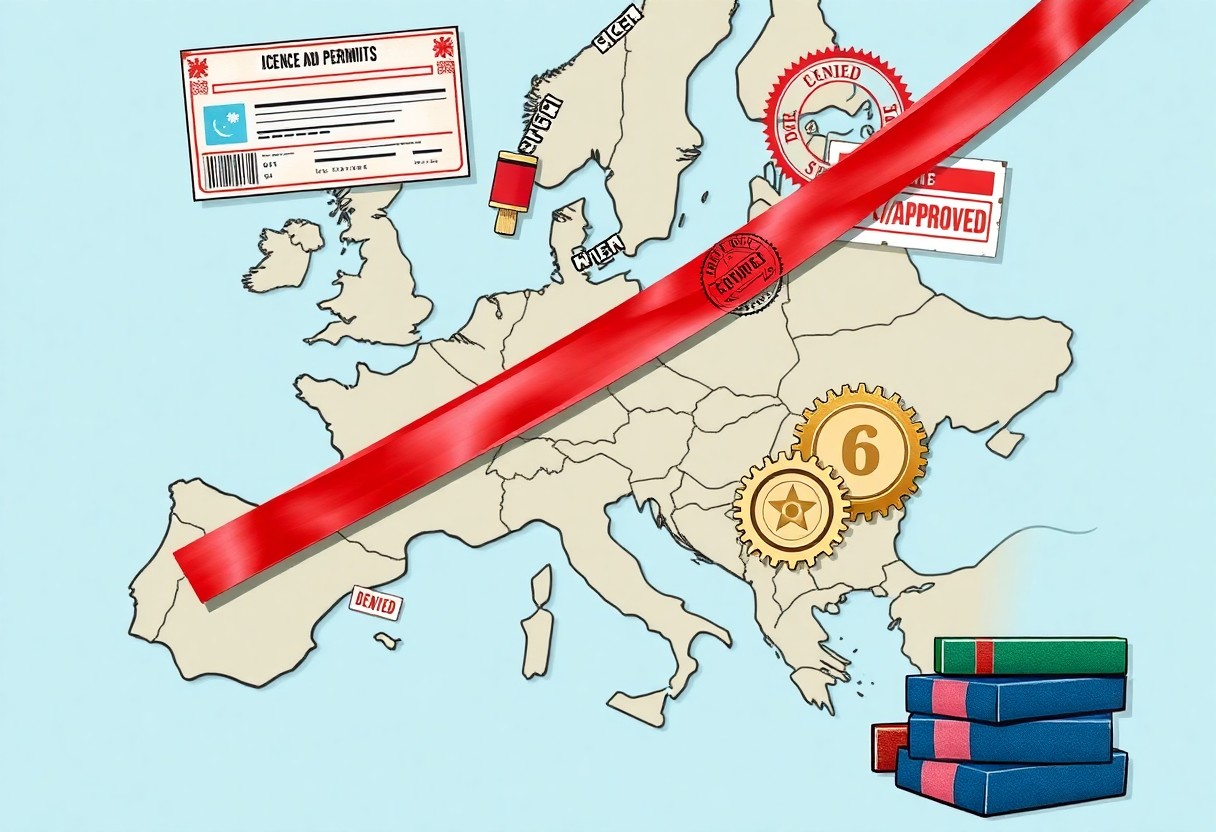
You will discover how varying regulations across European regions create barriers in licensing processes. This friction affects businesses, consumers, and the overall market dynamics, complicating compliance and influencing operational strategies across borders.
The Historical Evolution of European Licensing Regimes
Post-war national monopolies and the move toward integration
National monopolies characterized Europe’s post-war licensing environment, reflecting the desire for economic control and stability. Many countries maintained strict regulations to protect local industries, often leading to significant barriers for cross-border activities. These monopolistic practices not only stifled competition but also limited consumer choices across European nations.
Growing recognition of these inefficiencies prompted initial discussions on integration. Governments began to perceive the benefits of collaboration, laying the groundwork for regulatory reforms aimed at harmonizing licensing standards across member states. The shift indicated a collective move toward a more interconnected European marketplace.
The impact of the 1992 Single Market Act on cross-border services
The 1992 Single Market Act marked a pivotal shift in how cross-border services were regulated within Europe. Strikingly, it aimed to dismantle existing barriers that had plagued service mobility across nations. This legislative framework sought to promote free movement by standardizing licensing requirements, leading to enhanced market access for businesses.
By streamlining administrative processes and removing discriminatory practices, the Act encouraged competition and innovation. Increased transparency and cooperation among member states facilitated smoother transactions and interactions, significantly impacting the European economic structure.
Following the Act, numerous sectors experienced a surge of cross-border service activities, indicating a transition from isolated markets to a more cohesive economic area. Businesses could expand their reach across borders, further integrating the European economy and enhancing consumer options while fostering collaborative ventures between nations.
Evolution of the European Court of Justice’s role in licensing disputes
Evolving dynamics in licensing disputes have increasingly drawn the attention of the European Court of Justice (ECJ). Initially serving a limited role, the ECJ became instrumental in interpreting regulations stemming from the Single Market Act. Key rulings shaped the understanding of how national laws align with European mandates, thus resolving numerous conflicts over licensing practices.
As cases emerged, the Court’s principles promoted a more harmonized approach to licensing disputes. Judgments often emphasized the need for proportionality and non-discrimination, influencing member states to adjust their regulatory frameworks accordingly.
The ECJ has transformed from a peripheral entity to a central arbiter in licensing matters. Through its decisions, it has clarified the relationship between national laws and European regulations, ensuring that cross-border services operate under a unified legal framework.
Theoretical Framework of Regulatory Friction
Defining non-tariff barriers in the context of European licensing
Non-tariff barriers (NTBs) in European licensing represent regulatory obstacles that inhibit market access without imposing direct tariffs. These barriers can take various forms, including varying compliance requirements, licensing procedures, and regulatory standards across different regions. Understanding NTBs is imperative for any assessment of the operational landscape for businesses operating within the EU.
In this context, NTBs often manifest as differing interpretations of regulations among member states. Such discrepancies lead to increased costs and complexity for firms attempting to comply with diverse licensing requirements. This fragmentation complicates cross-border trade, impacting efficiency and competitiveness.
The economic cost of administrative fragmentation for SMEs
Administrative fragmentation presents notable economic challenges for SMEs attempting to navigate the European market. Time-consuming compliance processes translate into higher operational costs, limiting the ability of smaller firms to compete with larger entities. This environment discourages diversification and inhibits growth opportunities.
Moreover, significant resources are diverted to understanding and managing local regulations rather than innovating or expanding services. Consequently, SMEs may struggle to gain traction in foreign markets, stifling overall economic dynamism within the EU.
Legal principles of mutual recognition vs. home-country control
Mutual recognition and home-country control serve as foundational legal principles in European licensing. Mutual recognition suggests that member states should accept products and services legally sold in any other state, thus facilitating trade. In contrast, home-country control allows states to influence regulations within their borders, often leading to a lack of uniformity.
The tension between these principles underscores the complexities within the regulatory framework. While mutual recognition aims to streamline processes, home-country control can impose excessive standards that hinder market access, creating friction that affects businesses across Europe.
Digital Single Market and Content Portability Friction
Geoblocking regulations and the persistence of territorial licensing
Geoblocking regulations continue to create barriers to content access across European nations. These regulations often hinge on requiring users to access services based on their geographical location, reinforcing traditional territorial licensing agreements.
This territorial approach hampers the Digital Single Market’s goals, preventing consumers from accessing content freely as they travel within Europe. As a result, disparities in available content reinforce frustrations among citizens who expect uniform access across borders.
Challenges in multi-territorial music and audiovisual rights management
Managing music and audiovisual rights across multiple territories presents numerous challenges for stakeholders. Each country has distinct licensing requirements and regulations, complicating the process for rights holders seeking broader distribution.
Complexity often leads to fragmented rights management, making synchronization of licenses inefficient. This inefficiency hinders content creators and distributors from maximizing their reach in an increasingly interconnected market.
Clear inconsistencies in licensing practices create obstacles for producers who wish to release content simultaneously across borders. These complications not only consume valuable resources but also delay access for consumers eager for new releases.
The role of Collective Management Organizations (CMOs) in regional bottlenecks
Collective Management Organizations (CMOs) play a significant role in managing rights and streamlining the licensing process across multiple territories. By pooling resources and negotiating on behalf of their members, CMOs aim to alleviate some of the friction caused by fragmented national licensing systems.
However, challenges persist as CMOs must adapt to varying legal frameworks and administrative requirements, which can perpetuate regional bottlenecks. This adaptation adds layers of complexity that may impede the efficient dissemination of content across different markets.
CMOs frequently find themselves wrestling with the need for harmonization while simultaneously respecting local regulations. Successful navigation of these intricacies is important for ensuring that rights holders are fairly compensated while providing consumers with access to diverse content offerings.
Financial Services and Passporting Rights
The MiFID II framework and the limitations of financial passporting
The MiFID II framework aims to harmonize trading regulations across Europe, yet it introduces complexities in financial passporting. Many firms find that compliance with varied local interpretations of these rules complicates cross-border operations.
Regulatory friction in the emerging Fintech and Neo-banking sectors
Emerging Fintech firms face significant regulatory challenges within Europe. Compliance frameworks vary dramatically across jurisdictions, complicating market entry for startups and established companies alike.
This discrepancy often leads to significant legal ambiguities, stifling innovation and growth in the sector. Consequently, many startups are forced to focus on domestic markets rather than expanding across borders.
Regulatory friction manifests in inconsistent compliance requirements that create barriers for Fintech and Neo-banking firms. As these companies strive to adapt to local regulations, the lack of standardized guidelines hampers their agility and ability to scale quickly across European markets.
Post-Brexit licensing complexities and third-country equivalence
Post-Brexit, UK-based financial firms encounter numerous licensing difficulties when seeking access to EU markets. The loss of automatic passporting rights forces businesses to reevaluate their operational strategies, often resulting in increased costs.
Third-country equivalence remains a contentious issue, as EU regulators set stringent criteria for non-EU entities. This unpredictability complicates the landscape for UK firms, with many uncertain about future access to European clients.
Post-Brexit licensing complexities hinge on varying interpretations of third-country equivalence by EU authorities. As firms grapple with the possibility of losing access to vital markets, they are compelled to consider relocating their operations to EU member states, further heightening the regional licensing frictions.
Telecommunications and Spectrum Allocation Disparities
National sovereignty over 5G spectrum auctions and timing
National governments in Europe have the authority to control 5G spectrum auctions, leading to varying timelines and approaches across member states. This sovereignty complicates the coordination necessary for a unified 5G rollout, causing inconsistencies in availability and quality of service. As countries prioritize their interests, disparities in auction strategies contribute to market fragmentation.
Timing discrepancies further exacerbate these issues. Some nations may proceed quickly with auctions to jumpstart economic recovery, while others adopt a more cautious stance. This uneven pace results in a competitive disadvantage for countries lagging behind in 5G implementation.
Interoperability challenges between regional network operators
Fragmented 5G infrastructure creates interoperability challenges among regional network operators, complicating cross-border communications. Each operator develops distinct systems and technologies, resulting in varied user experiences. As a result, consumers face difficulties in maintaining consistent service levels when traveling between countries.
The absence of standardized protocols complicates network integration and cooperation, hindering the potential for synergies that could arise from collaboration. Without strong interoperability measures, operators struggle to deliver seamless connectivity, impacting overall market efficiency and user satisfaction.
EU-level harmonization efforts vs. member state fiscal interests
Efforts towards EU-level harmonization in telecommunications face resistance due to individual member states prioritizing fiscal interests. Each country seeks to maximize revenue from spectrum auctions, leading to a reluctance to adopt uniform policies. These fiscal concerns often overshadow the long-term benefits of a cohesive European telecommunications strategy.
Balancing national financial objectives with regional harmonization proves challenging. Member states may perceive that local control over their spectrum resources yields short-term economic benefits, but such a fragmented approach hinders collective progress and competitiveness in the global market.
Energy Sector Licensing and Cross-Border Interconnectors
Regulatory hurdles in the integration of the European Internal Energy Market
Integration of the European Internal Energy Market faces considerable regulatory challenges. Divergent national frameworks often complicate the licensing processes, creating delays and inconsistencies. Regulatory bodies sometimes impose differing requirements that stifle cross-border interconnector projects, reducing overall market efficiency.
Political considerations further complicate matters, as national interests often supersede broader market integration goals. These hurdles can deter investment in necessary infrastructure, ultimately hindering Europe’s energy transition.
Licensing for renewable energy transmission across national grids
Licensing for renewable energy transmission across national grids remains a complex issue. Each nation typically has unique criteria and processes, making it difficult for developers to secure necessary permits promptly. Streamlining these processes could enhance cooperation between member states and accelerate renewable energy deployment.
Aligning licensing requirements across borders allows for more effective integration of renewable sources, potentially maximizing renewable energy’s contribution to the energy mix. Efficient cross-border transmission enhances energy security and market resilience.
Developers often encounter fragmented licensing regulations, leading to increased project timelines and costs. Harmonizing these laws could significantly improve stakeholders’ ability to plan, finance, and execute renewable projects across different countries, driving overall progress toward sustainability goals.
Impact of national security considerations on cross-border energy permits
National security considerations play a significant role in the issuance of cross-border energy permits. Governments prioritize energy independence and critical infrastructure protection, which can result in restrictive policies. These measures frequently disrupt or delay vital energy interconnector projects necessary for market integration.
On occasion, security concerns lead to heightened scrutiny of foreign investments in energy infrastructure, further complicating licensing processes. Balancing these security priorities with the need for open energy markets poses a continuous challenge for European policymakers.
Rigorous national security assessments can hinder timely approvals, undermining collaborative energy initiatives. Policymakers must find a balance between safeguarding national interests and promoting an integrated European energy system to realize the full potential of cross-border interconnectors.
Intellectual Property and the Unified Patent Court
The transition from national patent silos to the Unitary Patent system
The shift from individual national patent systems to the Unitary Patent system aims to streamline patent protection across Europe. This consolidation allows inventors to secure rights in multiple jurisdictions through a single application, reducing administrative burdens and fostering innovation.
Enhanced efficiency in the patent application process encourages more entities to seek protection across borders. Replacing fragmented systems fosters a unified approach, which could lead to increased clarity in enforcement and reduced litigation costs.
Regional friction in Standard Essential Patents (SEPs) and FRAND licensing
Disputes over Standard Essential Patents (SEPs) create friction in regional licensing, particularly concerning Fair, Reasonable, and Non-Discriminatory (FRAND) terms. The lack of a harmonized approach to SEP licensing complicates negotiations and enforcement across different markets.
Many stakeholders struggle with inconsistent interpretations of FRAND obligations, leading to costly litigation and delayed access to technology. This discord can stifle innovation and hinder market entry for new players in technology sectors.
Variability in national laws and practices contributes to these complications. Companies often find themselves entangled in protracted legal battles, with different countries applying distinct standards for what constitutes fair licensing, ultimately affecting competition and innovation timelines.
Linguistic and procedural barriers in European trademark enforcement
Language differences across Europe create significant challenges in trademark enforcement. Legal documents need to be translated accurately, which can lead to misinterpretations or oversights during litigation.
Disparate procedural rules further complicate trademark cases. Each jurisdiction has unique requirements and timelines, which can hinder prompt enforcement and resolution of trademark disputes, often favoring larger entities that can navigate the complexity more easily.
Confusion arises when parties involved lack a thorough understanding of local languages and legal systems. This gap not only delays proceedings but can also deter smaller companies from seeking protection, perpetuating inequities in the enforcement landscape.
Professional Qualifications and Labor Mobility Friction
Mutual recognition of regulated professions: Medical, legal, and engineering
Mutual recognition efforts for regulated professions like medicine, law, and engineering exist to facilitate labor mobility within Europe. Each country maintains its standards, leading to complexities when professionals move across borders, resulting in lengthy recognition processes.
The European Professional Card (EPC) and its practical limitations
The European Professional Card (EPC) seeks to simplify the recognition of professional qualifications across EU member states. Despite its promise, practical limitations often hinder its effectiveness, including inconsistent adoption and implementation among countries.
Complexities arise from varying requirements and procedures, causing frustrations for professionals expecting a streamlined process. These inconsistencies deter many from pursuing cross-border opportunities, ultimately limiting labor mobility.
Language requirements as a de facto barrier to cross-border licensing
Language proficiency requirements often act as a significant barrier to cross-border licensing. Professional roles frequently demand not only technical expertise but also a strong command of the local language, complicating mobility for non-native speakers.
While language skills are crucial for effective communication in fields like healthcare and law, they disproportionately affect foreign professionals, discouraging them from applying for positions in different nations. This creates an uneven playing field, where language becomes a gatekeeper to opportunities.
Transport and Logistics: Rail and Road Fragmentation
The Fourth Railway Package and technical interoperability frictions
The Fourth Railway Package aims to enhance the efficiency of rail transport across Europe by introducing measures for better cross-border operation. Despite these intentions, varying technical standards among member states create interoperability issues, hindering smooth transitions between different rail networks.
Road haulage licensing and the Posting of Drivers Directive
Road haulage licensing regulations create disparities across European nations, affecting competitiveness and creating barriers for operators. The Posting of Drivers Directive further complicates matters by imposing differing labor conditions, which can distort market dynamics.
Implementing various national regulations often leads to confusion and misalignment in logistics operations. Compliance costs increase, putting pressure on both domestic and international haulage companies striving to maintain compliance in a fragmented regulatory environment.
Aviation safety standards: EASA centralized vs. national oversight
Aviation safety standards in Europe exhibit friction between centralized oversight by EASA and national regulatory frameworks. This duality can create inconsistencies, particularly when member states apply differing safety measures or interpretations of EASA guidelines.
Organizations often face challenges in adhering to varied safety standards, complicating training and certification processes. The resulting discrepancies can impede operational efficiency and increase compliance burdens for European aviation stakeholders.
Pharmaceutical and Healthcare Market Access
Centralized vs. Decentralized Marketing Authorization Procedures
Centralized procedures allow for a single application to cover all EU member states, promoting streamlined market access. This approach benefits innovative drugs, enabling quicker availability across the continent.
Decentralized procedures, on the other hand, require separate submissions in each country. This fragmentation can delay access and create inconsistencies, resulting in varying approval timelines and requirements for similar products.
Pricing and Reimbursement Negotiations as Regional Licensing Friction
Pricing strategies across Europe lead to regional discrepancies, complicating licensing. Member states often negotiate reimbursement rates independently, resulting in varied access to pharmaceuticals.
These negotiations can create friction when a product is approved in multiple countries but faces obstacles due to differing pricing expectations. Manufacturers must adapt to each region’s unique reimbursement framework, complicating their market entry strategy.
Regional pricing negotiations hinge on each country’s economic conditions and healthcare budgets. Disparities in pricing expectations create tension between manufacturers and governmental bodies, often resulting in delayed access for patients despite product availability.
The Impact of the Medical Device Regulation (MDR) on Regional Supply
The implementation of MDR has transformed the regulatory requirements for medical devices across Europe, introducing more stringent evaluation processes. Compliance challenges often hinder manufacturers from maintaining consistent supply chains within the region.
Devices that previously enjoyed faster access face extended timelines for approvals, leading to potential shortages. As organizations adjust to the new standards, discrepancies in supply can emerge, impacting healthcare providers and patients alike.
Understanding these regulatory changes is vital for companies aiming to succeed in the European market. Many manufacturers are reevaluating their strategies to ensure compliance while minimizing disruptions to supply chains and availability.
Data Privacy and Cross-Border Processing Licenses
GDPR Interpretation Variances Among National Data Protection Authorities
Interpretations of GDPR can vary significantly among national data protection authorities. Different countries may prioritize certain aspects of data protection, leading to inconsistent enforcement of regulations. This fragmented approach complicates compliance for businesses operating across multiple jurisdictions.
Discrepancies in interpretation often result in varied regulatory expectations. Organizations face challenges aligning their data practices with the requirements of each authority, making cross-border operations cumbersome and risky.
Complexity in Cross-Border Data Transfer Agreements Within the EEA
Negotiating cross-border data transfer agreements within the EEA involves various legal nuances. National regulations can impose additional requirements beyond GDPR, leading to potential conflicts and delays in implementation. These complexities make compliance more difficult for businesses.
Inconsistent national interpretations also impact the drafting and execution of these agreements. Companies must adapt to each jurisdiction’s legal climate, increasing both time and resource commitments across operations.
This complexity arises due to the interplay between national regulations and the overarching GDPR framework. Each EU member state may introduce unique stipulations, driving organizations to constantly update their compliance strategies to meet diverse legal demands.
Sovereign Cloud Initiatives and Regional Data Residency Requirements
Sovereign cloud initiatives have gained traction as nations prioritize data sovereignty. By mandating data storage within national borders, these requirements directly influence multinational companies and their data management strategies. Businesses must assess the implications of local laws to ensure compliance.
These initiatives often clash with existing international data transfer mechanisms, complicating cross-border operations. Organizations need to evaluate their data architecture to accommodate local residency requirements while maintaining operational efficiency.
Sovereign cloud initiatives reflect a growing emphasis on data sovereignty, impacting how businesses manage data storage and processing. Adapting to these regional data residency requirements necessitates significant changes in infrastructure and policy to meet evolving legislation. Organizations must proactively address these challenges to ensure compliance and continued operational success.
Economic Consequences of Licensing Fragmentation
Quantitative analysis of deadweight loss in the European economy
Estimating deadweight loss from licensing fragmentation in Europe reveals substantial economic inefficiencies. Research suggests that barriers impact consumer surplus and producer surplus, leading to billions in lost economic activity. Ineffective resource allocation stems from disparate licensing regimes that stifle competition and innovation.
Calculations indicate that the cumulative effect could exceed several percentages of the EU’s GDP. This loss reflects not only immediate market inefficiencies but creates ripple effects throughout interconnected economies within the region.
Impact of licensing friction on Foreign Direct Investment (FDI)
Licensing friction discourages foreign direct investment (FDI) by creating uncertainty and adding costs for international firms. Various regulations across member states complicate market entry, prompting investors to seek more stable and unified environments, thereby diminishing EU attractiveness as a business destination.
Consequently, regions with streamlined licensing processes tend to attract higher levels of FDI. This trend illustrates a direct correlation between regulatory simplicity and investment flow, with fragmented systems often pushing potential investors toward alternative markets.
Consumer price disparities resulting from regional market partitioning
Regional market partitioning leads to significant consumer price disparities across Europe, fueled by inconsistent licensing requirements. Variability in regulations often results in unequal competitive dynamics, where products may be cheaper or more expensive depending on the licensing structure in place.
Consumers in heavily regulated regions frequently face inflated prices due to limited market access and restricted competition. This situation exacerbates inequalities, creating economic discrepancies that can undermine overall consumer welfare in the European Union.
Strategic Recommendations for Policy Harmonization
Implementing the “Once Only” principle for administrative licensing
Streamlining the licensing process through the “Once Only” principle can significantly reduce administrative burdens. By ensuring that businesses need only provide certain data once, this approach minimizes duplication and improves efficiency in service delivery.
This principle fosters trust in regulatory processes by increasing transparency and accountability. Governments should collaborate on developing shared databases to facilitate data sharing among member states.
Standardizing digital interfaces for cross-border permit applications
Unified digital interfaces can simplify cross-border applications, ensuring consistency and clarity in submission processes. This standardization can reduce confusion for businesses operating in multiple jurisdictions.
Such platforms must prioritize user experience, helping applicants to easily navigate requirements while minimizing errors and delays in approval.
Standardizing digital interfaces not only enhances efficiency but also encourages the use of e-services across Europe. By adopting a unified framework, businesses can benefit from a more predictable experience when applying for permits, ultimately driving market integration.
Expanding the scope of the Services Directive to cover emerging sectors
Broadening the Services Directive’s coverage can address compliance challenges faced by emerging sectors, such as digital and green industries. This expansion encourages innovation while ensuring a level playing field among different sectors.
Inclusion of additional sectors fosters economic resilience and allows for adaptive regulatory frameworks, promoting growth and competitiveness within the European market.
Expanding the Services Directive could create a comprehensive approach to licensing in evolving markets, offering clear guidelines that accommodate new business models while safeguarding public interests. This proactive strategy would ensure that regulations remain relevant and effective in an ever-changing economic environment.
Final Words
Summing up, regional licensing friction in Europe hampers the efficiency of cross-border trade and innovation. Regulatory discrepancies among member states lead to increased compliance costs and barriers for businesses, stifling growth potential.
Addressing these challenges requires concerted efforts to harmonize regulations and promote greater collaboration among countries. Streamlined licensing processes could facilitate market access and enhance competitiveness, benefiting both consumers and businesses alike.
Q: What are the key factors contributing to regional licensing friction in Europe?
A: Regional licensing friction in Europe arises from diverse regulatory frameworks, varying enforcement practices, and differences in interpretations of intellectual property laws across member states. Each country maintains its own licensing rules, which complicates cross-border operations for companies.
Q: How does regional licensing friction impact businesses operating in Europe?
A: Businesses face increased compliance costs due to the need to adapt to multiple licensing requirements. This situation can lead to delays in product launches, limited market access, and confusion among consumers regarding product availability and rights.
Q: What steps can be taken to mitigate regional licensing friction in Europe?
A: Collaboration among EU member states is necessary to harmonize licensing rules. Initiatives such as the European Commission’s focus on creating a unified digital market can help. Engaging in dialogue with industry stakeholders can also streamline processes and reduce discrepancies.