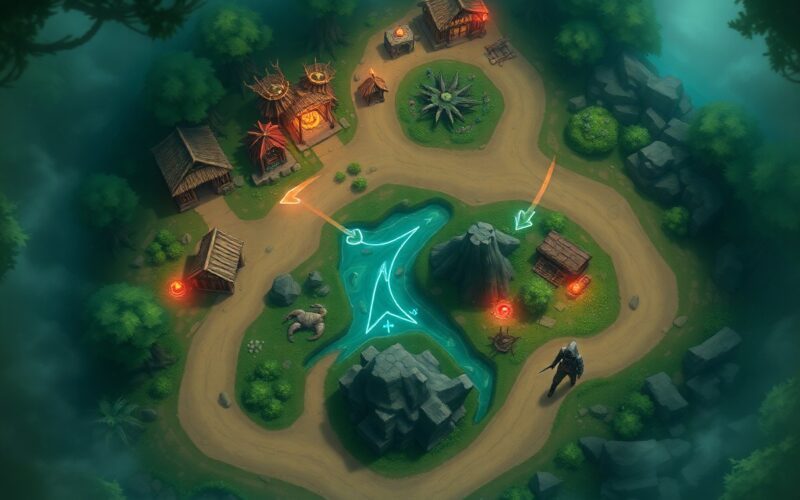
Prediction of jungle pathing in League of Legends enhances gameplay strategy by allowing players to anticipate enemy movements and optimize their own routes. Understanding specific paths provides a tactical advantage, leading to better decision-making and improved performance in competitive matches.
Fundamental Mechanics of Jungle Efficiency
Camp Respawn Cycles and Pathing Optimization
Each jungle camp has a specific respawn timer, typically ranging from 2:00 to 2:30 minutes. Understanding these cycles allows junglers to plan their routes more effectively, ensuring they maximize their experience and gold per minute. By timing the pathing correctly, a jungler can hit multiple camps in succession while capitalizing on respawn windows.
Efficient pathing not only increases farm but also enhances map pressure. Properly optimizing routes leads to more opportunities for ganks and lane assistance. Integrating camp respawn knowledge into pathing strategies ultimately results in a more impactful jungle performance.
Impact of Champion Clear Speeds on Map Presence
Champion clear speeds vary significantly, impacting how quickly a jungler can transition from farming to influence lanes. Some champions excel at clearing camps swiftly, allowing them to apply pressure across the map sooner than others. Selecting a champion with a fast clear speed can create early game advantages by enabling timely ganks or securing objectives.
Early map presence becomes indispensable as it dictates the pace of the game. Faster clearers can invade enemy camps, deny resources, or assist teammates in critical moments. The interplay between clear speeds and map control can define the trajectory of matches.
Clear speed not only influences immediate jungle performance but also feeds into broader game dynamics. Junglers with rapid clears can establish dominance early by counter-jungling or establishing vision with fewer resources. This advantage can lead to successful transitions into mid-game objectives, ultimately shaping the overall game outcome.
Information Gathering and Vision Control
Strategic Deep Warding for Route Verification
Effective deep warding allows junglers to confirm enemy movements and verify their pathing. Placing wards in key locations not only provides vision of the opposing jungler’s route but also reveals potential ganks or counter-ganks. Choosing optimal ward sites can shift the dynamics of early skirmishes, making it easier to capitalize on enemy missteps.
Positioning wards deep within the jungle reduces ambiguity about enemy intentions. By tracking the opponent, junglers can anticipate objectives and adjust their approach accordingly, ensuring they remain ahead in the game. This foresight can lead to advantageous trades or secure critical objectives.
Interpreting CS Count to Predict Camp Availability
Analyzing the creep score (CS) of opposing junglers is crucial for predicting their camp availability. A low CS count typically indicates that the enemy jungler has focused on ganking rather than farming. Observing this can inform decisions about securing objectives or contesting camps.
Conversely, a high CS count suggests that the enemy is likely farming efficiently. Tracking these nuances creates opportunities for counterplay, especially when timing ganks or when attempting to steal camps. Knowing when to act can turn the tide of skirmishes significantly.
CS counts provide insights into the enemy jungler’s focus and efficiency. For example, a jungler with 30 CS at the five-minute mark likely spent considerable time ganking instead of farming jungle camps. By correlating CS with jungle timings, players can anticipate when camps will respawn and position themselves strategically for engagement or objective control. This awareness creates a competitive edge in the jungle, as successful predictions can thwart the enemy’s plans and establish a stronger presence in key areas of the map.
Behavioral Analysis and Jungler Archetypes
Understanding jungler archetypes provides insight into potential playstyles. Different players tend to favor distinct strategies, often revolving around either aggressive ganking or efficient farming. Recognizing these patterns can guide in-game decisions, helping teams anticipate enemy movements or focus their own actions effectively.
- Gank-Heavy Junglers: Prioritize map pressure through early game aggression.
- Power Farmers: Focus on maximizing gold and experience via camps.
- Hybrid Junglers: Balance both farming and ganking strategies.
- Objective-Oriented Junglers: Emphasize securing dragons and heralds.
- Snowballing Junglers: Aim to build early leads through successful plays.
Power Farming vs. Gank-Heavy Routing Patterns
Aggressive junglers generally seek to establish early kills to capitalize on the enemy’s weaknesses. This ganking focus can disrupt the opposing team’s rhythm and create favorable conditions for their lanes. Alternatively, power farmers opt for a methodical approach, accruing resources to scale into the mid and late game.
Both routes have their merits depending on team composition and match dynamics. Gank-heavy junglers can gain substantial map control early on, while power farmers might provide a late-game advantage that is difficult for opponents to contest.
Identifying Deviations from Optimal Efficiency
Analyzing jungle pathing involves recognizing when a player strays from effective strategies. Deviations frequently manifest through poor route choices, inefficient resource use, or missed opportunities for ganks. Early detection of these mistakes can provide teams with an advantage, allowing for strategic adjustments.
Discrepancies often arise from either overly aggressive play or conservative approaches that fail to capitalize on strong matchups. Tracking these patterns not only highlights player tendencies but also helps formulate counter-strategies, giving teams a significant edge in decision-making during matches.
Identifying deviations requires close examination of both timing and positioning in jungle paths. When junglers frequently miss objectives or fail to pressure lanes at critical moments, these indicators signal a need for rectification. Understanding these inefficiencies aids in refining strategies, ultimately improving overall team performance.
Predictive Gank Timing and Lane Intersection
Calculating Vulnerability Windows Based on Jungle Progress
Identifying when enemy champions become susceptible to ganks requires understanding their cooldowns and positions relative to their lanes. This analysis hinges on recognizing when key abilities are on cooldown or when the opponent’s lane is pushed. Knowing the timing of your own jungle routes helps in projecting when to strike, maximizing the element of surprise while minimizing risk.
Observation of both the enemy’s and your own jungle timing reveals patterns. Analyzing these patterns allows for the anticipation of lane movements, creating opportunities for successful ganks. A well-timed approach leads to maximizing damage potential and increasing the chances of a securing kill.
Objective Priority and Its Effect on Movement Vectors
Focus on objectives such as Dragon or Baron can drastically shift jungler and lane dynamics. Teams often prioritize these key targets, which can distract them from warding or maintaining lane safety. By monitoring both teams’ objectives, a jungler can predict enemy movement vectors and exploit openings to execute ganks effectively.
Pressure from objectives often leads team members away from their lanes. This tendency creates windows of vulnerability that skilled junglers can capitalize on. Understanding this behavior highlights the importance of timing, reinforcing the need for awareness of the entire map and effective communication with teammates.
Counter-Jungling and Defensive Mitigation
Vertical Jungling and Cross-Map Objective Trades
Understanding vertical jungling can shift the flow of the game. This strategy involves focusing on your half of the jungle while denying your opponent the resources they need to succeed. When executed properly, it allows for efficient farming and creates opportunities for securing objectives like Dragon or Rift Herald without interference.
Executing cross-map objective trades provides a tactical advantage. By sacrificing a smaller objective, like a Scuttle Crab, for a larger one, such as a Dragon, you can create a favorable situation for your team. This decision-making process relies heavily on predicting enemy movements and understanding the risks involved in both jungles.
Mirroring Strategies to Neutralize Early Pressure
Adopting mirroring strategies can effectively neutralize early jungle pressure. By matching an opponent’s pathing, you deny them the chance to gain a significant advantage from their jungle movements. This tactic often forces them to reassess their approach and can lead to a more balanced game state.
Engaging in mirroring not only protects your resources but also creates opportunities for counterplay. As both junglers follow similar paths, skirmishes may occur in lanes, allowing for potential ganks that benefit both parties. This back-and-forth dynamic can help maintain equilibrium in the game, especially during early skirmishes.
Mirroring emphasizes observation of the enemy’s pathing and timing. By recognizing when the opponent commits to a side of the map, you can mirror their movements effectively. This creates a scenario where your presence counters their actions, allowing for safer jungle clears and the chance to ambush overextended opponents. The synergy between lane and jungle becomes crucial during these exchanges, as communication can lead to successful ganks or objective trades.
Advanced Analytical Frameworks
| Component | Description |
| Data Collection | Gathering player movements and actions across matches. |
| Statistical Modeling | Using algorithms to predict future movements based on past behavior. |
| Machine Learning | Implementing AI to analyze patterns and improve predictions. |
Probability Mapping and Movement Heatmaps
Analyzing player movements through probability mapping enhances understanding of likely jungle paths. Heatmaps visualize frequent movements, highlighting high-traffic areas that offer insight into player tendencies.
Utilizing these tools provides strategic advantages during gameplay. Predictable paths can be countered effectively, allowing teams to gain the upper hand in ambushes and objectives.
Psychological Factors and Habitual Pathing Exploitation
Observing psychological patterns in player behavior reveals crucial insights into habitual pathing. Players often gravitate toward familiar routes due to comfort, creating predictable movements that can be exploited by opponents.
Identifying these habits through analytics allows teams to anticipate enemy jungle movements. Predictive strategies can capitalize on this knowledge, creating opportunities for ganks and securing objectives.
- Psychological insights assist in predicting movements and creating ambush strategies.
- Understanding player tendencies fosters effective counter-play opportunities.
Thou must always analyze past games to identify and exploit habitual pathing.
Habitual pathing exploitation not only involves recognizing common routes but also predicting when players will deviate under pressure. Analyzing stress points during matches reveals moments where players alter their paths, introducing unpredictability into their strategy.
- Exploit unexpected behaviors to gain the upper hand in skirmishes.
- Always consider psychological aspects when formulating your game plan.
Thou must remain adaptable to capitalize on shifts in player behavior during the match.
To wrap up
Presently, understanding jungle pathing in League of Legends serves as a predictive tool for improving gameplay strategies. Analyzing opponents’ movements and potential objectives allows players to anticipate actions, increasing the chances of securing key advantages. Effective pathing creates opportunities for ambushes and counter-jungling, elevating a player’s overall impact on the game.
Mastering jungle pathing fosters better communication and teamwork among players. Incorporating this knowledge into gameplay can significantly influence match outcomes, as awareness of timing and position enables informed decisions. Strategic pathing not only enhances individual performance but also contributes to cohesive team efforts.