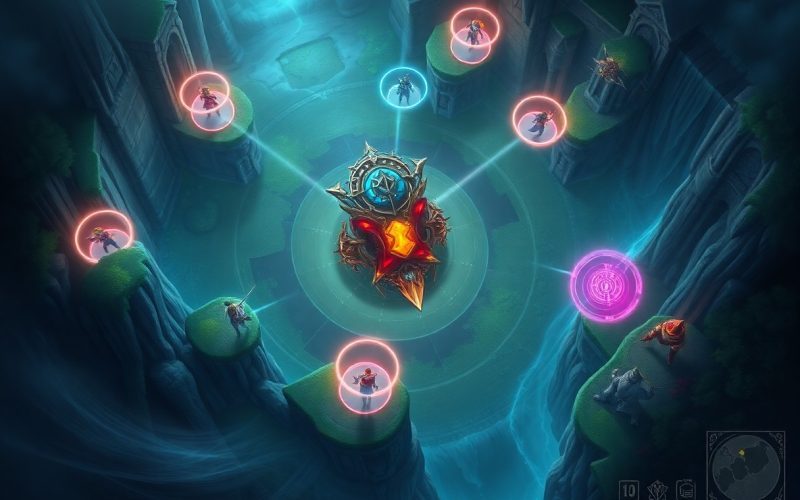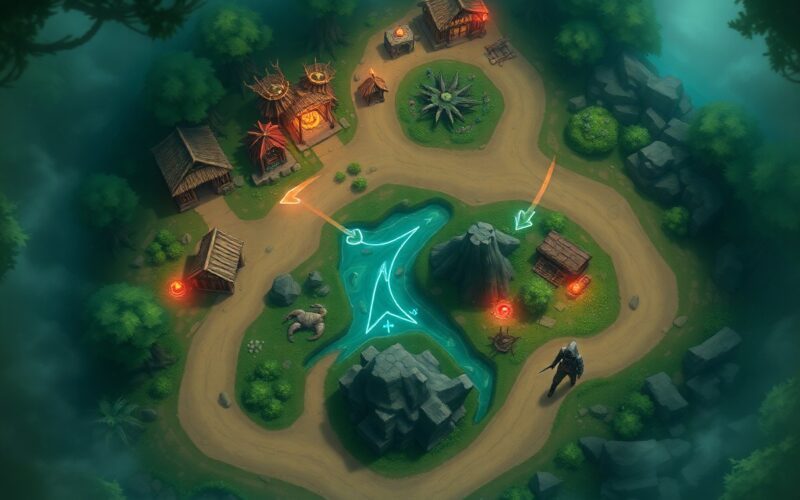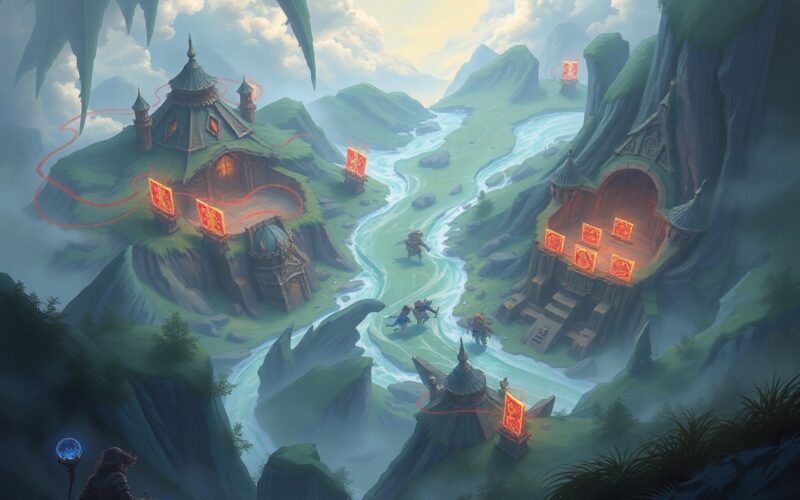
You must understand vision control and map awareness to excel in League of Legends. Effective vision allows for strategic decision-making, helping teams secure objectives and avoid ambushes. This guide explores imperative techniques and practices to enhance your gameplay through better vision management.
The Mechanics of Vision Control
Ward Types and Strategic Placement Utility
Understanding different ward types and their strategic placement enhances map control. Each ward fulfills a specific role in vision strategy, ultimately shaping team dynamics and decision-making.
- Stealth Ward: Provides vision without being detected.
- Control Ward: Reveals and disables nearby enemy wards.
- Sightstone Ward: Grants additional ward slots for enhanced coverage.
- Enemy Ward: Identifies potential ambush spots.
- Perceiving control zones creates opportunities for objective securing.
| Ward Type | Utility |
| Stealth Ward | Undetected vision |
| Control Ward | Reveals enemies and disables detection |
| Sightstone Ward | Extra vision slots |
| Enemy Ward | Identifies risks |
| Vision Ward | Extended map awareness |
Maximizing Efficiency with Sweeping Lens and Control Wards
Using Sweeping Lens and Control Wards effectively can change the course of a match. Players can remove enemy vision and maintain their own, creating opportunities for strategic plays.
Effective application of Sweeping Lens allows players to identify and disable enemy wards, disrupting their vision. Control Wards should be placed strategically in key areas, ensuring permanent vision while denying enemy sight. Together, these tools form a powerful vision strategy, enabling teams to secure objectives and control the map more efficiently.
Developing Map Awareness and Information Processing
The Mini-map Habit: Glance Intervals and Peripheral Cues
Practicing regular mini-map glances enhances awareness of your surroundings. Short intervals of 2-3 seconds allow players to absorb crucial information while staying focused on their champion’s actions. Peripheral cues, such as pings and enemy movements, should be noted during these looks to inform decision-making and positioning throughout the game.
Predictive Tracking: Analyzing Enemy Jungler Pathing
Understanding the enemy jungler’s route can shift the tide of skirmishes and objectives. By observing the initial jungle path and predicting future movements, players can determine when to establish vision or set traps. This proactivity minimizes risks and increases the likelihood of successfully countering the opponent’s strategies.
Analyzing the enemy jungler’s pathing requires critical observation of key indicators such as lane pressure and wave states. Noting where opponents are during early skirmishes and anticipating their movements grants insight into potential ganks or item purchases. Keeping track of buffs and camps also provides a clearer timeline of when the enemy might reemerge, allowing your team to respond strategically and maintain an advantage.
Objective-Based Vision Setup and Control
Establishing Territorial Priority for Epic Monsters
Prioritizing territory around epic monsters grants teams a strategic edge. Control wards should be placed in key areas to deter enemy vision while ensuring your team has clear sight lines. Securing these zones not only aids in objective capture but also protects against potential ambushes.
Defensive Bush Management and Chokepoint Security
Managing bushes effectively enhances your team’s defensive capabilities. Placing wards in critical locations prevents enemies from sneaking through chokepoints and allows for safer movement across the map. Vision in these areas is crucial for anticipating enemy actions and maintaining control during skirmishes.
Effective bush management involves not only warding but also denying enemy vision. Clearing enemy wards in strategic locations creates a safer path for your team. When engaging near chokepoints, always maintain ward coverage to spot any incoming threats early. This proactive approach to vision not only reinforces safety but also instills confidence when contesting objectives or during team fights.
Vision Dynamics Across Game Phases
Early Game: Mitigating Gank Pressure and Lane Safety
Prioritizing vision placement in early game is important for ensuring lane safety. Warding key bushes and river entrances helps players spot potential ganks, allowing for timely reactions. Strategic ward placements minimize risks and enable better trading opportunities, defining the lane dynamic early on.
Mid-to-Late Game: Deep Warding and Rotational Navigation
Scaling into the mid-to-late game shifts the focus on deep warding. Securing vision in enemy territory provides valuable information on their movements, facilitating rotations and objective control. Well-placed wards can turn the tides of team fights and secure key objectives.
Effective deep warding involves placing wards in high-traffic areas and around objectives like Dragon and Baron. This foresight not only grants information on opponent positioning but also creates opportunities for surprise engagements or safe retreats. Coordinating warding efforts with teammates amplifies map presence and can deter enemy advances. Understanding how to transition vision strategies as the game progresses is paramount for maintaining control and dictating the game’s pace.
Role-Specific Vision Responsibilities
The Support and Jungler Synergy in Vision Denial
Effective vision denial relies heavily on the coordination between supports and junglers. Supports should place wards strategically while junglers can clear enemy vision using Control Wards. This teamwork not only grants safety for objectives but also enhances map pressure by keeping enemy champions in check.
Solo Lane Contributions and Strategic Blue Trinket Usage
Solo laners play a key role in map control using blue trinkets. Timing their usage during potential ganks or while contesting objectives helps maintain visibility. Properly employed, blue trinkets can alert teammates to enemy movements, allowing for better informed decision-making in skirmishes.
Employing blue trinkets strategically not only supports solo lane safety but also impacts the macro game. By placing a blue trinket in the river or key jungle entrances, solo laners can track movements and set up plays. Coordinating with the jungler to sweep areas immediately prior to fighting for an objective transforms all-ins into effective ambushes, increasing the chance for success in team fights.
Advanced Tactical Vision and Counter-Play
Understanding the tactical applications of vision control can significantly influence gameplay outcomes. Effective vision management not only denies enemy information but also creates opportunities for strategic plays. Here, key strategies will be outlined:
- Positioning ward placements for maximum visibility.
- Timing vision rotations to maintain control over objectives.
- Utilization of sweeper and control wards for counter-play.
- Effective communication with teammates regarding vision status.
- Adapting ward placements based on enemy movements.
| Strategy | Description |
|---|---|
| Vision Baiting | Using false vision to lure opponents into traps. |
| Terrain Utilization | Understanding how terrain affects visibility and engagements. |
Vision Baiting: Utilizing Fog of War for Ambushes
Strategically placing wards to create the illusion of safety can deceive enemies, drawing them into unfavorable positions. This tactic forces opponents to overcommit, enabling your team to execute ambushes effectively.
Understanding Line of Sight and Terrain Interaction
Line of sight fundamentally affects vision dynamics in League of Legends. Terrain features like walls and bushes create blind spots that can be exploited or guarded against, making strategic positioning imperative.
Terrain placement interacts intricately with line of sight; for example, champions positioned behind walls become invisible to enemies unless spotted from the correct angle. Knowing these interactions allows players to craft ambushes or escape dangerous situations. Understanding how different terrains affect vision can provide a distinct tactical advantage in skirmishes.
To wrap up
From above, effective vision control and map awareness in League of Legends enhance gameplay by providing vital information on enemy movements and objectives. Players who master these fundamentals are better positioned to make strategic decisions, secure advantages, and contribute to overall team success. Consistent practice in warding and awareness can significantly impact match outcomes.
Q: What is vision control in League of Legends?
A: Vision control involves placing and denying vision on the map using wards and other tools. Proper vision allows players to anticipate enemy movements, avoid ambushes, and secure objectives. Warding key locations such as dragon and Baron pits enhances awareness and provides strategic advantages.
Q: How can map awareness improve my gameplay in League of Legends?
A: Map awareness lets players track enemy positions, understand team dynamics, and make informed decisions. Regularly checking the minimap helps identify potential threats and opportunities. Staying aware of enemy champions’ locations can prevent dying unexpectedly and lead to better engagement choices.
Q: What are effective ways to improve my vision control?
A: Prioritize buying control wards and place them in strategic areas. Coordinate with your team to cover blind spots and maintain vision on objectives. Regularly clear enemy wards using Sweeping Lens or other tools. Communicating with teammates about vision can enhance collective map control.