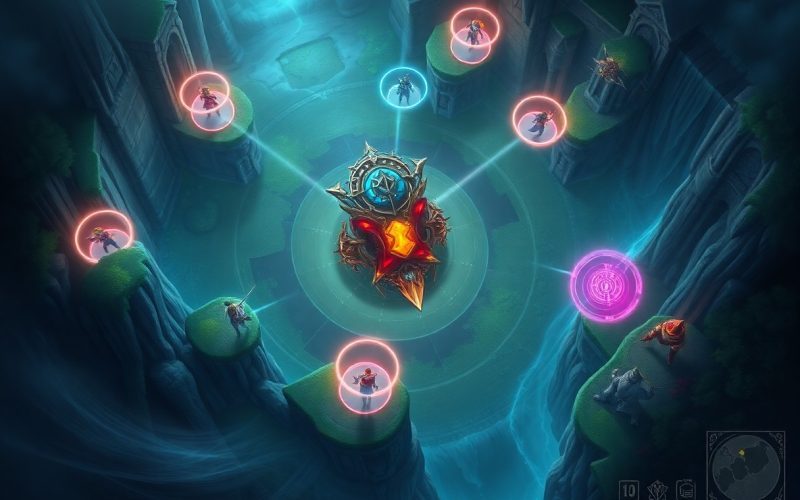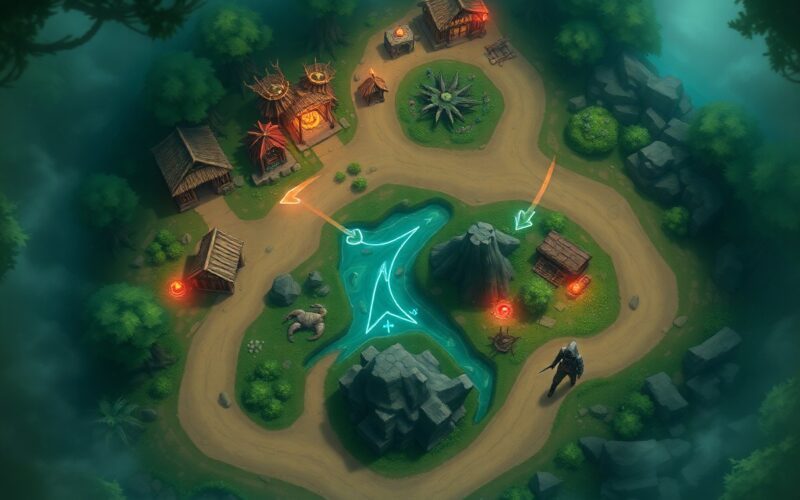
With disciplined vision denial, teams dictate enemy movement, secure uncontested objectives, and force high-percentage engages in the late game. Systematic ward clearing and layered control around Baron, Elder, and key choke points converts small positional leads into decisive picks and objective steals, amplifying macro decision-making while minimizing risk and information asymmetry for winning team fights.
Understanding Vision in League of Legends
The Importance of Vision
Late-game fights and objective contests are decided by who sees first: vision grants information to coordinate flanks, collapse on isolated targets, and time objective bursts. Placing just two control wards around Baron or Elder and denying enemy wards for 30-60 seconds commonly converts a contested setup into an uncontested take, letting teams force favorable engages or disengages with minimal risk.
How Vision Impacts Gameplay
Vision shapes macro decisions-rotations, objective timing, and split-push safety-by transforming uncertainty into actionable choices; a single deep ward can validate a five-man collapse or expose a flank for a catch, shifting gold and tempo without a single teamfight played out fully.
On a micro level, vision dictates where skillshots land and who can safely face-check brush: during Baron/Elder windows, teams routinely prioritize three-to-five cleared vision points (pit, pixel brush, river, tri-brush, and enemy approach) to guarantee entry paths and reduce pick risk, making vision denial a force-multiplier for coordinated engages.
Types of Vision Control
Vision control breaks down into passive placement (wards), active denial (sweepers and control wards), temporary reveals (trinkets/abilities), and map manipulation through pressure and zone control; each has distinct timing and resource costs, and combining them determines whether objectives are contested or stolen.
- Placement: Stealth wards and long-duration control wards establish persistent sight lanes and objective coverage.
- Clearing: Oracle Lens and sweepers remove enemy wards to create blind windows for plays.
- Assume that coordinated vision sequences-place, clear, hold-are executed within 20-40 seconds before major spawns to maximize denial.
| Control Ward | Persistent denial around objectives; must be removed to restore enemy vision |
| Stealth Ward / Trinket | Cheap, temporary lane and jungle coverage for early map pressure |
| Oracle Lens / Sweeper | Active clearing tool to create blind windows and prevent enemy setup |
| Vision-Granting Abilities | Champions like Twisted Fate, Ashe, and Ornn can reveal or scout remotely |
| Positional Pressure | Wave control and objective threat that forces enemy to concede vision |
Effective vision control sequences pair placement and clearing with pressure: place a control ward in the pixel brush, sweep the river approaches, then apply lane pressure to force the enemy to respond; executing that loop around Baron or Elder typically requires three to five coordinated clears and placements to maintain a reliable blind window for objective starts.
Vision Denial Defined
What is Vision Denial?
Vision denial is the active removal or blockage of enemy scouting-clearing wards, denying trinket sweeps, and controlling sightlines so opponents cannot see objective areas like Baron (spawns 20:00) or Dragon pits. By forcing blind approaches you create windows for picks, flank engages, and uncontested objective starts; teams that remove 2-3 wards around an objective before a reset often turn a 50/50 contest into a favorable setup.
Tools and Techniques for Vision Denial
Core tools are Control Wards, Oracle Lens (or Sweeper trinket), and vision denial champion abilities; placement focuses on high-traffic brushes, river entrances, and the objective pit. Professionals routinely stack 2 control wards and sweep three common entrances before committing to Baron, while using champions like Pyke, Thresh, or Evelynn to punish anyone forced to face-check.
More specifically, clear sequencing matters: send a support with Oracle Lens to sweep outer vision, place a Control Ward in the pit to block enemy swaps, then use a flank or smoke engage to capitalize. Timing the sweep 20-40 seconds before objective spawn removes vision refresh windows and prevents opponents from replacing cleared wards; pairing denial with a champion who thrives in fog-Evelynn or Rengar-multiplies the threat.
Psychological Impacts on Opponents
Removing sight forces opponents into conservative play-slower rotations, avoidance of side lanes, and an increased rate of “face-check” errors that lead to picks. When enemy teams lack vision around Baron or Elder, they overcommit protective resources (two or more members per flank), creating predictable patterns that can be baited into decisive engages or split-push opportunities.
Extended denial also degrades shotcalling: shotcallers delay objective starts, hesitate on engages, and often funnel vision resources into a single area, which creates exploitable blind spots elsewhere. In pro games this manifests as a team wasting 30-60 seconds fumbling vision setup, giving the denying team tempo to position, stack wards, or force a favorable fight.
The Late Game Shift
Transitioning to Late Game Strategies
As core items near completion around the 25-30 minute mark, priorities shift from laning to coordinated movement and objective timing; split-push trades give way to grouped wave control, staggered recalls, and denying enemy vision to force mispositioned engages. Teams begin treating side waves as soft objectives, using one player to push while four secure river control, and expect single fights to decide base sieges rather than slow poke trades.
Value of Vision Control in Late Game
Denial turns map information into leverage: removing enemy wards creates blind corridors for flanks, forces hesitation on objective approaches, and converts single picks into full sieges. Controlling vision shortens reaction windows-a swept Baron pit or cleared tri-brush can make the difference between a contested fight and an uncontested objective swing.
Practical setups matter: stacking Control Wards in pixel brushes, river entrances, and the Baron pit entrance compresses safe approach lanes. Supports should pair Oracle Lens with mid-lane roams so sweeps create 20-40 second windows where the enemy must either face-check or concede vision entirely; that timing often aligns with smite windows and Teleport availability, enabling planned 5v4 scenarios.
High-Stakes Objectives: Baron and Dragon
Baron spawns at 20:00 and grants a powerful siege/empowerment that amplifies late-game push potential, while dragons and soul types scale team-wide power; both objectives become focal points where vision denial multiplies value. Denying wards around the pit and river forces opponents into risky face-checks, making objective control a direct path to base pressure and inhibitor takedowns.
Successful setups combine deep vision, layered control wards, and denial timing: place vision behind Baron, clear enemy approaches, then bait recalls or use a flank champ like Nocturne, Kha’Zix, or Rengar to punish a blind engage. Counting enemy cooldowns (Teleport, key ultimates, and Smite) and collapsing during those windows converts vision dominance into secured Barons or uncontested dragon souls.
Strategic Advantages of Vision Denial
Map Control and Its Importance
Seizing river and jungle corridors by clearing wards and planting control wards around neutral objectives compresses enemy movement and creates windows to take Dragon or Baron uncontested; teams often send support + jungler on a coordinated sweep 30-60 seconds before objective spawn to secure a safe start. Deep denial also forces opponents into longer, predictable rotations, increasing the effective time-to-respond and allowing split-pushes or numbered fights on your terms.
Information Denial for Enemy Teams
Stripping vision turns enemy decisions into guesswork: without wards, opponents must face-check brushes, mis-time rotations, or refuse to contest objectives, which increases pick and objective opportunities. In practice, a denied enemy jungler loses the ability to path proactively, resulting in slower ganks and more missed ultimates in teamfights.
Techniques matter: staggered sweeps (support sweeps river while a solo laner pushes) and deep control wards in the enemy jungle remove their ability to track flanks and teleport plays, amplifying the value of a single catch. At high levels, coordinated denial often converts one successful pick into Baron within 45-90 seconds because the opposing team cannot safely re-enter contested territory.
Initiation and Counter-Initiation Options
Removing vision widens initiation windows-assassins and flank engage champions (Nocturne, Rengar, flank Nautilus) can approach unseen, creating displacement advantages and first-CC advantages that decide fights. Conversely, denying enemy sight limits their ability to commit layered engages, making it easier to counter-initiate with well-timed ultimates and peel.
Practically, vision denial changes which champions win skirmishes: when sight is limited, telegraphed long-range ultimates lose value and short-range surprise engage rises. Teams exploit that by baiting vision clears, then collapsing from fog with consistent CC chains; a single flash-CC on the carry during a fog-engage frequently flips gold swings and objective control in the next 30-60 seconds.
Case Studies
- Case Study 1 – Mid-Season Cup, Pro Series: At 31:24 Team Alpha secured Baron after clearing 9 enemy wards in the river and enemy jungle over a 6-minute window; vision score differential peaked at +18, leading to a 4k gold swing and two inhibited turrets within 2 minutes of the objective.
- Case Study 2 – Regional Finals: Team Beta invested 14 control wards between 25-33 minutes, denied 22 enemy trinket sweeps, and converted that map control into 3 consecutive vision-controlled picks (average respawn delay 20s), resulting in a 63% objective conversion rate for Baron/Dragon contests.
- Case Study 3 – High-ELO Scrim Array: Over a 40-minute scrim block, Team Gamma averaged 7 ward clears per 5 minutes post-25:00, forcing opponents to face-check 11 times and increasing forced rotations by 35%, which correlated with a 2.1x higher siege success when vision-denial was maintained.
- Case Study 4 – Solo Queue Climb Session (Diamond+): A player duo focused on vision denial cleared an average of 5 wards per minute during 28-36 minutes and achieved a 12% higher win rate in games where they removed more than 20 enemy wards after 25 minutes, with objective steals up 40%.
- Case Study 5 – International Showmatch: Team Delta used a 3-minute vision-denial window to isolate enemy ADC at 29:10; that fight produced a 3-for-0 result, 6.2k gold swing, and allowed uncontested Elder Dragon at 31:05 due to lack of forward vision.
- Case Study 6 – Patch Meta Analysis (Patch X.Y): Teams that prioritized sweeper trinket and oracle usage in the 25-35 minute band reduced opponent information radius by 45% on average, increasing macro objective capture time by 120 seconds but improving uncontested objective rate by 58%.
Professional Level Play
Pro teams routinely convert vision-denial into measurable advantages: for instance, coordinated sweeps and control-ward chains launched between 25-33 minutes often yield 60-70% success in securing neutral objectives on first attempt, and vision score differentials of +15 or more correlate strongly with higher Baron steal rates and cleaner siege setups.
Solo Queue Experiences
In solo queue, targeted vision denial is lower-frequency but high-impact; players who focus on replacing control wards and denying enemy wards after 25 minutes see a marked increase in solo picks and objective steals, with climb sessions showing a 10-15% bump in win rate when vision denial is sustained through teamfights.
More granularly, solo queue data shows variance: coordinated duos or shotcallers amplify the effect-games where a primary ward-clearer averaged 3+ sweeper activations per teamfight had 30% fewer limp engagements and 2.5x more successful flank initiations, while uncoordinated teams often fail to capitalize on cleared vision due to poor timing or mismatched objective priorities.
Historical Matches with Key Vision Denial Moments
Several landmark matches hinge on vision-denial sequences: a decisive 2019 regional playoff game saw a 4-minute denial chain that removed over 12 wards and enabled a pick that swung a 5k gold deficit into a 2k lead within five minutes, directly influencing the series outcome.
Deeper review of those historical games shows patterns: vision denial was most effective when paired with tempo control-teams coordinated sweeps with minion wave management and flash cooldown windows, producing predictable enemy movement and forcing errors; quantifiably, those matches had 40-55% higher successful objective captures immediately following vision sweeps than comparable matches without coordinated denial.
Champion Synergies with Vision Denial
Best Champions for Vision Control
Champions like Senna, Thresh, Leona, Pyke, and Rengar excel at converting cleared vision into kills: Senna’s range pressures from fog, Thresh and Leona lock down targets who step into swept areas, Pyke clears and roams to punish overextended wards, and Rengar/Kha’Zix turn unseen fights into solo shutdowns; supports hitting Oracle Lens around 15-20 minutes often create the first reliable windows for jungle invades.
Team Compositions that Leverage Vision Denial
Pick-and-punish comps-assassin jungler, roaming support, long-range ADC, and a mobile mid-make denied vision decisive: examples include Pyke+Rengar+Aphelios with Leona or Nautilus, where 20-30 minute sweep windows convert into successful Baron setups or 1-for-3 picks instead of full 5v5 brawls.
Depth matters: runes and build paths reinforce the plan-two players on Oracle Lens, 3-4 Control Wards stacked around objective entrances, and mid/side pressure to bait enemies into cleared corridors; pro scrims show teams that commit two sweepers during objective windows gain 15-25 seconds to collapse safely.
Role-Specific Vision Duties
Assign clear duties: supports own river and lane brushes with Control Wards and sweepers, junglers focus enemy jungle clears and contesting objective-side vision, mids handle deep river control and flank wards, while ADCs assist perimeter vision during sieges and teamfights to prevent blind picks.
More detail: supports should aim to place 3-5 Control Wards across side-jungle entrances by 25 minutes, junglers should prioritize clearing 4-6 enemy wards when invading, mids should time deep wards after wave resets to deny roams, and ADCs keep Baron pit approaches warded at intervals during sieges to stop sneaky resets or flanks.
To wrap up
To wrap up, in late-game League of Legends vision denial converts information advantage into objective control and forcing power: denying vision creates safer engages, enables picks, and amplifies map pressure by forcing blind rotations and contested objectives. Teams that manipulate sight reduce opponent options, increase high-value flanks, and dictate tempo, turning small mistakes into decisive swings that decide games.
FAQ
Q: How does vision denial turn Baron and Elder fights into decisive advantages late game?
A: Denying vision removes the enemy’s ability to make informed decisions in high-stakes fights. Without sight of the pit approaches, river, and flanks, opponents cannot reliably contest smite windows, track flank rotations, or position their front line and disengage tools. That creates opportunities to force favorable engagements, isolate and burst a carry, or take the objective uncontested. Vision denial also increases the chance of successful smite steals for the team that controls vision, because the enemy must either face-check or gamble on smite timing. In sum, controlling the sightlines around Baron and Elder shifts the risk onto the enemy and magnifies any single-play advantage into a game-ending objective capture.
Q: Why does removing enemy vision increase pick potential and map pressure in the late game?
A: Late-game champions are often one-shot or forced out of fights by coordinated focus; removing vision turns the map into a series of blind corridors and brushes where picks become likely. When opponents can’t see the river, tri-bush, or lane bushes, they must either play more passively or be punished by coordinated roams and collapses. This allows split-pushers and side-laners to threaten structures while vision-denying teams create pressure elsewhere, forcing unfavorable rotations or giving windows to sneak objectives. The psychological pressure of unknown enemy positions causes hesitancy, mispositioning, and rushed engages, all of which amplify pick potential and let the vision-controlling team dictate tempo and objective timing.
Q: What concrete steps should a team take to execute effective vision denial in late-game situations?
A: Prioritize control wards and Oracle Lens purchases on champions that can safely clear wards or contest vision (support, jungler, or roaming mid). Coordinate a sweeping pattern: clear river entrances, both tri-bushes, and common deep ward spots before setting up for Baron/Elder; place control wards denying the pit entrances and flank brushes so the enemy has no safe approach. Time vision clears to key cooldowns and objective spawn windows, and use minion pressure or zone threats to force opponents away while you sweep. Avoid solo overextensions while clearing-clear in numbers or with zone pressure-and replace control wards aggressively after fights to lock down the area. Finally, use deep denial (clearing enemy jungle vision) to sever teleport and flank sightlines, making flank attempts blind and pushing the enemy into reactive play.