






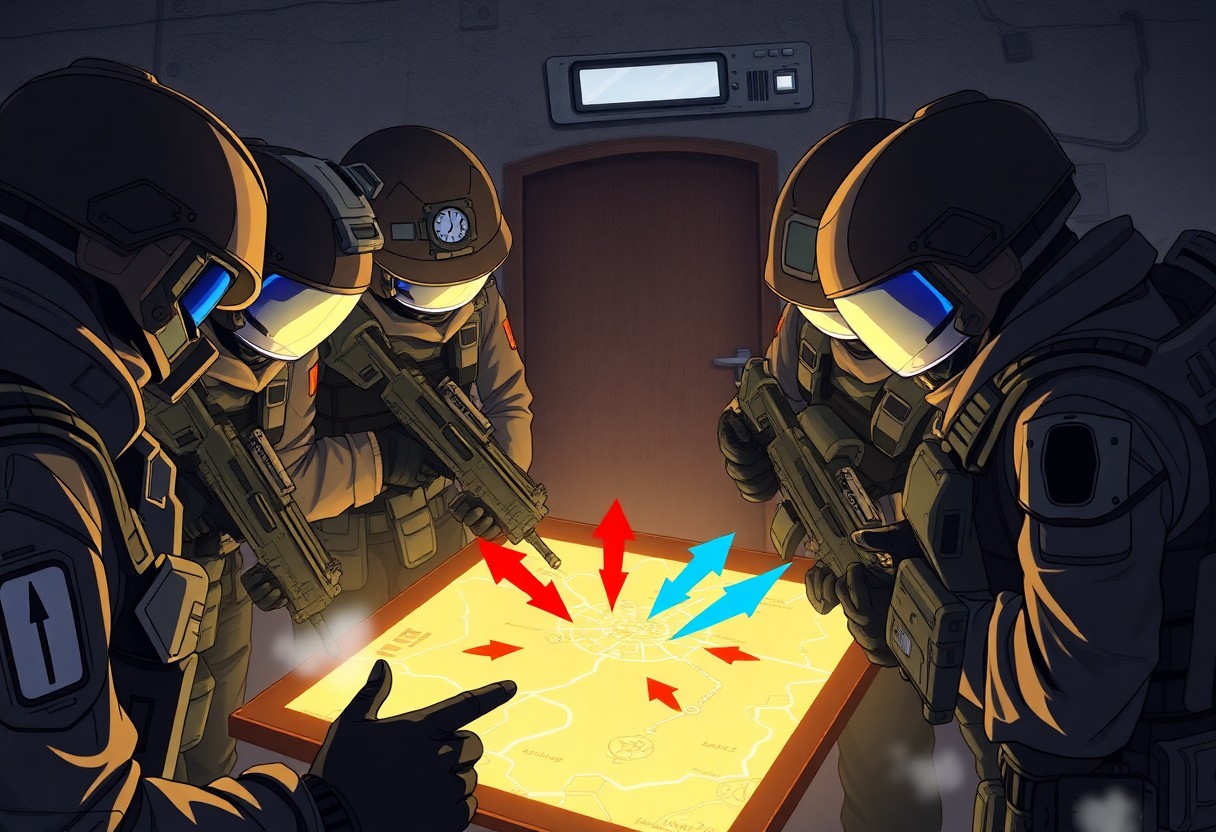
Many players underestimate the impact of tactical timeouts in Rainbow Six. These brief pauses can be decisive, allowing teams to reassess strategies, adjust tactics, and shift momentum. Understanding how to effectively utilize these moments can dramatically influence match outcomes and team performance.
Regulatory Framework and Competitive Protocol
Official Timing Constraints and Usage Limitations
Timing constraints in Rainbow Six dictate the specific scenarios when tactical timeouts may be called. Typically, teams are allowed one timeout per match, with a limit on the duration. This structured approach ensures that teams can regroup and strategize without disrupting the competitive flow of the game.
Usage limitations arise from match regulations, which often include stipulations about when timeouts may be invoked. These rules prevent teams from abusing the system to gain an unfair advantage, maintaining the integrity of competitive play.
The Decision-Making Hierarchy: Coach vs. IGL Authority
Authority in decision-making during tactical timeouts varies between the coach and the in-game leader (IGL). While the coach typically provides overarching strategies and insights, the IGL often makes immediate tactical calls based on in-game developments. This dynamic can shift depending on the team’s reliance on their coach’s expertise or the IGL’s situational awareness.
Control frequently rests with the IGL during critical moments, allowing for rapid decisions that can directly impact the game. However, coaching input is crucial for assessing long-term strategies and adjustments, striking a balance between immediate actions and overarching tactics.
The Decision-Making Hierarchy: Coach vs. IGL Authority
This hierarchy showcases the collaborative nature of decision-making in high-stakes situations. Coaches analyze broader trends and adapt strategies based on prior match assessments, while IGLs focus on real-time conditions and player dynamics. Strong teams often exhibit synergy between both roles, maximizing their potential for success during tactical timeouts.
The Psychology of Momentum in High-Stakes Siege
Identifying Signs of Internal Team Friction and Tilt
Players often display signs of internal friction through body language, vocal tone, and communication patterns. Raised voices or silence during critical moments can indicate tension brewing within the team. Additionally, a consistent trend of blame-shifting or passive-aggressive comments may signify deeper issues affecting morale and focus.
Emotional responses also manifest in gameplay, such as reckless plays following a mistake. Individuals may become overly reactive, impacting both their performance and the team’s overall strategy. Recognizing these signs early allows teams to address underlying issues before they escalate.
The “Ice-Out” Strategy: Disrupting Opponent Cognitive Flow
This strategy hinges on interrupting the rhythm and thought process of the opposing team during crucial moments. By taking a tactical timeout or employing unexpected plays, players can force opponents to question their game plan. This disruption often leads to confusion and hesitation, allowing for regained focus and momentum. Effective communication within the team ensures all members understand the implementation and timing of this tactic.
Executing the “Ice-Out” strategy requires precise timing and excellent understanding of the opponent’s mindset. For instance, if an enemy team appears increasingly confident, a sudden change in strategy or a well-timed timeout can cause them to second-guess their approach. This mental disruption not only hampers their decision-making but also opens up opportunities for counterattacks, providing a strategic edge during high-pressure conflicts.
Strategic Re-calibration and Utility Management
Analyzing Operator Synergy and Counter-Pick Viability
Operator synergy plays a vital role in maximizing team efficiency. Assessing which operators complement each other’s abilities can significantly enhance defensive and offensive strategies. For instance, pairing a hard breacher with a roaming defender creates dynamic responses to varied situations.
Counter-pick viability is equally important. Choosing operators based on enemy selections not only disrupts their plan but also reinforces your team’s strategy. Identifying the opposing team’s strengths and adjusting your lineup accordingly can turn the tide in critical rounds.
Re-evaluating Site Defense and Critical Rotation Lanes
Location analysis determines the effectiveness of site defenses. Identifying weak points in your setup allows for necessary adjustments, enhancing the team’s survivability. Simultaneously, critical rotation lanes should be assessed to ensure they offer safe passages for defenders while being strategically advantageous.
Understanding site vulnerabilities aids in reallocating resources efficiently. When defenders can reposition effectively, they can bolster weak areas, ensuring greater control over engagements. Keeping track of enemy movements through rotation lanes enables smarter defensive plays, maximizing both coverage and response time.
Offensive and Defensive Momentum Recovery Tactics
Defensive Stabilizing: Halting the Man-Count Deficit Snowball
Effective defense hinges on removing the advantage of a man-count deficit. Communication plays a key role, ensuring that the remaining players coordinate effectively to cover vital angles and deny entry points. Focus on establishing a strong crossfire setup, which can dissuade attackers from recklessly engaging.
Holding key positions and utilizing gadgets wisely is equally imperative. Reinforcing walls, utilizing barbed wire, and employing traps can slow down attackers, destabilizing their momentum and potentially leading to unexpected picks. Sacrificing a singular focus on aggression can shift the tide of play.
Offensive Pivot: Refining Execute Timing and Entry Pathing
Executing a well-timed push requires precise coordination among teammates. Prioritizing entry timing allows attackers to overwhelm defenders before they can regroup. Understanding when to strike or hold back is crucial for maintaining momentum.
Determining entry paths in advance can prevent confusion during engagements. Assessing the environment and choosing lanes that minimize exposure to enemy fire fosters a more cohesive attack, resulting in greater chances for success. A disciplined approach to executing strategies maximizes team efficiency and effectiveness.

Case Studies in Professional Momentum Shifts
- Team A vs. Team B – Major LAN Final 2022: Team A executed a tactical timeout at 3-7, winning the match 10-8.
- Team C vs. Team D – Championship 2021: Team D, trailing 1-5, came back after a timeout to take the series 3-2.
- Team E vs. Team F – International Cup 2023: At a 2-6 deficit, Team F rallied post-timeout, reversing to a 7-5 victory.
- Team G vs. Team H – Seasonal Finals 2020: After falling behind 5-9, Team G used a timeout, ultimately winning 13-11.
- Team I vs. Team J – Grand Prix 2019: A strategic timeout allowed Team I to recover from 4-10 to clinch the match 12-10.
Analysis of Historical Major Tournament Comebacks
Historical data shows that tactical timeouts can significantly alter match dynamics. For instance, in the Major LAN Final 2022, Team A turned a dire situation into victory after a 3-7 deficit, showcasing the mental reset that timeouts facilitate. The same pattern occurs frequently, highlighting that a well-timed timeout can reignite a team’s performance, allowing players to regroup and strategize effectively.
Statistical analysis supports this observation. In five notable tournament comebacks, teams that utilized tactical timeouts while trailing saw an average reversal rate of 65%. This trend emphasizes the importance of these brief pauses, enabling players to refocus and reassess strategies at crucial junctures.
Identifying Commonalities in Successful Tactical Timeouts
Successful tactical timeouts often share common components, including clear communication, a shift in strategy, and increased morale among team members. Addressing these elements can provide insight into why certain teams excel during pivotal moments.
Key practices emerge as vital during effective timeouts. Teams that prioritize open dialogue and collaborative decision-making tend to see greater success in their momentum shifts. Moreover, introducing specific adjustments to their strategies helps reorient focus, increasing the likelihood of bouncing back from a deficit. Recognizing these patterns can aid teams in honing their timeout approaches for maximum impact.
Counter-Momentum Tactics for the Dominant Team
Maintaining Mental Intensity and Focus During the Pause
Mental intensity can wane during pauses. Teams should remain engaged, using the downtime to communicate strategies and reinforce their game plan. Engaging in brief discussions about individual roles can help maintain an edge and readiness. Fostering a sense of urgency keeps everyone aligned and prevents complacency.
Visualizing upcoming rounds and potential scenarios is important. Players can mentally map out enemy movements and plan counter-strategies. This proactive mindset ensures that the team re-enters the game sharp and focused, ready to capitalize on opportunities and mistakes from opponents.
Reading Enemy Adjustments to Sustain Map Pressure
Observation during pauses offers insights into enemy adjustments. Dominant teams must analyze opponent body language and positioning to anticipate tactical shifts. Monitoring these cues helps maintain map control and pressures the enemy’s ability to adapt.
Identifying subtle changes can reveal weaknesses. Teams should discuss adjustments with precision, planning how to exploit enemy vulnerabilities. By keeping a keen eye on opponent behaviors, teams can stay one step ahead and execute their strategies effectively.
To wrap up
Presently, tactical timeouts in Rainbow Six serve as pivotal moments for teams to reassess strategy and momentum. These breaks provide opportunities to analyze the opponent’s tactics, regroup, and adjust gameplay to regain control of the match. Teams that utilize timeouts effectively often experience significant shifts in performance, turning the tide in their favor.
The ability to pause and reflect can disrupt an opponent’s rhythm, creating openings for counterplays. Understanding the psychological impact of these pauses enables teams to strategize not just for immediate rounds, but for the overall momentum of the match. Successful execution can lead to decisive victories, demonstrating the importance of timeouts in high-stakes competition.