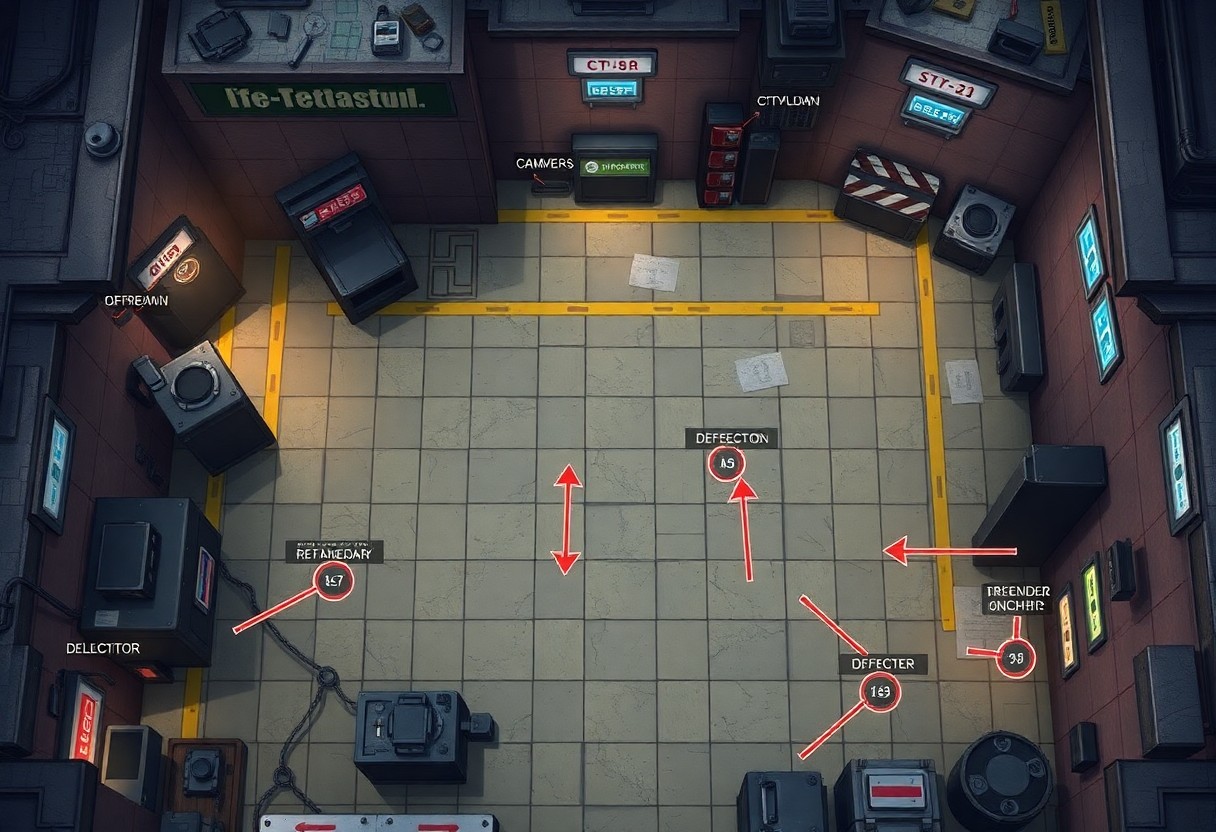
Just a closer look at map design in Rainbow Six reveals a notable defender-sided bias. Understanding this aspect is important for players seeking to improve their tactical approach and overall gameplay experience.
The Fundamental Mechanics of Defender Advantage
The Clock as a Primary Defensive Resource
Time serves as a critical advantage for defenders, allowing them to set up their strategies and positions before attackers begin their push. As the clock ticks down, defenders can adapt their tactics based on the attackers’ movements and choices, maximizing their defensive setups. This gradual build-up enhances their ability to respond effectively, creating a dynamic where attackers often feel pressured to act hastily.
Utilizing the clock also enables defenders to maintain control over key areas of the map. While attackers must gather intel and execute quickly, defenders can utilize time to reinforce positions or relocate, often catching unwary attackers off guard. Successful defensive teams exploit this with precise timing and coordination, often resulting in a significant advantage during engagements.
Information Asymmetry and Pre-placed Intel
Information inequality creates a strong defender advantage in Rainbow Six. Defenders can gather intel and reinforce areas with tools such as cameras and traps before the round begins. Knowledge of their surroundings fosters better decision-making, allowing them to position themselves optimally to counter attackers.
By having pre-placed gadgets and cameras, defenders establish a strategic edge in understanding enemy movements. This foresight not only enhances their positioning but also complicates attackers’ plans, making it difficult for them to ascertain where threats lie. The symbiotic relationship between pre-placed intel and defender positioning amplifies the challenges faced by attackers.
Information asymmetry in Rainbow Six highlights the disparity between what defenders and attackers know at the start of each round. Defenders benefit from the ability to prepare their defenses based on pre-placed cameras, traps, and strategic positions. This foresight creates a layered defense that attackers need to dismantle, often leading to well-timed counterplays. The imbalance of information creates an environment where the defender’s situational awareness significantly sways the gameplay dynamics, emphasizing the importance of intel in achieving a successful defense.

Architectural Design and Environmental Control
Verticality and the Power of Floor Destruction
Heightened verticality in maps can significantly alter defensive strategies. Multi-level structures provide defenders with advantageous sightlines and control, allowing them to pressure attackers from above or below. Floor destruction adds an extra layer of complexity, enabling rapid repositioning and potential ambush opportunities through cleverly placed holes.
Effective use of vertical space often forces attackers to rethink their approach. Rooms with destructible floors can create chaos and uncertainty, as defenders can rain down fire. This dynamic changes the pace of engagements, requiring attackers to remain cautious in their movements.
Structural Choke Points and Entry Denial Geometry
Choke points act as critical junctures in map design, allowing defenders to funnel attackers into predictable paths. Environmental structures, like walls and barricades, enhance this control by limiting available sightlines and routes. Proper reinforcement at these points can stall advances while maximizing defensive potential.
Defensive setups at these choke points often involve a combination of utility and firepower. Strategic placement of gadgets can deny entry while pummeling enemies attempting to breach. Such geometry creates psychological pressure, forcing attackers to weigh the risks before making a move.
Understanding choke points is imperative for maximizing defensive effectiveness. Each map features unique structural designs that can be manipulated to create deadly traps. This architectural insight empowers players to make informed decisions on where to focus their defenses, heightening the potential for successful engagements against attacking forces.
The Strategic Value of Rotation Holes and Off-site Holds
Rotation holes serve as critical escape routes, enabling defenders to reposition quickly and adapt to shifting situations. These openings provide breathability to the defensive setup, allowing for unpredicted movements that can surprise attackers. Off-site holds increase the defenders’ ability to maintain crucial map control while keeping attackers guessing.
Utilizing rotation holes smartly can lead to advantageous trades, as knowing when to retreat is as important as standing ground. The strategic execution of off-site holds allows defenders to challenge attackers from unexpected angles, drastically altering engagement dynamics.
Mastering the use of rotation holes enhances defensive strategies significantly. Players must consider the timing of rotations to maximize effectiveness while minimizing exposure. This aspect of map control can create a tactical edge, turning the tide in engagements against coordinated attackers.
The Utility Meta and Gadget Economy
Utility Soak: The Impact of the 20-Second Meta
Players increasingly face challenges with time management during engagements, especially within the 20-second meta. Defenders must maximize utility usage while attackers rush to secure objectives. This tension creates scenarios where gadget deployment can make or break defensive opportunities.
Understanding the concept of “utility soak” becomes vital in this fast-paced environment. Each gadget utilized not only affects the current round but also influences future rounds by controlling sightlines and maintaining map dominance. Thus, efficient use of resources is vital for sustained defensive effectiveness.
Passive vs. Active Intelligence Gathering Tools
Passive tools, such as cameras and gadgets that require minimal player interaction, provide consistent intelligence over time. Active tools, conversely, demand player involvement for real-time data collection. Balancing these options is crucial for maintaining situational awareness without sacrificing defensive capabilities.
The choice between passive and active tools impacts how strategies unfold. Passive tools establish a strong informational baseline, enabling defenders to remain informed with minimal effort. Active tools, while requiring focus, can yield immediate insights, allowing defenders to adapt quickly to changing attack strategies. Both types of tools work in tandem to create a well-rounded defense.
Case Studies: Archetypal Defender-Sided Maps
- Club House: Historical win rates show defenders with a 58% success rate.
- Villa: Maps reveal defenders winning 55% of rounds on average.
- Theme Park: Defender success rate sits at approximately 57% across multiple intervals.
- Border: Defensive teams dominate with a 54% win rate.
- Kafe Dostoyevsky: Consistent data indicates a 56% win rate for defenders.
Club House: The Evolution of Site Interconnectivity
Site interconnectivity on Club House has evolved, enhancing defensive strategies. The introduction of verticality allows defenders to leverage multiple levels, creating cross-site synergies that strengthen their hold.
Several sites feature overlapping lines of sight, which forces attackers to contend with numerous angles. This interconnectedness fosters a more challenging environment for attackers, often leading to increased defensive win rates.
Villa: Long Sightlines and Anchor Dominance
Villa’s design emphasizes long sightlines, offering defenders the ability to control key areas effectively. Numerous angles provide anchoring players with opportunities to repel attacks before they can gain entry.
This advantage becomes evident in key locations like the Living Room and Trophy, where defenders can utilize strong positions to deny pushes with minimal risk. By capitalizing on these vantage points, teams can reinforce their defensive strategies significantly.
Villa’s long sightlines create a tactical framework that grants defenders significant superiority, especially when anchoring in contested areas. Properly positioned defenders force attackers into difficult engagements, where even slight miscalculations can lead to swift eliminations. Crowded spaces become particularly perilous, allowing defenders to maintain control and capitalize on aggression.
Theme Park: Navigating Large Interior Buffer Zones
Theme Park presents unique challenges with its expansive interior buffer zones. Defenders can exploit these areas to create uncertainty for attackers, effectively amplifying their defensive capabilities.
Locations like the Dragon and Office allow defenders to delay advances and apply pressure. The layout fosters a sense of unpredictability, which can disrupt attackers’ strategies and lead to higher defensive success rates.
Theme Park’s layout requires attackers to be cautious, as the large interior spaces complicate pushes. This operational complexity benefits defenders, who can position themselves optimally to surprise and eliminate unwary attackers, reinforcing their dominance on the map.
Behavioral Disparities: Ranked vs. Professional Play
The Impact of Uncoordinated Attacker Execution
Uncoordinated attacks often lead to disarray, particularly in ranked matches. Attackers lacking communication and teamwork struggle to breach fortified positions, giving defenders a substantial edge. This lack of synergy results in high casualty rates for attackers, leading to an increased win rate for defenders further exacerbating the map bias.
Defensive strategies can easily exploit these missteps. When attackers execute plans without synchrony, defenders can effectively reposition and adapt. This dynamic not only reinforces defender advantages but also discourages cohesive play among attackers, further perpetuating the bias inherent in certain maps.
Statistical Win-Delta Variations Across Skill Tiers
Win-delta statistics reveal significant disparities in defender success rates across different skill tiers. Top-tier players demonstrate a narrower gap in performance between attackers and defenders, indicating higher adaptability. In contrast, lower-tier players often display significant vulnerabilities as they struggle to execute strategies effectively, skewing win rates in favor of defenders.
Analysis of win-delta variations provides insight into the nature of player skill and map design. Higher ranks tend to have coordinated teams, minimizing the impact of uncoordinated attacks. Conversely, lower ranks are prone to chaotic engagements, allowing defenders to capitalize on misplays. This contrast underscores how the same maps can produce vastly different outcomes based on player skill levels and coordination efforts.
Developer Interventions and Balancing Strategies
Map Reworks: Reducing Defensive Buffer Zones
Map reworks have played a significant role in addressing defender advantages. Reducing buffer zones strengthens the attacker’s position, compelling defenders to adjust their strategies. These adjustments create more engaging and dynamic gameplay, where attacking operators can challenge established defensive setups.
By narrowing defensive strongholds, developers enhance match fluidity. Players experience a heightened sense of urgency as attackers can apply pressure more effectively, transforming stalemates into action-packed encounters that demand adaptability from both teams.
Attacker Repick as a Counter-Strategy Tool
Attacker repick introduces a strategic layer to the pre-match phase, allowing teams to adapt their composition after the defender’s selection. This flexibility encourages attackers to counter specific defensive setups, making for a more balanced experience overall. It empowers players to reassess tactics based on the knowledge of opponent choices.
Utilizing attacker repick strategically has become important in top-tier gameplay. Teams can capitalize on information gained during the operator reveal phase, tailoring their approach to effectively counter defensive strategies in real time.
The Shift Toward Aggressive Attacker Utility
A growing trend towards aggressive attacker utility has emerged in recent seasons. Operators now come equipped with tools designed not just for entry but also for direct confrontation. This shift has prompted defenders to rethink their positioning and strategies, leading to more aggressive and interactive gunplay.
Increasing focus on offensive capabilities encourages attackers to take more risks, fostering a dynamic gameplay atmosphere. Players are incentivized to push forward, directly challenging defenders rather than relying solely on traditional strategies. As a result, both teams must adapt continually, ensuring that matches remain balanced and engaging.
Final Words
Taking this into account, the design of maps in Rainbow Six Siege heavily influences defender performance. Several maps tend to favor defenders due to their layout, cover options, and sightlines, allowing for stronger positions and tactics that can effectively counter attackers. This inherent bias shapes gameplay dynamics, often requiring attackers to adopt more strategic approaches to breach defenses.
Analysis of player statistics consistently shows higher win rates for defenders, particularly on maps that offer complex structures and choke points. Understanding these patterns can lead to better strategies and adjustments in gameplay, ensuring a more balanced and competitive experience for both teams.