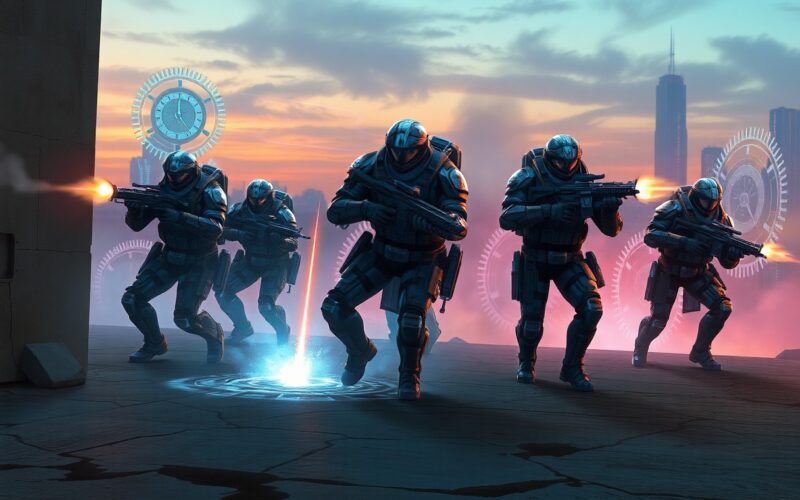
Many teams leverage Operator control to dictate sightlines, force cautious rotations and compress enemy timings, turning single picks into tempo advantages that reshape approach paths. Strategic placement, crossfires and utility denial amplify an Operator’s reach, enabling defenders or aggressive anchors to lock down chokepoints and create skewed economy decisions. Understanding how Operator presence alters lane commitment, economy and timing is crucial for planning executes and counter-rotations across map phases.
Understanding the Operator
Definition and Role in Valorant
The Operator is Valorant’s bolt-action sniper rifle (cost 5,000 credits) designed for long-range one-shot dominance and map control; it has a five-round magazine and punishes wide angles, making it ideal for anchors who hold static sightlines on sites like A Main on Bind or Mid on Ascent. Teams use Operators to lock down choke points, force utility expenditures from opponents, and create high-value trade windows-players with good crossfires and quick utility setups turn a single Operator into a round-winning presence.
The Operator vs. Other Sniper Rifles
Compared to the Marshal (950 credits), the Operator trades mobility and affordability for raw stopping power and guaranteed area denial: Marshal excels at quick peek-and-flick plays and eco rounds, while the Operator demands full buys and positional discipline. The price gap (5,000 vs 950) changes team buy patterns, and the Operator’s one-shot threat alters opponent pacing more than any other rifle in the arsenal.
Digging deeper, the Marshal’s faster equip and scope times plus lower cost make it a superior choice for aggressive operators of space-players can take multiple risky peeks per round-whereas the Operator’s slower reload and heavier commitment reward measured play and crossfire setups. Pro teams sometimes run a dual-Operator strategy on maps with long sightlines (Split, Bind) to completely deny rotations, but that often comes at the cost of reduced utility or rifle support on the other site.
Price and Economic Impact
At 5,000 credits the Operator is one of Valorant’s most expensive items, often dictating full-buy or forced eco decisions for teammates; purchasing it usually means sacrificing heavy utility or a teammate-side rifle, so teams must plan utility economy and site retake potential around that single investment. Securing a round with an Operator can flip a buy cycle, but losing it early frequently snowballs into two rounds of weakened buys.
More specifically, successful Operator rounds can offset their cost by enabling saved-weapons and by producing high-value multi-kills that swing enemy economy; conversely, a lost Operator drop grants opponents a massive credit and firepower boost when they pick it up. Tactical choices-who buys, who supports with smokes/flashes, and whether to buy two Operators-should be based on map geometry, opponent tendencies, and round-win probability rather than individual confidence alone.
Map Dynamics Influenced by the Operator
Key Map Features Favoring Operators
Maps with long, uninterrupted sightlines, minimal lateral cover and predictable player funnels amplify the Operator’s value; at 4,500 credits and offering one-shot body kills, it rewards setups on Ascent mid, Breeze A/B lanes, Bind B long and Fracture mid. Teams exploiting rotation distances and telegraphed entry points can isolate duels-two-player holding setups or staggered timings often convert simple picks into full-site retakes because the Operator punishes overextensions and slow utility usage.
Choke Points and Long Avenues
Narrow approaches like Bind B long, Ascent A main and Breeze mid create single-file engagement windows where an Operator can lock down 8-12 meter sightlines, forcing attackers to burn smokes and flashes; defenders typically hold with one anchor and a relief player to trade, turning a single opening shot into a multi-frag swing that dictates map tempo.
Attackers counter by layering utility-Omen smokes, Sage walls or staggered flashes-to reduce those sightlines, while defenders use passive angles and crossfires. Pro teams frequently run double-Operator or hybrid setups on Ascent and Breeze to amplify hold strength; when executed, even full executes require precise utility coordination and 2-3 committed players to clear an Operator’s lane safely.
Verticality and Sightlines
Elevated positions such as Icebox A belt, Split rope/heaven and Breeze platforms let Operators cover multiple approach vectors and sightlines simultaneously, often creating one-way advantages that complicate standard retake paths; a single elevated Operator can deny rotations and force attackers into predictable utility patterns to gain ground.
Counterplay centers on multi-angled clearing and vertical utility-nade arcs, blast packs, wall-placed smokes or flashbangs-to dislodge elevated snipers. Quick repositioning and timing plays (baiting with a secondary peek or using a short smoke to close vertical sightlines) turn those high-value perches from absolute holds into contestable positions that demand coordinated reads rather than raw aim alone.
Operator Strategies for Attackers
Initial Positioning and Site Entry
Anchor the Operator on dominant sightlines-heaven, rafters, elbow-so entry corridors funnel into a single pixel; on Ascent A, for example, heaven controls A Main and Market. Delay the full-site commit until utility clears common close angles, then use the Operator to open with a pick and let 2-3 entry fraggers trade the kill and secure a plant. Given the Operator’s 5,000-credit price, coordinate buys so you still have at least two teammates with smokes or flashes to enable safe entry.
Rotating and Flanking with the Operator
Rotate briskly and avoid predictable long walks-use smoke lines or wallbang timings to mask movement and reposition to a new one-shot angle within 5-10 seconds. Maintain line-of-sight consistency: move from long-range posts to intermediate holds where you can reset after a missed shot, and coordinate with a teammate to cover close-quarters cleared by utility so you aren’t traded by lurkers during the swing.
When executing a flank, plan two-stage pressure: one player commits to a silent flank while the Operator relocates to an unexpected angle (e.g., rafters to post-plant flank). Use one smoke to sever the defender’s view and one flash or concuss to cover the pivot; teams that practice this can convert a 1-for-1 into a round win by isolating rotations-statistically, coordinated flanks raise post-plant survival by a measurable margin in high-elo scrims.
Communicating with Teammates for Optimal Use
Keep comms concise and time-focused: call the Operator’s angle, enemy counts, and utility needs-e.g., “A rafters, two close, need one smoke”-and announce rotation timers like “30 seconds to plant” or “10 seconds post-plant.” Ping intent for peeks and rotating so entry fraggers know whether to trade or press, and always state health or number of enemies to help teammates decide if they should commit to a retake or bait.
Adopt a simple script: initial call (angle + enemies), request (utility + trade promise), and execution cue (“rotate now” or “peek on three”). For example: “I’m holding B long, one CT, need a smoke Heaven, two on site to trade” gives actionable data in three short lines. Consistent phrasing reduces clutter, improves reaction times, and lets an Operator player reposition confidently without costing rounds to miscommunication.
Operator Strategies for Defenders
Anchor Points and Holding Angles
Anchor points should center on dominant sightlines-heaven, rafters, elbow, tubes-so on Ascent hold A Heaven and A Main split, on Bind hold B Long from Hookah/Window. Use a layered hold: a deep primary for long-range first contact and a closer secondary to punish pushes; swap after 10-15 seconds or when enemy utility clears your line. Maintain a teammate 3-5 meters back for crossfire to reduce 1v1 vulnerability and secure trades.
Adapting to Enemy Strategies
Against fast rushes (3-5 players committing within the first 15 seconds) play deeper, call for flashes, and bait utility to thin the wave; versus slow defaults probe forward to isolate rotators and punish overextensions. Track enemy timings-early spikes in utility use often predict an imminent execute-so adjust depth and peek frequency accordingly.
More granularly, count flashes and smokes to infer remaining resources: if attackers burn 2 flashes and a smoke, they likely lack counter-utility for a late retake, so you can hold a more aggressive forward angle. Also reposition after one missed shot or a sound cue-shifting to an unexpected cubby or close-range angle increases your chance to win the next duel and denies predictable peek timings.
Using Utility to Support Operator Play
Pair Operator holds with site-denial and info tools: Brimstone/Omen smokes create safe peek corridors, Sova recon darts and Cypher cam reveal clustered pushes, Breach flashes or Raze grenades displace attackers off angles. Prioritize utility that secures line of sight or forces enemies into predictable movement to maximize single-shot value.
In practice, sequence utility: smoke the approach lane, use a recon or camera to confirm numbers, then pop a flash to stall an entry while the Operator re-peeks. On Split B, for example, a Brimstone mid-smoke plus Breach fault line can stall a 3-player execute long enough for the Operator to land a headshot or for teammates to setup crossfire, turning a stalled push into a tradeable engagement.
The Psychological Impact of the Operator
Fear and Respect Among Opponents
A visible Operator immediately changes opponent behavior: teams delay peeks, pre-fire common lanes less, and rely on utility to probe instead of raw duels. Because the rifle costs 5,000 credits and rewards conservative play with one-shot outcomes on headshots, attackers often cede 10-20 seconds of map control to avoid early trades, rotating or using recon abilities (Sova, KAY/O, Skye) to gather information before committing.
Creating Space and Map Control
An anchored Operator denies large sightlines and creates safe corridors for teammates to rotate or take other objectives; for example, an Op posted at A Heaven on Bind lets the site team play lighter in-site, freeing a second player to contest mid or lurk. That denial effect forces attackers to burn two smokes and a flash on average before attempting a contested peek, shifting resource allocation in the round.
More specifically, Operators alter standard defensive distributions: instead of 2-2-1 splits, teams may adopt 1-3-1 or 1-2-2 with the Operator holding a long angle while teammates compress elsewhere. On maps like Breeze or Ascent, a single Op pick can create a 15-30 second stall that allows rotations to arrive; attackers then need coordinated utility (typically 2-3 pieces: smokes, flashes, recon) to regain those lanes, increasing execution complexity and timing windows.
The Importance of Mind Games
Operators invite psychological tactics: fake rotates, deliberate jiggle peeks, and audible scope or reload baits can manipulate enemy rotations and utility usage. Teams exploit the fear of the Op by faking site pressure to draw the sniper out or by forcing repositioning through timed utility, turning a single rifle into a information and tempo weapon beyond its one-shot power.
In practice, pro teams use mixed signals-sending a lurker or an early smoke while showing presence elsewhere-to test whether the Operator will relocate or hold. If the Op falls for a bait or reveals position, attackers can punish with a quick 3‑player burst; if they respect the fake, attackers have gained time and forced costly utility. Repeatedly alternating these plays over rounds (two rounds showing aggression, one round feint) creates hesitation in opponents and raises the Op’s influence without firing a single perfect shot.
Countering the Operator
Effective Strategies for Attackers
Use coordinated utility and tempo to unsettle an Operator: smoke common sightlines (Brimstone/Omen), chain two flashes for entries, and execute trades by staggering peeks-one player shoulder-checks while a teammate times a 0.2-0.5s follow-up peek to catch the Operator off-aim. Prioritize clearing pockets with Boom Bot or Sova Recon, force a rotation to isolate the sniper, and convert a 2v1 into a trade win rather than forcing a single hero play.
Using Agents to Neutralize the Operator
Breach, Sova, Raze and Omen provide direct counters: Breach/Astra flashes and Breach aftershock can stun or disrupt holding angles; Sova Recon Bolt reveals positions through walls; Raze utilities flush and trade; Omen/Brimstone smokes deny lines of sight, and Viper walls can compress long corridors to force close-range fights.
On specific maps execute combos: on Bind A Long, send a Sova Recon into Lamps, drop a Brimstone smoke crossing and have Breach flash from Hookah as two players wide-peek; on Split, use Omen vents smoke then Skye flashes to allow a Jett dash for an entry. Timed utility-smoke 0.5-1s before the push and flash immediately prior-reduces the Operator’s reaction window and creates repeatable trade opportunities.
Map Awareness and Movement Techniques
Exploit sound, sightline knowledge and movement: jiggle-peek to bait a miss, counter-strafe to instantly stop and shoot, and cross only under smoke or after a confirmed Operator shot. Track common Operator perches-A Long on Haven, B Long on Bind, Mid on Split-and prioritize clearing them with utility before committing to a push.
Practical patterns include timing crosses to the Operator’s bolt cycle (push immediately after a missed shot), using silent walk to set up a shoulder peek, and planting for post-plant angles that deny re-peeks. Combine these with audio cues-weapon cycling, footsteps, ability casts-to predict repositioning and force the sniper into unfavorable close-range engagements.
Final Words
Considering all points, disciplined Operator control dictates tempo and territory in Valorant by enforcing sightlines, forcing rotations, and allocating resources; teams that master angle discipline, crossfire setups, and timing convert long-range dominance into reliable map pressure, shaping opponent decisions and enabling coordinated executes or retakes while limiting enemy options.
FAQ
Q: What is “Operator control” and how does it change map flow in Valorant?
A: Operator control refers to holding long, high-value sightlines with the Operator rifle so opponents cannot move freely without taking high risk. When a team secures those angles the pace slows: attackers are forced into slower, utility-heavy approaches, defenders can funnel rotations and isolate engagements, and site takes often require coordinated smokes, flashes, or multi-directional pressure. Economically, an Operator presence affects buy decisions-teams may save to answer an Operator or force eco plays to avoid 1v1s-and psychologically it creates hesitation that benefits site anchors and crossfires.
Q: How should teams adapt when an enemy Operator is locking down a key angle?
A: Use utility to deny sightlines (smokes, walls, molotovs) and force the Operator out of position, then close distance with coordinated entry tools-flashes, flashes-through, dashes, or fast executes from alternate approaches. Assign a dedicated tradespace: send a peek or recon agent (Sova, KAY/O, Skye) to bait a shot while a teammate trades from a different angle. Apply multi-site pressure or fake executes to stretch rotations; if the Operator is repeatedly controlling one lane, attack through ladders, vents, or flanks to remove their anchor. On low-econ rounds, avoid knife-range duels by using pistols and utility to overwhelm or isolate them rather than trying direct long fights.
Q: What map-specific tactics work to contest or regain Operator-controlled lines?
A: Ascent: smoke Mid and Short to prevent A Operator from anchoring, then take Short control for close-range trades; use boosts or flashes to contest Heaven. Bind: use Teleport flanks and B Short pushes to bypass A long Operators; Stun/flash B Long before peeking. Split: deny A Heaven and screens with utility and execute quick A site hits to force repositioning; use vertical utility to push Operators off high angles. Icebox: use grenades and vertical aggression to clear nest points; contest A Rope and Kitchen with close-range duelist plays. Across maps, coordinate post-Operator pushes with mollys and smoke lineups for safe defuse and set up crossfires to punish repositioning; if regaining control is costly, consider site swaps and economy management to reset the duel on more favorable terms.