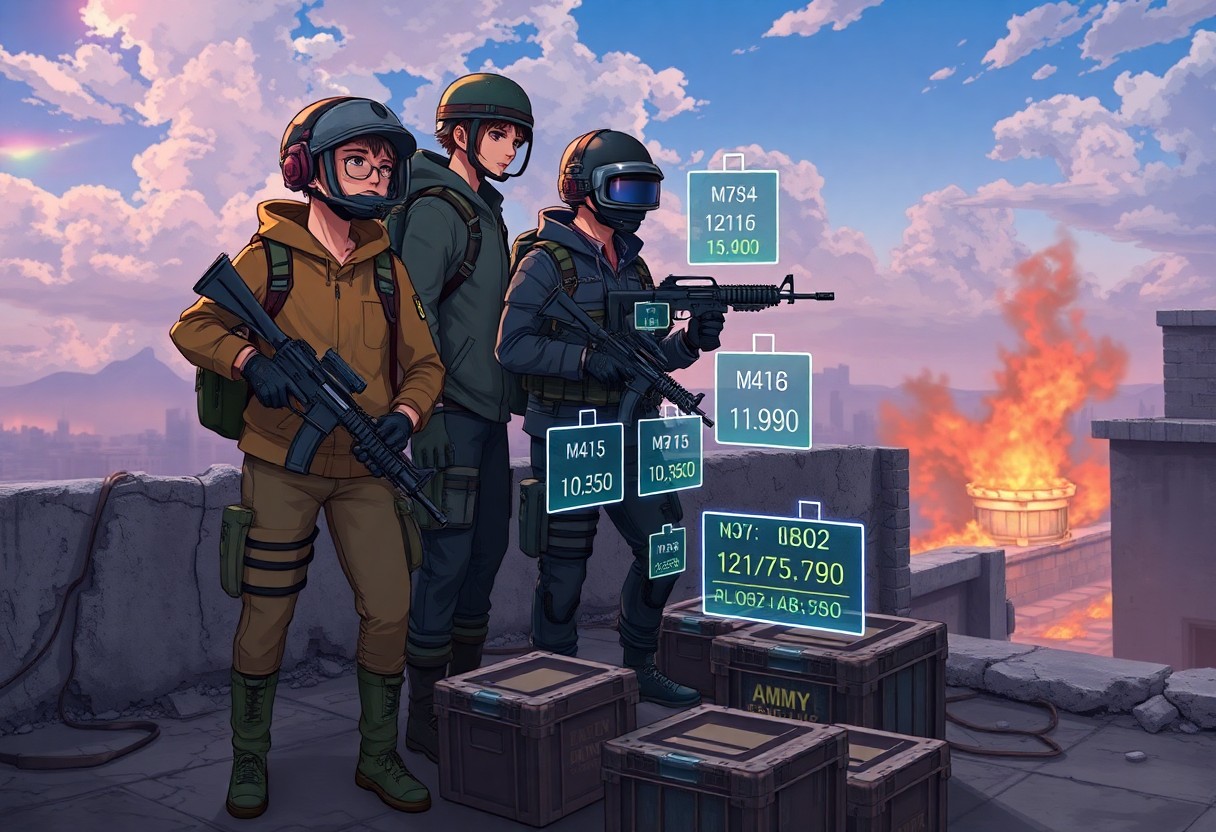
With the rise of underdog squads in PUBG, understanding their strategic advantages and decision-making processes becomes imperative. This blog post examines how these teams utilize value detection to optimize their gameplay and achieve surprising victories against more established opponents.
PUBG underdog squads and value detection
Defining the Underdog in Competitive PUBG
Underdog squads are those teams that come into tournaments with lower expectations yet demonstrate remarkable skill and depth. These teams often challenge established powerhouses, showcasing not just raw talent but strategic ingenuity that catches opponents off-guard. Their ability to thrive under pressure makes them intriguing contenders in any competitive setting.
Distinguishing Tier-2 Talent from Tier-1 Powerhouses
Evaluating Tier-2 talent versus Tier-1 teams hinges on several factors, including game sense, communication, and adaptability. While Tier-1 teams typically possess established rosters with extensive experience, Tier-2 squads often feature rising players eager to prove themselves. This hunger can lead to innovative plays that disrupt conventional strategies.
Skill gaps between these tiers often manifest in high-stakes situations, where Tier-1 teams rely on their refined synergy. Cohesion allows them to execute complex strategies smoothly, whereas Tier-2 teams may falter under pressure, despite moments of brilliance that shine through in matches.
The Impact of Regional Meta Variance on Global Performance
Regional meta variance creates distinct playing styles that significantly influence competitive performance. Different regions prioritize unique strategies, weapon choices, and approaches to engagement based on their own competitive environments. This variance can give underdog teams, unfamiliar with other regions’ playstyles, a strategic advantage if they adapt swiftly.
In many instances, teams from regions with less exposure to international play surprise stronger squads by leveraging their unique strategies and understanding of the meta. Adaptability becomes necessary; those who can quickly pivot in response to differing styles not only perform better but also redefine expectations. Embracing a flexible mentality allows underdogs to challenge norms and potentially secure unexpected victories on the global stage.
Analytical Frameworks for Value Detection
Statistical Anomalies in Kill-to-Death Ratios
Kill-to-death ratios (K/D) serve as a common metric for assessing player performance. Anomalies within these ratios often indicate either remarkable skill or inconsistencies in play. An underdog squad may display inflated K/D ratios when they secure unexpected kills against more experienced teams.
On the flip side, unusually low K/D ratios might suggest strategic flaws or poor resource allocation. Scrutinizing these anomalies becomes important for identifying potential overperformers or under-optimized squads.
Placement Consistency vs. Aggression Indices
Placement consistency illustrates a team’s ability to survive throughout the match. Conversely, aggression indices measure how frequently a squad engages in combat. Balancing these metrics is vital for success, as overly aggressive play can compromise placement.
Contrary to common belief, high aggression does not always correlate with superior performance. Squads that effectively balance placements and engage when advantageous often achieve better overall results.
Placement consistency plays a pivotal role in long-term tournament success. Teams that prioritize survival accumulate points steadily, while those that frequently pursue kills risk early elimination. A measured approach, blending both metrics, enhances a squad’s adaptability in various play styles and situations.
Resource Management and Economy Sustainability
Effective resource management directly impacts a squad’s sustainability throughout a match. Controlled expenditure and prioritization of items can dictate a team’s ability to engage or retreat. Underdog squads that excel in managing limited resources often outlast more established competitors.
Understanding the in-game economy allows teams to maximize their potential, ensuring that even lower-ranked squads can remain competitive with strategic planning and efficient resource usage.
Effective resource management requires keen awareness and tactical decision-making. Prioritizing important loot and communication fosters a cohesive strategy, enabling teams to exploit advantageous situations while minimizing wastage.
Strategic Indicators of Squad Growth
Early-Game Looting Efficiency and Drop Spot Security
Efficient looting in the early game sets the foundation for squad success. Identifying drop spots that are both rich in resources and low in enemy traffic can significantly increase a squad’s chances of survival and engagement in subsequent battles.
Prioritizing communication leads to organized looting strategies. By clearly assigning roles and areas of interest, squads can maximize their inventory while minimizing exposure to potential threats.
Rotation Speed and Circle Positioning Accuracy
Fast rotations contribute to a squad’s ability to control the circle effectively. Understanding the shrinking circle dynamics enables teams to position themselves strategically ahead of enemy movements.
Accurate circle positioning reduces the risk of being caught off-guard. Squads should prioritize safe pathways that offer cover and optimal vantage points, enhancing their ability to engage or disengage effectively.
Rotation speed directly impacts overall squad survivability. Quick decisions regarding when and how to rotate can mean the difference between gaining high ground and being trapped in the open. Monitoring the circle and efficiently moving toward advantageous positions maintain both safety and strategic initiative in engagements.
Tactical Execution and Mid-Game Resilience
Navigating High-Density Terrain and Dead-Side Rotations
Engagements in high-density terrain often lead to disarray. Teams must adapt their strategy, utilizing natural cover and maintaining formation during rotations to minimize exposure. Dead-side rotations can be particularly advantageous, allowing squads to reposition unseen while enemy players are focused elsewhere.
Understanding enemy movement patterns is imperative during these rotations. By analyzing the battlefield layout, teams can determine the safest paths and anticipate potential threats. Keeping communication open ensures everyone is aligned and aware, increasing the odds of survival and success as the match progresses.
Effectiveness of Utility Usage in Defensive Setups
Utility items play a key role in defensive strategies. Smoke grenades can obscure sightlines, while grenades force opponents to reposition. Strategically deploying these items allows teams to control engagements, making it harder for enemies to capitalize on their numbers.
Coordinated use of utility maximizes defensive potential. By timing the deployment of smokes and flashbangs, squads can create opportunities to eliminate enemies while minimizing exposure. Understanding the dynamics of utility usage is imperative for maintaining defensive integrity, especially in late-game scenarios.
Utility in defensive setups creates opportunities for strategic plays. Well-timed smoke deployment can mask retreat paths or repositioning of team members, while stun grenades disorient foes. Additionally, teams should practice utility combinations to capitalize on confusion, ensuring that each item serves a deliberate purpose. Effective utility usage reinforces team stability, enabling squads to repel threats and secure vital positions throughout the match.
Psychological Factors and Clutch Performance
- Pressure response can dictate squad performance.
- Clutch situations test individual resolve and teamwork.
- Mindset plays a pivotal role in decision-making.
- Experience in clutch moments breeds confidence.
Handling High-Pressure Final Circle Scenarios
Final circle scenarios demand a unique blend of composure and strategy. Players must balance aggression with caution, anticipating enemy movements while optimizing their own positioning.
Focus on communication becomes paramount, as frantic conditions can lead to chaos. Clear calls can turn the tide, ensuring that every member understands their role in achieving victory. Thou must remain calm to seize the moment.
The Influence of Roster Stability on Team Synergy
Stable rosters often enhance synergy, fostering effective communication patterns. Familiarity among teammates can lead to improved coordination and strategic execution in high-stakes situations.
Consistency also reduces the time spent acclimating to new players’ styles, allowing teams to focus on fine-tuning their tactics instead. A cohesive unit benefits greatly in moments that require swift decision-making.
Long-term partnerships allow players to develop an intuitive understanding of each other’s playstyles. This intuition can translate into split-second decisions that maximize the chances of victory, especially under pressure.
Adaptive Leadership and In-Game Leading (IGL) Flexibility
Effective in-game leaders demonstrate flexibility in their strategies. Adjusting plans based on current circumstances ensures that the squad remains dynamic and responsive to threats.
Flexibility in leadership roles helps maintain team morale during challenging scenarios. Leaders who adapt to shifting conditions can inspire confidence, crucial for maintaining composure during intense moments. Thou must embrace change to thrive in competitive environments.
Adaptive leadership promotes an environment where players can contribute ideas and strategies. This collaborative approach not only enhances creativity but also strengthens the team’s resilience in unpredictable matches.
Market Application and Predictive Modeling
Identifying Undervalued Odds in Tournament Settings
Strategic analysis of tournament odds often reveals underdog squads that present significant value. By utilizing predictive modeling, data on team performance, historical trends, and player statistics can highlight discrepancies between perceived and actual potential, allowing savvy investors to capitalize on these overlooked opportunities.
Scrutinizing individual match-ups also uncovers patterns that traditional metrics might miss. These insights enable a more nuanced understanding of match dynamics, shifting the focus from purely winning odds to assessing the broader context, making underdogs a compelling choice in betting scenarios.
Quantifying Momentum Shifts across Multi-Day Events
Analyzing momentum shifts in multi-day events provides a pathway to assessing team resilience and adaptability. Predictive modeling can quantify performance trends, illustrating how teams react under pressure across different stages of a tournament.
This analysis not only previews potential match outcomes but also informs betting strategies by exposing fluctuations in team morale. Understanding these dynamics fosters better predictions concerning team performance, ultimately guiding smarter decisions for bettors.
Continuing from previous discussions, tracking these momentum shifts effectively requires examining individual player statistics alongside team performance metrics. A cohesive picture emerges when combining aspects like kill-to-death ratios, healing efficiency, and engagement metrics throughout the event. Such a holistic approach reveals how confidence and team synergy influence overall results, offering crucial insights for informed betting strategies.
Risk Mitigation through Diversified Performance Metrics
Utilizing a wide range of performance metrics helps mitigate betting risks significantly. Each statistic, from player kill ratios to tactical execution, adds layers of predictive accuracy that protect against unforeseen outcomes. By diversifying data sources, bettors can construct a more balanced analysis, smoothing out the potential for loss.
This diversification allows for more resilient betting strategies, accommodating unexpected events and fluctuations in team performance. Ultimately, integrating varied metrics ensures that decisions are well-rounded and better equipped to weather the uncertainties inherent in competitive gaming.
Further exploration of diverse performance metrics reveals nuances often overlooked. Combining quantitative stats with qualitative assessments-such as team communication and strategy flexibility-enhances understanding beyond basic figures. Recognizing how team dynamics influence individual performance creates a more comprehensive betting framework, enabling better risk assessments and refining predictions over time.
To wrap up
With these considerations, underdog squads in PUBG demonstrate remarkable resilience and adaptability. Their ability to detect value in strategic positioning and resource management often leads to unexpected victories, challenging established teams and altering perceptions of skill hierarchy.
Understanding the dynamics of underdog squads enhances gameplay and strategy development. Observing their methods can provide insights into effective team play, highlighting the importance of collaboration and innovative tactics over conventional approaches in competitive scenarios.