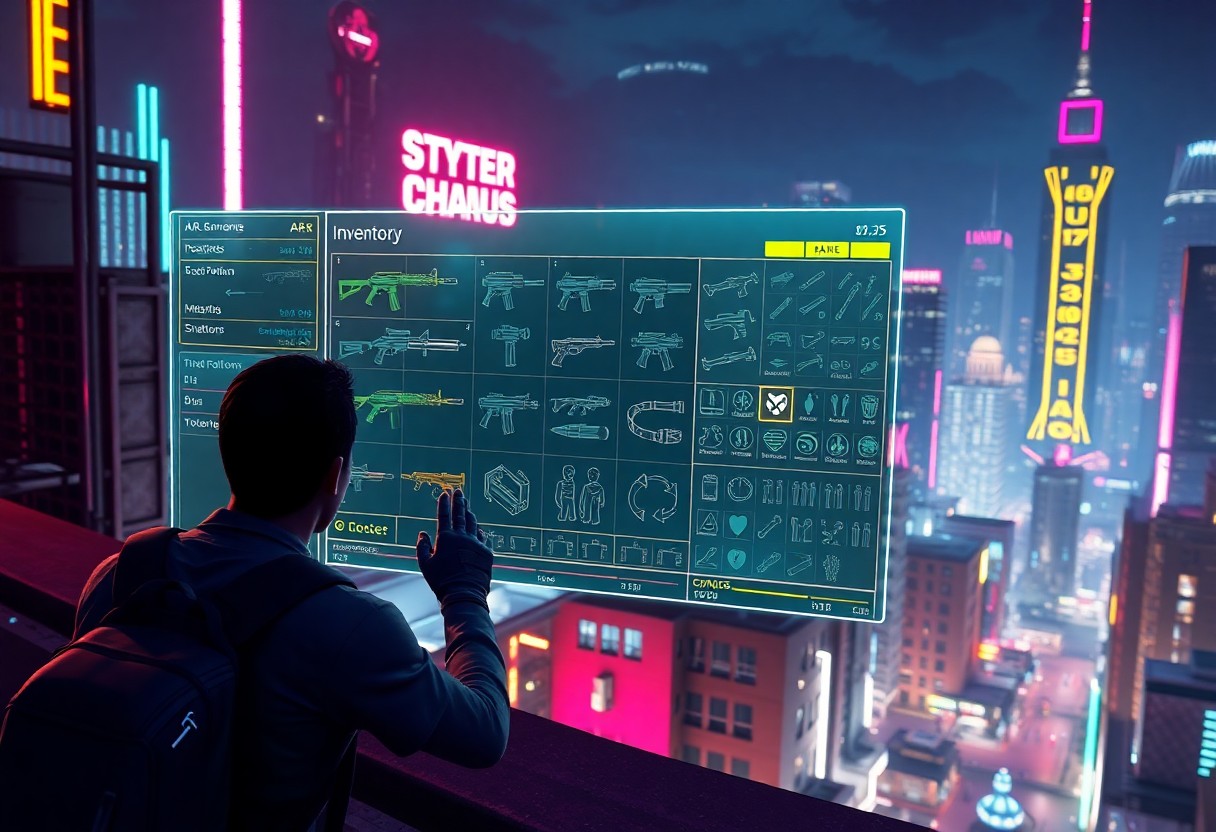
There’s a strategic layer to Fortnite that revolves around inventory management and loadout choices. Understanding weapon types, their effectiveness, and how to balance offensive and defensive gear can significantly enhance gameplay. This guide explores key strategies for optimizing your loadout for success on the battlefield.
The Core Mechanics of Fortnite’s Five-Slot System
Navigating the Inventory UI and Hotkey Optimization
Players can quickly access their inventory through a streamlined UI, which allows for efficient weapon and item management. Assigning hotkeys to specific slots enhances gameplay, enabling rapid selection during intense scenarios. Familiarity with this system can significantly improve reaction times and overall performance in matches.
Understanding Rarity Tiers and Weapon Stat Scaling
Each weapon in Fortnite has a rarity tier that directly affects its performance attributes. Higher-tier weapons generally feature superior damage, reload speed, and stability. Understanding these differences can inform loadout decisions, helping players choose the best equipment for combat situations.
Rarity tiers are categorized into common, uncommon, rare, epic, and legendary, with each level offering unique enhancements. For instance, a legendary weapon can inflict greater damage compared to its common counterpart. In high-stakes encounters, selecting weapons according to their rarity and associated stats is crucial for gaining an edge over opponents, transforming inventory choices into strategic advantages during gameplay.
Essential Weapon Slot Prioritization
The Primary Assault Rifle: Balancing Range and Reliability
Primary assault rifles offer a versatile blend of range and reliability, suitable for engaging enemies at various distances. Their consistent damage output allows for effective mid-range engagements, making them a cornerstone of any loadout strategy.
Close-Quarters Dominance: Shotgun and SMG Synergy
Shotguns and SMGs excel in close-range encounters, creating a formidable combination. Quick exchanges of fire coupled with high rate-of-fire capabilities provide an edge in frantic battles.
Utilizing shotguns and SMGs together maximizes close-quarters effectiveness. The shotgun’s high damage output can quickly eliminate opponents, while the SMG maintains a rapid firing rate for follow-up shots. This synergy enables players to adapt seamlessly during engagements, ensuring they can respond effectively to any threat in tight spaces.
Strategic Utility and Mobility Allocation
Tactical Movement Items: Shockwaves, Grapplers, and Vehicles
Shockwaves and grapplers provide vital mobility options, allowing players to traverse the map quickly and evade danger. Vehicles add an extra layer of strategy, enabling players to reposition or escape while carrying teammates. Balancing these options enhances survival chances and creates opportunities for ambushes or quick retreats.
Utility Carry: Using Bunkers and Environmental Tools for Cover
Bunkers and environmental tools serve as effective defensive aids, offering concealment and protection. Utilizing these resources intelligently can shift the momentum of engagements, allowing players to regroup or set ambushes. Mastery of these elements enhances combat versatility and enables teams to adapt to shifting battlefield dynamics.
Employing bunkers and environmental tools allows players to create a fortified position during skirmishes. Strategically placing these items ensures cover from incoming fire while providing adequate sightlines to engage opponents. When combined with tactical movement items, players can secure advantageous positions, disrupt enemy strategies, and dominate encounters effectively.
Optimized Healing and Shield Management
Shield Efficiency: Prioritizing Mini-Potions vs. Big Pots
Balancing shield items is key. Mini-potions provide 50 shield points each and can be stacked, making them ideal for quick replenishment. Big pots offer 100 shield points but consume more inventory space. In fast-paced situations, prioritize mini-potions for instant use while reserving big pots for critical moments when you need full shields.
Splash Healing and Medkits: Maximizing Team Sustainability
Splash healing items, like Chug Splashes, enable quick recovery for the entire squad, enhancing teamwork. Medkits offer comprehensive health recovery but require time to use, making them less efficient in chaotic fights. Focusing on splash healing can keep your team in the fight longer, while medkits serve as reliable backups when needed.
Utilizing splash healing effectively can shift the momentum in engagements. Chug Splashes can swiftly restore teammates, turning the tide during battles. Employing medkits in between skirmishes allows for strategic healing, though the time required makes them less favorable in high-pressure scenarios. Keeping a balance between splash healing and medkits ensures team endurance throughout the match.
Loadout Archetypes for Diverse Playstyles
| Playstyle | Description |
|---|---|
| Aggressive | Focuses on quick eliminations and high-action gameplay. |
| Defensive | Emphasizes survival and avoiding unnecessary fights. |
| Support | Provides utilities like healing and protection for teammates. |
| Long-Range | Utilizes sniper rifles and scoped weapons from a distance. |
| Close-Quarter | Focuses on shotguns and melee for intense combat. |
- Adaptable for various encounters
- Enhances team dynamics
- Facilitates strategic planning
- Encourages player creativity
- Improves overall performance
This section illustrates how diverse archetypes cater to different playstyles, enhancing the overall gaming experience.
The Aggressive “W-Key” Build for High-Kill Games
Players adopting the aggressive “W-Key” build prioritize quick eliminations through high mobility and rapid engagements. Selecting shotguns, SMGs, and mobility items ensures they can pressure opponents consistently and dominate encounters.
The Passive Survivor: Long-Range and Defensive Configurations
Survivors excel in long-range setups, avoiding direct confrontations while picking off opponents from a safe distance. This strategy relies on sniper rifles and defensive structures for protection during critical moments.
The Passive Survivor: Long-Range and Defensive Configurations
Utilizing a passive approach requires excellent positioning and map awareness, focusing on finding advantageous high ground. Balancing long-range weaponry with building materials allows players to defend against incoming threats while still securing eliminations from a distance. Control over the terrain is key, as it enables players to dictate engagement ranges and reduce the risk of being ambushed.
Mid-to-Late Game Inventory Transitions
Looting Efficiency: Rapid Decision Making Under Pressure
Looting during intense moments requires swift judgment. Prioritizing what to pick up can streamline your loadout and enhance survivability. Recognizing necessary items quickly, such as healing supplies and ammunition, is necessary for maintaining an edge over opponents.
Adjusting Loadouts for the Final Moving Circles
Loadouts must adapt as the storm shrinks, dictating the types of weapons and items prioritized. Emphasizing close-range and mobility items often proves beneficial, allowing players to reposition quickly and engage effectively in crowded late-game scenarios.
As the final moving circles approach, assessing the terrain and potential enemy positions becomes paramount. A balanced loadout featuring shotguns and mobility tools, like launch pads, can significantly influence your survival chances. Keeping a mix of utility items, such as grenades or shields, also allows for strategic plays, whether engaging enemies or retreating safely.
To wrap up
Now that you understand Fortnite’s inventory management and loadout decisions, optimizing your gear is crucial for success. Selecting the right weapons and items based on your playstyle can significantly influence your performance in matches. By assessing each item’s strengths and weaknesses, you can create a balanced loadout tailored to various combat scenarios.
FAQ
Q: How should I prioritize items in my Fortnite inventory?
A: Prioritize items based on your playstyle and the current game situation. Weapons should be ranked by damage and range. Healing items are vital for surviving engagements. Build materials must also be included, as they are critical for defense and mobility.
Q: What is the best loadout composition for different scenarios in Fortnite?
A: A balanced loadout typically includes an assault rifle, a shotgun, healing items, and building materials. For close-quarters combat, consider a shotgun and a submachine gun. Long-range engagements benefit from snipers or scoped weapons. Customize based on personal preference and play strategy.
Q: How often should I change my loadout during a game?
A: Adjust your loadout whenever you find superior items or your play strategy shifts. If you encounter many close fights, consider equipping a shotgun and SMG. Transitioning to a sniper or long-range weapon may be wise in open areas, especially in the late game.