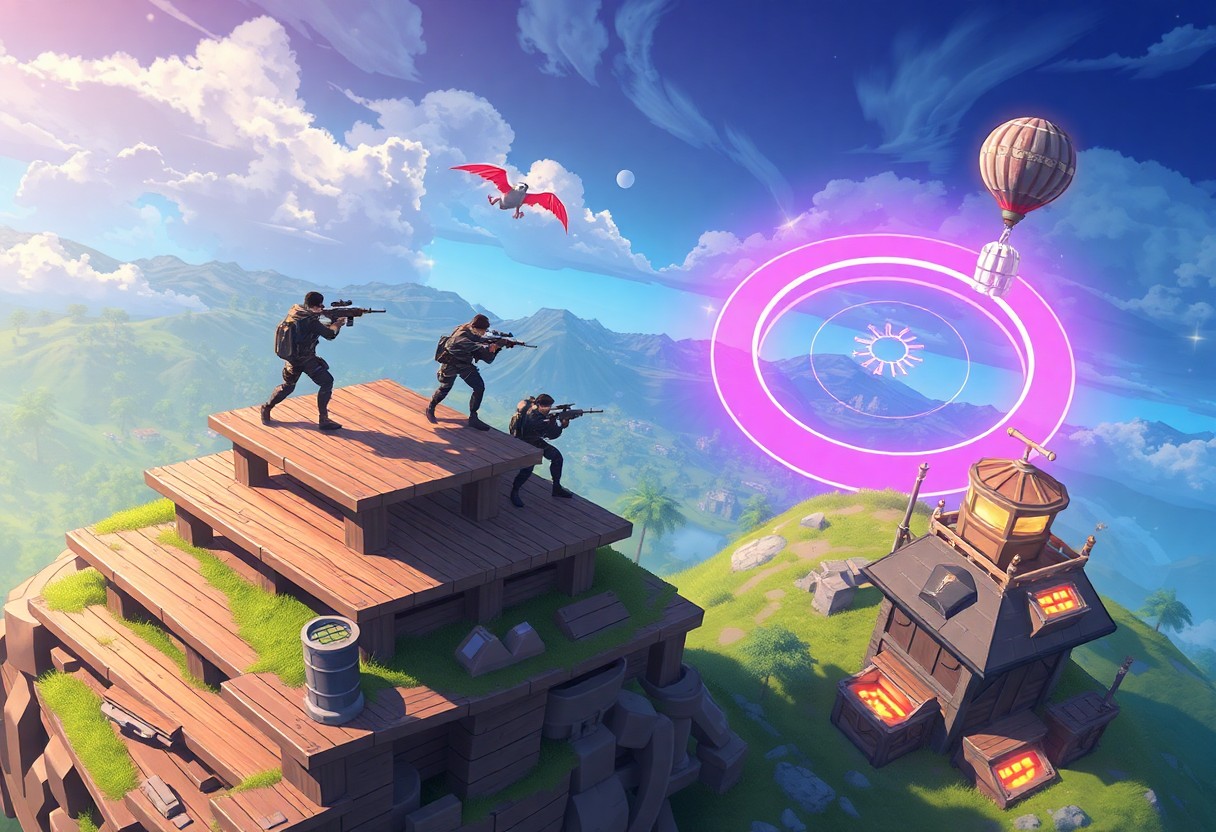
Volatility defines late-game scenarios in Fortnite, where high ground control becomes paramount. Players must master building techniques and strategic positioning to outmaneuver opponents, especially when facing the unpredictable shifts in player behavior and environmental factors. Understanding these elements can greatly influence match outcomes.
The Strategic Imperative of Vertical Dominance
Geometric Advantages and Field of Vision
Securing the high ground provides a geometric advantage that enhances a player’s field of vision. Elevated positions allow players to spot enemies from a distance and track movements without exposing themselves to fire. Angles and lines of sight improve dramatically, making it easier to plan tactical maneuvers or ambushes.
Visibility becomes a game-changer in late-game scenarios. From higher positions, players can assess enemy locations, determining where to engage or retreat. This strategic edge often dictates the outcome of encounters, affirming the importance of vertical dominance in Fortnite.
Psychological Pressure and Lobby Control
Holding the high ground exerts psychological pressure on opponents, significantly affecting their decision-making. Players are often hesitant to engage when they know the enemy has an elevated advantage, creating an atmosphere of uncertainty. This pressure can lead to mistakes, such as unnecessary retreats or ill-timed assaults.
Successfully controlling the lobby involves maintaining both positional dominance and mental superiority. When players feel outmatched from above, their overall strategy falters. High-ground holders influence the pace and flow of the match, dictating engagements on their terms. This psychological edge often translates to victory.
Establishing psychological dominance is as critical as tactical positioning. Players who occupy high ground can manipulate the mental state of opponents, forcing them into defensive postures. This dynamic creates an environment where fear overrides calculated decision-making, often leading to costly errors that can shift the match’s outcome.
Material Economy and Structural Integrity
Understanding material economy and structural integrity is necessary for maintaining high ground in Fortnite. Players must gauge their resources effectively to construct resilient builds that withstand attacks while conserving materials. Each decision impacts overall strategy and survivability, particularly in the intense late game when the pressure peaks.
Calculating Build-Limit Efficiency in Moving Zones
Assessing build-limit efficiency requires a keen understanding of available materials and the urgency of safe positioning. As zones shift, players must prioritize builds that maximize height while minimizing resource expenditure. Smart placements can ensure defensive capability without overcommitting materials.
Building efficiently also involves anticipating enemy movements and potential threats. Positioning structures as needed reduces unnecessary consumption while keeping sightlines clear. Engaging with this strategic mindset will dictate the effectiveness of high ground control in rapidly changing environments.
Resource Conservation Strategies for the Final Layer
Implementing resource conservation strategies becomes paramount during the final layer. Players should focus on reinforcing vital structures while employing quick edits to maintain mobility. Maintaining awareness of remaining materials helps ensure critical builds withstand endgame pressure.
Observing opponents’ builds can inform decisions about when to engage or conserve resources for defensive plays. Each build should further a player’s positioning while staying adaptable to surprise attacks. Success hinges on a balance of construction and tactical awareness, enabling players to dominate in high-stakes encounters.
Deciphering Late Game Volatility
The Impact of Moving Circles on Player Density
As circles move, player density shifts dramatically. High ground becomes a sought-after advantage, forcing players to make quick decisions about positioning. Increased proximity to other players often leads to conflicts, enhancing the volatility of late-game scenarios.
Changing circle locations also affect how players approach engagements. Some may choose to hold back, looking for opportunities while others rush into fights, leading to a chaotic mix of strategies. Anticipating these movements is key to maintaining an upper hand during final circles.
Analyzing Storm Surge and Health Depletion Risks
Storm surge mechanics introduce a layer of complexity to late-game encounters. When player counts exceed a certain threshold, damage begins to occur, compelling players to engage rather than wait. The tension increases rapidly, as many may find themselves unprepared for the onslaught.
Managing health becomes paramount in these situations. Players often need to balance aggressive tactics with defensive strategies, ensuring they maintain enough health to survive both enemy encounters and the encroaching storm. Every decision counts, and miscalculations can lead to elimination.
In such scenarios, effective health management is vital. Players who engage without adequate healing supplies or shield risk being caught off-guard by storm surge, which adds pressure to already high-stress moments. Monitoring not only your own health but also potential opponents’ positions encourages strategic thinking and informed decision-making in the heat of competition.
Advanced Retake Methodologies
- Identify high ground positions.
- Utilize cones for building control.
- Employ double ramps for elevation gains.
- Practice quick edits for strategic advantage.
- Maintain awareness of opponents’ movements.
| Strategy | Description |
|---|---|
| Protected Elevation Transitions | Moving upwards while maintaining defensive structures. |
| Piece Control | Establishing dominance through active building. |
Protected Elevation Transitions and Piece Control
Effective transitions involve maintaining coverage while ascending. Players should build walls around themselves as they elevate, reducing vulnerability to opponents from above and the sides.
Engaging piece control techniques ensures your structures dominate the space. In high-pressure scenarios, layering cones and walls strategically limits opponents’ movement options and creates a defensive stronghold.
Exploiting Timing Windows During Layer Rotations
Identifying key moments during layer rotations offers significant advantages. Players can capitalize on opponents’ distractions or engagements, using this time to reposition and seize the high ground.
Timing plays a critical role in these moments. Quick decision-making during chaos allows players to secure advantageous positions and dictate the battle flow, often leading to elimination opportunities.
Through precise timing, players can anticipate when their opponents are most susceptible. Engaging at the right moment can disrupt enemy plans and secure a power position, significantly increasing the likelihood of victory.
Maintaining the Summit: Defensive Protocols
Suppressing Mid-Ground Threats and Ascent Attempts
As players attempt to advance towards high ground, active suppression becomes imperative. Engaging opponents on mid-ground can fend off ascent attempts, maintaining your advantage. Utilizing structures effectively can create a barrier, deterring enemy players from launching an attack.
Defensive structures such as ramps and walls should be constructed to cover potential ascent routes. Firing from elevated positions not only showcases firepower but also sends a powerful psychological message to any would-be challengers. Keeping them at bay allows for sustained control over the terrain.
Vision Maintenance and Information Gathering
Consistent awareness of surrounding player movements provides a strategic edge. Positioning yourself within the highest vantage points offers insights into enemy approaches and potential threats. Utilizing visual cues can inform decision-making and enable timely responses to shifts in the battlefield.
Employing sound cues, such as gunfire and footsteps, alongside visual surveillance enriches your tactical awareness. Equipping the right tools, like recon items, enhances intelligence-gathering efforts and facilitates informed positioning. Regularly scanning the horizon helps predict enemy behavior, ensuring you remain one step ahead.
Effective vision maintenance relies on a combination of situational awareness and strategic positioning. Regularly shifting your focus allows for the identification of new threats and adapting to changing dynamics. Prioritizing information gathering can also inform defensive maneuvers, thereby reinforcing overall control of the summit.

Mitigating Risk in the Final Transition
Utility Management for Positional Security
Optimal utility management enhances positional security during the endgame. Players should prioritize their inventory, ensuring key items like launch pads and shockwave grenades are readily accessible. These utilities can provide vital mobility, preventing opponents from easily targeting vulnerable positions.
Properly timed utility use can disrupt enemy plans, granting your team the upper hand. Utilizing building materials wisely creates defensive structures while minimizing exposure. Staying aware of your surroundings allows for strategic placements, ensuring safety during intense engagements.
Executing the Final Drop: Timing and Target Priority
Effective timing is important when executing the final drop. Engaging opponents at the right moment can make all the difference between victory and defeat. Prioritizing targets based on health, positioning, and threat level helps create a favorable combat scenario.
Coordinating attacks allows for swift eliminations, reducing enemy numbers and chaos. Assessing timing during fights is crucial; a well-executed drop at peak moments maximizes damage while minimizing retaliatory strikes. Communicate with teammates to ensure synchronized action for maximum impact.
Identifying a target hierarchy streamlines efforts during the final moments of a match. Prioritizing threats capable of causing immediate danger should be the focal point while also considering vulnerable foes. Efficient communication about target focus allows for precise strikes, ensuring that the team can eliminate dangerous players quickly, preserving their own team’s strength in the process.
Managing Team Synchronicity in High-Pressure Scenarios
Synchronizing moves becomes increasingly important in high-pressure scenarios. Team members must communicate effectively to maintain cohesion and coordinated assaults. Establishing designated roles enhances efficiency, allowing players to capitalize on opportunities as they arise.
Utilizing voice chat or in-game signals can facilitate rapid decision-making. A unified approach helps mitigate the chaos of late-game engagements, ensuring that each player understands their responsibilities and can react swiftly to evolving situations.
Efficient coordination elevates a team’s performance under pressure. Each player must be attuned to both the overall strategy and the specific roles, allowing for immediate adjustments as the battle dynamic changes. Consistent practice with team members fosters a rhythm that enhances response times and situational awareness, leading to improved outcomes during critical moments of the game.
Final Words
With these considerations, maintaining high ground is imperative for controlling engagements in Fortnite, especially during the late game. Players who secure this position gain a significant advantage, as it provides better sightlines and safety against attacks.
Late game volatility demands adaptability and quick decision-making. Players must balance aggressive tactics with defensive strategies to respond to unpredictable shifts in the battle, ensuring that high ground is effectively utilized while minimizing exposure to threats.