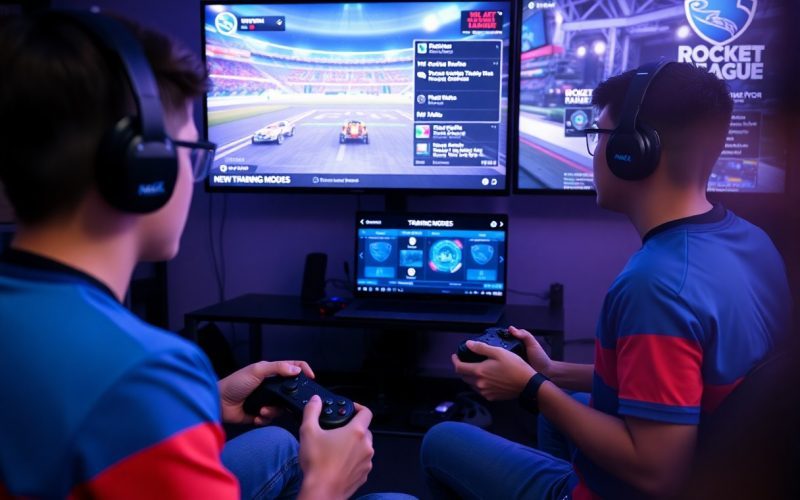
Evolution in esports has been rapid and dynamic, and Rocket League is no exception. The community and competitive landscape surrounding this unique vehicular soccer game have advanced significantly since its inception in 2015, particularly in the domain of coaching. With Rocket League gaining traction as a serious competitive game, the strategies behind coaching have been refined and adapted to enable teams and players to reach their highest potential.
Initially, coaching in Rocket League was more akin to traditional sports coaching, where players responded to basic guidance based on instinct and familiarity with the game mechanics. As the competitive scene expanded, coaches began to adopt a more analytical approach, breaking down gameplay into smaller components. This shift has helped players identify areas for improvement in both individual play and team synergy, focusing on elements like positioning, rotations, and decision-making in high-pressure situations.
One of the most notable changes in coaching strategies has been the integration of data analytics. Coaches and analysts now utilize advanced statistics to track player performance, team dynamics, and even opponent tendencies. By collecting data on shot accuracy, save percentages, and boost management, they can provide players with concrete feedback. This data-driven approach has helped teams develop specific training regimens tailored to their unique strengths and weaknesses, allowing for targeted improvement.
Another evolution in Rocket League coaching is the emphasis on mental conditioning and communication. Coaches have started to recognize that the psychological aspects of competition are as vital as mechanical skills. As such, many top-tier teams employ sports psychologists or specialized coaches to work on team cohesion, communication strategies, and mental resilience. This approach not only aids players in navigating the pressures of high-stakes matches but also fosters a positive team environment, necessary for long-term success.
The rise of online coaching platforms has also contributed to the evolution of coaching in Rocket League. With many players seeking to improve their skills from home, a plethora of services has emerged, offering coaching sessions through video calls, replays analysis, and even personalized gameplay reviews. These platforms have democratized access to quality coaching, allowing players at all ranks to benefit from expert insights that were previously reserved for professional teams.
As the scene continues to mature, coaching methodologies will likely evolve further, with an even greater focus on individual player development and customized training. New technologies, such as machine learning and artificial intelligence, promise to influence the strategic landscape of the game, providing coaches with new tools for analysis and training. Virtual reality (VR) could also play a role in immersive practice sessions, allowing players to hone their skills in simulated environments.
To put it briefly, the evolution of Rocket League coaching at the top tier has transformed from basic gameplay advice to a multifaceted approach driven by data, mental conditioning, and innovative technologies. As the competitive environment continues to grow, coaching will likely adapt further to meet the demands of an increasingly sophisticated game, ensuring that players are not only skilled but also well-rounded competitors.