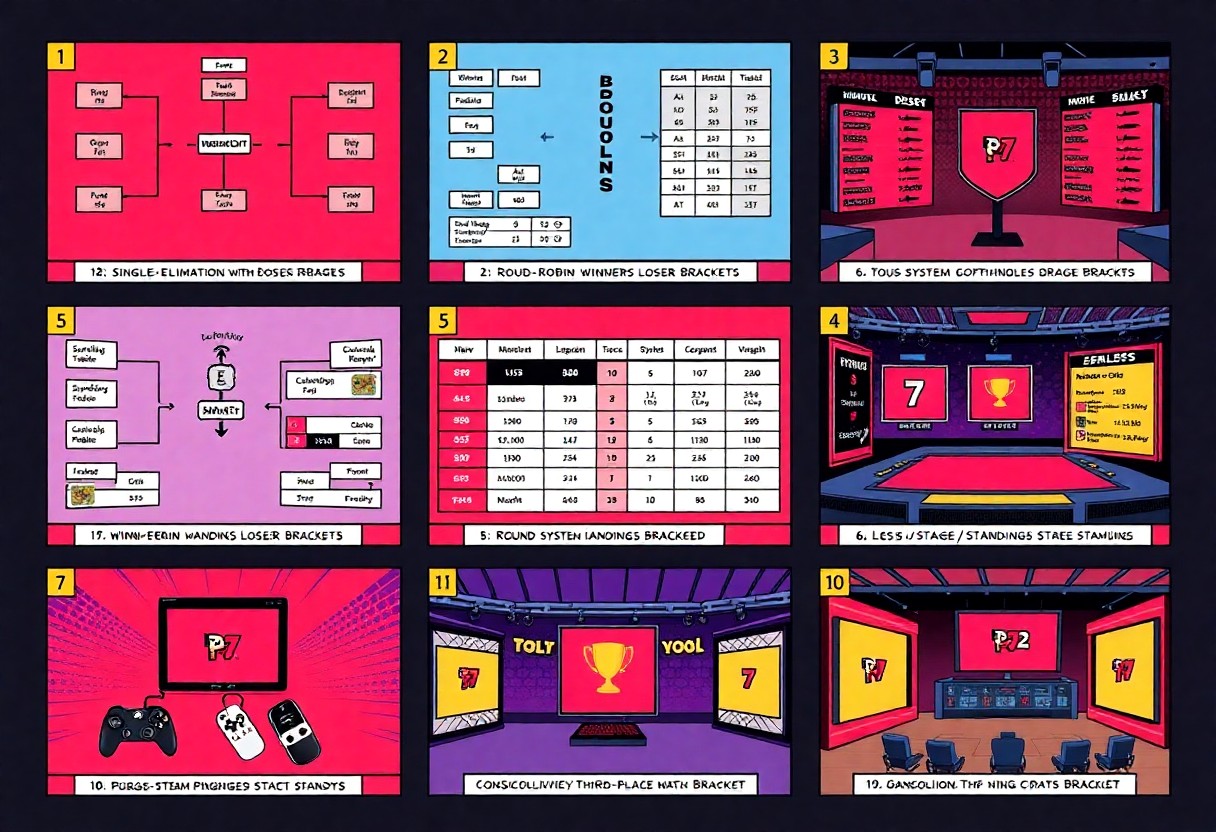
Analysis reveals the diverse array of tournament formats that shape the competitive esports environment. This listicle examines ten key formats, highlighting their unique structures, advantages, and impacts on player performance and audience engagement in the fast-evolving world of esports.
Single Elimination Brackets
High stakes tension
Single elimination brackets create an atmosphere of intense pressure. One defeat results in immediate elimination, forcing teams to perform at their best right from the start. This format amplifies the stakes, making each match a do-or-die scenario.
Rapid tournament progression
Single elimination formats streamline the tournament process, allowing matches to conclude quickly. Each round involves fewer matches compared to formats with double-elimination or group stages. This leads to a swift progression from the initial rounds to the finals.
With fewer games to play, the competition can wrap up in a matter of days, making it appealing for both players and fans. Quick match formats cater to the fast-paced nature of esports, allowing for dynamic scheduling and efficient use of resources, which is often crucial in live event settings.
Double Elimination Brackets
Lower Bracket Redemption
The lower bracket in double elimination formats offers teams a second chance after an initial loss. This structure ensures that a single defeat does not eliminate a competitor, allowing teams to fight their way back into contention. Teams must win successive matches to advance, creating an intense narrative as stakes rise with each game.
Increased Match Volume
Double elimination formats naturally increase the number of matches played, providing more opportunities for teams to showcase their skills. Unlike single-elimination formats, which can end a team’s journey abruptly, double elimination allows for two losses before elimination, resulting in a richer competitive experience.
Enhanced match volume not only offers fans more entertainment but also allows teams to adapt and showcase their depth throughout the competition. This structure increases the likelihood of unexpected outcomes and thrilling matchups, enriching the overall narrative of the tournament.
GSL Group Systems
Four Team Mini-Brackets
The GSL format employs four-team mini-brackets, where teams compete in a double-elimination setup. Each team plays at least two matches, ensuring that stronger teams have a chance to recover from an initial loss.
High Stakes Deciders
High stakes decider matches serve as a thrilling conclusion to the group stage. The two top-performing teams compete for a spot in the playoffs, while the bottom two teams face elimination. This added pressure heightens the intensity of gameplay.
Decider matches often showcase the best strategies and tactics, as teams must adapt to their opponents quickly. With everything on the line, players push their limits, leading to memorable moments that define the tournament and its narrative. High-level performance is expected, making these matches a focal point for viewers.
Swiss System Stages
Balanced Record Matchmaking
The Swiss system ensures that players with similar records face off against each other, promoting fair competition. A player’s performance determines the quality of opponents they encounter in subsequent rounds, providing a more accurate assessment of skill levels. This format mitigates the impact of early losses while allowing for strategic play across multiple matches.
Efficient Large Fields
The Swiss system excels in accommodating large participant pools, making it suitable for events with many entries. Traditional knockout formats can eliminate players too early, whereas Swiss allows everyone to play several matches, maximizing engagement. This structure keeps more competitors involved longer, which is particularly beneficial for events with diverse skill levels.
Organizers can efficiently manage tournaments with up to hundreds of players, ensuring a timely and structured competition. This efficiency translates to better audience retention, as viewers can follow their favorite players throughout multiple rounds. Such dynamics create a more engaging atmosphere and keep excitement high.
Round Robin Leagues
Comprehensive Skill Assessment
Round robin leagues allow each team to compete against every other team, providing a thorough evaluation of skill levels. Teams face a variety of opponents, showcasing their strengths and weaknesses in different matchups. This format reduces reliance on luck, ensuring that the best-performing teams can consistently prove their capabilities over multiple games.
Long Term Consistency
Long-term performance becomes clearer in round robin leagues, as teams participate in multiple matches against all opponents. Such consistency allows for a more accurate ranking of teams based on their overall performance rather than single elimination outcomes. Teams must maintain high levels of play throughout the league, promoting regular practice and strategic adaptability.
The structure of round robin leagues encourages teams to refine their strategies over time. Competing against a diverse set of opponents helps squads identify and address weaknesses consistently, fostering development. This ongoing competition also builds team synergy, as consistent engagement allows players to synchronize their gameplay, improving overall team cohesion and results in the long run.
Battle Royale Scoring
Survival and kills
In battle royale formats, player survival is paramount. Points often accumulate based on the number of players eliminated and the player’s final standing. A common scoring method awards points for each kill, incentivizing aggressive play while also adding to the overall score through placement. A player finishing in the top tier typically gains significant bonus points, highlighting the importance of longevity in gameplay.
Kill points vary by game, impacting strategic decisions. Some titles reward early-game eliminations, while others emphasize placements in the final circles. This dynamic scoring model encourages diverse strategies, balancing survival tactics against offensive gameplay.
Cumulative score tracking
Cumulative score tracking provides a continuous assessment of performance over multiple matches. Point totals are aggregated, allowing players to see how consistently they perform across games. This method serves as a metric for assessing both individual skill and overall player progression.
Tracking cumulative scores allows players and spectators to analyze trends in performance over time. Regular fluctuations in points can indicate a player’s adaptability to different match circumstances and strategies. An objective picture of skill development emerges, supporting competitive rankings and facilitating roster changes in team environments.
Gauntlet King Hill
Momentum Based Climb
Momentum plays a critical role in Gauntlet King Hill formats. Teams that secure early wins tend to build confidence, allowing them to perform better in subsequent matches. This psychological aspect often leads to a snowball effect, where players channel their initial success into higher performance levels.
This mechanic challenges competitors to maintain focus and adapt quickly. Consistent wins can demoralize opponents, making it tough for them to break the cycle. Strategies focused on sustaining momentum become important for teams aiming to secure the championship.
High Seed Advantage
High seed advantage is evident in Gauntlet King Hill formats, where top-ranked teams often face lower-seeded opponents initially. This setup increases the likelihood of early victories for higher seeds, as they generally possess more skill and experience. The psychological edge gained from this advantage influences outcomes significantly.
A high seed’s path typically allows them to bypass early eliminations, prolonging their tournament presence. The best-of series structure further enhances this benefit, enabling elite teams to capitalize on any mistakes made by opponents. Skill disparity often leads to predictable results, reinforcing the importance of seeding in tournament planning.
Double Round Robin
Maximum competitive fairness
Double Round Robin formats offer a balance of competition by ensuring each team plays every other team twice, once at home and once away. This structure minimizes the impact of luck and external factors, providing an equitable environment for all participants. Teams face identical challenges against each opponent, allowing for a clearer determination of skill and strategy.
Teams have ample opportunity to adjust their tactics based on previous encounters, enhancing the depth of competition. This format is particularly favored in leagues where maintaining competitiveness throughout the season is crucial, as it can mitigate the influence of a single bad game.
High broadcast volume
Double Round Robin formats lead to an increased number of matches, which allows for a higher volume of broadcast content. Organizations can engage fans with a more extensive match schedule, ensuring consistent viewership and ongoing interest. The frequent matchups also enable broadcasters to showcase a variety of strategies and team dynamics, appealing to a broader audience.
As more matches are scheduled across the league, broadcasters can utilize prime-time slots and special events to maximize viewer engagement. This format not only enhances the excitement for fans but also generates greater opportunities for sponsorship and advertising revenue, making it appealing to organizers and networks alike.
Triple Elimination Brackets
Extensive safety nets
Triple elimination brackets provide teams with three opportunities to stay in the tournament, ensuring multiple chances for recovery. Teams that lose their first match can still advance, maintaining competitive balance and encouraging a more forgiving environment for competitors. This format helps cultivate resilience among players, allowing for surprising comebacks and strategic adjustments.
This safety net accommodates varying skill levels and reduces the risk of early eliminations for stronger teams unexpectedly bested by underdogs. The structure promotes engagement, as fans remain invested in the drama unfolding throughout the competition.
Long tournament duration
The triple elimination format inherently extends tournament duration, often creating marathon events that can span several days or weeks. Participants face a demanding schedule as they must prepare for multiple matches, with potential delays caused by extensive matchups. This extended timeframe impacts player stamina and team dynamics, requiring strategic planning in both gameplay and recovery.
Teams need to manage resources effectively, balancing practice with rest. As players may face high levels of fatigue when competing over long periods, mental resilience and adaptability become crucial for success. Audience engagement can also fluctuate, highlighting the need for careful scheduling to maintain interest across extended tournaments.
Bracket Reset Finals
Grand finals parity
Bracket reset finals ensure that both teams in the grand finals start on equal footing, enhancing competitiveness. The structure requires a team to win two sets, making the potential for an underdog comeback more tangible. This format promotes thrilling matchups and engages the audience by allowing teams to demonstrate adaptability.
This model fosters excitement as it can shift the momentum entirely. A reset can instill pressure on a leading team, while the underdog gains renewed confidence. Such dynamics enrich the viewing experience, often leading to nail-biting conclusions.
Fighting game tradition
Bracket reset finals are deeply rooted in fighting game tournaments, reflecting a long-standing tradition. Players compete in a double-elimination format that emphasizes skill and endurance, aligning more closely with the game’s competitive nature. This tradition values both persistence and strategy, rewarding players who can handle high-pressure situations and adjust their tactics.
The fighting game community has historically embraced the bracket reset format due to its fairness and unpredictability. Titles like Street Fighter and Tekken exemplify the effectiveness of this structure, where a single match loss does not eliminate a player. This approach cultivates a competitive spirit and maintains viewer engagement throughout the tournament.

Competitive Integrity Analysis
Minimizing luck factors
Luck can influence outcomes in matches, which undermines competitive integrity. Tournament formats that rely heavily on randomization can skew results, favoring less skilled players. A well-structured format minimizes such factors through skill-based matchups and a rigorous bracket system.
- Single elimination promotes skill but limits chances for recovery.
- Double elimination allows for a more comprehensive test of ability.
- Round-robin formats equalize opportunity but can prolong events.
Assume that effective design mitigates randomness, emphasizing player performance over chance.
Reward for seeding
Seeding systems play a pivotal role in tournaments, rewarding higher-ranked players with advantageous placements in brackets. This structure encourages consistent performance and strategizing over time. Through seedings, players who achieve top rankings face lower-ranked competitors initially, allowing them to progress without facing stronger opponents prematurely.
The effectiveness of seeding hinges on its ability to create a fair and competitive environment. Players are motivated to improve, knowing that their efforts will impact their tournament positioning. Proper seeding enhances competition quality and ensures that the most skilled participants have the best chance to advance.
Viewership Engagement Metrics
Peak Audience Retention
Peak audience retention measures how well viewers stay engaged during key moments of a tournament. High retention rates indicate that exciting gameplay, climactic matches, or nail-biting finishes can captivate an audience. This metric is critical in determining which formats create compelling viewing experiences.
Different tournament structures impact viewer retention. Single-elimination formats often generate intense suspense, while round-robin styles may encourage longer viewing periods as teams compete over multiple matches. Balancing these elements can significantly influence overall engagement.
Narrative Building Potential
Narrative building potential refers to how effectively a tournament format can create storylines that resonate with the audience. Engaging narratives help viewers form emotional connections with teams and players, enhancing the viewing experience. Formats that allow for upsets, rivalries, and player journeys foster compelling stories throughout the event.
Interactions among players, the buildup to critical matches, and team dynamics are crucial elements that can transform simple competition into thrilling narratives. Formats that support these dynamics encourage fans to invest emotionally, leading to sustained interest and viewership over time. Engaging storylines can turn casual viewers into loyal followers, demonstrating the importance of narrative in esports tournaments.

Tournament Duration Efficiency
Venue Rental Days
Venue rental durations directly impact tournament budgets and overall efficiency. Shorter tournaments generally require fewer rental days, minimizing costs while maximizing usage. Efficient scheduling allows for swift turnarounds, making optimal use of facilities.
Longer tournaments often lead to higher rental fees and logistical complexities. Tournament organizers must balance the need for extended event duration with financial constraints to ensure sustainability. Strategic planning can help mitigate these challenges.
Broadcast Staff Requirements
Broadcast staff requirements vary significantly depending on tournament size and format. Larger events necessitate a broad array of professionals, including directors, producers, camera operators, and technical staff. Smaller tournaments can operate with leaner teams, reducing associated costs and logistical demands.
Understanding the staffing needs for broadcast can dictate tournament scheduling and resource allocation. A well-planned broadcast crew can enhance viewer experience while optimizing efficiency, ensuring that production quality aligns with audience expectations and logistical capabilities.
Player Mental Fatigue
Mental endurance needs
Mental endurance in esports is critical for player performance. Extended matches can lead to cognitive overload, hindering strategic thinking and decision-making. Players often face intense pressure, requiring sustained focus to execute complex strategies effectively.
Match density issues
Match density refers to the frequency and scheduling of matches within a tournament. High match density can result in insufficient recovery time, leading to exhaustion. Players may experience burnout if they are required to compete in back-to-back matches without adequate breaks.
This high frequency can diminish the quality of the games as fatigue sets in, impacting not only individual performance but the enjoyment of spectators. Scheduling that incorporates sufficient rest is imperative for maintaining player performance and engagement throughout the tournament.
Effective tournament design must consider match density alongside player mental health. Scheduling must allow sufficient recovery time to counteract the effects of fatigue. Balancing match frequency with rest periods directly affects the mental sharpness needed for high-level competition, ultimately influencing the outcome of the tournament.

Underdog Upset Potential
Underdog Victory Frequency
Underdogs often create thrilling narratives in esports tournaments. Statistics show that lower-ranked teams frequently pull off surprising victories, especially in formats that allow multiple upsets. Tournament structures like single-elimination amplify this effect, as a single match can change the outcome dramatically.
Data analyzing past tournaments highlights that specific games, such as those featuring less experienced teams, show a higher prevalence of upsets. This frequency is influenced by factors like team synergy, unexpected strategies, and the pressure of high-stakes matches.
Format Volatility Levels
Tournament formats exhibit varying levels of volatility, affecting the likelihood of underdog victories. Single-elimination brackets tend to create more volatile conditions than double-elimination or round-robin formats. In single-elimination, one poor performance can lead to instant elimination, thus painting a chaotic picture of potential outcomes.
The volatility in tournament formats also impacts strategic preparation. Teams facing higher volatility must adapt quickly, which can lead to unexpected results. Conversely, formats that provide multiple chances for teams to prove themselves often dilute upset potential, as stronger teams can recover from initial losses.
Prize Pool Distribution
Rewarding Top Performance
In esports, prize pool distribution often emphasizes top performers, with a sizable percentage allocated to the highest-ranked teams or players. This structure incentivizes competitive excellence, allowing elite participants to take home substantial rewards. Such models not only attract talent but also enhance the overall competitive environment.
Different games and tournaments exhibit varying approaches to this distribution. Some jurisdictions implement a tiered system, where the top positions receive exponentially larger shares, promoting fierce competition at the upper levels. This strategy helps to draw attention to top players and teams, creating a spectacle for fans.
Participation Fee Structures
Many esports tournaments adopt participation fees, which contribute to the overall prize pool while also serving as a potential barrier to entry for less-funded teams. These fees vary widely, depending on game popularity and tournament prestige. They can also impact team composition, often promoting larger, well-funded organizations over smaller or independent competitors.
Participation fees can range from nominal amounts for local tournaments to significant figures in major events. Free-to-enter tournaments promote inclusivity and allow emerging players to compete, while entry fees often lead to more sizable prize pools. Balancing accessibility and financial viability remains a challenge for organizers aiming to maintain competitive integrity and keep audiences engaged.
Tie-breaker Resolution Complexity
Statistical head-to-head
Statistical head-to-head comparisons can simplify resolving ties by analyzing performance metrics between tied players or teams. This method assesses previous encounters, wins, losses, and game statistics to establish a clearer ranking. The reliance on data creates objective criteria for resolving ties, which can reduce confusion and disputes.
Many esports tournaments incorporate head-to-head records as a primary tie-breaker. This approach helps promote transparency, making it easier for fans and teams to understand the rationale behind placements in the event of a tie. Effective use of these statistics can enhance the perceived fairness of tournament results.
Decider match necessity
A decider match becomes necessary when teams or players remain tied after all other tie-breakers. This format introduces a straightforward mechanism to ascertain a definitive winner. However, it can place additional strain on event scheduling and increase demands on player stamina and performance.
Decider matches often serve as a final showdown to resolve ties, providing an exciting conclusion to competitive scenarios. While they deliver a clear outcome, the logistics involved can complicate tournament planning. Ensuring that players possess adequate recovery time and managing potential scheduling conflicts become paramount to maintaining a high-quality event experience.

Broadcast Production Costs
Brand Visibility Duration
Brand visibility duration directly impacts advertising effectiveness during esports tournaments. Longer events provide more extensive exposure opportunities, allowing brands to engage with audiences over a sustained period. This increased visibility can enhance brand recall, ultimately driving consumer interest.
Viewership patterns show that prolonged broadcasts attract diverse demographics, extending reach beyond casual viewers. Channels leveraging strategic partnerships and sponsorships benefit from maximum exposure, aligning with specific target audiences throughout the tournament.
Ad Break Frequency
Ad break frequency influences viewer experience and revenue generation during broadcasts. High-frequency ad breaks can interrupt the flow of the game, potentially disengaging viewers. Maintaining a balance between ad placements and uninterrupted gameplay is necessary for retaining audience engagement.
Research indicates that optimal ad placement strategies vary across esports formats to maximize impact. Recommendations suggest integrating fewer, more impactful breaks to maintain viewer interest and foster brand loyalty, ensuring both advertisers and audiences benefit from the broadcast experience.
Fan Experience Factors
Analyzing tournament formats requires consideration of fan experience, which is pivotal for engagement and satisfaction. Key elements influencing this experience include:
- Onsite spectator value
- Online stream quality
- Interactive opportunities
- Merchandising options
- Social media integration
The integration of these factors can significantly enhance or diminish overall enjoyment during tournaments.
Onsite spectator value
Onsite experiences offer fans the excitement of live action and community interaction. The atmosphere in arenas filled with cheering crowds enhances emotional engagement and provides unique memories.
Accessibility of amenities, including food, seating, and viewing locations, significantly contributes to onsite value. Effective crowd management ensures safety and comfort, enriching the overall event experience.
Online stream quality
Online stream quality is crucial for remote fans. Streaming platforms must offer high-resolution graphics, low latency, and reliable connectivity to keep audiences engaged. Poor quality can lead to frustration and disengagement.
Various factors impact a fan’s perception of online streams, including resolution options, commentary quality, and viewer interactivity. High-quality streams with multiple camera angles and integrated graphics enhance viewer understanding and enjoyment. Streamers that prioritize audience interaction through chats and social media integrations amplify the overall experience, making fans feel part of the event. High reliability in streaming prevents drops and lags, ensuring fans remain invested throughout the tournament.
Future Hybrid Evolutions
Blending group systems
Hybrid tournament formats increasingly combine traditional group stages with knockout rounds. This approach maintains competitive integrity while enhancing viewer engagement. Teams can showcase their skills over multiple matches, offering a richer narrative within the tournament structure.
Such systems allow for flexibility in match scheduling and can accommodate varying team performances. The blending of formats can also extend the tournament’s lifespan, creating more opportunities for storylines to unfold and for underdog teams to shine.
Dynamic seeding innovations
Dynamic seeding introduces an adaptive element to tournament formats. Teams are seeded based on real-time performance metrics rather than fixed historical rankings. This change can lead to more balanced matchups and increase spectator interest by reducing predictability.
Adapting seedings throughout a tournament based on outcomes keeps competition fierce. The approach ensures that top-performing teams face stronger challengers, promoting exciting matches and maintaining viewer engagement. Real-time analytics may play a critical role in determining these seedings, aligning the tournament structure with current team dynamics.
Summing up
On the whole, tournament formats in esports exhibit significant diversity that impacts both player performance and audience engagement. A comparison of the top 10 formats reveals distinct advantages and drawbacks, shaping the viewer experience and competitive integrity uniquely for each game.
The analysis underscores the importance of customizing tournament structures to suit specific gaming genres, enhancing both strategic depth and spectator appeal. Recognizing these differences can inform better future tournament designs, catering to the evolving landscape of esports.
Q: What are the most common tournament formats used in esports?
A: The most common tournament formats include single elimination, double elimination, round-robin, and Swiss system. Single elimination eliminates teams after one loss, while double elimination allows teams to lose once before being knocked out. Round-robin involves each team competing against every other team, and Swiss system pairs teams with similar scores for a set number of rounds.
Q: How does the format impact player engagement and spectator experience?
A: Tournament format significantly affects player engagement and spectator experience. Single elimination creates high stakes that heighten tension but can lead to early exits for strong teams. Double elimination offers more opportunities for comeback narratives, which can keep audiences invested. Round-robin provides a comprehensive view of team performance, allowing for deeper storylines throughout the event.
Q: Which tournament format has produced the highest viewership in esports history?
A: The double elimination format has frequently yielded the highest viewership, particularly in major titles like Dota 2 and Super Smash Bros. Its structure allows for intense competition and memorable matches, often resulting in dramatic narratives and unexpected outcomes that attract larger audiences. Events like The International have showcased this format’s effectiveness in maximizing viewer engagement.