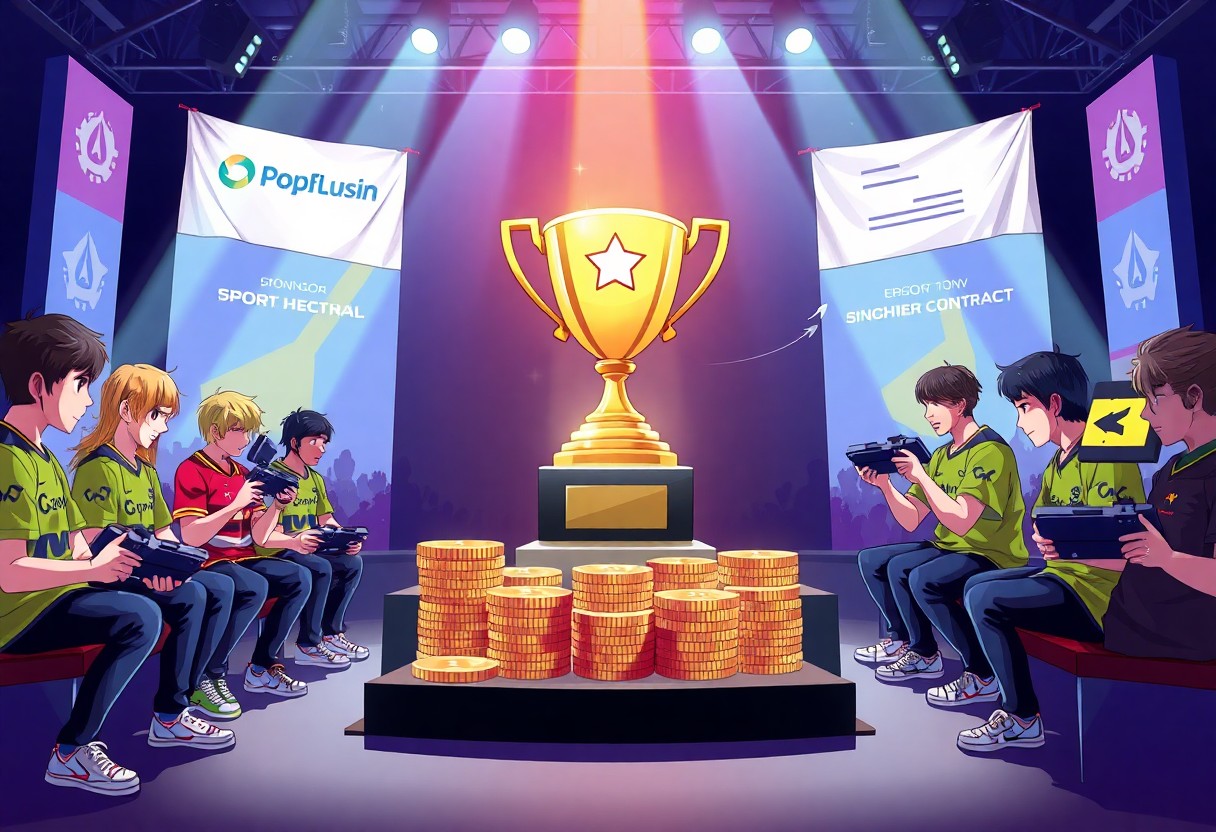
There’s a growing interest in understanding prize pool funding models and contribution regulations within esports. This examination highlights the diverse financial structures and regulations that govern competitive gaming, shedding light on how they impact tournament viability and player incentives.
Historical Evolution of Prize Pool Structures
Transition from grassroots LAN events to global professional circuits
Grassroots LAN events began as local tournaments supported by community engagement and minimal financial backing. Enthusiastic players gathered for the love of competition, with prizes often consisting of merchandise or minimal cash rewards.
As esports gained popularity, these grassroots events evolved into large-scale competitions, attracting sponsorships and media attention. This transition marked the foundation of professional circuits, with substantial prize pools reflecting the growing interest from fans and sponsors alike.
The influence of early professional leagues on financial stability
Early professional leagues established frameworks for consistent prize pools, leading to a more stable financial environment for players and teams. Organizations like Major League Gaming (MLG) set precedents for inviting sponsors and creating predictable revenue streams.
These leagues not only provided competitive platforms but also institutionalized financial models that encouraged long-term investment. With clearly defined structures, participants gained newfound opportunities for growth and sustainability within the ecosystem.
Shift from product-based incentives to liquid cash disbursements
Initial prize pools often consisted of products or merchandise, reflecting a focus on brand promotion rather than direct financial reward. Players competed for items rather than cash, limiting the scope of professional play.
As the viewership increased, sponsors began to recognize the potential for cash incentives, leading to the establishment of liquid prize pools. This shift encouraged a more serious approach, as players now had the potential to sustain themselves through competitive gaming.
The transition to cash disbursements represented a significant turning point, enabling players to earn a living from esports. Financial stability became increasingly important, allowing athletes to invest time and resources into honing their skills. This evolution not only solidified competitive gaming as a viable career but also attracted even more investment into the industry.
Direct Publisher Funding and Closed Ecosystems
Fixed-budget allocations and annual seasonal financial planning
Publishers often implement fixed-budget allocations to ensure predictable prize pools across competitive seasons. This strategy allows teams to plan their finances with a clear understanding of the potential returns from tournaments.
Annual financial planning becomes imperative, as publishers assess player engagement and market trends to establish budgets that reflect both competitive integrity and sustainability. Such foresight reinforces the overall health of the esports ecosystem.
Strategic marketing reinvestment as a primary funding source
Organizations frequently channel a portion of their marketing budgets into funding prize pools, treating expenditures as investments in brand building. This approach emphasizes the importance of player and audience engagement while enhancing brand visibility through competitive incentives.
By prioritizing marketing reinvestment, publishers can ensure prize pools not only attract top talent but also create compelling narratives around tournaments. This circular funding model proves to be mutually beneficial for both teams and publishers alike.
Incorporating marketing reinvestment into funding strategies allows organizations to engage audiences effectively, provide consistent financial backing for competitions, and reinforce community loyalty. This creates an environment where both players and fans are invested in the growth of the esports ecosystem.
Franchise-based subsidies and stipends for participating organizations
Franchise systems often incorporate subsidies and stipends, incentivizing organizations to field competitive teams. This financial support can ease operational costs, allowing teams to focus on performance without crippling budget constraints.
By providing these funds, publishers help ensure a higher level of competition while promoting sustainability within the esports ecosystem. Such initiatives cultivate long-term relationships between esports franchises and their parent publishers.
Subsidies and stipends foster stability by attracting diverse organizations into the competitive scene, ensuring that participation isn’t solely dependent on financial clout. This approach strengthens the ecosystem, encouraging a wider range of teams to compete, thereby enhancing overall competitive integrity.
Crowdfunding Dynamics and Community Contribution Models
Battle Pass and Compendium mechanics in major championship events
Battle Pass and Compendium systems have revolutionized funding in esports. Players purchase these items, unlocking exclusive content while contributing to the overall prize pool. These models not only enhance player engagement through tiered rewards but also promote community investment in major tournaments.
Event organizers effectively utilize these mechanics to generate significant revenue, as players are incentivized to invest in their favorite teams or games. By linking community contributions directly to tangible benefits, the esports ecosystem thrives, driving both player participation and financial support for events.
Transparency and real-time tracking of community-driven milestones
Real-time tracking of funding milestones builds trust within the community. By providing transparent updates, event organizers increase engagement and motivate contributors to amplify their support. Players can witness their contributions directly impacting the prize pool, creating a sense of ownership and shared success.
Platforms like Twitch and game-specific portals facilitate this transparency, often displaying live progress bars. Such visibility not only encourages more donations but also turns viewers into active participants in the competition.
This immediate access to funding updates fosters a communal atmosphere, wherein players can celebrate and strategize around milestone achievements. Such dynamics reinforce community bonds, encouraging contributions that positively affect the prize pool.
Impact of community sentiment on prize pool volatility and growth
Community sentiment significantly influences the fluctuations in prize pools. Positive trends, such as game popularity or tournament hype, often spark increased contributions. Conversely, negative sentiments, like dissatisfaction with game mechanics, can lead to reduced funding and engagement.
Understanding these patterns allows organizers to tailor initiatives that resonate with the community. As fans feel more connected to the events, their willingness to contribute grows, stabilizing and potentially expanding the prize pool over time.
Analyzing community sentiment regularly can serve as a barometer for prize pool health. Engaging with fan feedback and adapting strategies not only sustains interest but also guards against volatility, fostering a consistent and supportive funding environment.
Corporate Sponsorship and Brand Integration Strategies
Naming rights and title sponsorships in premier tournament tiers
Naming rights provide prominent visibility for brands within competitive esports. Title sponsorships often signal major investment, aligning a brand with high-stakes tournaments and enhancing viewer engagement.
Brands that secure these rights gain extensive promotional opportunities, including logo placements and branded content. This strategy creates a sense of ownership over the event, potentially increasing loyalty among fans.
Category-exclusive partnerships and non-endemic brand entry
Category-exclusive partnerships restrict competing brands within a designated sector during tournaments. This exclusivity fosters deeper brand integration, allowing sponsors to develop distinctive marketing campaigns that resonate with the esports audience.
Non-endemic brands often leverage this strategy to penetrate the esports market effectively. By associating with established gaming events, they gain credibility and visibility among a younger demographic.
Non-endemic brands entering esports tend to focus on innovative marketing strategies that resonate with the gaming community. By collaborating with event organizers, they create unique brand experiences, enhancing audience engagement while avoiding competition from similar companies.
Performance-based bonuses and “Player of the Match” financial incentives
Performance-based bonuses incentivize players to excel during tournaments, shaping competitive dynamics. “Player of the Match” awards not only recognize outstanding performances but also motivate players to strive for excellence.
Sponsors who tie in financial incentives can amplify audience excitement and engagement. Such incentives encourage peak performance, enhancing the overall quality of gameplay and viewer enjoyment.
Performance-based incentives create a direct correlation between individual achievements and financial rewards. This dynamic not only enhances player motivation but also fosters a competitive environment, enticing viewers eager to see who will emerge as the top performers. Brands that back these incentives strengthen their connection with the esports community while enhancing the event’s drama.
Media Rights, Broadcast Licensing, and Revenue Pools
Exclusive streaming rights and platform-specific bidding wars
Exclusive streaming rights have become a battleground for major platforms vying for audience engagement. Companies like Twitch and YouTube often enter intense bidding wars to secure rights to high-profile esports events, leading to inflated license fees.
These battles not only raise the stakes for broadcasters but also influence the overall financial landscape of esports. Winning a bidding war can enhance a platform’s reputation, attracting more content creators and viewers while increasing potential advertising revenue.
Regional broadcast licensing and localized distribution agreements
Regional broadcast licensing plays a pivotal role in how esports content reaches diverse audiences worldwide. Distributors cooperate with local operators to ensure that fans can access games in their language and cultural context.
Localized agreements also allow vendors to tailor promotional strategies, optimizing viewer engagement. This approach helps capitalize on the growing global interest in esports while generating additional revenue streams for participating organizations.
With localized agreements, companies can also identify unique opportunities in specific markets, adjusting their messaging and branding strategies accordingly. This customization fosters deeper connections with audiences, which enhances loyalty and viewership rates across different demographics.
Integration of ad-revenue sharing into the total prize purse calculation
Integrating ad-revenue sharing into prize pools brings a revolutionary shift in how funds are allocated for esports tournaments. By including advertising revenue in the financial calculus, events can offer larger purses, directly benefiting participants.
This model attracts sponsors eager to maximize their investment, resulting in a mutually advantageous relationship between organizers and advertisers. As a result, prize money can increase significantly, elevating the competitive stakes for all involved.
Through this integration, revenue models become more sustainable, balancing the interests of sponsors and players. Enhanced prize pools not only boost competitive allure but also encourage higher participation rates, ultimately expanding the esports ecosystem.
In-Game Digital Assets and Microtransaction Synergies
Revenue sharing models from team-branded skins and cosmetics
Revenue sharing models offer teams an opportunity to capitalize on the sale of branded skins and cosmetics. By partnering with game developers, organizations receive a percentage of sales, enabling a more sustainable income stream. This arrangement not only benefits teams financially but also enhances fan engagement by allowing supporters to purchase in-game items that represent their favorite teams.
Assuredly, these collaborations strengthen team identities and marketability. Effective marketing strategies around these products can drive sales and increase brand loyalty among fans. As more games embrace this model, an expanding revenue pool for esports organizations can lead to greater investment in player development and tournament participation.
Limited-edition event items and digital spectator ticket sales
Limited-edition event items generate excitement and urgency among players, creating a unique opportunity for teams and organizers. Digital spectator ticket sales also thrive during major events, enabling fans to experience tournaments from the comfort of their homes while contributing to prize pools. These initiatives effectively combine entertainment with revenue generation, fostering a culture of participation.
Creating exclusive event merchandise can boost viewership and engagement. Selling these items as part of a broader digital ecosystem also encourages players to invest in the games they love, driving revenue back to both teams and developers over time.
The influence of virtual economies on long-term prize sustainability
Virtual economies significantly impact the sustainability of prize pools in esports. By ensuring consistent revenue streams through in-game purchases, developers can maintain or even grow the financial resources available for competitions. This stability encourages more teams and players to participate, enriching the competitive ecosystem and ultimately benefiting fans.
Balancing player engagement with financial growth is imperative. When virtual economies thrive, they create an ongoing cycle of investment and reward that supports both player and organizational success in the long term.
Global Regulatory Frameworks and Legal Oversight
Compliance with international gambling, lottery, and sweepstakes laws
Esports prize pools often attract scrutiny under various gambling laws worldwide. Jurisdictions vary significantly, with some enforcing strict regulations while others adopt a more lenient approach. Compliance with these laws is vital to avoid legal repercussions, ensuring that both organizers and participants adhere to local legislation.
Vigilant oversight is necessary, especially as community-funded pools blur the lines between traditional gaming and betting. Understanding these laws helps prevent potential conflicts and supports a transparent ecosystem conducive to innovation and growth.
Contractual obligations between publishers, organizers, and athletes
Contracts form the backbone of relationships in esports, including roles and responsibilities among publishers, event organizers, and athletes. These agreements outline the distribution of prize money, rights to broadcast, and expectations around participation, ensuring clarity and fairness in operations.
Such contracts also stipulate contingencies for issues like disputes or breaches, providing legal recourse for all parties involved. This structured approach mitigates risks and promotes mutual trust across the ecosystem.
Consumer protection regulations regarding community-funded pools
Consumer protection laws are increasingly relevant in esports as community-funded prize pools proliferate. Regulations safeguard participants by ensuring transparency in fund allocation and usage, helping to prevent fraud and misrepresentation. It’s imperative that organizers uphold these protections to maintain player trust and commitment.
Engagement with regulatory agencies ensures compliance, fostering an environment where players feel secure contributing to prize pools. Adhering to these regulations builds a healthier community and supports sustainable growth in the esports industry.
Tax Implications and International Financial Compliance
Jurisdictional withholding taxes on cross-border tournament winnings
Players competing in international tournaments often face varying withholding tax rates depending on the host country’s regulations. These rates can significantly reduce net earnings, impacting players’ financial planning and sponsorship opportunities. Understanding these laws is vital for players to maximize their prize money.
Tax treaties between countries can mitigate some withholding taxes, allowing players to seek reductions. However, complexities arise when jurisdictions apply differing criteria for residency and tax obligations, complicating compliance for international players and organizers alike.
Corporate tax structures for tournament organizers and sanctioning bodies
Effective corporate tax structures are critical for tournament organizers, particularly those operating across borders. Different jurisdictions impose unique tax obligations that necessitate careful planning to ensure compliance while optimizing financial efficiency. Structuring as a local entity can sometimes provide tax benefits and simplify regulatory compliance.
Tax incentives may also be available for organizers hosting events in specific regions, promoting investment and economic development. Awareness of these incentives allows organizers to make informed decisions, balancing operational costs with potential tax benefits.
Reporting requirements for individual player earnings and prize equity
Tax authorities often require detailed reporting of individual player earnings from tournaments, necessitating robust documentation of prize distribution. Understanding these reporting obligations ensures players remain compliant and avoids potential penalties. Accurate accounting practices can also foster transparency among stakeholders.
Compliance with these reporting requirements not only protects the player but also enhances the legitimacy of esports as a professional field. Organizers are responsible for facilitating proper procedures, ensuring players are informed of their tax obligations, which varies significantly depending on local laws.
Distribution Mechanics and Equitable Payout Standards
Percentage-based allocation across tournament placement rankings
Allocation models often employ a percentage-based system, distributing prize money according to placement rankings. This method allows top-performing teams to receive a larger share, reflecting their skill and effort. Such structures aim to incentivize excellence while still rewarding lower-placed teams to sustain competitive enthusiasm.
Typically, the top placements garner a significant portion of the prize pool, while mid to lower placements receive diminishing shares. This balanced approach maintains excitement for participants and fans alike, emphasizing both competition and recognition for all involved.
Minimum appearance fees versus performance-based payout structures
Minimum appearance fees offer a safety net for teams, ensuring they receive compensation regardless of performance. This model can stabilize earnings for less successful teams, promoting participation without the pressure to perform at a high level.
In contrast, performance-based structures directly tie rewards to success in tournaments. While this system incentivizes excellence, it may deter participation from lower-ranked teams. Striking a balance between these two approaches can enhance overall competition and player satisfaction.
Minimum appearance fees can provide vital financial support, allowing teams to cover travel and operational costs. This model encourages broader participation and growth in the esports ecosystem. Conversely, performance-based payouts can motivate teams to consistently improve. Combining both strategies helps cultivate a competitive and inclusive environment, benefiting players and fans alike.
Escrow services and the security of prize fund disbursement protocols
Escrow services enhance trust in prize fund distribution by ensuring that the funds are held securely until all conditions of a tournament are met. This process minimizes disputes over payouts and creates a more transparent environment for participants.
Using escrow services also provides teams peace of mind, knowing that their earnings will be released as agreed upon. Such safeguards ensure that financial obligations are honored and can even elevate the event’s credibility in the eyes of the gaming community.
Escrow services play a pivotal role in solidifying trust among stakeholders in esports tournaments. Ensuring that funds are securely held protects participants from potential financial mishaps, reinforcing the integrity of competitive gaming. By implementing strict protocols for fund release, organizers enhance the overall experience, promoting a fair and reliable system for all involved.
Integrity Measures and Anti-Corruption Protocols
Addressing the risks of match-fixing in high-stakes prize environments
Match-fixing poses a significant threat to the integrity of esports competitions, particularly in high-stakes scenarios where prize pools are substantial. Enforcing stringent anti-corruption measures, such as monitoring player behavior and investigating suspicious betting patterns, is imperative to uphold fairness. Collaboration with betting regulators and organizations further strengthens these initiatives.
Education is another cornerstone in combatting match-fixing. Engaging players, teams, and stakeholders about the ramifications of corruption fosters a culture of integrity within the community. Building a transparent reporting system allows individuals to report unethical activities without fear, enhancing overall accountability.
Financial auditing procedures for community-contributed fund management
Establishing financial auditing procedures is vital for ensuring the integrity of community-contributed funds in esports. Regular audits help verify that funds are being managed appropriately and that all contributions are transparently documented. This fosters trust among the community and stakeholders, reinforcing the legitimacy of the funding process.
Implementing standardized reporting mechanisms allows for efficient tracking of contributions and expenditures. Outsourced audits by independent entities provide an additional layer of oversight, ensuring that financial practices align with community standards and expectations.
The role of the Esports Integrity Commission (ESIC) in financial oversight
ESIC plays a pivotal role in overseeing financial practices related to esports prize pools. This organization ensures that funds are allocated fairly and that all transactions comply with established regulations. By promoting best practices, ESIC supports the integrity of community-contributed funds.
Engagement with esports stakeholders enhances the effectiveness of financial oversight. ESIC actively collaborates with tournament organizers and players to maintain transparent financial ecosystems, fostering confidence amongst participants and fans alike.
Regional Variations and Geopolitical Financial Constraints
Regulatory challenges in North American versus European Union markets
Regulatory frameworks differ significantly between North America and the European Union, affecting sponsorship and prize pool structures. In North America, regulations tend to be more fragmented, often dictated by state laws, which can create inconsistencies in how prize pools are funded and distributed.
European Union regulations, however, offer a more standardized approach with clearer guidelines on advertising, taxation, and sponsorships. This consistency simplifies the funding process for esports organizations, allowing for more predictable prize pool allocation across different countries.
The rise of state-sponsored prize pools in the Middle East and Asia
State-sponsored prize pools are gaining traction in the Middle East and Asia, driven by government initiatives aimed at promoting esports as a competitive and engaging industry. Countries like Saudi Arabia and China are investing significantly to attract international esports events, aligning with broader economic diversification goals.
This approach not only boosts local gaming ecosystems but also positions these regions as emerging hubs for esports. The financial backing from governments provides stability for tournament organizers and attracts top talent, further enhancing the competitive landscape.
Currency fluctuation risks and financial hedging in international circuits
Currency fluctuations pose substantial risks for esports organizations operating across various countries. When prize pools are denominated in different currencies, changes in exchange rates can impact the actual value received by participants and organizers.
Implementing financial hedging strategies can help mitigate these risks. Organizations may use forward contracts or options to lock in exchange rates, ensuring more predictable cash flow and secure financial planning amid volatile global markets.
The Role of Third-Party Organizers and Independent Circuits
Navigating publisher licensing fees and operational cost recovery
Third-party organizers often encounter significant challenges related to licensing fees imposed by game publishers. These fees can be substantial, impacting the financial viability of tournaments, particularly for independent circuits. Developing a financial model that accommodates these fees while ensuring a competitive prize pool becomes paramount.
Operational costs further complicate the landscape. From venue rentals to marketing expenses, the total overhead can hinder organizers from providing lucrative prizes. Solutions typically involve careful budgeting and investment in brand partnerships that can offset these expenditures.
Diversification of funding through grassroots and B2B partnerships
Building relationships at the grassroots level can provide vital funding streams for esports events. Engaging local communities and small businesses creates a foundation for sustainable sponsorship opportunities while also promoting community involvement in tournaments.
Business-to-business partnerships serve as another avenue for revenue generation. Collaborations with tech companies or gaming peripherals can offer financial support, targeted marketing, and promotional opportunities that enhance event visibility and reach.
Diverse funding strategies not only enhance resource availability but also encourage community participation in esports events. By creating platforms for local businesses and grassroots organizations to invest, organizers can unlock unique sponsorship opportunities. This collaborative approach cultivates a supportive environment where both local and corporate sponsors see tangible benefits, fostering long-term relationships that enrich the esports ecosystem.
Strategic alliances between independent organizers and technology giants
Forming strategic alliances with established technology companies can significantly impact independent esports tournaments. Access to cutting-edge technology and marketing expertise enhances the overall quality of the events while streamlining operational efficiency.
Through such partnerships, independent organizers gain visibility and credibility. These alliances can lead to funding opportunities and greater audience engagement, ultimately creating a more dynamic esports experience that benefits all stakeholders involved.
Future Trends: Blockchain, AI, and Decentralized Funding
Tokenization of prize pools and smart contract automation for payouts
Tokenization allows prize pools to be represented as digital assets on the blockchain, ensuring transparency and security. Smart contracts automate payouts directly to players, removing intermediaries and reducing the potential for disputes.
This innovation can also facilitate tiered prize distributions based on player performance in real-time, enhancing competitive dynamics. Automated processes streamline operations, benefiting organizers and participants alike.
Use of AI in predictive modeling for sponsorship return on investment
AI’s capability to analyze vast datasets enables more accurate predictions of sponsorship ROI in esports. Algorithms can assess player performance, audience engagement, and market trends to inform sponsors about their potential returns.
This predictive aspect aids in decision-making, allowing companies to optimize their marketing budgets and tailor campaigns for greater impact.
Utilizing AI in predictive modeling means companies can identify which tournaments or players generate the highest engagement. Insights derived from gaming data analytics can empower sponsors to allocate funds more efficiently, ultimately driving higher returns and improving sponsorship strategies.
The potential for DAO-governed tournament ecosystems and funding
DAOs (Decentralized Autonomous Organizations) offer a new governance structure for esports tournaments, enabling community-driven funding models. Participants can vote on allocation of resources and prize distributions, fostering a sense of ownership among stakeholders.
This community-centric approach could revolutionize how tournaments are organized, promoting transparency and inclusivity while ensuring that funds are used effectively.
With DAO governance, decision-making becomes more democratic, allowing all participants to chip in on crucial aspects such as tournament rules and prize funds. Such a model not only increases engagement but also aligns the incentives of players, sponsors, and organizers, creating a sustainable funding ecosystem.
Final Words
Summing up, diverse prize pool funding models are shaping the competitive nature of esports. Variations include community-funded initiatives and sponsorship-driven pools, each affecting player incentives and participation levels.
Understanding contribution regulations is necessary for ensuring fair play and transparency. Compliance with these regulations helps maintain the integrity of the esports ecosystem, encouraging sustained growth and attracting investors.
FAQ
Q: What are common funding models for esports prize pools?
A: Common funding models include crowdfunding from the community, sponsorships from brands, entry fees from participants, and revenue-sharing from streaming platforms. Each model has its advantages, such as engaging fans or ensuring sustainability for tournaments.
Q: How do contribution regulations affect prize pool funding?
A: Contribution regulations often dictate how funds can be used and reported. Organizations must comply with legal requirements, which can include transparency about fund allocation, compliance with gambling laws, and ensuring equitable access for teams.
Q: What are the implications of prize pool size on participant engagement?
A: Prize pool size can significantly impact participant engagement. Higher prize pools tend to attract more teams and players, enhancing competition. Conversely, lower prize pools may limit interest and participation, affecting overall tournament success.