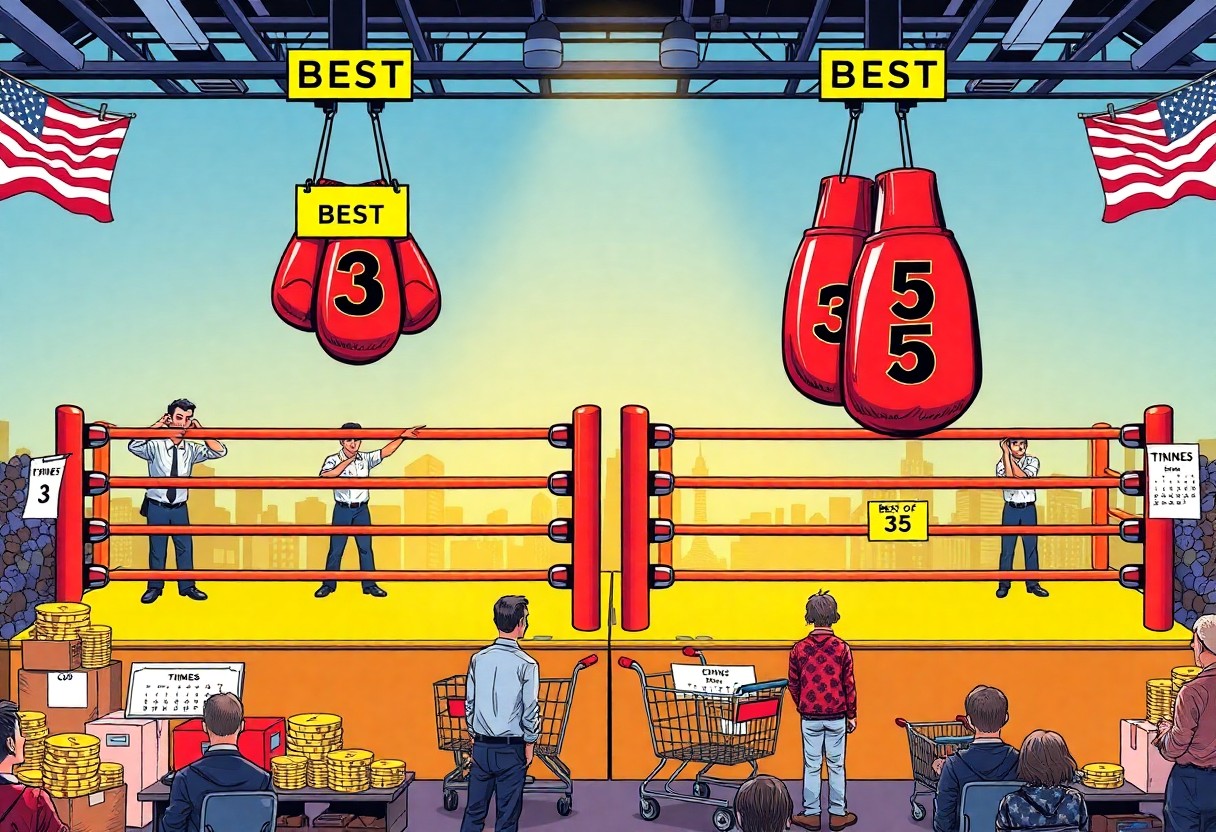
Just understanding the differences between best of three and best of five pricing strategies can enhance your business decision-making. This comparison explores how each strategy affects revenue, customer perception, and market positioning, offering insights for businesses looking to optimize their pricing approach.
The Psychological Foundations of Choice Architecture
The Decoy Effect and Strategic Price Anchoring
The decoy effect occurs when consumers are presented with an option designed to make another choice seem more attractive. This tactic utilizes strategic price anchoring by positioning a less appealing option alongside a more expensive one, guiding the buyer towards a preferred selection. By manipulating perceptions, sellers can increase the likelihood of upselling.
Strategically placed, the decoy draws attention to the more desirable option, enhancing perceived value. This psychological manipulation taps into cognitive biases, leading consumers to make choices that align with the seller’s goals rather than their original intentions.
Cognitive Load and the Paradox of Choice in Subscription Models
Cognitive load impacts consumer decision-making, especially in subscription models where numerous options exist. Consumers may experience paralysis when faced with too many choices, leading to dissatisfaction. This paradox highlights how excessive options can overwhelm rather than empower potential subscribers.
Streamlined offerings reduce cognitive overload, making it easier for consumers to make decisions. Simplified choices encourage quicker commitments and enhance overall satisfaction with the selection process.
When subscription models present too many tiers, consumers can struggle to assess value effectively. Anxiety may increase as buyers contemplate which option matches their needs, often leading to avoidance of decisions altogether. A limited selection can alleviate this burden, promoting clearer comparisons and understanding of benefits associated with each tier.
The “Center Stage” Effect in Three-Tiered Systems
The “Center Stage” effect refers to the phenomenon where the middle option in a three-tiered pricing structure garners more attention and selection. This positioning exploits consumer behavior, drawing them to the option that appears to provide the best balance of value and price.
This effect encourages consumers to gravitate towards the middle tier, which typically represents a compromise between cost and benefits. By strategically designing price offerings, sellers can exploit this tendency to enhance sales of the preferred option.
Subsequently, pricing structures that leverage the “Center Stage” effect can significantly influence consumer choice behaviors. Buyers are often hesitant to opt for the extremes, perceiving the middle option as a safe bet. Understanding this psychological tendency allows businesses to structure their offerings effectively, maximizing conversions while catering to the innate biases within consumer decision-making processes.
Analyzing the Best-of-Three Pricing Model
Streamlining the Decision-Making Journey for Consumers
Streamlined decision-making becomes crucial for consumers when faced with multiple price points. By limiting choices to three options, brands can simplify the selection process, helping buyers quickly assess value. Clarity in pricing reduces the cognitive load associated with decision-making, enabling faster purchase decisions.
Offering a concise range of options minimizes confusion, which can often lead to decision paralysis. A straightforward presentation of benefits tied to each price point ensures consumers understand what they’re getting, ultimately enhancing their satisfaction.
Maximizing Conversion Rates Through Simplified Value Propositions
Value propositions that are easy to understand can significantly boost conversion rates. Consumers respond positively to clear, straightforward messaging about what distinguishes each tier in the pricing model. When potential buyers can easily grasp the benefits of each option, they’re more likely to make a purchase.
Employing enticing value propositions allows brands to highlight unique features effortlessly. This clarity not only resonates with the audience but can also lead to increased loyalty as customers recognize the benefits tailored to their needs.
The “Good-Better-Best” Framework for Market Entry
The “Good-Better-Best” framework offers a strategic approach to market entry by catering to diverse consumer preferences. By providing a tiered pricing model, brands can attract a broad spectrum of clients, from budget-conscious shoppers to those seeking premium options. Each tier serves distinct customer needs, creating opportunities for upselling.
This framework encourages consumers to compare offerings logically, making it easier for them to justify their purchases. By demonstrating clear distinctions between options, businesses can drive engagement and enhance overall customer satisfaction.
Deconstructing the Best-of-Five Pricing Architecture
Capturing Extreme Willingness to Pay Across Diverse Segments
Understanding varying customer segments is crucial for maximizing pricing strategies. Different groups exhibit unique willingness to pay, influenced by their specific needs and preferences. Tailoring offerings to these segments allows businesses to better capture potential revenue and optimize pricing frameworks.
Incorporating a tiered strategy within the best-of-five model presents opportunities to segment customers effectively. By aligning product features with different willingness-to-pay thresholds, businesses can extract more value from each segment without alienating others.
Creating Granular Value Ladders for Scalable Growth
Designing value ladders involves mapping features and pricing to customer perceptions of value. Offering differentiated packages enables customers to choose based on their specific needs, encouraging upgrades and higher spending. Each rung of the ladder should appeal to varying levels of engagement and budget.
A granular approach not only enhances customer satisfaction but also fosters scalability. This structure allows businesses to adjust offerings based on real-time feedback and market demand, thus driving growth without extensive resource allocations.
Reducing Churn Through Precise Feature Alignment
Aligning features with customer needs is fundamental in minimizing churn. When offerings resonate closely with user expectations, retention rates improve significantly. This alignment ensures that customers perceive continuous value, which is crucial for long-term relationships.
Through data analysis and customer feedback, businesses can identify which features drive engagement and satisfaction. Adjusting offerings based on this information will reduce churn and foster loyalty among existing users, resulting in a more stable revenue stream.
Comparative Unit Economics and Revenue Impact
Table: Key Metrics Comparison
| Metric | Best of Three | Best of Five |
|---|---|---|
| ARPU | ||
| CAC | ||
| CLV |
Average Revenue Per User (ARPU) Variance Between Models
ARPU typically shifts between pricing strategies. For the best of three model, user engagement is often higher due to reduced complexity. This fosters a more direct revenue outcome per user, whereas the best of five strategy may dilute engagement and increase variance in revenue contributions.
In contrast, achieving a higher ARPU in a more complex tier may require extensive user education. While this complexity can attract more dedicated users, it risks alienating casual customers, resulting in a less predictable revenue stream.
Customer Acquisition Cost (CAC) Efficiency in Simple vs. Complex Tiers
Simplified pricing models usually attract a larger customer base, leading to lower CAC. When the structure is clear, potential users are more inclined to convert, minimizing marketing spend. In comparison, complex tiers often require more outreach and tailored messaging, escalating acquisition costs.
Effective marketing communication plays a vital role in raising awareness and driving conversions in tiered pricing models. Simplified offerings benefit from straightforward messages, while complex tiers necessitate detailed explanations and incentives, increasing both time and financial investment.
Impact on Customer Lifetime Value (CLV) and Expansion Revenue
CLV varies significantly based on the chosen pricing strategy. In simple tiers, the clarity often leads to higher retention rates, which can elevate CLV over time. Best of five models, though potentially engaging, may dilute ongoing user loyalty due to perceived complexity.
By investing in user relationships, companies can expand revenue streams, especially with upselling opportunities in simpler models. Complex tiers may provide unique offerings, but their success hinges on sustained customer understanding and engagement.
More information on CLV indicates that consistent interaction and feedback loops enhance customer loyalty in simpler pricing models. To maximize expansion revenue, businesses must focus on nurturing these relationships, ensuring that users see continuous value in their subscriptions. Complex models can thrive but require consistent educational efforts to maintain user engagement.
Strategic Implementation: When Three Tiers Outperform
Ideal Scenarios for B2C and Direct-to-Consumer Markets
B2C and direct-to-consumer markets thrive with three-tier pricing structures, providing clear options that cater to diverse customer segments. This model enhances customer decision-making by simplifying choices, making it easier for consumers to understand the value proposition of each tier.
Managing Limited Feature Sets Without Diluting Value
Limited feature sets can be an asset when presented strategically. Each tier should emphasize unique benefits, ensuring that customers perceive clear differences without feeling value is compromised. Positioning higher tiers with exclusive features can justify pricing and enhance perceived value across the board.
Clear communication of what each tier offers enables businesses to maintain a strong value perception. By highlighting imperative attributes and differentiators, companies can effectively manage customer expectations and satisfaction.
Accelerating Self-Service Sales Funnels
Self-service sales funnels benefit from three-tier pricing models through streamlined navigation and rapid consumer engagement. Customers can more easily identify their preferred option, leading to quicker decisions and smoother transactions. This approach minimizes friction in the buying process, enhancing overall sales efficiency.
A focused pricing strategy allows consumers to self-qualify their needs against tier offerings. As they assess options, it encourages a natural flow toward conversion, prompting action without the need for prolonged research or support engagement.
Strategic Implementation: When Five Tiers are Essential
Addressing the Complexity of Enterprise B2B Requirements
Enterprise B2B interactions often involve multifaceted needs that require tailored solutions. Five-tier pricing allows organizations to create specific packages addressing varying usage patterns and service expectations. Each tier can cater effectively to different business sizes and complexities, facilitating adoption across a broader spectrum of clients.
Customization becomes straightforward with multiple pricing tiers. This structure enables businesses to differentiate offerings based on the scale and scope of services required. Addressing unique enterprise demands promotes long-term partnerships while ensuring adequate support for different tiers of users.
Monetizing High-Usage and Power-User Personas
High-usage and power-user segments represent lucrative opportunities for B2B companies. Offering distinct pricing plans within a five-tier strategy can help monetize these groups effectively. Recognizing their exceptional service demands allows businesses to tailor benefits that enhance user satisfaction and retention.
Targeting power-users with specialized features and scalable options can drive revenue growth. Such differentiation ensures that high-usage clients feel valued while also justifying the investment needed to support their heightened engagement levels.
Facilitating “Land and Expand” Account Strategies
“Land and expand” strategies thrive when pricing structures accommodate evolving client needs. Five-tier pricing facilitates initial engagement through attractive entry points. As clients grow, they can scale their services effectively, benefiting both parties in the process.
Expanding existing accounts can significantly increase lifetime value. By implementing tiered pricing, companies can upsell additional features or services in a mutually beneficial manner, enhancing satisfaction and loyalty as clients probe deeper into the product ecosystem.
The Role of Tier Differentiation and Feature Gating
Identifying “Killer Features” for Mid-Tier Incentivization
Successful mid-tier offerings often hinge on defining “killer features” that distinguish them from standard options. These features should enhance user satisfaction while justifying a higher price point, attracting upgrades without alienating entry-level customers. Clear identification of these elements allows pricing strategies to directly align with user needs.
Targeting specific functionalities that solve significant pain points can drive mid-tier sales. Effective communication of these features through marketing channels will further increase their perceived value, encouraging users to make the upgrade. Highlighting user testimonials or case studies may also bolster their appeal.
Managing the Threshold Between Standard and Pro Tiers
Clear differentiation between standard and pro tiers helps streamline user progression. Establishing precise boundaries prevents confusion while allowing customers to perceive the value at each level. This approach ensures effective communication of benefits, making users more likely to see the worth in upgrading.
Regular analysis of user feedback can refine these thresholds over time. Subtle adjustments might enhance the appeal of the pro tier, making it more enticing for current users of the standard version. Consistent evaluation leads to improved user satisfaction and increased sales.
Positioning the pro tier with exclusive features promotes its allure, while maintaining a focus on core functionalities in the standard tier ensures broad appeal. Engaging users through surveys or monitoring usage patterns helps identify any perceived gaps or enhancements needed to bridge the two tiers effectively.
Using Usage-Based Add-ons to Complement Fixed Tiers
Integrating usage-based add-ons provides additional flexibility and personalization within fixed-tier offerings. This approach allows users to pay only for what they need, catering to varying demand levels. A well-structured add-on system can create an enticing opportunity for users to explore upgraded services without a full-tier commitment.
Offering tiered pricing on add-ons facilitates customer engagement while allowing users to scale their usage in alignment with their business growth. These add-ons can serve as incentives to upgrade, ensuring that users recognize their potential savings while benefiting from enhanced features.
Utilizing usage-based add-ons can improve customer retention by addressing fluctuating user requirements. Offering add-ons tied to specific usage metrics encourages continuous engagement and fosters a deeper connection with the product, enhancing customer loyalty and user satisfaction long-term.
User Experience and Interface Design for Pricing Tables
Maintaining Visual Hierarchy in Five-Column Layouts
A well-structured five-column layout enhances clarity and guides user decision-making. Utilizing font size, weight, and color contrasts helps in emphasizing key features and price points, ensuring users focus on what matters most.
Elements should be arranged logically, grouping similar items together. This organization streamlines information absorption, allowing potential customers to make comparisons easily without feeling overwhelmed.
Mobile-First Optimization for Extensive Pricing Data
Designing for mobile users requires simplifying complex pricing tables while ensuring accessibility. Prioritizing important information reduces clutter and enhances user interactions, catering to the mobile audience effectively.
Responsive designs adapt seamlessly to different screen sizes, maintaining readability. Using collapsible sections or expandable lists allows users to explore extensive data without sacrificing space or usability.
Optimizing for mobile means ensuring all pricing data is readily understandable on smaller screens. This adaptability not only enhances user satisfaction but also encourages conversion, as potential buyers can easily access and evaluate their options.
Information Scents and Tooltips for Complex Feature Sets
Providing information scents helps users grasp the functionality of various features without feeling lost. Strategically placed tooltips clarify details and offer additional context without overwhelming the main pricing table.
These visual cues should be intuitive, guiding the user to more information when needed. Highlighting important aspects alongside brief descriptions encourages educated decisions and reduces anxiety during the selection process.
- Tooltips can enhance engagement without cluttering the layout.
- Information scents lead to better user confidence in navigating complex data.
- This approach supports an informed purchasing decision.
Employing effective information scents not only aids comprehension but builds trust in the pricing strategy. This establishes a transparent dialogue with potential customers, ensuring they feel informed and secure in their choices.
- Clear tooltips can reduce uncertainty for users.
- Information scents improve navigation by visually indicating available options.
- This clarity enhances overall user experience and satisfaction.
The Impact of Tier Density on the Sales Cycle
Reducing Friction in Low-Touch, High-Volume Models
Streamlined processes enhance customer experiences in low-touch, high-volume sales scenarios. Simplifying choices reduces hesitation and accelerates decision-making, ultimately shortening the sales cycle. Clarity in tier structures ensures prospective buyers can easily identify the best fit for their needs.
Customers appreciate transparent pricing and straightforward features. By minimizing complexity, businesses can encourage more prospects to engage without the burden of extensive research. This approach leads to increased conversions and a smoother sales experience.
The Necessity of Sales-Assisted Tiers in Multi-Option Architectures
Sales-assisted tiers serve as a bridge between fully automated and high-touch interactions. Offering this middle ground caters to customers who seek guidance while also enjoying the benefits of self-service options. Personalized assistance can clarify complex choices and drive satisfaction.
Selling through assisted tiers becomes important as customers encounter diverse options. Providing expertise during critical decision points can mitigate confusion, ensuring that prospects make informed choices aligned with their expectations.
Shortening the “Time-to-Value” Through Tier Clarity
Clear tier definitions establish clear expectations, shortening the time-to-value for clients. When customers understand what each tier includes, they make quicker evaluations and decisions. This transparency reduces misunderstandings and aligns client needs with service delivery.
Enhancing clarity in tier offerings directly influences customer satisfaction. Sales cycles shorten as prospects identify value sooner, creating a compelling reason to commit without prolonged deliberation.
Transitioning and Scaling Your Pricing Strategy
Signals That Your Three-Tier Model is Limiting Revenue
Declining customer acquisition rates often indicate that a three-tier model may not be resonating with the target audience. If potential customers consistently choose the middle tier, it suggests that the pricing structure might need reevaluation to better capture revenue across all segments.
Increased churn rates provide another signal. Customers moving away from lower or mid-tier plans could signify dissatisfaction with perceived value or service. Understanding these dynamics is important to identify opportunities for adjusting pricing tiers.
Risks and Mitigation Strategies for Tier Consolidation
Consolidating pricing tiers can create confusion among existing customers. Risks include potential loss of clients who feel their needs are no longer met. Clear strategies should be implemented to ensure customer understanding and retention, including targeted communication and support.
Another risk involves perceived loss of value. Customers may feel that their previous options provided more tailored solutions. Gathering feedback prior to consolidation can help customize the new offerings to better align with customer expectations.
Communicating Price Migrations to Existing Customer Bases
Effective communication during price migrations is important for maintaining customer trust. Clearly outlining the reasons for changes and the benefits of new pricing plans can alleviate concerns and promote acceptance. Tailored messages via multiple channels ensure the audience understands the transition.
Providing opportunities for feedback encourages customers to express their concerns, allowing companies to address issues proactively. By involving customers in the process, businesses can foster stronger loyalty even during transitions.
Data-Driven Optimization and A/B Testing Methodologies
Isolating Variables in Multi-Tier Pricing Experiments
Experimental design in multi-tier pricing requires a clear focus on one variable at a time. By manipulating the price point while keeping other factors static, businesses can identify how specific changes influence consumer behavior. This precision enhances the validity of the results, minimizing external noise that could skew interpretations.
Controlling for variables such as product features or marketing strategies allows for effective isolation. Testing with diverse customer segments can also yield insights into how different demographics respond to pricing, facilitating more targeted strategies in future campaigns.
Measuring the Elasticity of Demand Across Five Tiers
Elasticity of demand reflects how responsive customer purchases are to price changes. Utilizing a five-tier model enables businesses to analyze which price points result in increased or decreased purchases. This method showcases consumer sensitivity to various pricing strategies, informing more effective decision-making.
Assessing elasticity across multiple tiers provides a nuanced view of consumer behavior. Understanding whether demand is elastic or inelastic at different price levels can guide future pricing strategies and promotional efforts.
Elasticity analysis across five tiers generates actionable insights into pricing effectiveness. For instance, if demand increases significantly at the lowest tier while declining at higher tiers, companies can recalibrate their pricing strategy accordingly. This precise understanding aids in balancing revenue and customer acquisition effectively.
Analyzing User Drop-off Points in Complex Selection Menus
User drop-off points reveal critical chokepoints within complex selection menus. By tracking where users abandon the process, companies can identify frustrating elements and streamline navigation. Attention to these insights allows for more user-friendly designs that encourage conversions.
Studying drop-off metrics can highlight patterns related to pricing presentations or tier confusion. Takings steps to simplify the user journey directly enhances engagement and retention.
Analyzing user drop-off points not only uncovers specific discontent but may also indicate broader design flaws. By systematically addressing these issues, businesses improve user experience and, ultimately, increase conversion rates. Employing data-driven insights ensures adjustments are both timely and effective.

Industry Case Studies: The Success of Three-Tier Simplicity
- Microsoft Office: Increased subscriptions by 25% when introducing three pricing tiers, boosting user engagement.
- Adobe Creative Cloud: Transitioning to a three-tier model led to a 30% rise in new subscribers year-over-year.
- SaaS Companies: 40% of users prefer three-tier pricing, showing higher conversion rates than two-tier models.
- Spotify: Introduced three subscription options, resulting in a 20% growth in overall revenue and subscriber retention.
- Canva: Three pricing tiers led to a 50% increase in small business subscriptions, enhancing user acquisition.
Productivity Software and Single-Utility Applications
Office productivity suites have reaped benefits from three-tier pricing models, offering basic to advanced features. Balancing cost and value has resulted in increased user adoption and satisfaction.
Applications such as task management tools often employ this strategy, attracting a broad user base. Pricing structures cater to varying business needs, promoting upgrades for additional features.
Media Streaming and Content Subscription Services
Streaming platforms have capitalized on three-tier pricing to diversify their content offerings. By segmenting audiences into basic, standard, and premium tiers, they effectively maximize revenue while catering to different viewer preferences.
Established brands like Netflix and Hulu demonstrate how this model enhances customer retention. As users explore unique features at each tier, they often find value in upgrading, thereby boosting average revenue per user.
Enhanced content libraries and exclusive original series drive the appeal of premium tiers. This strategy not only satisfies diverse consumer preferences but also encourages growth through user engagement across multiple subscription levels.
Boutique Professional Services and Consulting Packages
Consulting firms benefit from three-tier pricing by aligning service complexity with costs. Offering distinct packages enables businesses to target different client segments, optimizing service delivery and profitability.
Companies with tailored consulting solutions often see increased inquiries for higher-tier options. This strategy addresses varying budget levels while attracting clients seeking specialized expertise.
By presenting tiered service levels, boutique firms can enhance value perception among clients. Custom packages foster deeper client relationships and can lead to extended project engagements, ensuring long-term growth.
Industry Case Studies: The Power of Five-Tier Granularity
- Amazon Web Services: Increased customer retention by 25% with granular pricing tiers.
- Salesforce: 15% boost in upsell opportunities attributed to five-tier pricing models.
- Google Cloud: Achieved 30% revenue growth after implementing tiered pricing structure.
- Microsoft Azure: 20% higher adoption rates through tailored five-tier options.
- Zendesk: Saw 40% increase in customer acquisition with tiered service plans.
Cloud Infrastructure and Infrastructure-as-a-Service (IaaS)
Cloud service providers have witnessed remarkable results from adopting five-tier pricing structures. This granularity allows customers to select specific resource allocations based on their needs, leading to more precise billing and improved customer satisfaction. By catering to various budgets and requirements, these providers can attract a broader range of businesses.
Amazon Web Services (AWS) exemplifies this strategy with its tiered offerings, resulting in a notable 25% increase in customer retention. Clients appreciate the flexibility to pay for only what they use, enhancing their loyalty to the platform.
Comprehensive CRM and Enterprise Resource Planning Ecosystems
Five-tier pricing models in CRM and ERP systems offer businesses tailored solutions that match their operational complexities. Organizations can select packages that fit their size and growth trajectory, optimizing resource allocation. This approach has repositioned many suppliers as go-to solutions for different customer segments.
Salesforce’s five-tier structure led to a significant 15% increase in upselling opportunities. By presenting distinct functionalities, customers can opt for upgrades as their business needs evolve, ensuring a continuous revenue stream for the provider.
Salesforce has effectively demonstrated the financial benefits of diverse tier offerings. Each package aligns with specific customer profiles, driving increased satisfaction and loyalty while simultaneously creating pathways for upselling premium features as organizations expand.
Telecommunications and High-Bandwidth Data Providers
Telecommunications companies adopting five-tier pricing have transformed their service delivery models. Enhanced granularity allows service providers to cater to a variety of consumer needs-from data-heavy users to light consumers-ensuring that customers pay only for the services they actually consume. This flexibility can significantly enhance user experience and loyalty.
A notable case is Verizon, which reported a 20% increase in user satisfaction after implementing tiered plans. By segmenting services according to usage, consumers find greater value and clarity in their subscriptions, reinforcing their commitment to the brand.
Telecommunications firms have leveraged tiered pricing to drive customer engagement. By offering distinct packages tailored to user behavior, they ensure that each segment feels adequately served, resulting in higher retention and reduced churn rates across varying service users.
Summing up
Upon reflecting, the choice between a best of three versus a best of five pricing strategy often hinges on customer engagement and perceived value. A best of three model generally offers quicker decisions, appealing to consumers who prefer simplicity and ease of understanding. This approach may lead to higher conversion rates in fast-paced markets.
In contrast, employing a best of five strategy can create a deeper commitment from customers, enhancing brand loyalty over time. Although this method may take longer to conclude, it can justify higher prices due to perceived weight and thoroughness of choice, ultimately driving higher margins. Effective implementation depends on the target audience and market demands.
Q: What is the difference between best of three and best of five pricing strategies?
A: The best of three pricing strategy typically involves a quicker decision-making process, appealing for time-sensitive products. In contrast, the best of five strategy allows for more thorough evaluation, often attracting customers who prefer detailed comparisons. Both strategies aim to enhance customer engagement and maximize sales.
Q: What are the advantages of using the best of three pricing strategy?
A: The best of three pricing strategy can lead to quicker customer decisions, reducing the time spent on comparisons. This approach often results in higher conversion rates due to its simplicity and ease of understanding. Customers appreciate the straightforward options, making it easier for them to choose.
Q: When is it preferable to implement a best of five pricing strategy?
A: The best of five pricing strategy is more effective when customers seek detailed information and comparative analysis before making a purchase. This method works well for complex products, catering to buyers who prioritize comprehensive evaluations. Higher engagement through multiple options can influence purchasing decisions positively.