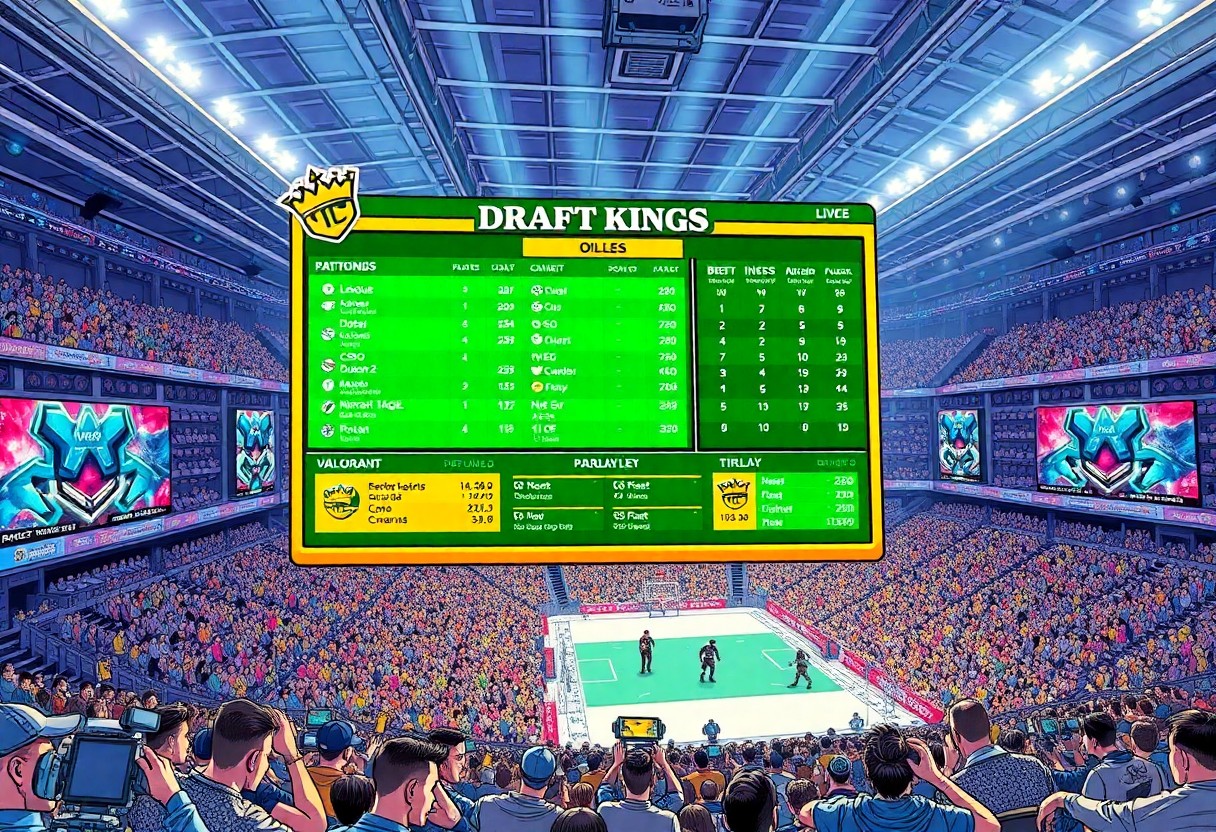
You can explore how DraftKings is reshaping the betting experience with its integration of esports titles. This innovative approach caters to a growing audience, enhancing engagement and providing diverse wagering options in the rapidly expanding esports market.
The Evolution of the Esports Betting Landscape
Historical transition from skin gambling to regulated platforms
Early betting on esports primarily involved skin gambling, where players waged virtual items within games. This unregulated practice often led to issues surrounding fairness and security, prompting a need for oversight.
As concerns grew, many esports titles began to implement more structured gambling systems. This shift paved the way for established sportsbooks to enter the market, bringing legitimacy and consumer protection to esports betting.
Growth trajectories of major titles: MOBA, FPS, and Battle Royale
MOBA games like “Dota 2” and “League of Legends” have seen consistent player engagement, while FPS titles, such as “Counter-Strike: Global Offensive,” attract a fervent competitive audience. Battle Royale games, exemplified by “Fortnite,” have rapidly captured the attention of casual and hardcore gamers alike.
Tracking the engagement levels of these genres reveals distinct patterns. MOBAs continue to dominate with established tournaments, while FPS and Battle Royale games grow rapidly due to evolving gameplay and huge player bases.
Shifting demographics and the profile of the modern esports bettor
Modern esports bettors represent a diverse group, blending millennials and Gen Z enthusiasts. Younger audiences often prioritize online platforms and seek instant access to betting options during live matches.
Many bettors are also more tech-savvy, using data analytics to inform their betting decisions. This shift not only impacts how sportsbooks market their offerings but also the types of betting options that are becoming increasingly popular.
Technical Architecture for Real-Time Data Integration
High-concurrency server frameworks for live event handling
High-concurrency server frameworks are crucial for managing thousands of simultaneous connections during live esports events. Technologies like Node.js or Java’s Akka framework provide the necessary performance to handle real-time interactions, enabling users to place bets instantaneously.
These frameworks allow for efficient scaling across multiple servers, ensuring that latency remains minimal while accommodating spikes in user activity. By distributing loads effectively, sportsbooks can maintain a high level of service during intense matches.
Low-latency data pipelines for instant play-by-play updates
Low-latency data pipelines are pivotal for delivering immediacy in live esports betting. Utilizing technologies such as Apache Kafka or Redis, platforms can process and distribute data swiftly, providing users with real-time updates on game events.
The architecture supports various data sources, streamlining information flow from game servers directly to the sportsbook. This enables participants to react instantly to in-game developments, enhancing the betting experience.
Instant updates create a competitive edge, allowing bettors to make informed decisions as events unfold. By maintaining a constant data feed, sportsbooks ensure users receive the most accurate and timely information, which is crucial during fast-paced esports competitions.
Scalability requirements for peak international tournament traffic
Scalability is non-negotiable during peak traffic moments, such as international esports tournaments. Systems must be designed to handle extensive user growth without compromising performance, employing horizontal scaling strategies to add resources dynamically.
Utilizing cloud-based solutions allows for rapid scaling in response to user demand fluctuations. This flexibility ensures that sportsbooks can effectively manage the influx of users while providing uninterrupted service during significant events.
Handling peak traffic efficiently requires advanced planning and infrastructure investment. Capacity should be regularly evaluated to anticipate demand spikes, allowing sportsbooks to remain competitive and responsive in the bustling esports betting market.
The DraftKings UI/UX Model: Design Principles for Esports
Visual hierarchy and gamification elements in dashboard design
Effective dashboard design employs visual hierarchy to guide users smoothly through content. Key features should stand out, allowing bettors to access vital information quickly while engaging them with gamification elements that enhance the overall experience. Icons, color schemes, and typography all contribute to making esports betting intuitive and enjoyable.
Gamification techniques introduce competitive elements, rewarding users for participation and interaction. Features like leaderboards or achievement badges encourage continual engagement, making the betting experience not just about winning, but also about reaching personal milestones and enjoying the journey. This approach cultivates a loyal user base.
Seamless navigation between traditional sports and esports markets
Integration of traditional sports and esports markets must prioritize fluid user experience. Users should easily switch between sections with minimal disruption, ensuring quick access to their preferred betting options. Clear labeling and categorization support this fluidity, empowering users to find what they need without extensive searching.
Consistent design patterns across both sports categories enhance familiarity, reducing the learning curve for new users. As bettors transition between traditional and esports markets, recognizable elements in the UI streamline the process, promoting engagement with both areas of betting without any confusion or frustration.
Dynamic bet slip functionality and multi-market visibility
Dynamic bet slip functionality enhances efficiency by allowing users to adjust wagers quickly as they browse multiple markets. This adaptability enables bettors to experiment with different betting strategies without the hassle of resetting their choices. Multi-market visibility ensures users can view all options in one place, promoting informed decision-making.
Offering real-time updates within the bet slip keeps users informed of changes in odds or events, making it easier to seize opportunities. By integrating these features, DraftKings caters to the unique needs of esports bettors while aligning with traditional sports betting functionalities, creating a fluid user experience across the board.
API Ecosystems and External Data Sourcing
Evaluating tier-one data providers and official league feeds
Quality data sources are crucial for accurate esports betting. Selecting tier-one data providers ensures access to timely, reliable, and comprehensive statistics. Official league feeds, maintained by governing bodies, usually provide the most accurate and consistent data available.
Reputable data providers typically offer extensive coverage of numerous esports titles, catering to diverse betting markets. Evaluating their performance in real-time data accuracy and uptime is crucial for effective integration within a sportsbook.
Normalization of disparate data formats across multiple game titles
Normalization challenges arise from the variety of data formats used across different esports titles. Each game may have unique metrics, making it vital to standardize this information for effective integration into betting platforms.
Successful normalization involves developing a framework that translates diverse data inputs into a uniform format. This enables sportsbooks to offer consistent odds and enhance user experience.
By mapping specific game metrics to a standardized schema, sportsbooks can streamline data ingestion processes. This unified approach not only simplifies odds calculation but also enhances analytics capabilities, leading to informed betting options.
Implementation of WebSocket protocols for real-time odds streaming
WebSocket protocols play a pivotal role in delivering real-time odds updates to users. Utilizing this technology enables instant communication between the server and clients, ensuring that bettors receive the latest information without delay.
Efficient implementation of WebSocket connections guarantees low latency and high-frequency updates, crucial for live betting experiences. Such responsiveness enhances user engagement and trust in the sportsbook’s offerings.
Utilizing WebSocket protocols requires careful architecture planning to manage numerous concurrent connections effectively. This demands robust back-end infrastructure capable of handling data streams in real-time, optimizing user interactions during highly dynamic events.
Market Selection and Odds Compilation Strategies
Algorithmic modeling for pre-match and in-play betting lines
Utilizing sophisticated algorithms enhances the assessment of pre-match and in-play betting lines. These models analyze historical data, player performance, and team statistics to generate accurate odds, enabling sportsbooks to respond dynamically to real-time events. In-play adjustments are particularly important, as they allow operators to capture the changing momentum within matches.
Integration of machine learning techniques further refines these models, adapting to new data inputs as they arise. Continuous learning ensures the reliability of odds amid the unpredictable nature of esports, providing a competitive edge against market fluctuations.
Identifying niche markets: First Blood, Map Winners, and Objective Control
Exploring niche markets becomes imperative for sportsbooks aiming to cater to esports enthusiasts. Markets such as First Blood, Map Winners, and Objective Control not only attract dedicated bettor engagement but also differentiate offerings in a competitive landscape. These specific betting options appeal to fans with deeper knowledge of gameplay mechanics.
By pinpointing these opportunities, sportsbooks can tap into specialized communities and enhance user experience. Understanding player tendencies and strategic elements allows for more accurate odds compilation, benefiting both operators and bettors.
Balancing the book against high-volatility professional play
Managing risk in high-volatility esports requires careful balancing of the book. Professional play often results in rapid fluctuations in betting patterns, necessitating real-time adjustments to odds. Maintaining a balanced book minimizes exposure while maximizing potential profit, crucial in a landscape defined by unpredictability.
Employing risk management strategies, such as limiting stake sizes or setting volatility thresholds, assists in mitigating potential losses associated with extreme betting behavior from professional players.
Regulatory Landscapes and Global Compliance
Navigating US state-by-state licensing for esports wagering
Each US state has its own unique regulatory framework for esports wagering. Compliance with local laws requires sportsbooks to carefully analyze licensing requirements and adapt their operations accordingly. States such as New Jersey and Nevada have already established clear guidelines, while others are still in the developmental phase.
Understanding how these regulations differ is necessary for market entry. DraftKings must collaborate closely with state gaming commissions to ensure they meet all legal parameters, providing a trustworthy environment for esports bettors.
Adhering to international standards: MGA, UKGC, and Curacao frameworks
Regulatory bodies like the Malta Gaming Authority (MGA) and UK Gambling Commission (UKGC) impose strict standards for esports wagering. Each framework sets specific rules for player protection, responsible gaming, and financial transparency, impacting how sportsbooks operate globally.
Curacao’s licensing approach offers more flexibility but also requires operators to ensure compliance with broader international standards. Adhering to these regulations is crucial for maintaining credibility and trust in the global esports betting market.
MGA and UKGC emphasize player safety, transparency, and ethical practices, which are foundational for building trust. These frameworks require sportsbooks to undergo regular audits and provide clear terms of service, establishing credibility across global platforms.
Age verification and responsible gaming protocols for digital natives
Implementing effective age verification is necessary in the esports betting environment. Digital natives engage in gaming and betting differently; thus, sportsbooks must adopt advanced technologies for verifying user age to protect underage players. Compliance with regulations ensures that only eligible individuals participate.
Responsible gaming protocols must include tools for self-exclusion, spending limits, and access to gambling addiction resources. Keeping players informed about responsible practices enhances the integrity of the betting experience and promotes long-term engagement.
Age verification tools, such as biometric identification and AI-driven methods, can streamline the process. By prioritizing responsible gaming measures, sportsbooks can create a safer environment that resonates with both regulators and users, ensuring a sustainable approach to esports wagering.
Integrity Monitoring and Fraud Prevention
Collaboration with the Esports Integrity Commission (ESIC)
DraftKings emphasizes strong collaboration with the Esports Integrity Commission (ESIC) to develop standardized protocols for monitoring esports betting. This partnership enhances trust by implementing guidelines that address potential integrity issues in esports events.
Working together, both organizations can share insights and data to identify and combat unethical practices within the gaming community. Such efforts help maintain a level playing field, ensuring that esports betting retains its credibility and attractiveness for both casual and serious bettors.
Identifying suspicious betting patterns and match-fixing indicators
Analyzing data from betting activities helps identify unusual patterns that may indicate match-fixing or collusion among players. Continuous monitoring systems scrutinize large volumes of bets to spot any anomalies that deviate from normal betting behavior.
By employing advanced algorithms and machine learning techniques, DraftKings can flag inconsistencies that warrant further investigation. This proactive approach not only protects the integrity of esports events but also bolsters user confidence in the platform.
Implementing robust Anti-Money Laundering (AML) and KYC procedures
DraftKings employs stringent Anti-Money Laundering (AML) protocols to prevent illicit activities within its esports betting ecosystem. Anti-money laundering measures are critical for safeguarding the platform and ensuring that all transactions are legitimate and traceable.
Effective KYC procedures further enhance security by verifying users’ identities before allowing them to engage in betting. By establishing clear user profiles, DraftKings mitigates the risk of fraud and ensures compliance with regulatory requirements.
Customer Acquisition and Retention Tactics
Leveraging Influencer Partnerships and Professional Team Sponsorships
Influencer partnerships have become a key mechanism for reaching esports fans. Engaging popular streamers and content creators not only enhances brand visibility but also builds trust among targeted demographics. These partnerships can lead to authentic endorsements that resonate more strongly than traditional advertising methods.
Simultaneously, sponsoring professional esports teams offers a unique opportunity for brand alignment. Associating with established teams enhances credibility and taps into their fan base, creating a community-driven approach to customer acquisition. This strategy nurtures loyalty and engagement through shared identities.
Loyalty Programs and Personalized Bonus Structures for Esports Fans
Implementing tailored loyalty programs can incentivize beginner and seasoned bettors alike. Offering personalized bonuses based on user preferences enhances the betting experience and establishes long-term relationships. Gamifying the experience through rewards accelerates user engagement and retention.
A structured loyalty program, designed specifically for esports fans, encourages continuous interaction. Points earned from betting can be redeemed for exclusive content, merchandise, or even meet-and-greets with players. Tailored bonus structures based on player history ensure relevance, making users feel understood and valued.
Content Integration: Live Streaming and Expert Analysis within the Platform
Incorporating live streaming and expert analysis directly into the sportsbook platform creates a compelling user experience. Access to professional commentary and match insights enhances the overall betting environment, making it more interactive and informative. Users gain confidence in their betting choices when they can view expert insights alongside live events.
This integration serves a dual purpose. Active bettors can engage with real-time events and gain insights into game mechanics that enhance understanding. Such engagement ensures users remain loyal to the platform, as it provides added value beyond traditional betting experiences.
Mobile-First Development and Cross-Platform Performance
Optimizing native iOS and Android applications for low-latency betting
Native applications for iOS and Android must prioritize real-time performance to ensure low-latency betting experiences. Focus on efficient coding practices, utilizing asynchronous programming techniques to minimize delays when processing bets and odds updates. Optimizing network calls can further enhance responsiveness during high-traffic periods.
Streamlined UI/UX design enhances user interactions by simplifying navigation and minimizing loading times. Implementing local caching strategies will reduce the number of server requests, allowing users to place bets instantly, especially during critical moments of esports events.
Progressive Web App (PWA) strategies for cross-device consistency
Progressive Web Apps (PWAs) provide an excellent solution for consistent performance across devices. Their responsiveness ensures that users experience the same functionality, whether on a desktop or mobile device. Leveraging service workers allows for offline capabilities, making it easier for users to engage with content without interruptions.
Developing a flexible design framework enables seamless adaptation to varying screen sizes, ensuring graphics and layouts are visually appealing across devices. Employing consistent APIs fosters a unified experience, allowing users to interact with the sportsbook effortlessly, regardless of their chosen platform.
Maintaining cross-device consistency through PWAs also involves regular updates and enhancements. By utilizing modern web technologies like WebAssembly and Web APIs, developers can ensure that users enjoy fast load times and smooth navigation, further blurring the lines between native applications and web-based experiences.
Managing hardware resource consumption during long-form tournament events
Optimizing applications for long-form esports events requires careful management of hardware resources. Prioritizing efficiency in power usage and memory allocation is crucial for providing a smooth experience while minimizing the risk of crashes. Using adaptive streaming protocols can reduce bandwidth consumption, allowing devices to handle prolonged engagement effectively.
Monitoring resource usage during live events ensures that applications can respond to user demands without overwhelming device capabilities. Implementing throttling techniques on background tasks can preserve battery life, granting users the ability to enjoy extended viewing periods without interruption.
Developers can enhance user experience by employing dynamic resource allocation strategies. This ensures that the application adjusts its needs based on real-time user engagement, which is especially important during high-stakes betting moments in lengthy tournaments. By prioritizing the performance of the most relevant features and services, users can fully immerse themselves in the action without concerns over device performance.
Financial Infrastructure and Payment Processing
Integrating traditional gateways with digital-native payment methods
Integrating traditional payment gateways with digital-native methods ensures smooth transactions for a diverse user base. Operators must accommodate various preferences, including credit cards and e-wallets, to enhance the user experience in esports betting.
Incorporating cryptocurrencies offers an additional layer of convenience, appealing to tech-savvy customers. This combination not only broadens the market reach but also enhances transaction speed and security, vital for maintaining user trust.
Managing rapid withdrawals and high-frequency transaction volumes
Managing rapid withdrawals is crucial for retaining users who expect instantaneous access to their funds. High-frequency transaction volumes further complicate this challenge, requiring efficient algorithms and technology to ensure timely processing.
Investment in automated systems can help mitigate delays and enhance user satisfaction. Implementing advanced risk management protocols assures compliance while allowing for rapid transactions, crucial in a fast-paced esports environment.
Managing rapid withdrawals and high-frequency transaction volumes necessitates a technological investment that prioritizes speed and security. Users demand instantaneous fund access, and delays can result in a loss of trust. Automated systems, capable of handling substantial transaction loads, play a pivotal role in this efficiency. Additionally, risk management frameworks must adapt quickly to prevent fraudulent activities while ensuring compliance, making it easier for operators to thrive in a competitive esports market.
Multi-currency support and the role of digital assets in global markets
Multi-currency support addresses the global nature of esports, enabling users to bet in their preferred currency. This capability not only enhances user experience but also allows operators to reach a more extensive client base.
Digital assets are becoming increasingly relevant, offering innovative alternatives to traditional payment methods. Integrating such assets can streamline processes and attract cryptocurrency enthusiasts, further expanding market potential.
Multi-currency support and the inclusion of digital assets significantly enhance user engagement in a global market. As esports draws diverse audiences, the ability to transact in various currencies ensures accessibility and convenience. Digital assets present an emerging trend, providing unique payment solutions that appeal to a younger demographic. This strategic integration offers operators a competitive edge, fostering growth in international gaming markets.
Artificial Intelligence in Predictive Analytics
Machine learning models for professional player performance forecasting
Machine learning models offer sophisticated algorithms that analyze historical performance data of esports athletes. These models identify patterns and trends, allowing for advanced forecasting of individual player performance in various scenarios.
By incorporating diverse factors such as player statistics, game patches, and team dynamics, these models enhance their predictive capabilities. This technology strengthens betting strategies, making them more aligned with actual player performance outcomes.
Automated risk adjustment based on real-time game state changes
Automated systems analyze in-game events to adjust betting odds dynamically. Changes in player performance, map control, or crucial in-game decisions can significantly impact the overall risk assessment.
This technology ensures that sportsbooks provide the most accurate odds based on live data, responding swiftly to the evolving nature of esports matches. Bettors benefit from more precise information, enhancing their decision-making process.
Utilizing advanced algorithms, real-time data feeds allow sportsbooks to monitor various in-game metrics continuously. These metrics include player health, resource allocation, and position changes, which influence the game’s outcome. As conditions fluctuate, automated risk adjustments occur instantly, ensuring bettors are engaging with the most informed lines.
Personalized recommendation engines for user betting preferences
Personalized recommendation engines analyze individual user behavior to suggest tailored betting options. By examining past betting patterns and preferences, these algorithms provide customized insights that enhance user engagement.
This targeted approach not only increases the likelihood of successful bets but also fosters a more personalized betting experience. Users can receive alerts about potential bets that align with their interests and historical choices.
Engagement improves significantly through personalized recommendations, as users discover betting opportunities that they might not have considered otherwise. The integration of user data and predictive analytics creates a unique interface, enhancing overall user satisfaction within the platform.
Social Features and Community Engagement
Peer-to-peer betting rooms and private group tournament leagues
Peer-to-peer betting rooms create a dynamic environment for fans to engage directly with one another. Users can set up private groups to organize tournaments, allowing for tailored rules and wagers that suit their specific gaming preferences.
Private group leagues foster a sense of camaraderie among participants while leveling the playing field. Users can compete with friends, making the betting experience both personal and competitive, enhancing the overall excitement of the esports betting experience.
Integrated community chat functions and social media sharing capabilities
Integrated chat functions enhance real-time interaction, allowing bettors to discuss strategies, share insights, and celebrate wins. This feature turns solitary betting into a shared experience, promoting a community atmosphere around esports titles.
Sharing capabilities further connect users with social media platforms, enabling them to broadcast their bets and achievements. Such integration not only amplifies engagement but also attracts new users drawn by the vibrant community interactions.
Integrated community chat features promote lively discussions among bettors, encouraging strategy sharing, predictions, and reactions during live events. These interactions enhance the immersive experience, making users feel part of a larger community while engaging deeply with content.
Leaderboards and competitive ranking systems for sportsbook users
Leaderboards and competitive ranking systems provide transparency and excitement for users aiming for recognition. They encourage friendly rivalry as bettors track their performance against others, driving a competitive spirit that enhances engagement.
Ranking systems can motivate users to improve their betting strategies and performance. By promoting top performers, sportsbooks not only celebrate success but also inspire other users to strive for greater heights within their betting endeavors.
Leaderboards and ranking systems create a competitive framework, granting users the opportunity to showcase their skills and strategies in real time. This not only enriches user experience but helps retain bettors by ensuring ongoing challenges and milestones. Regular updates keep the excitement alive, fostering continuous participation and engagement.
Strategic Outlook: The Convergence of Media and Betting
In-game betting overlays for Twitch and YouTube Gaming integrations
In-game betting overlays enhance viewer engagement by providing real-time odds and betting options directly on streaming platforms. These overlays simplify the betting process, allowing audiences to place wagers while following the action without switching contexts.
Integrating this feature into major streaming platforms positions sportsbooks to attract a younger, tech-savvy audience. As interactions become more immersive, bettors can participate in the excitement of esports events, enhancing both viewing and betting experiences.
The rise of micro-betting on specific round-by-round outcomes
Micro-betting has emerged as a popular option, allowing users to place quick, targeted bets on specific outcomes within a match. Gamers appreciate the opportunity to engage at multiple points of an event, rather than committing to traditional pre-match bets.
This trend promotes continuous viewer engagement while providing sportsbooks with a steady revenue stream throughout an event, capitalizing on the dynamic nature of esports gameplay. By focusing on smaller betting windows, sportsbooks can attract a broader audience seeking immediate action.
This approach aligns perfectly with the fast-paced nature of esports, where outcomes can shift dramatically in mere moments. Instantaneous betting options keep users glued to their screens and incentivize frequent wagers, reshaping the betting experience around real-time engagement.
Long-term impact of Virtual Reality on the remote betting experience
Virtual Reality (VR) has the potential to revolutionize remote betting, offering immersive environments that simulate attending live events. Betters will find themselves in virtual arenas where they can interact with others and place wagers in real-time, bridging physical and digital experiences.
This technology encourages deeper emotional connections to events while providing a more entertaining betting interface. The long-term adoption of VR in esports betting could lead to increased customer retention and more dynamic interactions between sportsbooks and their clients.
As VR technology continues to advance, the remote betting experience will become more engaging and interactive. Users can expect to feel greater immersion in both the gameplay and the betting process, transforming how they experience esports events from home.
Conclusion
Drawing together traditional sports betting and esports, DraftKings integrates a variety of esports titles, catering to a growing demographic of fans and bettors. This strategy enhances user engagement and expands the betting market, appealing to both seasoned gamblers and newcomers.
By offering diverse esports betting options, DraftKings not only meets the demands of a modern audience but also positions itself as a leader in the evolving sports betting industry. This forward-thinking approach not only boosts participation but also drives revenue growth, reinforcing the brand’s innovative identity.
Q: How does DraftKings integrate esports titles into its sportsbook platform?
A: DraftKings incorporates esports titles by offering betting options on popular games such as League of Legends, Call of Duty, and Dota 2. The platform provides a dedicated section for esports betting, featuring live odds, match statistics, and streaming options to engage users during events.
Q: What types of bets can users place on esports events at DraftKings?
A: Users can place various types of bets on esports, including match winner, tournament victor, and individual player performance. Additional options may include prop bets on specific in-game events, providing a diverse betting experience tailored to esports enthusiasts.
Q: Are there special promotions available for betting on esports at DraftKings?
A: DraftKings often offers promotions specific to esports events, such as enhanced odds, risk-free bets, and special bonuses for new users. These promotions aim to attract more customers to the esports betting section and enhance the overall betting experience.