





Just effective communication enhances teamwork and overall performance in competitive gaming. Players must adhere to specific guidelines to ensure clarity, minimize misunderstandings, and foster a collaborative environment, whether competing online or in-person at LAN events.
Pre-Match Technical Readiness and Setup
Verification of Voice Communication Software and Latency Optimization
Ensuring that voice communication software is operational before matches is important for team coordination. Players should conduct tests to verify audio clarity and connectivity, reducing potential distractions during gameplay.
Latency directly impacts communication effectiveness. Teams must optimize their network settings for minimal delay, using wired connections whenever possible. Regularly checking ping and jitter can enhance overall communication performance.
Hardware Compliance and Peripheral Configuration for LAN Stability
Compliance with hardware specifications is necessary to prevent technical issues during LAN events. Each player should utilize approved devices that meet tournament standards, ensuring consistency and reliability.
Configurations on peripherals, including mice, keyboards, and headsets, require careful attention. Proper adjustment of DPI settings and response rates can prevent input lag, promoting a stable gaming environment.
Devices that don’t meet recommended specifications can lead to unpredictable performance. Regular checks on firmware updates and using high-quality peripherals can mitigate risks associated with technical failures during critical moments in matches.
Mandatory Audio Level Balancing and Microphone Sensitivity Calibration
Balancing audio levels among team members ensures clear communication without distractions. Calibration of microphone sensitivity prevents feedback loops and ensures that voices are heard evenly across all channels.
Consistent settings allow teams to communicate effectively. Players should encourage each other to adjust volumes according to their environment, making real-time adjustments if background noise becomes an issue.
Standardized In-Game Verbal Protocols
Precision Callouts and Geographic Terminology on Competitive Maps
Clear and precise communication in competitive environments relies heavily on specific callouts and geographic terms unique to maps. Players should familiarize themselves with designated locations, avoiding ambiguity that can lead to confusion during critical moments. Accurate terminology can significantly reduce response time and enhance team coordination.
Effective callouts include referencing well-known landmarks, routes, and strategic points. When all players use the same terms, it builds a common language that ultimately increases situational awareness. Standardizing these references facilitates quicker decision-making and enhances overall team performance.
Prioritizing Information Density: The Brevity and Clarity Mandate
Conciseness in communication is of paramount importance during competitive play. Players should aim to convey information using the fewest words possible while maintaining clarity. This approach ensures that critical data reaches teammates without delay or confusion, especially in high-pressure scenarios.
Every second counts in games; thus, insisting on brevity enhances reaction times and allows players to concentrate on executing strategies. Effective communication becomes a seamless process, where every word carries weight and significance, leading to a more cohesive team effort.
Applying this principle not only improves communication but also encourages a disciplined atmosphere where players prioritize important information. By adhering to the brevity and clarity mandate, teams can minimize misunderstandings and make quicker, better-informed decisions on the battlefield.
Eliminating Non-Essential Chatter During High-Intensity Combat Phases
Distracting chatter can severely undermine team dynamics during intense combat. Players must recognize when to limit communication to critical updates that influence gameplay directly. Reducing extraneous dialogue promotes a focused environment where every member can maintain situational awareness.
Practicing silence amid chaos allows players to concentrate on their roles without mental overload. Encouraging teams to save discussions for downtime can foster a culture of efficiency and effectiveness, minimizing the risk of miscommunication when it matters most.
Establishing clear boundaries for communication helps players understand the importance of focus during critical phases. This discipline not only enhances individual performance but also strengthens the team’s collective ability to respond crisply and effectively under pressure, ensuring that every member remains fully engaged in the action.

Professional Conduct and Anti-Toxicity Regulations
Zero-Tolerance Policies for Verbal Abuse and Discriminatory Language
All players must adhere to strict zero-tolerance policies concerning verbal abuse and any form of discriminatory language. Offenders face immediate penalties, which can include warnings, disqualifications, or bans from events. This policy aims to create a respectful environment that upholds the integrity of competition.
Organizations are committed to enforcing these standards consistently across all platforms and events. Reporting systems are established to allow participants to document incidents, ensuring accountability and transparency within the community.
Defining the Boundaries of Competitive Trash Talking and Sportsmanship
Competitive trash talking can enhance the excitement of gameplay, but it should never cross into personal attacks or disparaging remarks. Set boundaries are crucial, encouraging playful banter while maintaining respect for fellow competitors.
Players should clearly understand the difference between light-hearted competition and toxic behavior. Sportsmanship remains paramount, reinforcing that mutual respect should prevail, even in the heat of competition.
Defining acceptable trash talk requires clarity about the competition’s spirit and context. Agreeing to ribbing among friends is different than targeting opponents with off-hand comments. Players must consider their language and tone, ensuring that while competition thrives, respect for all individuals remains intact.
Maintaining Decorum in Public and Global Text Chat Channels
Public and global text chat channels require players to maintain decorum to foster a positive atmosphere. Disruptive comments, inappropriate content, or excessive negativity are not tolerated and may lead to disciplinary actions. Players are encouraged to engage constructively.
Keeping communication respectful in these shared spaces is crucial. These channels reflect the community, and promoting a positive tone sets a standard for behavior that everyone should aspire to uphold.
Maintaining decorum involves adhering to community guidelines while encouraging constructive dialogue. Thoughtful engagement helps create a welcoming environment, making it easier for newcomers to join in and feel included. Respectful discourse uplifts the entire gaming experience.
Tactical Pause and Technical Timeout Communication
Permissible Coaching Interactions and Strategic Discussion Limits
Coaching interactions during tactical pauses must adhere to strict guidelines. Players can engage in brief strategic discussions, but these should focus on immediate game tactics rather than long-term strategies or adjustments.
Detailed conversations about past matches or complex game plans are not allowed. This limitation ensures that the competitive integrity of the event remains intact while allowing teams the opportunity to address immediate concerns.
Procedural Communication During Technical Faults and Admin Reviews
Clear communication is paramount when facing technical faults or during admin reviews. Players should report issues promptly to their designated admin or tech support to ensure swift resolution.
Quick updates should be provided during reviews to keep all team members informed. This transparency fosters trust and maintains a positive atmosphere amidst potential frustrations.
During technical faults, players must refrain from communicating unnecessary information to preserve focus. Adhering to established procedures can expedite the resolution process and minimize downtime, which is beneficial for all involved.
Maintaining Focus and Composure During Extended Match Delays
Extended match delays can test a team’s focus and composure. Players need to maintain a positive mindset and engage in activities that keep their mental state sharp, such as light discussions or brief exercises.
Staying connected as a team is important to prevent feelings of isolation and frustration from creeping in. Unified communication can enhance morale and ensure that when the match resumes, players are ready and alert.
Interaction with Tournament Officials and Referees
Formal Protocols for Reporting In-Game Bugs and Discrepancies
Players must adhere to established protocols when reporting in-game bugs. Using the designated communication channels ensures that issues are logged appropriately and addressed promptly. Detailed descriptions and, when possible, supporting screenshots or video evidence streamline the review process.
Neglecting to follow these formal protocols can lead to delays in resolution or even penalties. It’s imperative for players to prioritize clarity and accuracy in their reports, enhancing the overall integrity of the tournament environment.
Professionalism in Dispute Resolution and Direct Appeal Processes
Engaging with tournament officials during dispute resolutions requires professionalism. Players should communicate respectfully, expressing their concerns without resorting to hostility. This conduct supports a constructive dialogue and facilitates a fair review of the situation.
Approaching appeals with a clear rationale and any necessary evidence strengthens a player’s position. Respecting the officials’ processes is imperative for maintaining order and fairness throughout the competition.
Professional interactions during disputes ensure that players are heard and that their concerns are validated. Constructive communication promotes a more effective resolution process, minimizing conflict and misunderstanding.
Strict Adherence to Administrative Directives and Match Start Times
Adhering to administrative directives and match start times is non-negotiable in any tournament setting. Officials implement these rules to maintain order and fairness among all participants. Late arrivals or failure to follow instructions can lead to forfeited matches or penalties.
All players must remain vigilant regarding schedules and directives, as they are designed to provide an equitable playing field. Understanding these guidelines is crucial for a smooth competition experience.
Failure to follow administrative directives not only affects individual players but also disrupts the overall tournament flow. Consistent compliance fosters an environment of professionalism and respect, contributing to the integrity of the event.
LAN-Specific Environmental Communication
Adapting to High-Decibel Crowd Noise and Acoustic Interference
High-decibel environments often present unique challenges, making clear communication crucial. Players must learn to speak loudly and articulate words clearly, ensuring teammates can comprehend important calls amidst the cacophony.
Using team-specific code words can also help cut through background noise. Establishing these terms before the event prepares the team to respond quickly and effectively during intense gameplay.
Utilization of Physical Non-Verbal Cues and Visual Signaling
Non-verbal cues become critical when verbal communication falters. Players should use hand signals or gestures to indicate strategies, targets, or when assistance is needed.
Visual signaling not only simplifies communication but also ensures that teammates can quickly react without relying solely on auditory cues. Such methods promote teamwork and minimize confusion.
Incorporating visual signaling into gameplay allows teams to maintain cohesion even in noisy environments. Creating a shared understanding of these gestures before the event ensures clarity under pressure, helping to streamline communication effectively during critical moments.
Managing Communication Within Sound-Proof Booths vs. Open Stages
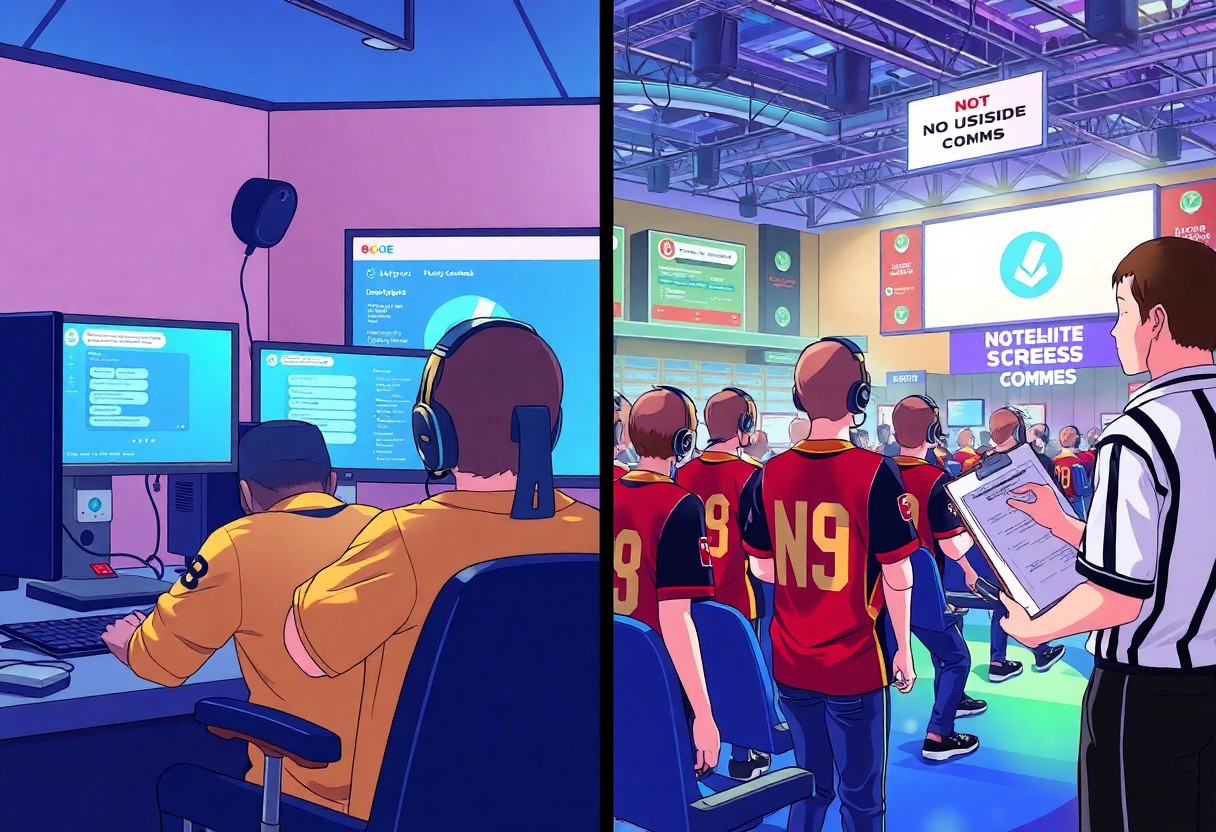
Sound-proof booths alter how players communicate by providing a quieter space for focused dialogue. These environments facilitate clear conversations without distractions from the crowd.
Open stages, in contrast, require players to amplify their communication strategies. They need to adapt to ambient noise while ensuring that messages remain clear and accessible to all team members.
In sound-proof booths, the ability to speak at normal volumes enhances focus and strategy development. Conversely, open stages mandate a proactive approach to communication, necessitating gestures and loud vocalizations to compensate for environmental noise, ultimately shaping how teams interact under pressure.

Online Competition Integrity and Remote Rules
Mitigation of Latency Issues and Standardized Lag Reporting
Latency issues can significantly impact player performance in competitive settings. Establishing standardized procedures for lag reporting is crucial, allowing players to communicate technical difficulties effectively without disrupting the flow of the game.
Players must report latency issues through designated channels rather than in-game chat. This ensures that reports are documented and addressed appropriately, promoting a fair competition environment.
Prohibitions on External Third-Party Communication and Ghosting
Clear guidelines prevent players from engaging in external communication during matches. This rule prohibits any interaction with outside parties that could influence gameplay decisions or provide unfair advantages.
Ghosting, where a player receives information from an outside source about the game, undermines the integrity of the competition. Strict penalties are enforced to deter such practices, ensuring a level playing field for all participants.
Violation of these prohibitions can result in immediate disqualification, as maintaining a fair competitive environment is paramount. Players are encouraged to familiarize themselves with the rules to avoid unintended breaches.
Mandatory Webcam and Voice Channel Monitoring for Integrity
Implementing mandatory webcam and voice channel monitoring serves as a deterrent against cheating. This practice ensures players are not receiving unauthorized assistance during matches, reinforcing the necessity of integrity in competition.
Match organizers must supervise real-time communication and visual verification to identify any irregular behavior. Transparency in monitoring creates a sense of accountability among players.
Compliance with webcam and voice channel monitoring is crucial for maintaining the integrity of online competitions. By utilizing these technologies, organizers can swiftly address any potential misconduct, safeguarding the legitimacy of the event. Players should understand and accept these protocols as part of their commitment to fair play.
Role-Specific Communication Hierarchies
The In-Game Leader (IGL) Authority and Decision-Making Chain
Authority within the team starts with the In-Game Leader (IGL), who is responsible for crafting strategies and making pivotal decisions during matches. Clear communication channels must be established, enabling the IGL to relay instructions efficiently while ensuring that all team members understand their individual roles.
Team dynamics rely heavily on respecting the IGL’s authority. Players should prioritize feedback that aligns with the IGL’s strategies, which enhances coherence during gameplay. This hierarchy allows for streamlined decision-making, even in high-pressure situations.
Support Role Responsibilities for Resource and Utility Tracking
Support roles hold critical responsibilities in managing resources and tracking utility usage during matches. Precise communication about available grenades and other utilities can significantly influence strategic decisions. Support players need to remind teammates of remaining resources and suggest optimal usage times.
Establishing regular updates enhances team awareness and allows for coordinated plays. A support player’s insight can reduce wasted utility and ensure that the team maximizes its potential during engagements.
Support players should employ proactive communication methods such as in-game markers or vocal alerts to signal the availability and status of resources. This continuous feedback loop helps maintain focus and aligns individual actions with team objectives, ultimately improving overall gameplay effectiveness.
Information Flow Management from Entry Specialists and Scouts
Entry specialists and scouts are tasked with gathering critical intel about enemy positioning and strategies. Effective information flow from these roles is crucial for the entire team, as timely updates can dictate key tactical decisions. Depending on their findings, entry players can direct the team’s engagements or retreat strategies.
Clarity in communication is crucial; scouts should convey information succinctly. Utilizing shorthand coding for quick updates can enhance the speed of information transfer during intense action, allowing teams to adapt swiftly to evolving scenarios.
Entry specialists communicate significant details, such as enemy numbers or potential threats, creating a comprehensive picture for the team. Regularly sharing this intel supports informed decision-making and prepares the team for anticipated moves, maintaining proactive rather than reactive gameplay strategies.
Post-Match Formalities and Media Conduct
Mandatory Sportsmanship Protocols: Handshakes and “GG” Formalities
Sportsmanship remains a cornerstone of competitive gaming, requiring players to engage in handshakes and exchange “GG” (good game) sentiments after matches. These gestures embody respect and acknowledge both the challenge and camaraderie experienced during gameplay.
Exhibiting such courtesies promotes a positive environment and sets the tone for future encounters, benefiting both players and fans alike. Adhering to these protocols cultivates a healthier competitive atmosphere.
Professionalism in Post-Game Interviews and Press Conferences
Interview scenarios demand players maintain composure and articulate their thoughts clearly, reflecting their team and personal brand. Addressing questions straightforwardly and respectfully fosters goodwill and trust with fans and analysts.
Transparency about match performance, highlighting both strengths and areas for improvement, can enhance a player’s reputation. Engaging in constructive dialogue helps develop a positive public image.
Preparation is key for demanding post-game settings. Players should familiarize themselves with potential questions and focus on delivering insights that resonate with their audience. Remaining poised under pressure demonstrates professionalism and maturity, further defining a player’s character in the eyes of fans and sponsors alike.
Responsible Social Media Engagement Following Competitive Results
Post-match reactions on social media platforms require a balanced approach. Players should celebrate victories with humility while addressing losses with grace and reflection. Engaging positively with fans and the community can strengthen relationships and enhance a player’s following.
Overreactions or negative comments can lead to repercussions, damaging both personal and team branding. Thoughtful communication online sets the tone for future interactions and maintains a favorable reputation.
Establishing guidelines for social media use encourages mindfulness in online interactions. Players must consider their audience and the potential impact of their words, ensuring that content fosters community rather than division. This strategic approach can build lasting relationships and uphold the integrity of competitive gaming.
Conflict Resolution and Internal Team Dynamics
De-escalation Strategies for Mid-Match Interpersonal Friction
Identifying signs of tension among team members early is key to maintaining focus. Addressing conflict directly yet calmly can prevent escalation, ensuring that players remain concentrated on their objectives. Encouraging team members to voice concerns, even minor ones, promotes an open atmosphere where issues can be resolved swiftly.
Utilizing non-confrontational language helps diffuse potential conflicts. Team leads should emphasize positive language, actively listen, and guide discussions towards common goals. This approach not only resolves tensions but also strengthens team cohesion.
Constructive Feedback Loops During Half-Time Transitions
Half-time provides an ideal opportunity for players to recalibrate strategies and address performance issues. Teams benefit from structured feedback sessions, where players exchange observations and suggestions in a respectful manner. Cultivating a culture of open dialogue fosters a shared commitment to improvement.
Encouraging both praise and constructive criticism creates a balanced feedback loop. This approach ensures that players acknowledge their strengths while also recognizing areas for growth, ultimately enhancing overall team performance.
Half-time feedback sessions should focus on actionable insights and collaborative brainstorming. Setting clear goals for the next phase fosters accountability within the team, ensuring that everyone is aligned and committed to making necessary adjustments.
Managing Morale and Psychological Resilience Under Pressure
Players must learn techniques to maintain morale even in challenging circumstances. Positive reinforcement, such as recognizing individual contributions, can uplift spirits during tough moments. Encouragement from teammates reinforces a shared sense of purpose, crucial for bonding and resilience.
Implementing stress-relief practices, like brief breathing exercises or quick team huddles, can significantly impact psychological performance. These practices help players re-center and return to the game with renewed focus and confidence.
Building psychological resilience requires ongoing effort, not just during matches but in practice as well. Regular team-building exercises enhance trust and communication, equipping players with the skills necessary to bounce back from setbacks. This consistent teamwork cultivates a supportive environment, imperative for maintaining morale under pressure.
Information Security and Anti-Cheating Communication
Safeguarding Tactical Secrets and Private Communication Channels
Team strategies must remain confidential to ensure a competitive edge. Utilize encrypted communication tools to discuss tactical plans, limiting access to only imperative team members. This precaution prevents outside interference and maintains focus during critical moments.
Choosing the right platform is equally important. Use secure messaging apps designed for gamers, which offer encryption and are less susceptible to interception. Avoid discussing sensitive information over public channels or in-game voice chat.
Identifying and Reporting Suspicious Opponent Behavior to Officials
Recognizing unusual gameplay patterns can be imperative for maintaining fair competition. Players should be aware of signs such as inconsistently high precision or movements that seem impossible without external assistance. Reporting such instances promptly helps officials investigate and uphold integrity.
Team members must document the behavior clearly and provide evidence for review. Taking screenshots or recording gameplay can aid officials in determining the validity of claims and taking necessary actions against potential cheaters.
Protocols for Secure Credential Management in Public LAN Environments
Protecting account credentials in public venues requires strict protocols. Players should avoid using personal accounts on shared devices and opt for guest accounts when necessary, reducing the risk of unauthorized access. Additionally, ensuring that devices are secure from malware is imperative to avoid data breaches.
Regularly updating passwords and utilizing two-factor authentication can further enhance security. Players must remain vigilant about their surroundings and protect their login information to maintain account integrity.
Multilingual Team Integration and Accessibility
Establishing a Universal Competitive Lexicon for Diverse Rosters
Creating a common vocabulary helps bridge communication gaps between team members from different linguistic backgrounds. Essential terms related to strategies, roles, and game mechanics should be standardized, ensuring all players understand their implications regardless of their native language.
This shared lexicon not only facilitates smoother gameplay but also strengthens team cohesion. Regularly updating the lexicon based on evolving game meta ensures its relevance and effectiveness in competitive settings.
Translation Protocols and Real-Time Interpretation Strategies
Implementing clear translation protocols is fundamental for teams with diverse languages. Designated translators or applications can streamline crucial communication during high-stakes moments, ensuring that critical information isn’t lost in translation.
Real-time interpretation strategies, such as utilizing voice recognition software, allow teams to communicate instantly, reducing the chances of misunderstandings. This immediate exchange of ideas accelerates decision-making processes, enhancing overall team performance.
In addition, training translators to understand game-specific terminology can enhance accuracy. Familiarity with competitive jargon will minimize miscommunication, providing players with timely and precise information in the heat of competition.
Accommodations for Players with Auditory or Speech Impairments
Support systems for players with auditory or speech impairments must be established to ensure inclusivity. Utilizing text chat during gameplay allows these players to communicate their strategies and respond to teammates effectively.
Incorporating assistive technologies, like speech-to-text software, creates a more accessible environment during tournaments. This encourages participation from all players, regardless of their communication challenges.
By ensuring all team members have equal opportunities to contribute, teams benefit from diverse perspectives and strategies. A commitment to inclusivity enhances team dynamics and competitive success.
Disciplinary Framework and Enforcement
Escalation Ladders: Warnings, Round Losses, and Disqualifications
Warnings serve as the first step in addressing communication violations, allowing players to correct their behavior without severe consequences. Upon repeated violations, round losses may be imposed, impacting the team’s chances in the competition. This structured approach promotes a clear understanding of acceptable conduct while ensuring that penalties escalate appropriately based on the severity and frequency of offenses.
Disqualifications represent the most severe action and are reserved for egregious breaches of communication rules. Such measures underscore the importance of maintaining integrity and respect within competitive environments, ultimately preserving fair play for all participants.
Monetary Fines and Competitive Bans for Communication Violations
Monetary fines are imposed for team members who violate communication protocols, acting as a deterrent against careless behavior. Competitive bans may accompany these fines in cases of repeated or severe infractions, restricting players from future participation in events. This dual approach highlights the seriousness of upholding communication standards.
Individuals facing financial penalties or bans must recognize the long-term impact of their decisions on both their careers and their teams. Such measures ensure that competitive integrity remains intact, while simultaneously encouraging accountability among players.
Documentation and Appeals Process for Disciplinary Actions
Documentation plays a crucial role in the enforcement of disciplinary actions, with all incidents meticulously recorded for review. Players subjected to penalties have the right to appeal decisions, ensuring fairness in the process. The appeals mechanism allows for a thorough examination of the situation and a chance for players to present their perspectives.
Following established protocols enables teams and players to better understand the rationale behind disciplinary measures. Clear communication regarding the documentation and appeals processes not only fosters transparency but also builds trust in the enforcement system.
Final Words
Clear communication rules enhance player interactions during online and LAN events. Establishing guidelines not only improves team coordination but also fosters a respectful environment among participants. Players should prioritize clarity while minimizing distractions and ensure that their communication tools are functioning properly.
Adherence to these standards promotes a professional atmosphere and reduces misunderstandings. Teams that effectively communicate are more likely to succeed, making it imperative for participants to understand and follow established protocols during competitions.
Q: What are the basic communication rules for players during online events?
A: Players should keep communication respectful and constructive. Use in-game chat or voice channels appropriately, avoiding spam and personal attacks. Clarity is important; messages should be concise and related to the game. Always prioritize game-related topics over personal conversations.
Q: How should players handle disagreements or conflicts during LAN events?
A: Address disagreements calmly and respectfully. Use private messaging to avoid disrupting the game for others. If a resolution isn’t possible, seek assistance from a moderator or event staff. Always prioritize a positive gaming experience for everyone involved.
Q: Are there specific guidelines for team communication during competitive matches?
A: Teams should establish clear roles and communication protocols before the match. Use designated channels for strategy discussions. Encourage players to give concise updates about game status and enemy movements. Avoid excessive chatter that may distract teammates during crucial moments.