






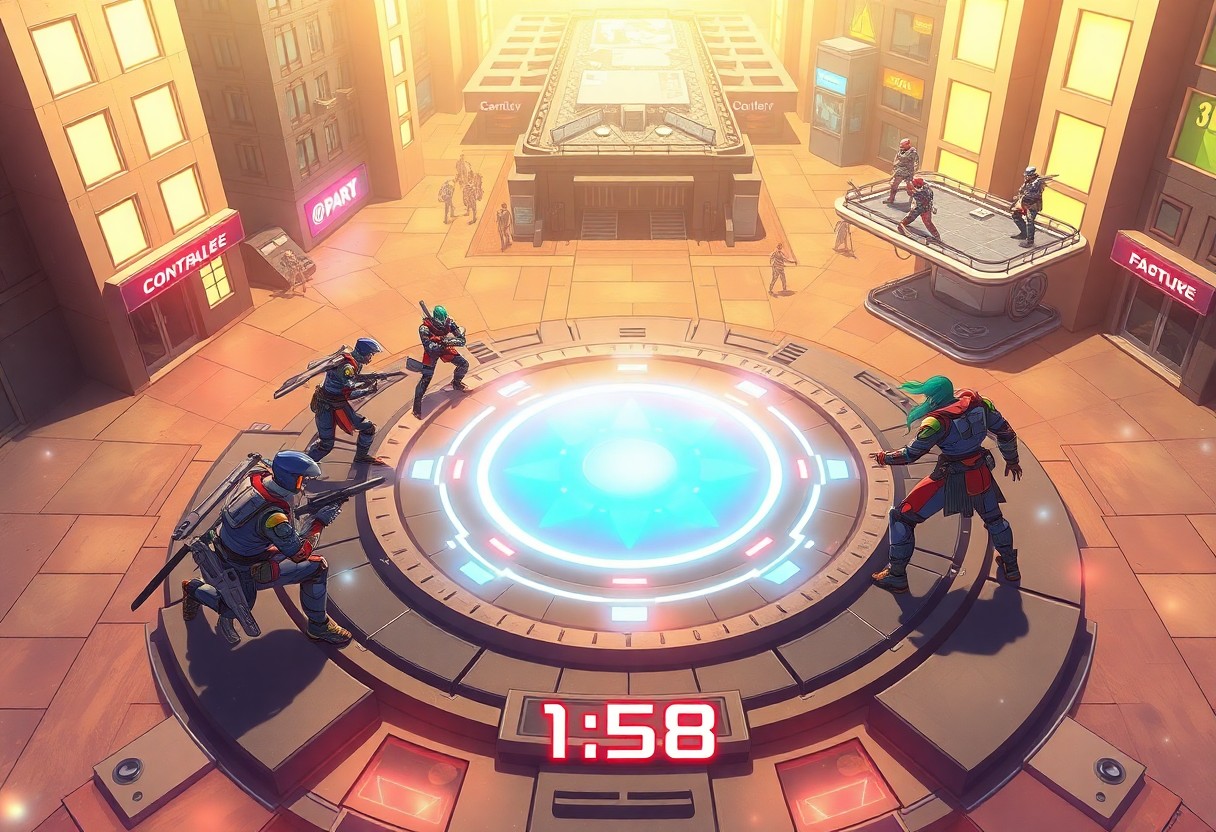
Most players overlook the significance of first fight advantage on control maps in Overwatch. Understanding positioning, team compositions, and map features can drastically influence initial engagements and overall match outcomes. This guide explores how these factors shape gameplay dynamics and strategies.
The Mechanics of the Control Game Mode
Objective Capture Progression and Scoring Logic
Capture progression hinges on maintaining control over designated zones. Teams must occupy these objectives to accumulate percentage points towards victory. Each second spent in control raises the team’s score, with the target set at 100% to claim victory.
Successful engagements and tactical positioning directly influence scoring dynamics. Teams that quickly establish dominance in the objective gain a notable upper hand, increasing their chances of securing the round and applying pressure on their opponents.
Spawn Room Distribution and Travel Time Analysis
Spawn room placement significantly influences team strategy and engagement timings. Optimal positioning allows players to regroup swiftly and make calculated pushes toward the objective. Disparities in travel times can lead to crucial advantages during the initial skirmishes.
Understanding the map layout helps teams anticipate their opponents’ movements while minimizing downtime. Controlling the spawn rooms effectively can turn the tide in intense matches, making it crucial to capitalize on these opportunities.
Spawn points are strategically placed to balance teams’ paths to objectives. Analyzing these locations reveals potential choke points that can be exploited, whether to ambush opponents or reinforce friendly advances. Travel times between spawn rooms and objectives can significantly affect the outcome of the first fights, emphasizing the importance of awareness in controlling these elements for success.
Quantifying the First Fight Advantage
Statistical Correlation Between Initial Capture and Round Victory
Analysis reveals a strong correlation between capturing the first point and winning the match. Teams that secure the initial objective often build momentum, leading to increased control over subsequent fights. Data shows that approximately 65% of matches see the team winning the first fight emerging as overall victors.
Sustained pressure from the initial capture translates into psychological advantages as well. Teams that start strong can demoralize opponents, making it challenging for them to regain composure and reposition strategically.
The Snowball Effect: Ultimate Economy and Resource Management
Winning the first fight sets the stage for superior ultimate economy, allowing teams to accumulate resources more efficiently. Teams that capture objectives early can dictate the pace of future engagements, utilizing ults to maintain pressure. Without this early advantage, opponents struggle to catch up, often facing ultimate disadvantages in critical skirmishes.
Ultimate economy becomes a decisive factor in the ensuing fights, as teams can capitalize on their resource lead. By managing their ultimates wisely after an early victory, teams can create unstoppable momentum and dictate match flow, amplifying their control of the map and fight scenarios.
Map-Specific Strategic Considerations
Identifying High-Value Terrain and Sightlines
High-value terrain often encompasses elevated positions or natural cover points that provide teams an advantage. Acquiring such spots allows for effective control of sightlines, enabling snipers and damage dealers to threaten enemies while minimizing risk.
Understanding sightlines can shape engagement strategies decisively. Teams can utilize natural architecture to funnel opponents into traps, disrupting their approach and maximizing damage output during critical moments.
Variations in Engagement Distances Across Map Sub-types
Different map sub-types present unique engagement distances and can influence team compositions significantly. Maps with open areas often encourage longer-range heroes like snipers, whereas tighter maps may favor close-quarter combat specialists.
Adapting to these distances becomes crucial for maximizing efficiency in fights. Teams should consider how composition interacts with range, engaging enemies at optimal distances to secure early advantages.
| Map Type | Engagement Distance |
| Control | Varied |
| Hybrid | Moderate |
| Assault | Close |
| Escort | Long |
| Push | Mixed |
- Engage enemies based on map-specific strategies.
- Adjust team compositions according to distance needs.
- Utilize cover and terrain for optimal positioning.
- Understand enemy composition to counter effectively.
- Thou shalt exploit every opportunity for engagement.
Composition Selection for the Opening Engagement
The Role of Mobility and Speed in Early Objective Pressure
Fast heroes often dictate the pace of the initial skirmishes on control maps. Mobility allows teams to reach objectives quicker, establishing presence and applying pressure on the enemy before they can respond. Heroes like Tracer or Genji can flank and disrupt setups, making early engagements unpredictable.
Speed not only aids in reaching objectives, but also in retreating when necessary. This flexibility enables teams to dictate engagements, choosing when to engage and disengage. Coordination between fast-moving heroes and those with heavy damage output can secure early advantages that shape the following fights.
Balancing Sustained Presence vs. Burst Potential
Teams often face the challenge of choosing between heroes that provide sustained presence and those that excel in burst damage. Sustained presence allows for steady pressure on objectives, while burst potential enables quick eliminations that can turn the tide instantly. The combination of these elements can lead to effective strategies.
Choosing heroes that complement each other can mitigate weaknesses. For instance, a tank with high durability combined with DPS characters capable of burst damage creates a balanced approach. Team compositions should focus on synergy, as this enhances adaptability in diverse engagements.
Striking the correct balance between sustained presence and burst potential requires careful consideration of the opposing team’s composition. Teams concentrating solely on burst may lack control over extended fights, while those emphasizing sustainability might struggle to secure quick picks. Finding a blend of both aspects can prove advantageous during the opening engagement, allowing for flexibility in strategies as the match progresses.
Psychological Momentum and Team Coordination
Establishing Tempo and Forcing Opponent Reactivity
Establishing tempo often dictates the flow of the match. Teams that initiate engagements quickly can dictate strategies, forcing opponents into reactive play. This initiates a psychological edge, as the opposing team finds themselves on the defensive, struggling to regain control.
Creating and maintaining pressure can disrupt the enemy’s rhythm. When a team consistently pushes forward, it pressures opponents to make hasty decisions, often leading to mistakes. Coordinated advances not only intimidate but also bolster confidence within the initiating team.
Managing Team Mental Fortitude After an Initial Loss
Rebounding from a loss requires mental resilience. Teams must quickly reassess strategies to maintain focus and cohesion. Acknowledging the setback without dwelling on it can help regain composure and drive forward momentum.
Clear communication and positive reinforcement can counteract the negative feelings stemming from a loss. Encouragement among teammates fosters a supportive environment, reminding players that setbacks are part of the game and can be used as learning opportunities.
Strategies such as taking a moment to regroup and revisiting team objectives can help erase the stigma of failure. By refocusing on what’s ahead rather than what just occurred, teams can rebuild confidence and establish a mindset fixed on growth and improvement.
Tactical Frameworks for Overcoming a First Fight Defeat
Executing Coordinated Retakes and Dry Runs
Executing coordinated retakes requires clear communication and unity among team members. Each player should understand their role, positioning, and timing for engagements. Practicing dry runs in scrims enhances these elements, allowing teams to refine strategies against specific compositions.
Focusing on synergy during these practices can expose weaknesses in enemy defenses before encountering them in competitive play. Using tools like voice chat and signals helps align team efforts, leading to better execution during critical moments on the map.
Identifying and Exploiting Gaps in the Enemy Defense
Identifying gaps in enemy defenses often starts with diligent observation during fights. Targeting out-of-position players or areas with insufficient support can provide opportunities for quick eliminations. Teams should prioritize communication on these findings to coordinate focused attacks.
The ability to exploit these weaknesses requires adaptability. As opponents respond and adjust their formations, maintaining the pressure and reshaping strategies becomes imperative. Observing enemy cooldowns and ultimates can also reveal vulnerabilities worth exploiting in subsequent fights.
Conclusion
So, Overwatch control maps often present teams with a significant first fight advantage due to positioning and map design. Teams that secure early control can dictate the pace of the game, forcing opponents to respond reactively. Effective utilization of these advantages can shift momentum and lead to decisive victories.
Analyzing map layouts reveals how choke points and objectives can impact strategies in initial engagements. Teams with strong coordination and communication can maximize their chances of winning the first fight, establishing an early dominance that shapes the outcome of the match.