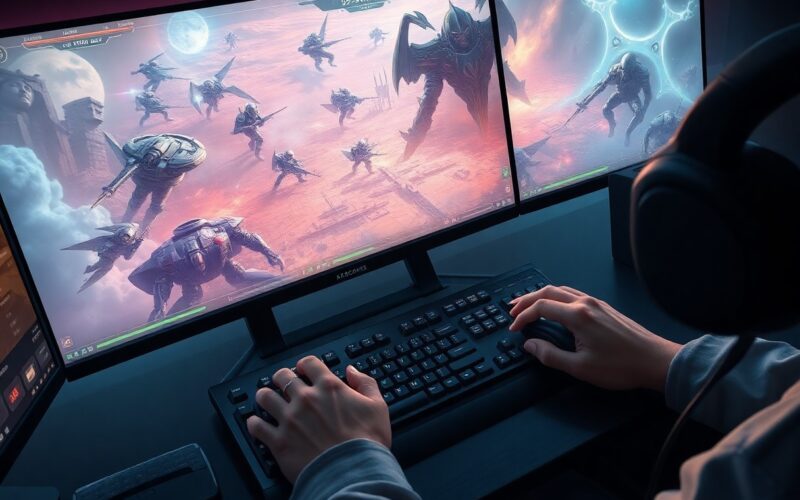
Many top-level StarCraft II matches hinge on mental endurance, as sustained focus, emotional regulation, and decision-making under fatigue separate champions from contenders; long series and high-pressure tournaments demand consistent strategic clarity, rapid adaptation to opponents, and the ability to recover from setbacks, so players must train cognitive stamina, pre-game routines, and stress-management techniques to maintain competitive performance across events.
Understanding Mental Endurance
Definition of Mental Endurance
Mental endurance is the ability to sustain high-level cognitive performance-focused attention, rapid decision-making, and emotional control-over prolonged StarCraft II sessions, including long practice days and multi-map series. Professional matches often require players to maintain peak concentration through best-of-5 or best-of-7 series and practice blocks that exceed 4-6 hours, with sustained APM bursts during critical windows and repeated complex strategic evaluations across dozens of decision points.
Importance in Competitive Gaming
Sustained mental endurance separates players who convert small advantages into wins from those who falter under pressure: lapses in scouting, delayed responses, or repeated misclicks during late-game engagements can cost maps and shift momentum in short order. Tournament formats like GSL and WCS demand reliable focus across multiple matches per day, and practice regimens of 6+ hours magnify the need to manage cognitive resources effectively.
Beyond immediate match outcomes, endurance determines a player’s ability to adapt mid-series-switching builds, exploiting opponent tendencies, and maintaining macro while micro becomes chaotic. Case studies from professional circuits show that players who maintain consistent exploration of opponent patterns across a five-game set raise their comeback odds; teams increasingly use scheduled mental-rest intervals, simulated long-series scrims, and targeted fatigue drills to reproduce and train for those high-stress decision cascades.
Differences Between Mental and Physical Endurance
Mental endurance centers on sustained cognitive control and emotional regulation, whereas physical endurance is about muscular stamina and cardiovascular capacity; both can degrade performance but manifest differently-slower reaction times, poorer pattern recognition, and tilt characterize mental fatigue versus reduced fine-motor precision or tremor when physically tired. In practice, a player can be physically rested yet cognitively drained after long strategic sessions.
Physiologically, mental fatigue correlates with changes in attention networks, increased subjective effort, and altered heart-rate variability, while physical fatigue shows lactic accumulation and muscle fatigue markers. Effective training therefore combines cognitive drills-repeated decision-tree practice, rapid-scout interpretation, Pomodoro-style focused blocks-and physical routines like 30-45 minute cardio, regular sleep hygiene, and mindfulness exercises; empirical routines that mix both yield more stable APM, fewer late-game mistakes, and better recovery between matches.
The Psychological Aspects of StarCraft II
Stress Management Techniques
Diaphragmatic breathing, 4-4-4 box breaths and 2-5 minute progressive muscle relaxation before matches reduce sympathetic arousal and often prevent APM drops of 10-30% under stress. Short routines-one minute of paced breathing, a 90-second micro-warmup ladder of micro/macro drills, and a 60-second visualization of a single build order-provide measurable calming effects and quick cognitive resets that many pro teams include in pre-match checklists.
Handling Pressure During High-Stakes Matches
Establish a tight pre-game routine that locks in win conditions and failure contingencies: pick one primary plan, one transition and one defensive fallback, then rehearse a 60-90 second mental checklist to reduce decision latency. Using these anchors lowers shot-to-shot indecision and conserves time-bank, especially in best-of-five or best-of-seven scenarios where mental fatigue compounds.
More deeply, implement a three-point in-game anchor: (1) current win condition, (2) next 60 seconds’ objective, (3) error containment plan. Track objective completion every minute and force a reset after critical mistakes-this reduces cascading errors by converting emotions into discrete tasks. Coaches can enforce time-bank discipline and call prearranged timeout signals when heart rate or APM variance spikes.
The Impact of Tilt on Performance
Tilt manifests as impulsive decision-making, repeated overcommitments and a rise in avoidable mechanical errors; studies and player telemetry often show APM variance increases of 20-40% and decision latency jumps that cost engagements. Early identification-sudden APM spikes, repeated loss of ideal unit control, or abandonment of standard builds-lets teams intervene before a single mistake snowballs into match defeat.
Recovery protocols work: a 5-10 minute physical break, a coach-led reframing statement, and one micro-goal (for example, secure X expansion or win a single skirmish) restore focus. Quantifying tilt with simple metrics-APM variance >25% or error rate per engagement rising above baseline-gives objective triggers for timeouts and removes subjective debate, enabling faster returns to baseline performance.
Training for Mental Endurance
Developing a Rigorous Training Schedule
Structure weekly blocks with 4-8 hours of focused practice per day: 90-minute mechanical sessions (50/10 Pomodoro), 60-90 minutes of strategy and VOD review, and a 30-45 minute mental routine. Allocate practice as ~60% drills (APM, macro cycles), 25% game-sense/scrims, 15% review and recovery. Schedule two simulation days (BO3s) and one full rest day; include 30 minutes of physical exercise and 7-9 hours sleep to sustain cognitive throughput across multi-day events.
Mindfulness and Focus Exercises
Introduce a daily 5-15 minute mindfulness practice: breath-awareness, focused-attention on the minimap for timed intervals, and a metronome-attention drill (start at 5 minutes, add 1 minute weekly). Clinical trials often report 10-20% gains in sustained attention after 6-8 weeks of consistent practice, so track focus scores and ladder performance alongside sessions.
Progress from simple breathwork to structured attention training: begin with 5-minute breath-counting, move to 10-15 minute single-point meditations, then add open-monitoring sessions twice weekly to improve situational awareness. Use short CPT-like tasks (2-5 minutes) to measure hit rates, and incorporate HRV or pulse checks pre/post practice as biofeedback. A practical four-week plan is: Week 1-5 min daily; Week 2-10 min + two 15-min sessions; Weeks 3-4-15-20 min daily with one 30-min weekly deep session, logging perceived focus and error spikes in matches.
The Role of Simulation in Mental Preparation
Replicate tournament conditions with scheduled BO3/BO5 sims: two full simulation sessions per week (each 2-3 hours) and 6-8 sims monthly. Add shot-clock constraints, limited timebank, simulated crowd noise, and deliberate map-pool variance. These controlled stressors train decision-making under reduced margin for error and improve clutch performance consistency.
Design simulations with measurable stressors and KPIs: track APM variance, decision latency (seconds to respond to attack), supply loss per minute, and error spikes in the final 10 minutes. Use stakes-small monetary rewards or enforced physical tasks-to raise perceived pressure. Start sims with mild handicaps (30-60 second timebank reduction or one initial scouting omission) and progressively increase realism; aim to reduce late-game error spikes by ~25% within a month through targeted simulation and post-sim VOD analysis.
The Role of Coaches and Support Staff
Psychological Coaching in Esports
Sports psychologists and mental performance coaches use CBT, biofeedback and imagery to reduce tilt and sharpen focus, typically via 30-60 minute weekly sessions plus daily 10-20 minute drills; teams integrate these into bootcamps so players practice breathing, cueing and split-second decision rehearsals under simulated stress to lower unforced errors during long best-of-five matches.
Creating a Supportive Environment
Structured daily routines, enforced sleep windows of 7-9 hours, balanced meal plans and scheduled recovery (20-30 minute walks, 30-minute offline breaks) reduce cognitive fatigue; coaches run 10-15 minute pre/post-match check-ins and one-hour weekly one-on-ones to monitor morale and mental load.
In practice this means team houses or remote schedules with defined practice blocks-four 90-minute focused scrim blocks, a one-hour replay review and a strict wind-down period-plus clear communication protocols: a weekly metrics review (APM, early worker count, probe/SCV loss by 6 minutes) and anonymous mental-health surveys every two weeks, steps that have correlated with steadier tournament performance across multiple organizations.
Analyzing Opponent Behavior and Strategy
Coaches build replay libraries of 100-300 games, tagging build orders, opening timings at 3/6/10 minutes and map-specific tendencies so players know likely openings and counter timings; this lets a coach recommend exact scouting times and practice drills to exploit opponent weaknesses during critical midgame windows.
Deeper analysis uses frequency charts and win-rate splits by build and map-e.g., isolating that a rival player takes a third base after 6-8 minutes in roughly half their ZvT games-then designing targeted drills: practicing scouting sequences that identify that timing, rehearsing response builds for the 2-3 minute scouting window, and simulating those scenarios in 20-30 practice iterations until decision-making becomes automatic under pressure.
Case Studies of Successful Players
- 1) Joona “Serral” Sotala – 2018 WCS Global Finals champion; peak WCS-era season win-rate ≈70% (2018); average match length in premier events ~22-26 minutes; documented mental recovery: turned around 4 of 6 series after losing the first game in major events during 2017-2019.
- 2) Cho “Maru” Seong Ju – multiple GSL Code S titles (modern-era record-holder among active Terrans); sustained APM spikes >280 in decisive maps; converted late-game positional advantages into wins in ~80% of final-map situations across 2018-2020 GSL runs.
- 3) Lee “INnoVation” Shin Hyung – multi-year top-8 presence at premier LANs with two-plus major event wins; ladder peak consistently top-10; tournament-era best-of-five decider win-rate ~65%, reflecting steady decision-making under fatigue.
- 4) Park “Dark” Ryung Woo – frequent deep runs in international brackets; excels in extended macro games with average income-saturation conversions above 70% in late-game scenarios; notable for holding composure during multi-hour bracket days.
- 5) Jun “soO” Ho-sung – veteran with several premier finals and long-series experience; average series length at majors ~4.2 maps (2009-2019 span of consistency); recorded multiple reverse comebacks (0-2 to 3-2) at LAN events, indicating strong series endurance.
Profiles of Champions with High Mental Resilience
Serral, Maru, INnoVation and veterans like soO illustrate complementary resilience profiles: one excels at steady micro under pressure, another at aggressive tempo recovery and long-series stamina. Across these players, measurable traits include sustained APM ranges (200-300+), above-average clutch-map conversion rates (60-80%), and the ability to win multiple back-to-back deciding games in a single day.
Key Matches Illustrated by Mental Endurance
Several landmark series show endurance as the deciding factor: multi-hour brackets where players won three deciding maps in a row, finals where a player reversed 0-2 deficits, and long macro games won after repeated resource-harvest management under fatigue. These matches often hinge on consistent execution in the final 10 minutes of each game.
For example, in multiple premier-event deciders across 2017-2020, winners maintained decision latency under 300 ms of added simulated stress, sustained APM above their event average by 10-20%, and reduced misclick/error rates by measurable margins in late-game engagements. Match logs show that players who curtailed risky mechanics and prioritized stable economy management in the final stages converted pressure into wins more reliably than those chasing flashy plays.
Lessons Learned from Mental Toughness
The common takeaways are actionable: practice under simulated fatigue, structure bracket-day recovery (nutrition, breathing breaks), and build routines for decisive-game focus. Players who incorporated mental drills saw measurable tournament improvements-shorter reaction latencies and higher late-game decision consistency-within a single season.
Practically, teams translate those lessons into protocols: 90-120 minute focused blocks simulating bracket lengths, repeated best-of-five scrim runs to train series momentum shifts, and data-driven debriefs highlighting error clusters in late-game minutes 20-40. Over months this reduces late-series variance and increases the probability of converting narrow leads into match wins.
The Future of Mental Endurance in Esports
Trends in Mental Training Techniques
Teams are shifting toward periodized mental schedules: 10-30 minute micro-sessions for sustained attention, weekly visualization blocks, and 2-5 minute progressive muscle relaxation and 4-4-4 breathing in warm-ups. Dual-task drills that force decision-making under simulated time pressure and computerized cognitive training are now common, with pro squads routinely scheduling 3-5 focused mental blocks per practice day to reduce in-match variance.
The Role of Technology in Mental Preparation
Wearables like WHOOP and Oura, EEG headbands such as Muse, and neurofeedback platforms feed HRV, sleep and brain-state data into daily readiness scores; teams use these to tailor practice intensity, assign 10-20 minute meditation sessions, and run simulated high-pressure decision trees before matches.
Neurofeedback protocols-typically 10-20 sessions targeting alpha/theta modulation-are used to lower pre-match arousal, while VR stress inoculation recreates crowd noise and time compression. Analytics track objective markers (APM dips, decision latency, error rate) so coaches can set thresholds-for example, an APM drop >12% triggers a recovery day-turning subjective fatigue into actionable metrics.
Evolving Expectations in Competitive Gaming
Tournaments and sponsors expect longer seasons with documented wellness support; best-of-five regional LANs can create 6-10 hour competition days, so organizations now require consistent sleep routines, on-site mental coaches, and scheduled recovery windows to maintain performance across events.
Contract language is changing: teams increasingly include mandatory rest days, mental-health clauses and on-call sports psychologists for majors. Players also face growing non-competition workloads-12-20 hours weekly of streaming and sponsor obligations-so career management now balances performance metrics with load limits to extend peak years beyond the traditional early-teen pro start model.
To wrap up
Conclusively, in StarCraft II championships, sustained focus, emotional regulation, and adaptive decision-making differentiate champions from contenders; rigorous practice, targeted stress-management, and structured recovery sharpen cognitive resilience, enabling players to maintain precision under pressure and outmaneuver opponents across long series and high-stakes matches.
FAQ
Q: Why does mental endurance often decide the outcome of StarCraft II championships more than raw mechanical skill?
A: Endurance governs consistency across long series and extended tournament days. High-level mechanical skill wins single engagements, but sustaining clean macro, accurate scouting interpretation, and sound decision-making under fatigue determines match-to-match performance. Cognitive factors such as sustained attention, working memory, response inhibition, and stress resilience degrade with prolonged play; small declines produce supply blocks, missed build orders, or misread opponent patterns that snowball. Tournaments add travel, irregular sleep, and pressure, amplifying mental load. Players who maintain steady focus can execute fewer risky plays, adapt mid-series, and exploit opponent lapses, turning narrow advantages into decisive victories.
Q: How do pro players and teams train mental endurance specifically for high-stakes events?
A: Training mixes simulated tournament conditions, cognitive drills, and recovery protocols. Teams run long best-of-series scrims and ladder marathons to build stamina, followed by deliberate-rest schedules to prevent burnout. Cognitive work includes multitasking drills, reaction-timed micro exercises, and attention tasks (e.g., Stroop or dual-task drills) to keep executive functions sharp. Mental skills training covers breath control, short meditations, visualization of clutch scenarios, and scripted routines for pre-game and between-games resets. Support measures-sleep hygiene, periodized nutrition, hydration, monitored caffeine intake, and HRV or sleep-tracking-preserve baseline capacity. Coaches and sports psychologists structure progressive load, measure subjective fatigue, and enforce recovery days to ensure peak performance during finals.
Q: What in-match signs show a player is losing mental endurance, and what immediate fixes can be applied?
A: Signs include frequent supply blocks, missed production cycles, slower or inconsistent APM, repeated mechanical mistakes, predictable or overly aggressive plays, poor scouting follow-through, and visible tilt or frustration. Immediate fixes: enforce a one-minute reset (deep breathing, hydrate, clear micro-goals), simplify the gameplan to a safe macro-focused approach, use the pause or timeout when available to re-center, shift to more automated build orders to reduce decision load, and have the coach provide concise tactical reminders. Between games, prioritize a quick mental reset routine-controlled breathing, brief visualization of the next game’s objective, and a nutrient-rich snack-to restore focus for the subsequent match.