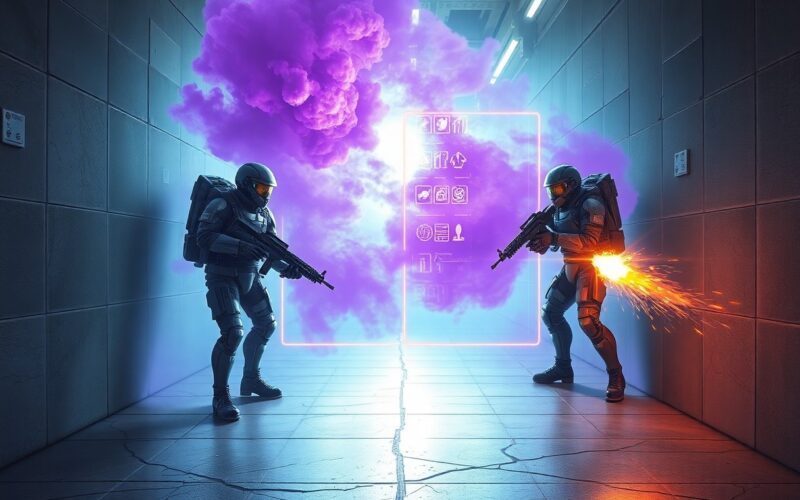







Over time, mastering defensive setups and site anchoring in Valorant can significantly enhance your team’s success. Understanding key strategies, positioning, and communication is vital for controlling maps and securing victories against opponents. This guide will cover fundamental techniques for effective defense.
The Fundamentals of Site Anchoring
Defining the Anchor Role and Mental Fortitude
Anchoring requires a unique blend of patience and decisiveness. Players must embody resilience, maintaining composure under pressure while executing strategic plays. Understanding the importance of positioning and timing is vital for effective site control.
Identifying High-Value Holding Positions and Power Spots
High-value positions greatly impact a team’s defensive strategy. These locations offer optimal sightlines and cover, allowing defenders to control choke points and deny enemy advances.
Understanding high-value holding positions involves recognizing spots that maximize visibility and minimize vulnerability. Areas such as elevated sites or corners provide defenders with advantageous angles, enabling quick engagement with attackers. Additionally, using the map layout effectively can create opportunities for surprise flanks or crossfires, amplifying defensive strength and disrupting enemy plans.
Defensive Positioning and Crosshair Placement
Utilizing Off-Angles to Disrupt Enemy Pathing
Off-angles allow defenders to catch enemies off-guard, disrupting their anticipated movements. By holding positions slightly away from common sightlines, players can surprise attackers and gain valuable kill opportunities while reducing their own exposure.
Mastering the Art of Passive vs. Aggressive Holds
Balancing between passive and aggressive holds can dictate the outcome of engagements. Passive holds involve maintaining a safe distance while observing enemy movements, whereas aggressive holds capitalize on opportunities to take down enemies before they can react.
Mastering passive versus aggressive holds enhances a player’s adaptability. Passive holds focus on survival and information gathering, allowing you to communicate enemy positions. Aggressive holds, on the other hand, involve taking control of key areas and forcing enemies to react to your presence. Understanding the map, timing, and team dynamics helps determine which approach to employ effectively, maximizing your impact in defensive situations.
Effective Utility Management for Site Denial
Timing Smokes and Area Denial to Stall Executions
Placing smokes at strategic moments disrupts enemy advances, creating gaps in their execution strategy. Targeting choke points with well-timed utility stalls opponents, forcing them to reconsider their approach and giving your team valuable seconds to regroup.
Reactive Utility Usage Against Hard Site Hits
Anticipating hard pushes on a site allows for effective countermeasures through reactive utility. Agents can deploy their abilities instantaneously, turning the tide by hindering enemy movement and forcing them out of advantageous positions.
Reactive utility usage is important during intense site hits. Monitoring enemy patterns and detecting their timings enables players to deploy abilities like grenades or flashes just as opponents initiate their assault. Recognizing when to use this utility can significantly disrupt an enemy’s plan, making it challenging for them to secure the site efficiently.
Communication and Information Gathering
Providing Concise Callouts and Damage Reports
Efficient communication is key in Valorant. Provide clear, concise callouts regarding enemy positions and any damage dealt during encounters. This clarity helps teammates make informed decisions quickly, ensuring a coordinated response and maximizing the team’s potential in crucial moments.
Interpreting Audio Cues and Minimap Intelligence
Understanding audio cues and utilizing the minimap are vital skills for any player. Pay attention to footsteps, ability sounds, and gunfire to gauge enemy movements. Awareness of your teammates’ positions on the minimap also informs strategic planning and site defense.
Audio cues play a significant role during matches, offering insights into enemy locations and intentions. Distinct sounds, such as duel bursts or ability activations, can indicate where opponents are likely headed, allowing for timely adjustments. Minimap intelligence, when combined with auditory information, gives players a comprehensive view of the battlefield, enhancing defensive setups and site anchoring. Prioritizing these elements ensures a more informed and tactical defensive strategy.
Strategic Decision Making Under Pressure
Playing for Life vs. Contesting the Spike Plant
Choosing whether to play for survival or to contest a spike plant can dramatically impact your team’s strategy. Prioritizing life allows for future rounds and potential economic advantages, whereas contesting may yield immediate gains, but at a risk to team morale and utility availability.
Coordinating the Retake with Rotating Teammates
Effective communication and timing are important for a successful retake. Teammates must quickly decide whether to rotate or hold positions, ensuring that the attacking team is caught off guard.
Planning the retake requires each player to understand their roles and responsibilities clearly. Assigning specific entry points and roles-such as entry fraggers and support-ensures that all angles are covered. Constant communication about enemy positions and utility usage can turn the tide in a retake scenario, allowing for coordinated assaults that prioritize overwhelming the defenders while carefully managing resources.
Agent-Specific Defensive Specializations
Sentinel Setup Optimization for Maximum Information
Positioning Sentinels for optimal coverage can drastically heighten team awareness. Utilizing locations with multiple sightlines enables them to gather intel while creating a sustainable defensive presence, allowing for timely communication of enemy movements.
Controller Smoke Placement for Chokepoint Control
Effective smoke placement at key chokepoints can deny visibility and restrict enemy advances. Controllers should focus on high-traffic areas, ensuring that their smokes create safe zones for teammates while disrupting enemy strategies.
Strategically placing smoke at chokepoints not only obscures enemy sightlines but also manipulates their movement patterns. By covering crucial angles, controllers can funnel opponents into predictable paths, allowing for easier engagements and enhanced team coordination during defenses.
Initiator Counter-Utility for Disrupting Enemy Momentum
Timing and positioning are imperative when deploying initiator abilities to interrupt enemy pushes. By anticipating enemy movements, players can disrupt strategies effectively and create openings for their team to capitalize on.
Deploying initiator abilities at the right moment can significantly alter the course of a round. Well-timed utility not only hampers enemy progression but also instills doubt in their plans, forcing them to reconsider their approach and encouraging hesitation at crucial moments. This disruption provides valuable opportunities for defenders to regain control of the site and reset the momentum in their favor.
Conclusion
Presently, understanding Valorant defensive setups and site anchoring basics is vital for effective gameplay. Strong positioning and smart use of abilities can significantly impact team success. Mastering these fundamentals allows players to create formidable defenses, control map dynamics, and maintain an advantageous position against opponents.
Q: What are effective defensive setups for A Site in Valorant?
A: Effective defensive setups for A Site often include using agents like Cypher or Sova for intel gathering. Place Cypher’s cameras and traps near common entry points to gather information and delay attackers. Sova can assist with drone scouting and shock darts to damage pushing enemies. Use crossfires with teammates positioned at key angles, such as A rafters or A site itself, to ensure multiple lines of sight during engagements.
Q: How can players improve site anchoring when defending?
A: Site anchoring requires good map positioning and awareness. Anchors should choose spots that provide cover while still allowing visibility of entry points. Communicating with teammates is crucial for calling out enemy movements. Holding off-site positions can create opportunities for retakes, but staying close enough to the site ensures support during attacks. Properly timing utility usage, like smokes or flashes, can delay attackers and give the anchor critical time for reinforcements.
Q: What role should utility play in defensive setups?
A: Utility plays a key role in slowing down enemy pushes and creating advantages. Agents such as Sage can use her wall to block paths, giving teammates time to reposition. Smokes from Omen or Viper can obscure sightlines, making it harder for attackers to push effectively. Utilize grenades and traps from agents like Killjoy to enforce safe areas and catch enemies off-guard. Proper utility usage can significantly alter the outcome of engagements and maintain control over sites.