Just like traditional sports, esports teams are composed of specific roles, each contributing to the overall success. Understanding these roles is crucial for fans and aspiring players alike. Here’s a breakdown of the top 10 roles in esports teams, highlighting their unique responsibilities and importance.
In-Game Leader
Strategic Shot Calling
An In-Game Leader (IGL) is responsible for making critical decisions during matches that influence the team’s strategies. Effective shot calling involves assessing the current game state, predicting opponent moves, and determining the best tactical approach. This role requires deep game knowledge and experience, allowing the IGL to communicate strategies that enhance gameplay cohesion.
Team Coordination Focus
Team coordination relies heavily on the IGL’s ability to synchronize players’ actions. Clear and timely communication fosters collaboration, promoting unity in decision-making among team members. This role not only involves guiding tactical execution but also ensuring that all players are aware of their roles and responsibilities during engagements.
Coordination includes assigning positions, setting up plays, and managing resources such as utility in games like Counter-Strike. A well-coordinated team can react swiftly to unforeseen challenges, ensuring that objectives are achieved efficiently. The IGL’s leadership in these times can be the difference between a win and a loss, reinforcing the importance of this position within the team dynamic.
Entry Fragger
Aggressive first contact
The entry fragger leads the charge into engagements, taking the brunt of enemy fire. This role requires quick reflexes and sharp aim to eliminate threats and pave the way for the team.
Players in this position often create opportunities by pushing into contested areas first. Their primary goal is to secure kills and force opponents to react, allowing teammates to follow-up with strategic plays.
Opening map space
Opening map space is about seizing control of key areas quickly. Entry fraggers focus on ensuring sightlines and critical positions are cleared, enabling strategic maneuvers for the team.
This strategy involves understanding map dynamics and anticipating enemy movement. An effective entry fragger uses utility strategically to create openings, which not only secures advantageous positions but also assists the team in maintaining momentum throughout the round.
Main Support
Providing utility coverage
Main Supports play a pivotal role in controlling the flow of a match through the use of utility. This includes deploying abilities to manipulate the battlefield, applying crowd control, and providing vision. Effective utility coverage can disrupt enemy plans and create openings for teammates.
Protecting key carries
Key carries, or high-damage dealers, rely on Main Supports to ensure their safety during engagements. Main Supports must position themselves strategically to absorb damage, heal, or shield carries from incoming threats. This protection allows carries to focus on dealing damage while the support manages enemy threats.
Effective protection involves anticipating enemy attacks and creating a buffer zone around carries. By using positioning and abilities wisely, Main Supports can deflect damage away from carries, enabling them to perform at their best. The synergy between the support and the carry is crucial for securing victories in competitive matches.
The Carry
Maximum damage output
The carry aims to deal the most damage during team fights and skirmishes, often becoming the focal point of the team’s strategy. Strong positioning and efficient ability usage are imperative for maximizing this damage output, allowing the carry to eliminate key enemy targets effectively.
Late game scaling
Late game scaling represents the carry’s potential to become disproportionately stronger as the game progresses. Strategic item choices and experience accumulation enhance their impact significantly, making them capable of turning the tide in critical moments.
This scaling often hinges on the character’s abilities and synergies with teammates. A carry that excels in late game can dominate with increased attack power and advanced skills, outmatching opponents unless countered effectively.
The Sniper
Long distance precision
The sniper in esports serves as the sharpshooter, excelling in long-range engagements. This role requires exceptional accuracy and an ability to make split-second decisions. Snipers often dominate in games that emphasize headshots, where precision can drastically change the outcome of a match.
Not only do they focus on hitting targets from afar, but they also monitor the battlefield from a concealed position. This strategic overview allows them to relay critical information to teammates, enhancing overall team coordination during combat scenarios.
Holding defensive angles
Snipers often take up positions to cover vital areas, dictating the flow of the game. By holding defensive angles, they create significant pressure on advancing enemies, allowing their team to maintain control over critical points on the map.
Effective snipers analyze the terrain, predicting enemy movement and choosing angles that maximize their impact. Controlling focal points enables them to frustrate opposition strategies, turning potential threats into opportunities for their team. The psychological advantage of knowing there’s a sniper covering an area can deter aggressive plays from enemies, allowing the team to dictate the pace of engagements more effectively.
The Jungler
Objective Map Control
The jungler maintains control over the jungle area, balancing between farming resources and supporting teammates. Effective map control maximizes pressure on opponents, allowing the jungler to dictate the pace of the game.
Surprise Ganking Maneuvers
Surprise ganks catch opponents off guard, isolating them for easy takedowns. Timing and positioning are vital; junglers must assess lane state and enemy vision before striking.
Executing ganks from unexpected angles increases the likelihood of success. Teammate communication solidifies strategy, enabling the jungler to capitalize on enemy vulnerabilities.
Effective ganking requires the jungler to understand enemy patterns and anticipate movement. By using terrain to remain unseen and coordinating with laners for crowd control, a jungler can create decisive moments, shifting momentum in favor of their team.
The Coach
Out of Game Preparation
The coach plays a pivotal role in the preparation of the team outside of actual gameplay. This includes analyzing match footage, developing strategies, and ensuring that players are physically and mentally prepared for competition. Effective planning sessions often involve detailed discussions on team dynamics and individual responsibilities.
Mental Performance Support
Mental performance support is a key aspect of a coach’s responsibilities. Coaches often work closely with players to enhance their focus, resilience, and stress management skills. This not only improves individual performance but also strengthens team cohesion under pressure.
Beyond game strategies, mental training sessions help players develop techniques for maintaining composure during high-stakes matches. These methods might include visualization exercises, mindfulness practices, and practical strategies for managing anxiety. Such tools equip players to handle competitive stress, making coaches vital in nurturing a mentally agile team.
The Analyst
Data driven feedback
The analyst plays a key role in providing data-driven feedback to the team. This involves collecting in-game statistics and performance metrics, identifying areas of improvement, and suggesting strategies based on hard evidence. By analyzing data, the analyst offers insights that help players understand their strengths and weaknesses.
Effective analysis transforms raw numbers into actionable strategies. This process ensures that every player is aware of their performance trends, allowing for targeted practice and refinement. Data not only informs strategy but also enables clear communication within the team regarding expectations and goals.
Scouting enemy tendencies
Scouting enemy tendencies involves studying opponents’ playstyles and strategies. Analysts observe matches from rival teams, gathering information on their tactics, preferred champions, and decision-making patterns. This intelligence allows teams to prepare tailored counter-strategies.
Understanding an opponent’s behavior can shift the tide of a match. Analysts use historical data to predict enemy actions, leading to strategic advantages. Recognizing patterns gives teams the ability to exploit weaknesses and anticipate moves, enhancing overall game plans for crucial matches.
The Substitute
Flexible Roster Backup
The substitute serves as a flexible backup for the main roster, stepping in when needed due to player absences or underperformance. This role allows teams to maintain competitiveness without compromising strategy. A skilled substitute understands team dynamics, making quick adjustments to fit seamlessly into the team’s existing tactics.
Specific Map Specialist
A substitute may also specialize in specific maps, enhancing the team’s performance on particular terrains where they may struggle. Such players bring in-depth knowledge and unique strategies tailored for those maps, providing a tactical advantage. This specialization allows the main lineup to exploit opponents’ weaknesses effectively.
A specific map specialist possesses extensive experience on select maps, understanding nuances like choke points and sightlines. This expertise offers the team a tactical edge, enabling them to devise strategies that play to their strengths while countering opponents’ tactics. The ability to call upon these specialists during crucial matches can become a game-changer in tight situations.
Team Manager
Travel and logistics
The team manager oversees all travel arrangements for players and staff, ensuring logistics are efficient and cost-effective. This involves booking flights, accommodations, and local transportation for tournaments across different locations.
Player schedule management
Player schedule management encompasses organizing practice times, scrims, and other team activities to optimize performance. Managers help balance training with rest, ensuring players remain focused and avoid burnout.
A detailed schedule aids in aligning team objectives with individual player goals. Managers track player commitments to ensure adequate preparation before competitions, enhancing teamwork and overall effectiveness during matches.
To wrap up
Presently, understanding the roles within esports teams is important for aspiring players and enthusiasts. The top 10 structure highlights specific responsibilities, from the in-game leader shaping strategy to support players ensuring success during matches. Each role contributes uniquely, reinforcing the team’s dynamics and overall performance.
Various roles provide insight into collaboration and specialization in esports. Effective team compositions maximize individual strengths while addressing weaknesses, emphasizing the significance of each player’s contribution to achieving victory. This structure enables clearer expectations and enhances communication, ultimately leading to improved outcomes in competitive environments.
Q: What are the main roles within an esports team?
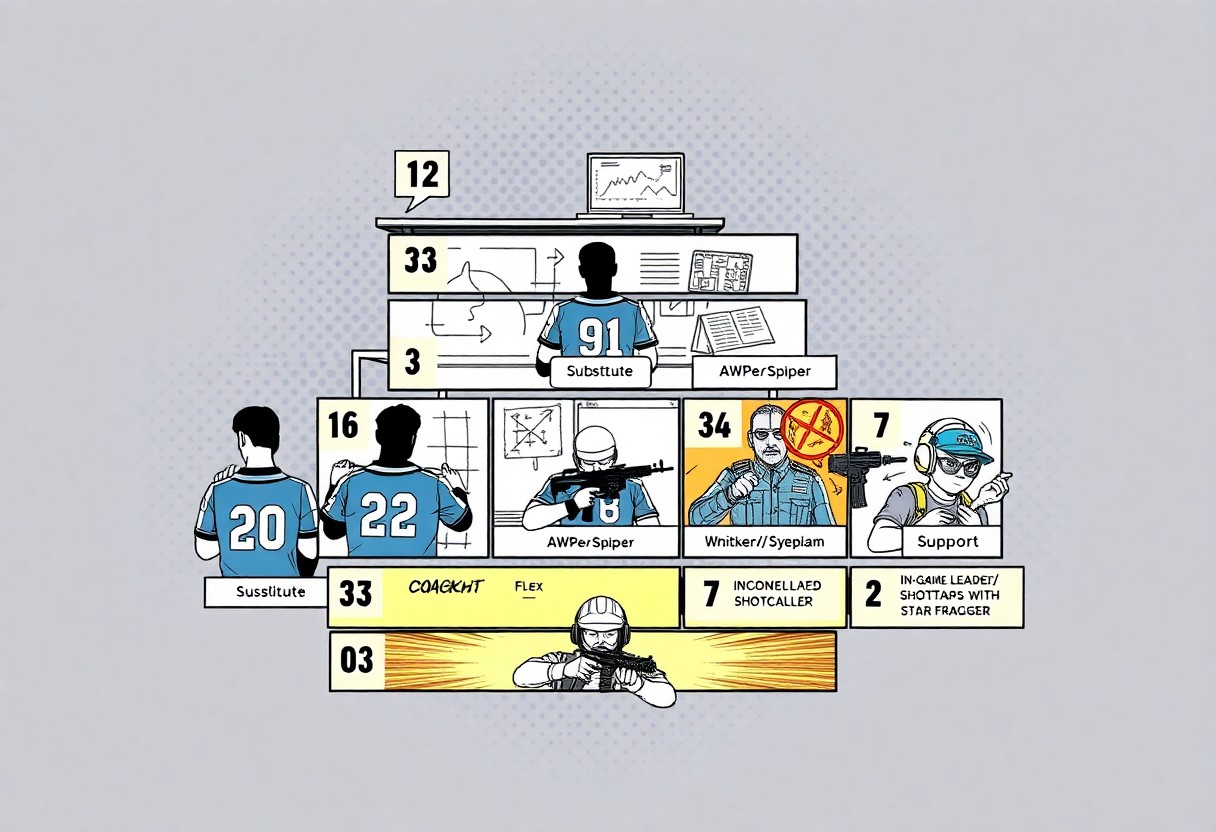
A: The main roles typically include: 1. Team Captain: leads the team strategy and communication. 2. IGL (In-Game Leader): makes tactical decisions during matches. 3. Support: assists teammates, providing utility and protection. 4. Entry Fragger: initiates fights and creates space for the team. 5. AWPer: specializes in using sniper rifles for critical shots. 6. Flex Player: adapts to different roles as needed. 7. Coach: trains and develops strategies for the team. 8. Analyst: reviews gameplay to provide insights and improvements. 9. Manager: oversees operations and logistics. 10. Substitute: ready to replace primary players as needed.
Q: What specific skills are required for the Team Captain role?
A: A Team Captain must possess strong leadership skills to motivate and guide the team. Communication is important for relaying strategies and feedback. Decision-making under pressure helps during critical game moments. Understanding team dynamics and individual strengths influences overall performance. Conflict resolution skills are important for managing interpersonal issues. Vision for both short-term tactics and long-term goals aligns the team toward success.
Q: How does the role of an Analyst impact team performance?
A: The Analyst impacts performance through data-driven insights that inform strategies. Reviewing past matches highlights strengths and weaknesses. Identifying opponent patterns aids in developing counter-strategies. Providing constructive feedback enhances individual and team play. Collaborating with coaches ensures consistent strategic alignment. Continuous monitoring of gameplay trends keeps the team competitive and adaptive.