Many players and fans are keenly aware of the complexities surrounding team composition regulations in Overwatch esports. These rules dictate character selection and strategy, influencing competitive dynamics and team performance. Understanding these regulations is important for grasping the intricacies of competitive play.
Historical Evolution of Overwatch Team Structure
The “No Limits” Era and the Transition to Hero Locks
The early days of Overwatch esports featured a “No Limits” format, allowing players to select any hero without restriction. This environment led to chaotic and often unpredictable matches, with teams frequently stacking multiple characters for overwhelming strategies. The rapid pace of change and experimentation captivated fans while also raising concerns about balance and gameplay integrity.
Analysis of the Triple-Tank, Triple-Support (GOATS) Meta
The Institutional Shift Toward Standardized Competitive Formats
The Implementation of the 2-2-2 Role Queue System
Formalizing Tank, Damage, and Support Archetypes
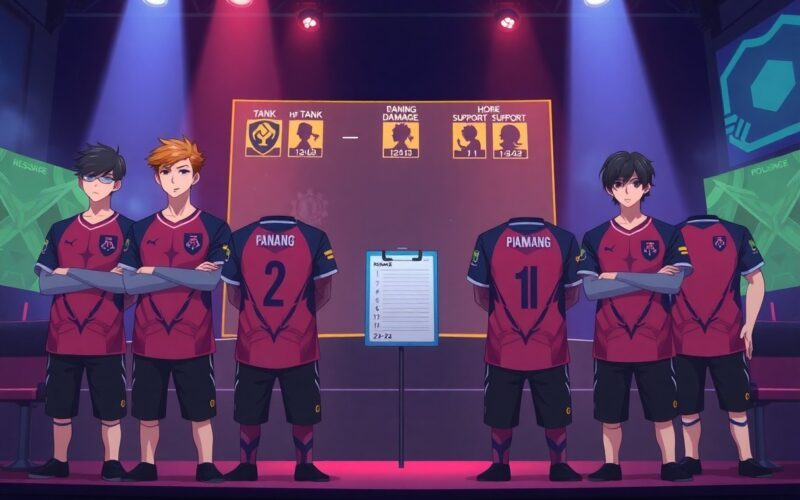
The 2-2-2 role queue system clearly delineates the Tank, Damage, and Support roles within Overwatch. This structure enables teams to optimize team strategies by standardizing player roles, allowing for more seamless coordination during matches. Such formalized roles help reduce ambiguity around team compositions.
- Tanks absorb damage and initiate fights.
- Damage heroes deal damage and secure eliminations.
- Support characters provide healing and utility.
- Communication improves as team structures become predictable.
- The clarity in roles enhances overall gameplay strategy.
Rationale for Restricting Strategic Flexibility for Competitive Balance
Restricting role flexibility through the 2-2-2 system addresses competitive balance concerns by minimizing power imbalances among team compositions. Teams can no longer stack multiple hero types, leading to a more equitable gameplay experience. This formalization helps maintain consistent engagement and fair competition across matches.
Balancing the game has always been critical to its success, ensuring that no single hero or playstyle dominates. By enforcing role restrictions, Blizzard aims for a more structured environment where strategy, teamwork, and hero synergy dictate success rather than overwhelming individual skill or hero choice.
Impact of Role Locking on Professional Hero Pools and Specialization
The shift to a more defined pool of heroes under the role lock creates tension and excitement. Teams must now adapt strategically, often relying on niche picks or innovative strategies to maximize their performance potential while navigating the limitations of their selected roles.
Transitioning to Overwatch 2: The 5v5 Paradigm Shift
Structural Removal of the Off-Tank Position
Removing the off-tank role in Overwatch 2 alters team dynamics significantly. Teams now rely on a single tank, which demands a shift in how players approach drafting and gameplay strategies.
This structural change funnels responsibilities onto one main tank, necessitating a reevaluation of hero selections. The absence of the off-tank role encourages teams to prioritize synergy and complementary picks, amplifying the importance of communication and coordination.
Rebalancing Hero Power Levels for Solo-Tank Utility
Hero adjustments aim to ensure that the solo tank can effectively advocate for their team. With the removal of the off-tank, developers restructured tanks to handle the demands of their new roles. This reevaluation allows for greater versatility in combat scenarios.
Pivotal changes enhance the offensive and defensive capabilities of tanks, making them more self-sufficient. This strategic pivot ensures that, while the tank’s role is pivotal, other heroes can still impact the game significantly.
First and foremost, balancing the power levels ensures that tanks can withstand pressure while contributing meaningfully to engagements. By focusing on strength and utility, developers position solo tanks to capitalize on their role without overshadowing other heroes’ contributions.
Tactical Implications of Increased Individual Agency in Professional Play
Increased individual agency shifts the tactical approach taken by professional teams. Given that each player has a more pronounced role, teams must adapt their strategies to this change. Greater emphasis on individual skill leads to heightened player performance.
This evolution enhances the overall excitement of matches, as clutch plays and individual moments can shift the tide of battle. Coaches and analysts now need to prioritize player strengths when devising strategies, adding another layer of complexity to team compositions.
Adjusting tactics to account for individual agency encourages teams to embrace players’ unique skills. Preparedness for unpredictable plays can lead to innovative strategies that exploit openings, highlighting the importance of individual excellence in team performance.
Official Roster Size and Composition Limits
Minimum and Maximum Active Player Count Regulations
Regulations set specific limits for active player counts within Overwatch esports teams. Each roster must include a minimum of six players and a maximum of twelve. This ensures teams have enough flexibility for strategy and player rotation during matches.
Identifying an ideal roster size helps balance teamwork and individual skill. Teams are encouraged to maintain a diverse player pool, enhancing the overall strategy and adaptability in dynamic gameplay scenarios.
Guidelines for Substitute Players and Tactical Rotations
Clear guidelines exist regarding the use of substitute players in Overwatch esports. Teams can utilize substitutes to counter specific strategies or adapt to on-the-fly conditions within matches, enhancing tactical depth.
Substitutes must be registered officially and can rotate in according to the team’s strategic needs. This allows teams to keep imperative players fresh and maintain high performance levels throughout tournaments.
Two-Way Player Contracts and Academy Team Integration
Two-way player contracts facilitate the integration of players between a main roster and an academy team. These contracts allow for flexibility, enabling player development while maintaining competitiveness at the highest level.
Using two-way contracts effectively creates a pipeline for emerging talent. Academy teams can serve as a training ground, allowing players to gain imperative experience before moving up to the main roster.
Role Passive Mechanics and Class-Based Regulations
Standardizing Class-Specific Advantages Across the Roster
Standardization of class-specific advantages ensures that each role in Overwatch retains its unique identity while contributing strategically to the team. Players can expect certain mechanics, such as damage amplification or healing efficiency, that enhance their chosen hero’s playstyle. These standardized features facilitate balanced gameplay and emphasize strategic synergies among diverse heroes.
Equity among roles creates an environment where every player can compete at the highest level without feeling overshadowed by others. This balance enhances team dynamics, allowing different roles to shine in their respective capacities during various match scenarios.
Regulatory Influence on Hero Selection Priorities in High-Stakes Matches
Hero selection in high-stakes matches often reflects the influence of regulatory standards set by the Overwatch League. Coaches and players prioritize heroes with strong passives that align with the match’s objectives and the composed team strategy. This reliance shapes the meta, forcing teams to adapt quickly as hero dynamics shift.
Dynamic regulations impact not just hero choice, but also playstyles, as specific heroes may emerge as dominant picks depending on the map and opponent strategy. Understanding these constants is critical for teams aiming for success.
Hero selection priorities also reveal underlying trends in the meta, as certain heroes may gain prominence due to favorable passive mechanics. Teams often analyze patterns in previous matches to optimize their hero pools, reflecting a strategic adaptation to evolving regulations and opponent strategies.
Balancing Passives to Maintain Role Identity and Competitive Integrity
Balancing role passives is important for maintaining unique hero identities while ensuring competitive integrity in Overwatch. Each role must offer distinct contributions to the team, achieved by fine-tuning the mechanics that define their effectiveness. Passives should enhance strategic depth and promote diverse team compositions.
By implementing balanced passives, Overwatch esports can cultivate a healthy competitive environment that rewards individual skill and teamwork. This careful calibration helps prevent any single role from dominating, encouraging creativity in hero selection and gameplay strategies.
Hero Bans and Drafting System Experimentation
Historical Context of Hero Pools and Weekly Rotations
Overwatch introduced hero pools in early 2020 as a way to enhance competitive diversity by rotating certain heroes out each week. This system aimed to maintain a fresh meta and prevent stagnation. Players quickly adapted to these changes, facing new challenges with each rotation.
Initially met with mixed responses, hero pools sparked heated discussions within the community. Some praised the unpredictability, while others argued it restricted player choices and strategies. This balancing act has shaped the ongoing discourse surrounding hero selection in Overwatch esports.
Comparative Analysis of Pick-Ban Systems in Other Major Esports
Games like League of Legends and Dota 2 employ established pick-ban systems, creating strategic layers during draft phases. In these titles, teams select or ban heroes in a deliberate manner, emphasizing tactical depth and counter-strategies.
This approach contrasts with Overwatch’s hero pool method, focusing more on dynamic rotations rather than static picks. The differences highlight varying philosophies in managing hero availability and competitive balance in esports.
Comparative Analysis of Pick-Ban Systems in Other Major Esports
| Esport | Pick-Ban System |
|---|---|
| League of Legends | Teams alternate banning and picking champions in a set order. |
| Dota 2 | Vertical pick-ban phase allowing for counter-pick strategies. |
Current Stance on Hero Availability in Professional Tournament Play
Presently, professional tournaments have seen a shift towards more flexible hero availability. Organizers are experimenting with various pick-ban mechanisms to enhance competition. This includes implementing regular adjustments to hero rotations and availability based on team performance.
In evaluating these methods, feedback from players and teams plays a significant role. This process reflects a growing understanding of the need to adapt competitive structures to ensure engagement and strategic depth.
Current Stance on Hero Availability in Professional Tournament Play
| Aspect | Current Trends |
|---|---|
| Hero Availability | Increased flexibility in hero selections for tournaments. |
| Feedback Mechanisms | Continual adaptation based on player and team input. |
Eligibility and Professional Certification Standards
Minimum Age Requirements and Global Compliance
Minimum age requirements for Overwatch esports are established to ensure that players are of suitable maturity and legal standing. These requirements typically mandate that participants be at least 18 years old for most competitive leagues, with some exceptions allowing younger players under specific conditions.
Global compliance is necessary as regulations vary by region. Many leagues adapt their policies to align with local laws, ensuring that all players can participate without legal complications. This balance supports a diverse competitive environment across various regions.
Regional Residency Rules and Import Player Limitations
Regional residency rules require players to live in the region they compete in, promoting local representation and community engagement. Import player limitations further restrict the number of non-local players on a team, ensuring homegrown talent has opportunities to flourish.
These regulations aim to create a balanced competitive field by limiting the influence of international talent. Teams often prioritize scouting local players, which enhances the development of regional esports ecosystems, making leagues more inclusive and relatable to local fans.
Standardized Player Conduct and Professionalism Mandates
Standardized player conduct mandates establish clear behavioral expectations for professional players. Adherence to these standards ensures a positive image for the sport, emphasizing respect, integrity, and sportsmanship. Leagues implement strict codes of conduct, addressing issues such as harassment and unsportsmanlike behavior.
Implementing professionalism mandates reinforces a culture of accountability among players. Regular workshops and training sessions are often provided, focusing on communication skills and conflict resolution, which contribute to maintaining a respectful competitive atmosphere.
Mid-Match Substitution Protocols and Tactical Timeouts
Regulations Governing Map-Specific Roster Changes
Teams must adhere to strict guidelines when making roster adjustments specific to each map within a match. Any substitutions must be pre-approved and communicated to the match officials, ensuring fairness and consistency throughout the competition. Changes are typically limited to a set number of players, allowing for tactical flexibility while maintaining competitive integrity.
Map-specific regulations also stipulate that substitutions cannot occur during critical phases of play, such as during a round or while an objective is being contested. Such rules serve to eliminate disruptions that could impact the overall competitiveness of the match, thereby upholding the integrity of the game.
Emergency Substitution Procedures for Technical or Medical Issues
When unforeseen technical difficulties or medical emergencies arise, teams have protocols in place to ensure a smooth substitution process. Quick notification of the match officials is crucial, allowing for an expedited assessment of the situation. Approved substitutes must be prepared to step in promptly, minimizing delays in gameplay.
Substitutions under these circumstances are limited to specific conditions outlined in the league regulations. A medical professional must verify any health-related issues, while technical problems require official confirmation before a team can proceed with their substitute player.
Strategic Use of Coaching Communication During Competitive Sets
Coaching communication plays a pivotal role during matches, as it allows for real-time strategy adjustments. Coaches can relay critical information and tactical insight that players may not have access to during intense gameplay. This advantage often helps teams regain momentum or alter their approach based on the unfolding match dynamics.
Effective use of coaching timeouts can lead to improved performance and morale. Coaches should utilize these moments wisely, focusing on reinforcing strategies, addressing player concerns, and recalibrating team tactics all based on the current state of play.
Financial and Contractual Frameworks for Professional Teams
Salary Cap Regulations and Minimum Compensation Standards
Salary cap regulations ensure a balanced playing field by limiting the total salaries a team can offer its players. Teams must adhere to these caps to maintain competitive integrity while encouraging strategic financial planning.
Minimum compensation standards mandate that players receive a baseline salary, providing financial security for all participants in professional esports. Such standards aim to reduce disparities between team budgets and promote stable career opportunities for players.
Transfer Window Protocols and Buyout Clause Restrictions
Transfer window protocols define specific periods during which player trades can occur, creating a structured environment for team management. These windows allow teams to strengthen their rosters and adjust strategies based on performance metrics.
Buyout clause restrictions prevent teams from financially crippling each other through excessive player acquisition costs. By regulating these clauses, esports organizations promote fair dealings and limit exploitation in player transfers.
Effective transfer protocols enhance team dynamics by allowing timely roster adjustments. Setting clear guidelines on buyout clauses ensures that both players and teams are protected, preventing unbalanced financial maneuvers that could disrupt the integrity of the competition.
Revenue Sharing Models and Organizational Financial Stability
Revenue-sharing models distribute earnings from tournaments and sponsorships among participating teams, fostering a collaborative environment. This practice not only enhances team sustainability but also supports the overall growth of the league.
Organizational financial stability relies heavily on these models, ensuring that even smaller teams can maintain operations and invest in talent development. By sharing revenues, the ecosystem becomes more robust and interconnected.
Implementing effective revenue-sharing models plays a key role in leveling the playing field, allowing teams of all sizes to thrive. A stable financial framework bolsters competition, attracting talent and encouraging investment in the esports industry.
Competitive Integrity and Anti-Collusion Policies
Monitoring and Enforcement of Match-Fixing Prohibitions
Strict regulations govern the detection of match-fixing in Overwatch esports. Organizations utilize advanced analytics and reports from players and coaches to identify suspicious behavior. Transparency in match outcomes is important to maintaining trust within the community.
Surveillance during competitions involves constant monitoring of player interactions and betting patterns. Collaboration with law enforcement agencies enhances efforts to curb illicit activities, ensuring a fair playing field for all participants.
Disciplinary Framework for Exploiting In-Game Bugs or Glitches
Exploiting bugs or glitches leads to severe penalties under the established framework. Players found utilizing these advantages face suspensions or outright bans, reflecting the seriousness of the issue. The integrity of gameplay is paramount in preserving competition standards.
Implementation of this framework allows for timely investigations and the issuance of penalties. Determinations are made based on the severity of the exploitation and its impact on match outcomes.
For cases involving exploiting in-game bugs, a detailed review process ensures fairness. Teams must stay informed about acceptable practices, as ignorance of regulations does not absolve players of accountability. Repeat offenders face increasingly harsh consequences, reinforcing the commitment to equitable play.
Standards for Sportsmanship and Toxic Behavior Mitigation
Expectations for sportsmanship in Overwatch extend beyond technical skills. Guidelines promote positive communication and respectful interactions among players. Violations lead to penalties, including fines and suspensions.
Creating a supportive environment enhances overall player experience. Promoting healthy competition aids in discouraging toxic behavior, driving a cultural shift towards respect and collaboration in the community.
Education on acceptable behavior is continually emphasized to mitigate toxicity. Engagement strategies involve workshops and resources, highlighting the importance of maintaining a competitive yet respectful atmosphere in gameplay.
Technical Standards for Tournament Environments
Mandatory Hardware and Peripheral Specifications
Specifications for mandatory hardware and peripherals ensure uniform performance across all teams. Each participant must use a specific range of devices to maintain consistency, including keyboards, mice, and headsets that meet competitive standards.
These guidelines help minimize discrepancies caused by variations in equipment. Compliance with these specifications is monitored closely during tournaments, ensuring that all players operate under the same competitive conditions.
Network Latency Optimization and Server Selection Protocols
Optimizing network latency is necessary for a fair and competitive environment. Established protocols dictate the selection of servers with minimal latency for all participants, balancing competitive integrity with accessibility.
Teams must adhere to geographic limitations aimed at reducing ping times. This standard ensures that matches are fluid and that players have the best possible experience during high-stakes competitions.
Adjustments in server selection protocols are crucial for maintaining competitive fairness. A transparent selection process is implemented, allowing teams to confirm server locations and latency prior to matches, thus enhancing accountability and trust in performance outcomes.
Integration of Specialized Anti-Cheat Monitoring Software
Monitoring for cheating is a top priority in esports. The integration of specialized software is mandatory in all tournament settings to detect and prevent unfair advantages during play.
This technology actively scans for known cheat signatures and suspicious behavior, ensuring the integrity of matches. Continuous updates to the software allow it to adapt to emerging threats, reinforcing the commitment to fairness in the competitive scene.
Using specialized anti-cheat software builds confidence among participants. With real-time monitoring and immediate response capabilities, the likelihood of cheating incidents decreases significantly, safeguarding the competitive nature of Overwatch esports tournaments.
The Path to Pro: Regulating the Contenders and Open Division
Standardization of Rules Across All Tiers of Competition
Establishing consistent regulations across all competition tiers enhances fairness and clarity. Standardization facilitates understanding for players and teams, ensuring everyone operates under the same guidelines, reducing ambiguity in gameplay and roster management.
Uniformity in rules also streamlines the progression of teams moving between tiers. By adhering to the same regulations, organizations can focus on skill development rather than constantly adjusting to different rule sets, creating a more cohesive competitive environment.
Qualification Pathways and Promotion-Relegation Mechanics
Clear qualification pathways and promotion-relegation mechanics structure competitive play. They allow teams to earn their place in higher tiers based on performance, promoting meritocracy within the ecosystem.
This system maintains high stakes, with teams continuously striving for improvement. As teams are evaluated regularly, it fosters a dynamic environment where only the most talented advance, keeping the competition fresh and engaging.
Teams can ascend through a tiered system, where consistent performance leads to promotion, while underperforming teams risk relegation. This dual pathway encourages sustained excellence and accountability, highlighting the importance of persistent effort in the competitive sphere.
Talent Development Restrictions and Academy Roster Protection
Talent development restrictions are in place to ensure aspiring players receive necessary training and exposure. These policies safeguard emerging talent from being overshadowed while providing structured opportunities for growth.
Academy roster protection maintains the integrity of lower-tier teams, allowing them to develop and retain promising players. Such measures prevent poaching and instability, promoting a healthier competitive foundation for future stars.
Future Regulatory Outlook and Potential Structural Shifts
Adapting to New Hero Archetypes and Evolving Mechanics
Anticipations for future regulations in Overwatch esports must take into account the evolving dynamics of hero design and gameplay mechanics. As new archetypes emerge, regulatory bodies will need to be flexible to accommodate diverse strategies that challenge traditional team compositions. Keeping regulations responsive ensures competitiveness and reflects current gaming trends.
Monitoring changes in hero development requires a layered approach, focusing on:
- Identifying impactful hero changes
- Balancing existing team compositions
- Evaluating emerging gameplay strategies
- Adapting regulations in real-time
- Ensuring consistent competitive integrity
The ongoing nature of these adaptations will be critical for maintaining relevance.
| Aspect | Considerations |
| Hero Diversity | Ensuring all hero types are viable |
| Balance | Adjusting power levels of heroes frequently |
| Team Roles | Defining clear roles for players |
| Meta Shifts | Analyzing shifts due to patches and updates |
The Influence of Community and Professional Feedback on Rulemaking
Constructive feedback from both the community and professional players significantly influences rulemaking processes. Engaging directly with stakeholders helps regulators understand the practical implications of existing rules and possible areas for improvement. Transparency in feedback loops fosters trust and encourages collaborative development of future guidelines.
Community insights provide benchmarks for success and highlight emerging trends, while professional critiques ensure that regulations align with competitive standards. Incorporating diverse viewpoints cultivates a well-rounded regulatory framework.
Long-Term Sustainability of Global League Regulations
Assessments of current regulations reveal the need for long-term sustainability strategies. A stable framework that adapts to the evolving nature of the game contributes to a consistent competitive environment. Regular reviews and updates are vital to maintain relevance and integrity in the face of rapid developments.
Taking into account various global markets and player demographics is crucial for creating regulations that resonate across different regions. Such an inclusive approach ensures that all stakeholders feel represented and valued within the competitive scene.
Conclusion
So, team composition regulations in Overwatch esports are designed to promote balance and competitive integrity among teams. These guidelines ensure players have a structured environment to showcase their skills while preventing any single strategy from dominating the game.
Effective team composition rules enhance the overall viewer experience and maintain the competitive spirit. By enforcing these regulations, tournament organizers can cultivate an atmosphere that encourages innovation and strategic diversity, allowing players to adapt and evolve in the ever-changing landscape of Overwatch.
Q: What are the maximum team sizes allowed in Overwatch esports tournaments?
A: Teams in Overwatch esports must consist of a maximum of six players during competitions. This includes five main players and one substitute, ensuring teams have flexibility in strategy and player performance.
Q: Can teams change their roster throughout the season?
A: Teams are allowed to make roster changes during the season. However, there are specific windows for roster updates, and all changes must comply with league regulations to ensure fair play.
Q: Are there any restrictions on player eligibility for team composition?
A: Yes, player eligibility is strictly regulated. Players must meet age and residency requirements, and they cannot compete for multiple teams in the same season. Following these guidelines ensures fairness and balanced competition within the league.