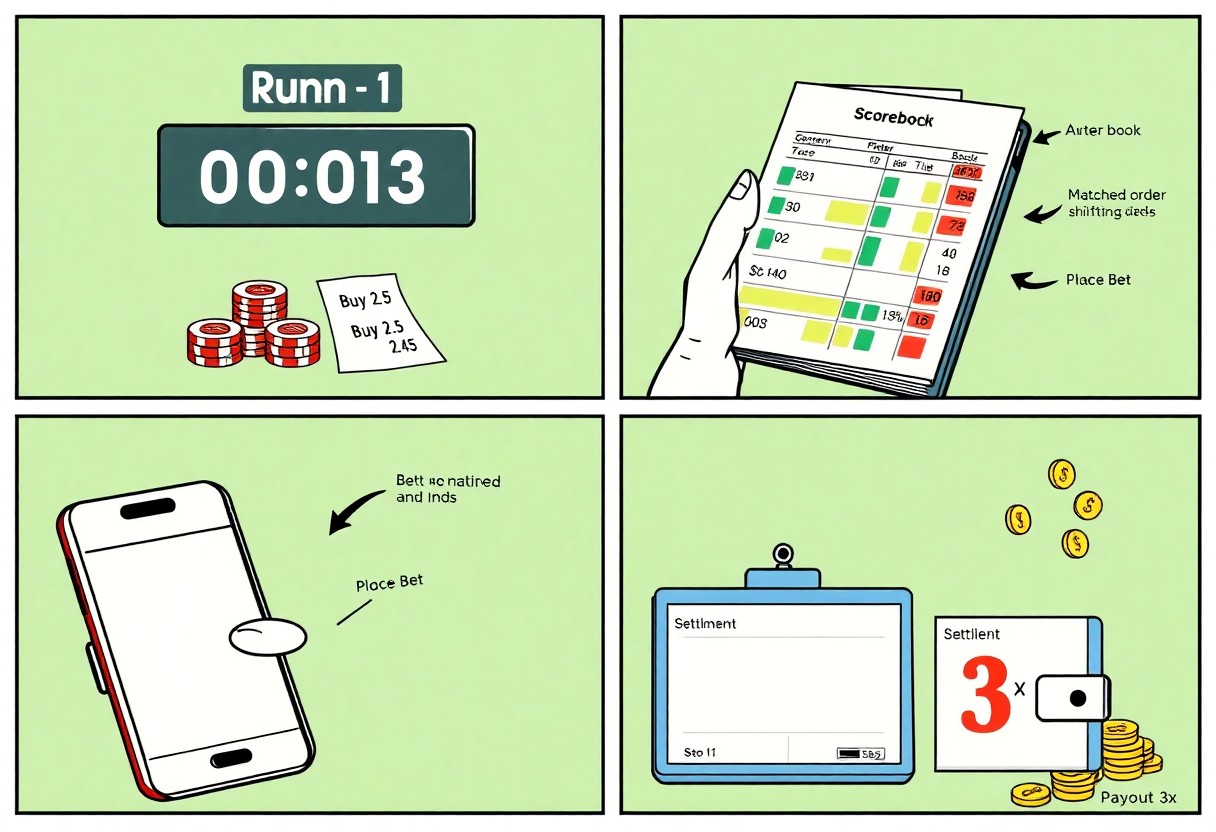
You can enhance your betting experience by understanding round betting micro markets. These specialized markets focus on specific segments of a match, allowing for targeted wagering opportunities. Explore how they work, the advantages they offer, and strategies to maximize your betting potential.
Defining Micro Markets in the Context of Combat Sports
The evolution of sports wagering technology and real-time data
Advancements in technology have transformed sports wagering, providing bettors with real-time data that enhances decision-making. Live streaming and analytics now allow gamblers to track fighter performance and condition instantaneously, shaping their betting strategies onsite.
Algorithms process vast amounts of statistics, determining trends and probabilities as fights progress. This technology ensures that odds adjust quickly, reflecting not only fighter dynamics but also crowd sentiment, giving bettors a strategic advantage.
Distinguishing micro markets from traditional moneyline and prop bets
Micro markets focus on specific events within a fight, such as round outcomes or specific actions like knockdowns, unlike traditional moneyline bets, which cover the overall fight winner. Prop bets may include various outcomes but lack the granularity offered by micro markets.
This specificity allows bettors to capitalize on their insights regarding fighter performance and tactics in real-time, leading to more targeted and strategic wagering opportunities.
Understanding this distinction is imperative for bettors looking to maximize their potential returns. Micro markets enable a level of precision in betting that traditional options do not, aligning closely with the dynamic nature of combat sports and allowing for more informed wagers.
The role of high-frequency trading in setting round-specific odds
High-frequency trading plays a pivotal role in the rapid adjustment of round-specific odds, ensuring that they reflect immediate changes in fight dynamics. Market makers utilize algorithms to analyze betting patterns and fighter performances, recalibrating odds almost instantaneously to accommodate new data.
This precision in real-time adjustments allows for a highly responsive betting environment, where fluctuations in odds can occur within seconds, mirroring the unpredictable nature of combat sports events.
High-frequency trading emphasizes the importance of quick data analysis in sports betting. The speed at which odds are adjusted based on incoming information can significantly impact bettor decisions, often leading to more favorable odds if one acts quickly.
The Fundamentals of Round Betting Mechanics
Exact Round Betting vs. Round Range Markets
Exact round betting focuses on predicting the specific round where a fight will conclude. For example, if a bettor believes a match will end in Round 2, they will place a wager on that precise outcome. This approach generally offers higher payouts due to its specificity, but carries greater risk.
Round range markets allow bettors to forecast a range of rounds for an event to finish, such as ‘Round 1 to Round 3.’ This method can provide more flexibility, as it covers multiple outcomes and typically balances risk and reward more effectively.
Understanding the “To Start the Round” vs. “To Complete the Round” Distinction
“To Start the Round” bets focus on whether a fighter can begin the next round. This often pertains to whether a fighter will come out for subsequent rounds after sustaining damage. In contrast, “To Complete the Round” bets center on whether the fighter can remain in the bout until the official end of that round, regardless of the situation.
This distinction affects betting strategies, as it alters the perceived likelihood of a fighter’s endurance and overall performance. Bettors must assess factors like stamina, injury resistance, and fight dynamics when placing their wagers.
The Relationship Between Round Betting and Total Rounds Over/Under
Round betting markets often correlate with total rounds over/under scenarios. This connection arises because both concepts rely on predicting the fight’s duration. Round betting can provide insights into the likely length of a match, while total rounds betting often involves broader strategies concerning overall fight dynamics.
Bettors can analyze a fighter’s historical performance and style to inform their round betting and over/under wagers. Understanding how these markets interact helps in developing a comprehensive betting strategy tailored to specific match dynamics.
The Strategic Value of Round Grouping
Analyzing 3-round vs. 5-round fight structures for optimal grouping
Three-round fights typically offer a more predictable structure, allowing for strategic betting based on fighters’ stamina and pacing. In contrast, five-round formats introduce additional complexity, as they require assessments of durability and tactical adjustments over an extended period.
Groupings in 3-round fights can simplify risk management, whereas 5-round battles present opportunities for in-fight adjustments. A thorough analysis of fighter profiles and historical performance in these formats is necessary for maximizing betting returns.
Hedging techniques using multi-round blocks to minimize variance
Utilizing multi-round blocks in betting allows bettors to hedge risks effectively by spreading wagers across multiple outcomes. This technique reduces exposure to variance, providing a safety net when a particular fight’s momentum shifts unexpectedly.
Implementing this strategy involves analyzing each round’s potential outcomes, enabling bettors to safeguard their investments while enhancing profit potential from favorable positions. This committed approach to risk management transforms betting from sheer speculation into a calculated endeavor.
Hedging through multi-round blocks encourages proactive decision-making. This method allows bettors to reassess positions after each round, ensuring that they can adapt to evolving fight dynamics while still maintaining an overall strategy.
Price discovery and identifying value in specialized round-by-round odds
Specialized round-by-round odds provide an innovative approach to price discovery, revealing insights into potential fight dynamics that standard odds may overlook. Identifying value in these specialized markets requires close attention to fighter styles and performance trends.
Competitive edge arises when bettors recognize discrepancies between actual fighting conditions and offered odds. Understanding these nuances facilitates informed betting choices, transforming opportunities into profitable returns.
Specialized round-by-round odds highlight the importance of data analysis in uncovering hidden values. Close examination of fighters’ historical performance across different rounds can lead to strategic betting opportunities, aligning risk tolerance with potential rewards.
The Mechanics of Live Round Betting
How live algorithms react to significant strikes, knockdowns, and takedowns
Algorithms continuously analyze real-time fight data, including significant strikes, knockdowns, and takedowns. Each event triggers immediate adjustments to betting odds, reflecting the fighters’ performance dynamics.
Responding to these critical moments, the algorithms can shift the betting landscape in seconds. Odds may increase or decrease based on the perceived likelihood of a fighter’s victory after a decisive action.
Capitalizing on the “between rounds” wagering window
Between rounds, bettors have a unique opportunity to place wagers before the action resumes. This window allows for strategic bets based on previously observed fight patterns and in-round performance.
Utilizing this time effectively can lead to advantageous odds, as many casual bettors may remain unaware of potential changes in fighter momentum or condition.
Experience and observation during the fight can inform decisions made in these brief gaps. For bettors who analyze trends or mental state shifts, this period is ripe for more calculated stakes.
The impact of broadcast latency and “courtsiding” on micro market execution
Broadcast latency can create discrepancies between real-time events and available betting data. Delays in coverage may influence how quickly bettors can react to fight developments, leading to missed opportunities or unfavorable odds.
Understanding the effects of broadcast latency and courtsiding is crucial for bettors aiming to optimize their strategies. The delay can skew perceptions of a fight’s progression, and serious bettors must account for potential advantages held by those present at the event.
Analyzing Fighter Profiles for Round-Specific Success
Identifying “early finishers” and the mathematics of first-round volatility
Recognizing fighters who commonly finish bouts in the first round provides strategic insights for round betting. These early finishers often possess knockout power and aggressive styles, leading to heightened volatility in the initial round. Statistical analysis reveals that initial knockouts occur in about 30% of all fights, making this a critical area for bettors.
Calculating first-round outcomes becomes simpler with data-driven approaches. By examining previous fight histories and opponent vulnerabilities, betting strategies can be tailored for efficient round-specific bets, leveraging odds in favor of the likely early finishes.
Assessing cardio efficiency and the probability of late-round surges
Evaluating a fighter’s cardio efficiency helps predict their performance in later rounds. Fighters who maintain output without significant fatigue can capitalize on their opponent’s waning energy, often turning the tide in crucial moments. Metrics, such as striking accuracy and volume over time, can provide insight into a fighter’s endurance capabilities.
Examining data from past fights shows that fighters with better cardio management tend to excel in later rounds, creating opportunities for late-round betting success. Understanding a fighter’s conditioning gives bettors an edge in predicting late-round comebacks or finishes.
Assessing cardio efficiency entails analyzing fight metrics such as strikes landed per minute and takedown success rates throughout match duration. Consistent output without diminishing returns is indicative of strong cardiovascular conditioning. Bettors can exploit these patterns to predict potential momentum shifts and capitalize on odds reflecting late-round exploitative opportunities.
Historical damage absorption and its correlation with round endurance
Analyzing historical damage absorption highlights how well fighters withstand and recover from strikes. Fighters with a higher threshold for damage often maintain performance in later rounds, significantly affecting round-by-round consistency. Historical data reveals that those who absorb less damage tend to have better endurance over time.
Comparing damage absorption rates among fighters shows a clear correlation with late-round performance. Fighters adept at mitigating damage are more likely to secure victories in later rounds, providing insightful data for betting strategies focused on endurance and resilience.
Understanding historical damage absorption can reveal key aspects of a fighter’s longevity in bouts. By pinpointing effective defensive strategies and grappling capabilities, bettors can evaluate how fighters handle adversity. This insight is crucial for predicting which fighters are likely to endure into the later rounds, thus influencing round-specific betting decisions.
Statistical Analysis and Historical Trends in Micro Markets
Utilizing historical finish rates categorized by weight class and round
Analyzing finish rates by weight class reveals patterns that can inform betting strategies. Fighters often exhibit different tendencies based on the weight class, impacting potential outcomes in micro markets.
Examining finish rates per round allows bettors to anticipate when a fight is most likely to conclude. By breaking down historical data, one can identify high-risk rounds that may yield favorable betting opportunities.
The significance of “average fight time” (AFT) metrics in predictive modeling
AFT metrics provide insights into typical fight duration, aiding predictions for specific micro markets. Shorter average times often indicate aggressive fighting styles, while longer durations suggest strategic approaches.
Understanding AFT helps bettors assess both fighters’ tendencies, forming a foundation for informed betting decisions. Patterns in average fight time can reveal critical insights into potential outcomes, shaping bets across different rounds.
Examining AFT alongside historical trends allows for a comprehensive view of fighter behavior. By integrating this data, bettors can craft strategies that align with expected fight dynamics.
Quantifying the correlation between round-one dominance and fight duration
Round-one dominance often correlates with a fighter’s overall performance, influencing fight duration. Fighters who establish control early tend to dictate the pace, affecting when and how fights conclude.
Analyzing these correlations can guide betting choices in micro markets, especially when evaluating fighters with a history of strong round-one performances. Identifying such patterns is vital for making strategic bets that capitalize on round-specific dynamics.
Establishing a direct correlation between early dominance and fight outcomes enhances predictive accuracy. Bettors can utilize this data to inform micro market strategies that align with fighter tendencies observed in prior matches.
Risk Management and Bankroll Strategies for Micro Markets
Calculating expected value (EV) in high-variance round betting scenarios
Expected value (EV) serves as a fundamental metric for assessing the profitability of bets in high-variance round betting. Determining EV involves calculating the potential outcomes and their probabilities, allowing bettors to make informed decisions. In high-variance scenarios, even slight differences in odds can lead to significant changes in the expected value, making precise calculations indispensable.
Analyzing various scenarios ensures a comprehensive understanding of potential returns. A favorable EV suggests a profitable bet over the long term, guiding bettors in their selection process for micro markets where volatility can obscure clear opportunities.
The importance of line shopping across multiple sportsbooks for micro-odds
Finding the best odds through line shopping directly impacts profitability in micro-odds betting. Different sportsbooks often provide varying lines, which can drastically alter potential payouts. Consistently comparing odds across platforms ensures that bettors can capitalize on the most favorable prices available.
Successful line shopping is often the difference between a winning and losing strategy. In micro markets, where margins are typically slim, even the smallest variations can enhance overall returns. This practice is necessary for bettors aiming for sustainable success in these competitive environments.
Line shopping plays a critical role in maximizing a bettor’s edge, particularly in micro markets characterized by tight odds. By consistently evaluating multiple sportsbooks for the best prices, bettors are more likely to secure advantageous lines that improve the profitability of their wagers. Engaging in this practice not only enhances return potential but also supports disciplined bankroll management.
Staking plans tailored for the volatility of specific round outcomes
Establishing staking plans that account for the unique volatility in round outcomes is necessary for maintaining bankroll health. Properly tailored strategies can help manage risk while maximizing potential gains. Fixed stakes may not be ideal due to the unpredictable nature of micro markets, where outcomes can fluctuate significantly.
Adapting staking approaches based on perceived risk and market movements allows bettors to adjust their exposure to losses and profits. Dynamic staking methods, such as percentage betting, can accommodate the variance inherent in round betting, ensuring that bankroll preservation remains a priority.
Strategically structured staking plans empower individuals to respond proactively to the inherent volatility in specific round outcomes. By balancing stake size with risk assessment, bettors can maintain a sustainable approach that mitigates losses while capitalizing on potential winnings. Adjusting stakes based on performance allows greater flexibility in managing bankroll through unpredictable market fluctuations.
Advanced Wagering: Combining Method of Victory with Round Specifics
- Understanding the synergy between method of victory and round-specific betting
- Identifying profitable scenarios through careful analysis
- Evaluating long-term trends and individual fighter behaviors
Double Chance Strategy
This strategy combines the method of victory with round ranges to enhance betting value. By selecting both the victory method and the specific rounds, bettors can cover multiple outcomes, increasing the chances for a winning wager.
The “Double Chance” strategy: Method of victory paired with round ranges
Double Chance betting allows for a more nuanced approach, combining different outcomes within defined round limits. By focusing on fighters notorious for early finishes or those who excel in later rounds, bettors can cover a wider array of potential results, enhancing their betting success.
Pairing method of victory with specific rounds capitalizes on fighters’ trends and durability. This strategy is particularly effective in volatile matchups where uncertainty looms, and predicting outcomes based on historical performance can yield positive results.
Exploiting discrepancies between method-of-victory lines and round lines
Discrepancies between method-of-victory lines and round lines often present valuable betting opportunities. When the market undervalues a fighter’s ability to achieve a specific victory type within particular rounds, betting on these mismatches can lead to significant profits.
Analyzing statistical data helps identify these inconsistencies. By dissecting fighter performances across various rounds, savvy bettors can pinpoint when the market misprices certain outcomes, allowing for a strategic advantage.
Fighter history and statistical analysis reveal trends that can illuminate discrepancies. If a fighter often wins by knockout in the later rounds but the market favors early finishes, exploiting this mismatch can generate favorable odds, ensuring higher returns.
Analyzing the impact of referee stoppage tendencies on “Round KO” markets
Referee habits significantly influence “Round KO” markets. Knowing a referee’s tendency to stop fights early or allow bouts to continue can inform better betting choices, impacting strategy effectively. Different referees have distinct styles that can affect fight outcomes in unexpected ways.
Understanding these tendencies enables bettors to adjust their strategies accordingly. By focusing on how specific referees interact with fights, particularly in high-stakes matches, bettors can make informed decisions based on likely stoppage scenarios.
Reviewing past fights officiated by specific referees offers insights into how they manage bouts. For instance, if a referee is known for quick stoppages, betting on early-round KOs may be advisable; conversely, a referee known for leniency may call for longer fights, warranting a different betting approach.
External Variables Affecting Round Outcomes
The influence of cage size and ring dimensions on pacing and finishes
Ring dimensions directly impact fighters’ strategies, including pacing and finishing ability. A smaller cage encourages aggressive exchanges, potentially leading to faster finishes, while larger arenas provide opportunities for strategic maneuvering.
The size also influences cardio efficiency. Smaller spaces may cause fighters to expend more energy quickly, while larger rings allow for varied tactics and movement, impacting how rounds unfold.
Environmental factors: The impact of altitude and temperature on fighter stamina
Altitude affects oxygen availability, which can lead to rapid fatigue for fighters unaccustomed to high elevations. Temperature plays a role in stamina, with excessive heat exacerbating dehydration and energy depletion during fights.
Training at altitude can improve endurance, yet unexpected shifts in environment during a match may challenge even the best-prepared athletes.
Environmental Factors and Their Effects
| Factor | Impact |
|---|---|
| Altitude | Can lead to rapid fatigue |
| Temperature | Affects hydration levels and stamina |
- Assume that higher elevation will challenge stamina more than lower levels.
Judging bias and its effect on “Round Winner” micro markets in live betting
Judging bias can heavily influence round assessments, affecting betting markets’ accuracy. Each judge may have subjective interpretations of effective strikes, takedowns, and control, leading to skewed scoring that impacts round winner predictions.
Discrepancies in judging become pronounced during close rounds, where small factors could sway outcomes, creating opportunities for savvy bettors to exploit inconsistencies in judging patterns.
Judging decisions are often influenced by the judge’s background or affiliations with specific fighters. Fans and analysts can spot biases, allowing for informed betting strategies based on historical judging tendencies.
Judging Factors and Their Impacts
| Factor | Impact |
|---|---|
| Judge Bias | May influence scoring towards certain fighters |
| Close Rounds | Creates opportunities for betting inconsistencies |
- Assume that close rounds are more prone to biased judgments.
Psychological Factors and Momentum Shifts
Understanding the psychological dimensions in round betting micro markets can offer insights into odds movement. Factors include fighter mindsets, crowd reactions, and momentum created during bouts.
- Adrenaline effects and timing of round shifts
- Body language as a reflection of fighter condition
- Impact of corner advice on fighter performance
Perceiving these elements can inform more strategic betting decisions.
The “Adrenaline Dump” and its Predictable Effect on Second-Round Odds
Fighters often experience an “adrenaline dump” after the first round, leading to fatigue that can influence their performance. This phenomenon frequently results in shifting odds, as the market reacts to a fighter’s decreased stamina.
Traders may observe odds fluctuations, indicating a drop in perceived fighter effectiveness. Consequently, understanding this pattern allows bettors to anticipate shifts and make informed decisions before round two.
Interpreting Fighter Body Language and Corner Instructions as Market Indicators
Body language provides subtle clues about a fighter’s confidence and readiness. Signs of fatigue, hesitation, or frustration can shift market perceptions and affect odds in real time.
Corner advice also plays a significant role; encouraging instructions may lead to a boost in performance, influencing betting markets. Altering tactics based on corner insights can prove advantageous for savvy bettors.
Body language intricately communicates a fighter’s mental state. When observing resilience or discouragement, markets may react sharply. Likewise, corner instructions can signal strategic shifts that alter betting landscape.
The Impact of a Dominant 10-8 Round on Subsequent Micro Market Pricing
A dominant 10-8 round creates a ripple effect in micro market pricing. This scoring can significantly boost the favored fighter’s odds, as bettors become more confident in their chances for victory.
Shifts in pricing often reflect perceived momentum changes. A strong round can lead to drastic alterations in anticipated outcomes, prompting decisive action from traders in affected betting markets.
The influence of a dominant 10-8 round is profound, as it establishes psychological dominance. This situation often leads to bettors reassessing their expectations and acting accordingly.

Comparing Round Betting Across Different Combat Disciplines
Comparison Table
| Combat Discipline | Round Structure |
|---|---|
| Professional Boxing | 10 to 12 Rounds |
| MMA | 3 to 5 Rounds |
| Kickboxing | 3 to 12 Rounds |
| Muay Thai | 5 Rounds |
The 10-to-12 round endurance structure of professional boxing
Professional boxing generally consists of 10 to 12 rounds, with each round lasting three minutes. This structure emphasizes endurance and strategy, requiring fighters to pace themselves effectively. The longer format allows for complex tactics, where fighters can adapt to their opponent’s style as the bout progresses.
Evaluating performance over multiple rounds helps judges assess consistency in scoring. As fatigue sets in, the tactical nuances become even more pronounced, creating opportunities for dramatic comebacks or decisive victories in the later rounds.
The high-variance 3-to-5 round structure of Mixed Martial Arts (MMA)
MMA bouts typically feature 3 to 5 rounds, each lasting five minutes. This high-variance format leads to unpredictable outcomes, as fighters must capitalize on early opportunities. A strong start can dictate the fight’s momentum, inviting explosive exchanges and rapid shifts in tactics.
Competitive pressure is heightened, with fighters often taking risks to secure decisive victories within a brief window. The potential for unpredictability makes betting on these fights particularly volatile but also exciting for spectators.
With a short round duration, MMA contests often rely on aggressive strategies. Fighters frequently seek immediate advantages, leading to a higher likelihood of knockouts or submissions. Such intensity creates an environment where the tide can turn quickly, keeping fans and bettors alike on the edge of their seats.
Pacing and scoring nuances in professional kickboxing and Muay Thai
Kickboxing and Muay Thai feature varied round structures; kickboxing may consist of 3 to 12 rounds, and Muay Thai commonly has 5 rounds. Scoring in these disciplines reflects the effectiveness of strikes, control, and overall aggression. Rounds can differ in pace, leading to inconsistencies in how bouts are evaluated.
Kickboxers and Muay Thai fighters exhibit unique pacing characteristics, as the use of various striking techniques plays a key role in scoring. In Muay Thai, clinching and knee strikes can swing judges’ perceptions, adding another layer to the betting landscape.
Pacing in kickboxing and Muay Thai is crucial for success. Fighters who manage to maintain pressure and control can secure vital points, especially when matches progress into later rounds. Striking diversity not only influences scoring but affects betting strategies, making an understanding of each discipline’s nuances crucial for informed wagering.
Common Pitfalls and Mistakes in Micro Market Betting
Overestimating “KO power” in the championship rounds
Betters often fall into the trap of believing that fighters possess the same level of knockout ability in later rounds as they do early in the match. Conditioning and fatigue play significant roles, diminishing a fighter’s explosive power over time. As the championship rounds progress, strategic grappling and control become more important, making KOs less likely.
Specialists in round betting must analyze past performances to assess whether a fighter can maintain their power late in a fight. Factors like previous endurance issues or late-round tactics should inform betting decisions in micro markets.
Ignoring the impact of point deductions and fouls on round-specific scoring
Assessing the scorecards without considering penalties can skew the perception of a fight’s outcome. Point deductions for fouls can drastically alter a fighter’s scoring and influence betting odds. Undeniably, this could lead to unexpected shifts in a bout’s outcome, especially in closely contested matches.
Understanding a fighter’s history with fouls helps assess their potential impact on scoring. Forgotten factors can lead to inaccurate predictions and lost bets, highlighting the importance of comprehensive analysis.
Failure to account for stylistic “stale-mates” that drive fights to decisions
Certain matchups result in stagnant exchanges, where both fighters struggle to impose their styles. This often leads to decisions rather than finishes, meaning betters should consider the likelihood of a fight going the distance. Failures to anticipate these scenarios can result in poor betting choices, particularly in round-based markets.
Recognizing fighters prone to tactical standoffs lays the groundwork for more strategic betting. A detailed understanding of fighting styles reveals potential for fights to extend multiple rounds, affecting how bets are structured for better outcomes.
Final Words
Round betting micro markets provide a dynamic approach for punters, allowing for more precise bets on game segments. Each micro market focuses on specific outcomes within a round, catering to deeper insights and strategic plays.
Understanding these markets enhances betting strategies, providing an avenue for those looking to capitalize on nuanced game developments. This level of detail in betting can lead to improved decision-making, making round betting micro markets a compelling option for serious bettors.
Q: What are round betting micro markets?
A: Round betting micro markets refer to specific betting opportunities within a single round of a sporting event. These markets allow bettors to place wagers on minute details, such as the outcome of a specific series of plays, the performance of individual players, or the score at a certain moment.
Q: How do round betting micro markets differ from traditional betting?
A: Traditional betting typically focuses on larger outcomes, such as the overall winner of a match or tournament. Round betting micro markets emphasize temporary outcomes, allowing for more dynamic and immediate betting experiences throughout the event.
Q: What strategies work best for betting on micro markets?
A: Successful strategies include closely monitoring player performance and in-game statistics, understanding the context of the match, and assessing the impact of real-time events. Staying updated on injuries and substitutions also plays a critical role in making informed bets in these fast-paced markets.