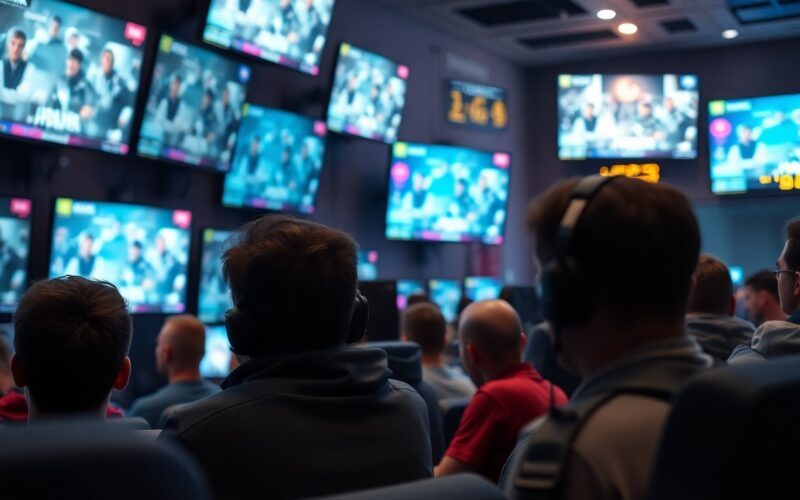






Over the years, third-party organisers have become instrumental in shaping esports governance. Their involvement ranges from structuring competitions to enforcing regulations, ensuring fair play, and providing oversight. Understanding their role is important for grasping the complexities of the esports ecosystem and its future developments.

The Evolution of Esports Infrastructure
Historical transition from grassroots tournaments to commercial leagues
Esports began with humble grassroots tournaments, where passionate gamers gathered in local venues. These community-driven events fostered friendships and skill development, laying the groundwork for larger competitions.
As interest surged, sponsors and investors saw potential in these events. This led to the emergence of commercial leagues, offering professional opportunities and structured formats that attracted a wider audience.
The emergence of the publisher-centric model of ownership
Publishers began to dominate the esports scene, controlling game rights and tournament organization. This centralization shifted power from independent organizers to game developers, molding the competitive environment.
With publishers at the forefront, their focus turned toward creating branded leagues, solidifying their influence over game titles and the associated competitive structures.
Publishers now dictate the terms of engagement for third-party organizers. This trend has led to conflicts regarding the execution of tournaments versus the rights held by publishers, creating a complex relationship between developers and event hosts.
Defining the gap between intellectual property rights and tournament execution
Tension exists between publishers’ intellectual property rights and the execution of esports tournaments. Event organizers often struggle to obtain necessary permissions, impacting competition standards.
This disconnect can hinder tournament success, as organizers must balance adherence to copyright rules while aiming for engaging gameplay experiences.
Without clear guidelines from publishers, tournament organizers face uncertainty in their event planning. This gap not only complicates logistics but can also lead to missed opportunities for community engagement and sponsor involvement.
Defining Third-Party Organisers (TPOs) in the Digital Ecosystem
Third-party organisers (TPOs) play a pivotal role in shaping esports governance, acting as intermediaries between game developers, sponsors, and players. Their influence extends across various dimensions of the esports industry, from event management to community engagement, creating a structured environment for competitive gaming.
Categorization of TPOs: Global Majors versus Regional Specialists
Global majors are large-scale organisations managing international tournaments and leagues, showcasing the most prominent esports titles. These entities attract significant attention, providing a platform for players and teams to compete on a global stage.
Regional specialists, on the other hand, focus on local or niche markets, tailoring events to specific communities. Their expertise helps cultivate grassroots esports, making competitive gaming accessible and relevant to diverse audiences.
Service-Level Agreements and White-Label Production Capacities
Service-level agreements (SLAs) govern the operations and expectations between TPOs and stakeholders, ensuring transparency and accountability. These contracts define quality standards, payment terms, and deliverables, creating a framework for successful partnerships.
White-label production capabilities enable TPOs to offer tailored event management solutions to various clients. By customizing branding and content, they enhance client relationships and broaden market reach, ensuring different stakeholders can present unique esports experiences.
Establishing strong SLAs is necessary for TPOs to maintain trust and operational efficiency. These agreements not only define responsibilities but also create a safety net for dispute resolution, fostering a reliable collaboration atmosphere among stakeholders.
The Economic Model: Revenue Streams from Sponsorships and Media Rights
Sponsorships represent a major revenue stream for TPOs, enabling them to secure funding through partnerships with brands. These collaborations often involve extensive marketing campaigns, translating into substantial financial backing for tournaments.
Media rights also play a crucial role in the financial sustainability of TPOs. Selling broadcast rights to streaming platforms or networks allows organisers to generate income while increasing the visibility of esports events to wider audiences.
Revenue from sponsorships and media rights is foundational to the economic stability of TPOs. Securing these streams allows them to invest back into the esports ecosystem, enhancing event quality and growing the competitive scene further.
Legal Frameworks and Intellectual Property Licensing
The fundamental role of the Game Publisher License (GPL)
The Game Publisher License (GPL) serves as the cornerstone for esports governance, enabling third-party organizers to host events lawfully. Issued by game developers, this license stipulates the rules and regulations for competition involving their intellectual property, ensuring compliance with copyright and trademark laws. Organizers must secure a GPL to protect both themselves and the game’s integrity.
Navigating exclusivity clauses and restricted competitive windows
Exclusivity clauses in GPL agreements can significantly impact tournament organizers. These clauses limit partnerships, often restricting certain organizations from hosting events with conflicting publishers or titles. Understanding these stipulations is crucial for organizers to avoid potential legal disputes.
Restricted competitive windows further complicate event planning by designating specific periods when esports events can occur. Effectively managing these timeframes ensures compliance with game publishers, thereby avoiding conflicts and creating optimal conditions for player participation and viewership.
Understanding exclusivity clauses and restricted competitive windows requires diligent planning and robust communication with game publishers. Organizers must frequently review their contracts to minimize conflicts and maximize participation opportunities during designated timeframes.
Liability frameworks for physical event safety and digital integrity
Liability frameworks play a critical role in safeguarding both physical and digital aspects of esports events. Physical safety protocols protect attendees and participants during live competitions, ensuring compliance with local regulations and risk management strategies. In contrast, digital integrity frameworks address issues like cheating and security breaches, maintaining the competitive fairness of online tournaments.
Recent legal cases highlight the importance of organizers establishing comprehensive liability frameworks. By implementing stringent safety measures and protocols around digital integrity, organizers can mitigate risks and enhance trust among players and fans, further solidifying the esports ecosystem.
Establishing liability frameworks not only enhances safety but also strengthens the reputation of esports as a legitimate industry. Organizers must develop detailed plans encompassing both physical and digital domains, prioritizing participant welfare and fostering an environment where competition can thrive without compromise.
Standardisation of Competitive Integrity
Implementing anti-cheat protocols and hardware verification standards
Effective anti-cheat protocols are important for maintaining fairness in competitive gameplay. Third-party organisers (TPOs) play a pivotal role in developing and implementing these standards, ensuring that participants compete on a level playing field. By utilizing advanced technology and ongoing software updates, TPOs can effectively deter cheating practices and provide a transparent gaming environment.
Hardware verification standards further enhance integrity in esports competitions. TPOs establish guidelines for acceptable equipment, preventing players from using unfair advantages. Regular inspections and pre-match checks are critical practices employed by TPOs to uphold these standards.
Developing and enforcing universal rulebooks across diverse game titles
Creating universal rulebooks allows for consistent regulations that transcend individual games. TPOs facilitate this standardization, providing a common framework for tournaments, which aids in reducing ambiguity for players and organisers alike. This cohesion enhances understanding and compliance across different competitive environments.
With varying genres and styles in esports, universal rulebooks adapt to different gaming dynamics while ensuring fair play. By collaborating with developers and stakeholders, TPOs can not only maintain consistency but also incorporate best practices that accommodate unique game mechanics.
The role of TPOs in establishing professional officiating and refereeing
Professional officiating is paramount for upholding integrity in esports events. TPOs are instrumental in training and certifying referees to ensure they are knowledgeable about game-specific rules and regulations. This expertise helps them make informed decisions that can impact the outcome of competitions.
Through rigorous training programs, TPOs prepare referees to handle disputes and enforce rules impartially. Their commitment to professionalism establishes a trusted environment where players can compete fairly, knowing that impartial oversight is in place.
Player Welfare and Professional Standards
Minimum requirements for player facilities and logistical support
Comprehensive facilities and logistical support are imperative for player well-being. Standardized requirements ensure access to practice areas, nutrition, and healthcare services, which directly affect performance. By establishing guidelines, third-party organizers can enhance the competitive environment and promote higher professional standards.
Access to adequate training facilities can greatly influence not only performance but also overall player morale. Third-party organizers should prioritize these needs in event planning, ensuring players have safe and accommodating environments to optimize their skills.
Addressing the lack of collective bargaining in third-party circuits
Absence of collective bargaining in third-party circuits often leads to inconsistent standards and player exploitation. Many players lack a voice in negotiating terms related to contracts, sponsorships, and benefits. This disparity can adversely affect their careers and overall satisfaction within the industry.
Striving for a unified framework would enable players to have a stronger negotiating position. By creating collective agreements, third-party organizers can ensure fair treatment and transparency, fostering a more stable environment for players’ careers.
Conflict resolution mechanisms and disciplinary procedures for athletes
Establishing conflict resolution mechanisms and disciplinary procedures empowers players with clear avenues for addressing grievances. Effective systems promote accountability among players, teams, and organizers, reducing the potential for disputes. Third-party organizers play a pivotal role in defining these structures, ensuring they are accessible and transparent.
Providing a well-defined process helps maintain fairness in competition. Having clear disciplinary measures encourages professionalism and upholds standards within esports, fostering a culture of respect and integrity among participants.
Commercial Governance and Revenue Distribution
Transparency in Prize Pool Management and Escrow Systems
Transparency in prize pool management is necessary for establishing trust among participants and stakeholders. Third-party organisers can implement escrow systems, ensuring that funds are securely held and distributed according to predefined criteria. This practice mitigates disputes and promotes fairness within the competitive ecosystem.
Clear communication about prize distribution timelines and conditions is paramount. By adopting transparent processes, TPOs create an environment where players feel valued and confident in the governance of their competitions, ultimately enhancing the overall experience for both participants and fans.
Negotiating Media Rights in a Fragmented Global Broadcast Landscape
Negotiation strategies for media rights become increasingly complex in a fragmented broadcast environment. TPOs play a critical role in aligning the interests of various stakeholders, ensuring wide exposure for events while maximizing revenue potential. They leverage their expertise to strike balanced agreements that benefit all parties involved.
Successful media rights negotiations require an understanding of diverse regional markets and audience behaviors. By tapping into local insights, TPOs can tailor agreements that reflect the unique dynamics of each region, fostering stronger connections with global audiences.
The Impact of TPOs on Team Sustainability through Revenue Sharing Models
Team sustainability hinges on effective revenue-sharing models facilitated by TPOs. These organisations help ensure that teams receive fair compensation for their contributions to the ecosystem. By promoting equitable distribution, TPOs enable teams to thrive in a competitive environment while maintaining focus on performance.
Effective revenue-sharing strategies not only bolster individual team finances but also enhance the overall health of the esports ecosystem. When funds are allocated responsibly, teams can invest in talent, infrastructure, and growth, leading to a more stable and sustainable future for esports competitions.
Relationship with National and International Federations
Cooperation versus competition with the International Esports Federation (IESF)
Collaboration with the International Esports Federation (IESF) often enhances the legitimacy of esports events. Third-party organizers can help bridge gaps by promoting events that align with IESF standards while also bringing unique competitive formats to the table.
Opposition can arise when organizers and the IESF pursue differing goals. While the IESF sets regulations, independent events may prioritize innovation and diversity, sometimes resulting in conflicts over tournament structures and player eligibility.
Aligning with national sporting bodies for visa and legal recognition
Partnerships with national sporting bodies are imperative for achieving visa and legal recognition. Third-party organizers can streamline processes that enable players to compete abroad, thereby enhancing participation and visibility in the esports industry.
These collaborations often involve comprehensive dialogues and strategic planning to ensure that all legal requirements are met, allowing for smoother entry for international participants and greater acceptance within the broader sporting community.
The quest for a unified global calendar and circuit harmonisation
Efforts to establish a unified global calendar face numerous challenges, including varying regional tournaments and differing seasonal schedules. Third-party organizers often advocate for a standardized calendar to prevent overlaps and enhance audience engagement.
Creating a harmonized circuit grants players and teams consistent competition opportunities while simplifying scheduling for organizers. Without such alignment, fragmented events may dilute the viewer experience, hindering overall growth in the esports sector.
Technical Governance and Infrastructure Management
Latency management and server localisation for competitive parity
Latency management plays a critical role in ensuring a level playing field in esports competitions. By optimally localizing servers, third-party organizers can minimize delays, allowing players from different regions to compete without inherent advantages related to connection quality.
Effective server localization enhances overall gameplay experiences and maintains competitive integrity. Players can perform at their best when latency is consistently managed, leading to fairer outcomes in tournaments.
Broadcast technology standards and real-time data integrity protocols
Adhering to broadcast technology standards is fundamental for maintaining the quality and reliability of esports events. These measurements ensure that viewers receive high-quality streams while protecting the integrity of real-time data feeds.
Robust data integrity protocols help maintain transparency in game outcomes. When third-party organizers implement these standards, they enhance the viewer experience and reinforce trust in the competitive scene.
Real-time data integrity protocols are critical in preventing tampering and ensuring accuracy in stats and results. Establishing strict standards fosters a transparent environment where fans and stakeholders can engage with the sport authentically, ultimately protecting its credibility.
Cybersecurity measures against DDoS attacks and match-fixing vulnerabilities
Cybersecurity measures are crucial to safeguarding esports events from DDoS attacks and match-fixing schemes. Third-party organizers must prioritize the implementation of advanced security protocols to protect both players and viewers from disruptive activities.
Effective strategies against DDoS attacks require real-time monitoring and proactive responses. By bolstering digital defenses, organizers not only enhance player safety but also contribute to the overall integrity of the esports ecosystem.
Implementing strong cybersecurity protocols deters potential threats and enhances the industry’s reputation. By addressing vulnerabilities proactively, third-party organizers can foster a secure environment, encouraging both player participation and fan engagement in esports competitions.
Community Engagement and Grassroots Development
Creating sustainable pathways from amateur play to professional tiers
Grassroots programs play a pivotal role in transitioning amateur players into the professional esports scene. Establishing community tournaments and leagues allows aspiring gamers to showcase their skills, build relationships, and gain exposure. Third-party organizers provide the infrastructure necessary to facilitate these events, offering platforms for talent recognition.
Support from TPOs also includes mentorship opportunities, where seasoned players guide newcomers. This helps generate a network that connects all levels of participants, ensuring that talent can be nurtured effectively while promoting long-term growth within the sport.
Managing regional diversity and cultural sensitivities in global tours
Confronting regional diversity requires a nuanced approach as global tours expand. Incorporating local cultures and preferences ensures events resonate deeply with diverse audiences, helping to establish a strong connection. TPOs often consult with local organizations to tailor experiences that reflect cultural significance.
This attention to detail reduces the risk of alienating communities while fostering inclusion. By respecting regional differences, TPOs not only enhance the event experience but also build lasting partnerships that can bolster future engagements.
Understanding that each region has unique customs and values is fundamental for third-party organizers. Engaging local communities in the planning process ensures that events celebrate regional identity, ultimately attracting larger audiences and building a loyal fan base.
The role of TPOs in fostering fan loyalty and live event experiences
Creating memorable live event experiences encourages stronger fan loyalty. TPOs are instrumental in designing immersive environments that resonate with attendees, providing opportunities for interaction beyond the competition. Unique entertainment elements, such as meet-and-greets with players and interactive booths, enhance the overall experience.
By prioritizing fan engagement in live events, TPOs contribute to a sense of community and belonging. This investment in experience often translates into lasting loyalty, driving ticket sales and merchandise acquisitions in future events.
TPOs consistently innovate to ensure that live events stand out in a crowded marketplace. Tailored experiences, exclusive content, and opportunities for fan participation create a vibrant atmosphere that not only entertains but also solidifies emotional connections between fans and the esports ecosystem.
Ethical Governance and Social Responsibility
Promoting diversity, equity, and inclusion within tournament structures
Incorporating diverse participant demographics enhances the gaming community’s richness. Tournament organizers must implement inclusive recruitment practices, ensuring representation across gender, ethnicity, and socio-economic backgrounds. Creating policies that prioritize accessibility fosters an environment where all players feel welcomed and valued.
Equitable opportunities for all participants can lead to innovative gameplay and broader engagement. By collaborating with various organizations, third-party event coordinators can identify and address barriers, allowing underrepresented groups to participate more fully in esports competitions.
Safeguarding minors in professional and semi-professional competition
Ensuring the safety of minors in esports is paramount, particularly as participation rates increase. Age-appropriate guidelines and restrictions must be established to protect younger competitors from potential exploitation and negative influences. Organizers should implement strict age verification processes to maintain a safe environment.
Education and support programs are imperative components of safeguarding initiatives. Providing resources about online safety and mental health can significantly benefit minors competing in these high-pressure environments, reinforcing a culture of care and responsibility.
Comprehensive safeguarding protocols not only protect minors but also promote ethical standards across the industry. Regular training for staff and organizers about the challenges faced by young competitors contributes to a protective framework that prioritizes the welfare of all participants.
Environmental sustainability initiatives in large-scale offline production
Adopting sustainable practices during large-scale offline events reduces environmental impact and promotes responsible event management. Organizers can prioritize eco-friendly materials, minimize waste, and establish recycling programs, which enhances sustainability awareness among attendees and participants alike.
Community partnerships can amplify environmental initiatives, encouraging local businesses and stakeholders to contribute their resources and expertise. Collaborative efforts can ensure that the esports industry leads by example, inspiring other sectors to adopt similar practices for greater ecological responsibility.
Integrating sustainability into event planning is more than a trend; it reflects a commitment to future generations. By highlighting these initiatives, organizers can foster a culture that values environmental care and encourages ongoing advancements within the esports community.
Anti-Corruption and Integrity Monitoring
Collaboration with the Esports Integrity Commission (ESIC)
Third-party organisers play a significant role in partnering with the Esports Integrity Commission (ESIC) to uphold integrity in competitive gaming. This collaboration fosters a unified approach to maintaining standards and ensuring fair play across various tournaments.
Trust between event organisers and ESIC enhances the transparency of operations, allowing for effective communication regarding integrity breaches. This partnership is necessary for educating stakeholders about compliance and creating a culture of accountability in esports.
Monitoring Betting Patterns and Preventing Match-Manipulation
Effective monitoring of betting patterns is necessary to combat match-fixing in esports. Implementing advanced analytics helps identify suspicious activities, allowing organisers to act swiftly against violations.
This proactive stance strengthens the overall integrity of esports events. Engaging with betting companies further aids in detecting irregularities and preventing manipulation, ensuring that the competitive spirit remains intact for players and fans alike.
Using sophisticated algorithms and data analysis techniques, organisers can establish benchmarks for normal betting behaviors, making it easier to spot anomalies that may indicate match-fixing. This vigilant approach not only protects the integrity of tournaments but also reassures stakeholders of a fair competitive environment.
Sanctioning Regimes and the Implementation of Cross-Tournament Bans
Establishing clear sanctioning regimes is critical for maintaining integrity in esports. When breaches occur, consistent penalties serve to dissuade future infractions and uphold competitive fairness across different events.
Cross-tournament bans act as a powerful deterrent, ensuring that offenders face repercussions beyond a single event. This interconnected system reinforces the seriousness of integrity violations while promoting responsible conduct in the community.
Implementing cross-tournament bans creates a unified front against misconduct. When players or teams receive penalties that affect their participation across various competitions, it signals to the entire industry that integrity is paramount, thereby fostering a culture of respect and accountability among all participants.
The Impact of Consolidation and Mergers in the TPO Space
The rise of conglomerate groups and their influence on market access
Conglomerate groups have increasingly dominated the esports space, reshaping market entry dynamics for third-party organizers (TPOs). These entities often consolidate resources, enabling them to control significant tournament opportunities, thereby limiting access for smaller organizers. The consolidation leads to fewer high-profile events, impacting diversity and innovation within the competitive ecosystem.
Market access becomes more challenging as conglomerates prioritize their own interests over smaller competitors. This creates an environment where independent TPOs struggle to secure sponsorships and partnerships, effectively narrowing the pathways for new entrants. As a result, the competitive nature of esports governance is compromised.
Risks of monopolistic behaviour in tournament hosting and talent management
Monopolistic behavior poses serious challenges in tournament hosting and talent management. By controlling key events, conglomerates can dictate terms that may disadvantage participants and sponsors alike. This dominance risks stifling competition, leading to less compelling experiences for players and audiences.
Talent management also suffers as conglomerates prioritize their own rosters, sidelining emerging talent and limiting opportunities for diverse player development. Such a lack of competition can lead to stagnation, where only a few players rise to prominence while many others remain overlooked.
The implications of monopolistic behavior extend beyond immediate tournament logistics. When a handful of organizations control talent and event hosting, they create barriers that prevent up-and-coming esports teams from breaking through. The ecosystem can become homogenous, limiting the overall growth and innovation that diverse talent can bring to the industry. As a result, the vibrancy and richness of esports may diminish, impacting both fan engagement and the development of new competitive formats.
Venture capital influence on long-term governance and stability
Venture capital plays a significant role in shaping long-term governance within the esports ecosystem. With substantial investments, VC firms can influence the strategic direction of TPOs, pushing for practices that align with their financial goals. This often results in increased commercialization at the cost of grassroots initiatives.
While venture capital can provide the necessary funds for growth, it may also introduce volatility into the governance structure. The focus on short-term profits can overshadow the need for sustainable practices, potentially destabilizing the ecosystem in the long run.
Venture capital’s impact on long-term governance is profound, as the influx of funding often drives a focus on rapid expansion rather than stability. Without a balanced approach that prioritizes both profitability and community engagement, the esports scene risks losing its foundational elements. This could lead to alienation of dedicated fans and players, ultimately undermining the community’s integrity.
Future Trends in Distributed Governance
The potential of Decentralised Autonomous Organisations (DAOs) in esports
Decentralised Autonomous Organisations (DAOs) offer an innovative governance model for the esports ecosystem. By enabling community-driven decision-making, DAOs could democratize tournament structures, promote transparency, and enhance player engagement.
Players, teams, and fans could participate in governance processes, directing resources and setting rules collaboratively. This approach not only shifts the power dynamics but also cultivates a more inclusive environment, appealing to diverse stakeholder interests.
Integration of Artificial Intelligence in real-time rule enforcement
Artificial Intelligence can significantly streamline rule enforcement during esports competitions. AI systems can monitor gameplay for violations, providing instant feedback and ensuring adherence to regulations without human intervention.
Real-time monitoring enhances fairness, reduces disputes, and increases audience engagement by keeping the competition transparent. As technology evolves, AI could also incorporate player insights, making enforcement more nuanced and context-aware.
Deploying AI solutions for real-time enforcement can address challenges such as inconsistent officiating and player misconduct. By analyzing vast data sets, algorithms can identify patterns and flag potential infractions swiftly, ensuring a consistent and unbiased approach to rule enforcement across various tournaments.
Shifting power dynamics between publishers and independent organisers
The rise of independent organisers is challenging traditional power structures dominated by publishers. This shift enables diverse event formats and innovative approaches to player and spectator engagement, fostering competition within the ecosystem.
As independent entities gain traction, publishers may need to adapt, offering more collaborative partnerships rather than unilateral control. This growing independence helps promote creativity and contributes to a healthier overall esports environment.
Independent organisers are redefining the relationship with publishers, often prioritizing community-driven initiatives over publisher mandates. This shift not only heightens the importance of audience preferences but also encourages publishers to be more responsive to evolving community needs, potentially leading to more equitable relationships in the future.
To wrap up
From above, third-party organizers serve as pivotal entities in esports governance, establishing frameworks for competition integrity and player representation. Their role includes ensuring adherence to regulations, promoting fair play, and setting industry standards that empower stakeholders across the ecosystem.
These organizers enhance the overall legitimacy of esports by facilitating transparent tournament structures and resolving disputes effectively. This oversight not only attracts sponsors but also builds trust among players and fans, solidifying esports’ position in the broader sports market.
Q: What is the primary function of third-party organisers in esports governance?
A: Third-party organisers manage the logistics and operations of esports tournaments and events. They handle player registrations, match scheduling, and venue coordination, ensuring that competitions run smoothly and efficiently. Their role is crucial in providing a structured environment for players and teams.
Q: How do third-party organisers contribute to fair play in esports?
A: Third-party organisers implement rules and regulations to maintain fairness during competitions. They enforce code of conduct guidelines for players and teams, along with monitoring gameplay for compliance. This oversight helps to prevent cheating and ensures equitable opportunities for all participants.
Q: In what ways do third-party organisers enhance the esports community?
A: Third-party organisers create events that bring together diverse players, fans, and sponsors. These events promote community engagement through initiatives such as fan meet-and-greets and online forums. By facilitating interactions, they help to build a stronger network within the esports ecosystem.