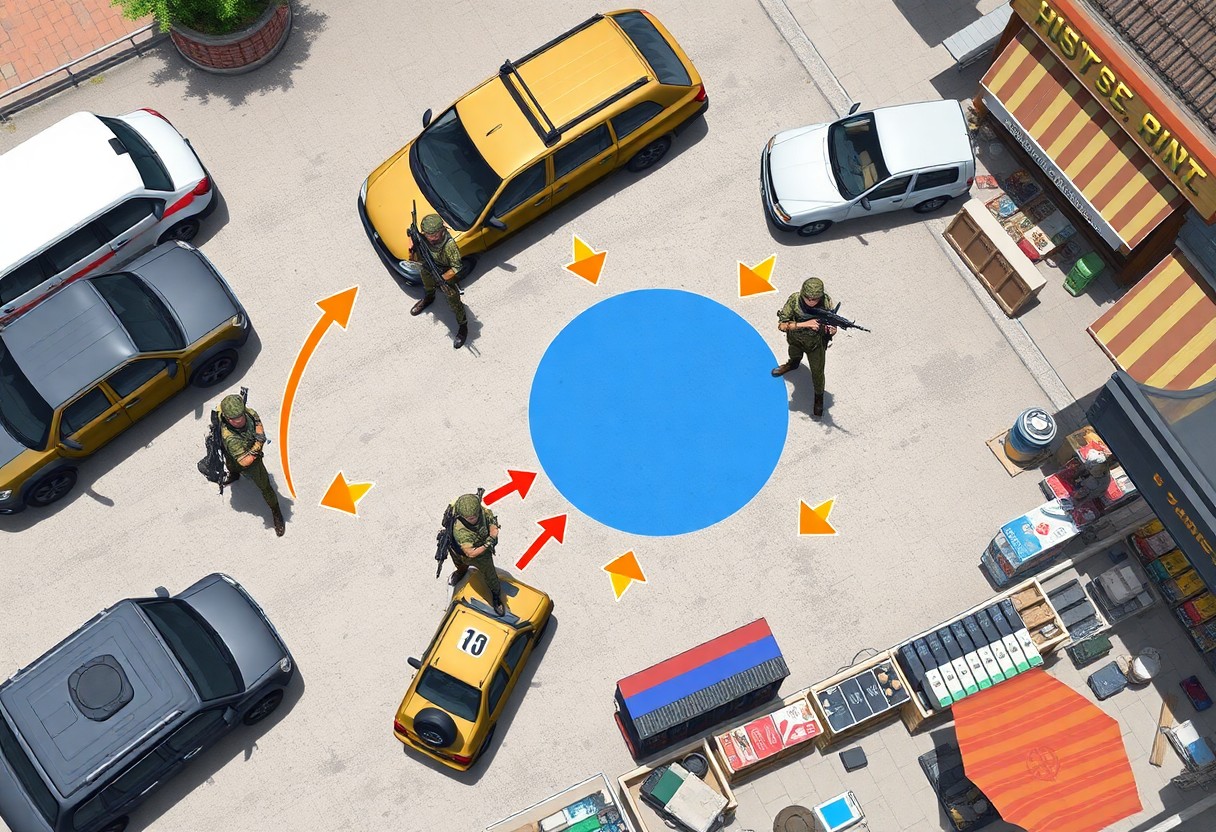
Rotation strategies in PUBG directly impact team positioning and survival. Understanding these patterns and how they interact with prop markets can provide insights into both gameplay tactics and economic dynamics, important for competitive advancement in the game.
PUBG Team Rotation Patterns and Prop Markets
Defining Macro-Game Logic and Zone Pathfinding
Understanding macro-game logic is vital for effective team rotations. Players must assess the safe zones and anticipate enemy movements while prioritizing optimal pathways. Awareness of the shrinking play area influences strategic decisions, driving teams to either hold positions or reposition to secure better terrain.
Zone pathfinding relies heavily on triangulating player locations and remaining zones. Efficient routing can minimize exposure to enemy fire and enhance overall team survivability. Players with a keen sense of game dynamics often predict the most traveled paths, allowing them to outmaneuver opponents effectively.
Vehicle Prioritization and Timing as Performance Indicators
Choosing the right vehicle can dictate engagement outcomes in competitive scenarios. Teams that prioritize versatile vehicles not only improve mobility but also gain advantages in positioning. Timing your vehicle use also plays a critical role; early usage may expose teams, whereas late-game deployment can surprise opponents.
Vehicle choice and timing directly impact a team’s performance. Fast, agile vehicles allow for rapid repositioning, vital for flanking or disengagement. Additionally, synchronization in vehicle usage among teammates can create tactical advantages, such as quick escapes or coordinated assaults, making it a primary focus in high-stakes matches.
Classification of Strategic Rotation Patterns
Aggressive Edge-Play: High-Risk Engagement and Kill Potential
Aggressive edge-play focuses on teams engaging enemies at the perimeter of the play zone, maximizing kill potential while minimizing exposure. This strategy often leads to high-risk scenarios where players must make quick decisions about fights and positioning.
Center-Circle Hard-Shifting and Compound Dominance
Center-circle hard-shifting emphasizes positioning in the most favorable zones to control vital compounds and chokepoints. Teams adopting this pattern aim to secure high-ground locations for strategic advantage and visibility.
Utilizing terrain effectively can lead to overwhelming dominance over rivals. Compounds become strongholds, allowing teams to defend against incoming threats while stockpiling resources to outlast opponents.
Focusing on center-circle hard-shifting requires an understanding of the terrain and enemy movements. Optimal positioning allows teams to dictate engagements, preferring to fight on their terms. Securing pivotal compounds enhances control significantly, providing cover and sightlines to monitor enemy rotations and capitalize on vulnerabilities.
Map-Specific Rotation Dynamics and Geographical Constraints
Erangel: Bridge Control and Open-Field Vulnerabilities
Bridges on Erangel provide critical chokepoints where teams can establish dominance. Controlling these structures forces enemies into predictable paths, often leading to ambush opportunities. Awareness of enemy movements across bridges can enhance a team’s strategic positioning and resource management.
Open fields, however, create significant vulnerabilities. Traveling through these areas can expose teams to sniper fire and flanking maneuvers, increasing the chances of being eliminated. Effective rotation requires careful planning and coordination to mitigate these risks.
Miramar: Terrain Utilization and Ridge-Line Navigation
Miramar’s varied terrain offers numerous advantages for teams adept at utilizing its features. High ridges provide elevation that enhances visibility and protection, allowing teams to survey vast areas below. Mastering this terrain is vital for both offensive and defensive strategies.
Teams can also exploit valleys and dips for cover when rotating between zones. Recognizing the natural advantages presented by the map’s topography can lead to successful engagements and strategic withdrawals, minimizing exposure to enemy fire.
Focusing on the intricacies of ridge-line navigation is paramount for optimizing team rotations. Properly utilizing these elevated locations not only enhances attack strategies but also provides escape routes when under fire. Teams can engage opponents while maintaining high ground, effectively controlling the flow of battles as they rotate between zones.
Theoretical Framework of Prop Markets in Esports
Player-Specific Props: Total Kills and Survival Duration
Total kills and survival duration serve as primary metrics in the prop markets, offering insights into player performance. Betting on specific player outcomes allows fans to engage deeply with individual matches, enhancing the viewing experience.
Analyzing these metrics reveals patterns in player behavior and skills, indicating which players are likely to excel. Bettors often focus on high-kill players or those known for longevity in matches, which directly influences market dynamics.
Team-Based Metrics: Placement Points and Circle Dominance
Placement points and circle dominance are pivotal for understanding team performance in PUBG. Betting strategies often hinge on how well a team can secure favorable positions and outlast opponents.
Evaluating team positioning within the shrinking play area allows bettors to predict outcomes based on historical data and current match conditions, shaping prop bets accordingly.
Circle dominance reflects a team’s ability to control vital zones, significantly affecting their potential success. Teams with a history of strong positioning tend to attract more prop interest, influencing market trends in betting on placement points.
Market Volatility During Early versus Late Game Phases
Market dynamics shift markedly between early and late game phases. Early game volatility arises from high uncertainty regarding team strategies and individual performances, often leading to unpredictable betting trends.
As matches progress to the late game, data becomes clearer, stabilizing betting behaviors. Teams that survive longer typically see their prop values increase, creating a contrasting market environment driven by confidence and established performance metrics.
Early game unpredictability often results in fluctuating odds, as teams establish their strategies. Late-game scenarios lead to a more settled market, reflecting bettor confidence in established team performance and survival capabilities.
PUBG Team Rotation Patterns and Prop Markets
Impact of Rotation Speed on Top-Finish Placement Odds
Speed of rotation heavily influences placement odds in PUBG. Teams that rotate quickly can position themselves in advantageous zones, often leading to higher finish placements. This strategic movement creates windows of opportunity to engage opponents or evade confrontations.
Calculated rotations allow squads to anticipate the activity of opponents, improving their odds for a top finish. As teams optimize their gameplay, the correlation between rotation efficacy and placement becomes increasingly evident in betting markets.
How Rotation Conflicts Influence Over/Under Kill Markets
Conflicts during rotations can drastically alter kill counts in a match. When multiple teams encounter each other while repositioning, the likelihood of significant engagements increases, affecting over/under kill bets. Bettors must analyze rotation patterns to gauge potential chaos on the battlefield.
Proactive teams often exploit rotation conflicts, leading to higher kill counts, thus impacting the betting lines. Understanding these dynamics gives bettors an edge when placing over/under wagers.
Anticipating conflicts during rotations requires careful observation of team movements and patterns. Any shifts in rotation routes or timing can signal increased likelihood of engagements. This understanding provides bettors an vital resource when evaluating over/under kill prop markets, influencing their betting strategies effectively.
Predictive Modeling for Market Optimization
Utilizing Heat Maps to Forecast Circle Outcomes
Heat maps provide a visual representation of player density and predict the most likely circle outcomes in PUBG. These visuals analyze historical data to pinpoint high-value areas where players tend to gather, enabling teams to optimize their rotations and tactical positioning.
Incorporating real-time updates enhances the predictive capabilities of heat maps. This dynamic approach allows teams to adjust strategies as circle shifts occur, ultimately securing advantageous positions before competitors can react.
Identifying Value in Mid-Game Positional Shifts
Mid-game rotations often determine the success of end-game strategies. Identifying optimal positional shifts during this phase can reveal unexploited areas, where teams gain a tactical advantage over opponents. Teams should focus on these shifts to control critical zones.
Positioning around predicted circle movements results in effective zone control and resources availability. Mid-game strategies, therefore, should involve analyzing potential entry points and ambush opportunities to outmaneuver rivals and establish dominance in key areas.
Identifying positional shifts requires a blend of real-time analysis and historical context. Tracking player movement across maps helps teams understand rotation patterns. By recognizing where other players are heading, teams can anticipate threats and capitalize on underutilized locations that provide significant strategic advantages.
Risk Assessment of Late-Game High-Density Rotations
High-density rotations in late-game scenarios heighten the risk of engagements with multiple teams. Assessing these risks involves analyzing player positions and potential threats that emerge as teams converge on shrinking zones. Strategic planning is necessary.
Utilizing data from previous matches allows teams to judge when to rotate. Understanding the dynamics of player behavior in late-game settings can mitigate the risk of unfavorable encounters and maximize survival chances.
Assessing risks involves not only evaluating direct threats but also predicting enemy actions based on statistical patterns. By understanding common strategies employed by competing teams during high-density rotations, a proactive approach to engagement can be developed, improving overall survival rates through informed decision-making.
Statistical Significance of Drop Spots on Rotation Success
Drop spots heavily influence a team’s rotation success rate. Analyzing landing zones provides insight into resource availability and potential engagement scenarios. Certain drop locations statistically correlate with higher success rates in critical mid and late-game phases.
Data on loot density, player traffic, and historical win rates from specific drop spots helps teams make informed decisions about their landing strategies. Effective drop spot selection can set the tone for the entire match, impacting both early-game resource acquisition and long-term survival.
Success rates from various drop spots can inform a team’s overall strategy. Analyzing player behaviors, engagement patterns, and loot dynamics helps establish a direct correlation between initial landing locations and performance outcomes, enabling teams to refine their tactics for optimal efficiency in rotations.
Final Words
Presently, PUBG team rotation patterns reflect dynamic strategies that can shift outcomes in competitive play. Teams analyze map positions and player movements to optimize their rotations, ensuring safety and strategic advantage. Understanding these patterns is necessary for success in high-stakes matches.
The prop market in PUBG plays a significant role in influencing team strategies. Availability and positioning of props can determine tactical choices, impacting engagement and survival rates. Awareness of both rotation patterns and prop distribution is critical for professionals aiming for peak performance in the game.