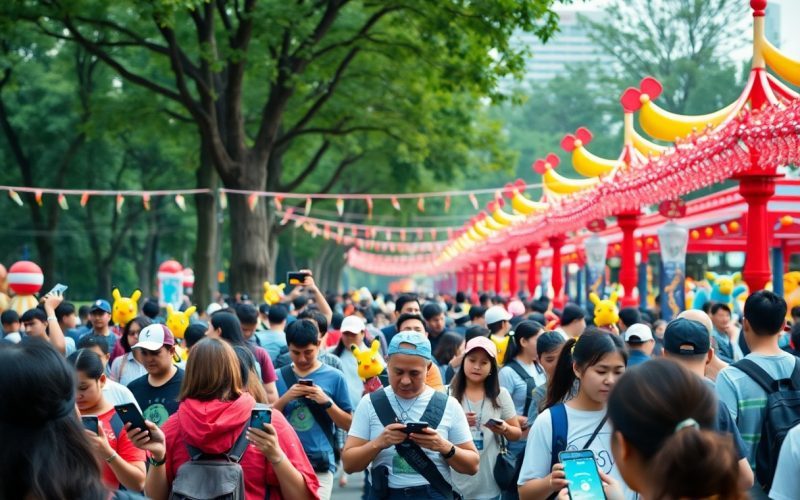




Pokémon battles have always been a fundamental aspect of the Pokémon franchise, and in Pokémon Go, players around the globe engage in thrilling competitions to test their skills and strategies. However, a looming concern among players is the integrity of the game’s player-versus-player (PvP) economy. As the competitive landscape evolves, insiders may be manipulating key aspects, creating an uneven playing field that benefits a select few while leaving others at a disadvantage.
At the heart of Pokémon Go’s PvP system lies the concept of battling with skilled trainers in various formats such as Great League, Ultra League, and Master League. The game’s mechanics allow players to utilize different Pokémon with varying levels of combat power, move sets, and special abilities. While this system provides ample opportunities for fun and competition, it also opens the door to potential exploitation by insiders who may have access to privileged information or resources that average players do not.
One of the primary concerns highlighted by the community is the accessibility of certain Pokémon and resources. Some players have demonstrated a disproportionate ability to obtain rare Pokémon or high IV (Individual Value) creatures, which are vital for maximizing battle potential. Insiders are often able to manipulate trades, access exclusive events, or amass in-game resources in ways that standard players cannot. This raises questions about the fairness of the competition, as those with greater insider advantages are more likely to dominate the rankings and economically benefit from their successes.
Furthermore, the structured rewards system plays a significant role in perpetuating this economic imbalance. Players earn stardust, rare candy, and other valuable items after participating in battles and tournaments. However, seasoned insiders often know which battles yield more rewards or have a better chance at securing rare Pokémon, enabling them to earn resources significantly faster than other players. As a result, these insiders can upgrade their Pokémon more efficiently, thus maintaining a cycle of success that is hard for casual players to break into.
The disparity in competition extends beyond individual trainers. Raids and special events often cater to the more knowledgeable and connected players, often denying opportunities to the less informed. For instance, certain invitations to exclusive events or raids with rare Pokémon can be leaked or shared within certain circles, resulting in a community that is fracturing along lines of visibility and privilege.
In response to these inequities, players are voicing their concerns on various platforms, demanding transparency and accountability from the developers at Niantic. Community-led initiatives are also forming to level the playing field by sharing information, strategies, and tips to help players optimize their chances in battle. While the game was designed for enjoyment, maintaining a fair and equitable environment remains necessary for sustaining player interest and community engagement.
To summarize, while Pokémon Go thrives on its community-driven, competitive elements, the underlying PvP economy appears to be rigged in favor of a select few insider players. As the game’s landscape continues to evolve, it will be imperative for developers to address these concerns, ensuring equal access and opportunity for all players to compete fairly.