






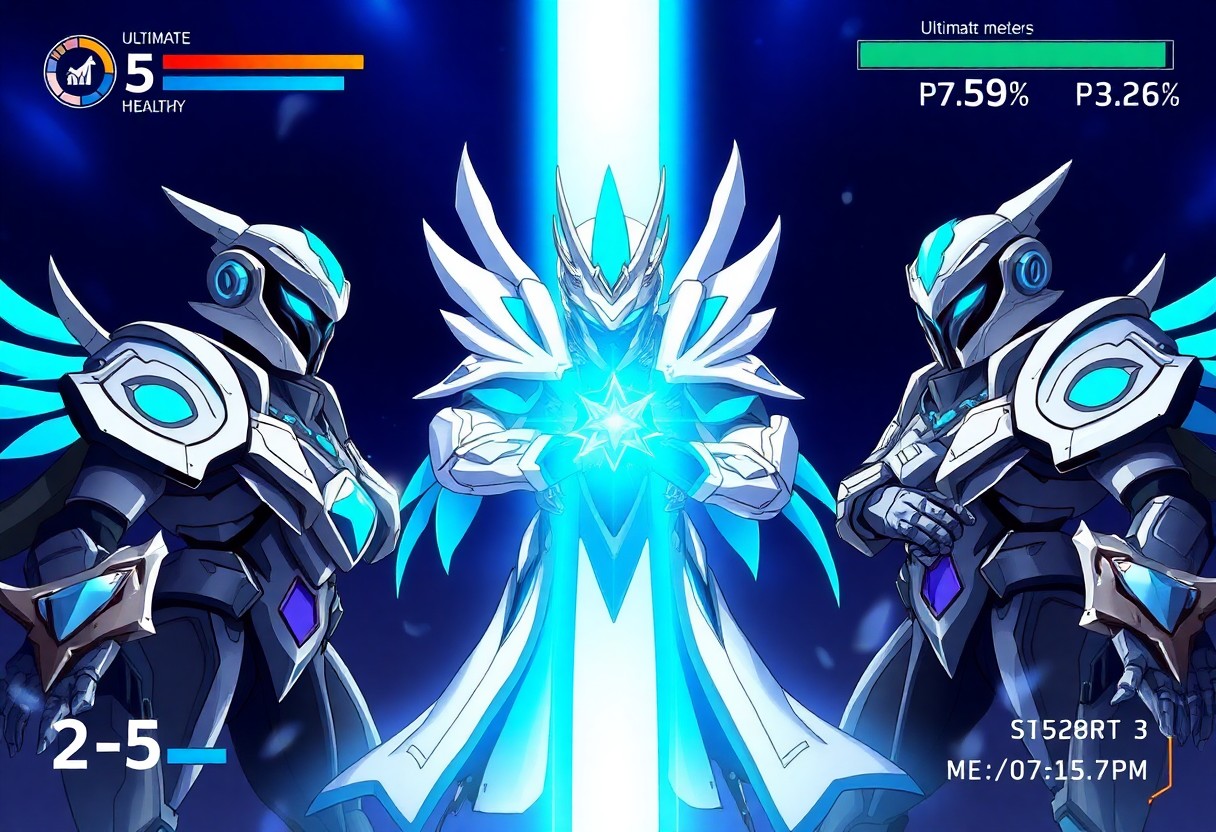
Over the course of competitive play, the support role in Overwatch greatly influences match outcomes by enabling team survivability and strategic positioning. An effective support player can turn the tide, making their presence important for achieving victory and improving match spreads significantly.
Defining Support Agency in the Modern Overwatch Meta
Transitioning from Passive Healing to Active Playmaking
Support heroes have evolved beyond mere healers, embracing roles that require strategic positioning and proactive engagement. Players now integrate damage-dealing abilities and crowd control to influence opponents directly, shifting the dynamics of team fights. This transition invites creative strategies, allowing supports to create opportunities for their teammates and capitalize on enemy mistakes.
Active playmaking enhances the overall impact of support players, making them central figures in combat scenarios. Teams thrive when supports assert control over engagements, dictating the tempo of fights and enabling aggressive plays that can turn the tide. This evolution marks a significant change in how teams approach coordinated strategies, emphasizing versatility within the support role.
The Impact of Support Survival Rates on Team Longevity
Survival rates for support heroes directly influence a team’s effectiveness throughout a match. Higher survival rates lead to sustained healing output and utility, which in turn improves the team’s chances of maintaining pressure on objectives. When supports remain alive longer, they can consistently empower their teammates and execute coordinated strategies with greater efficacy.
Support survival becomes paramount, especially in extended engagements, where consistent healing can outlast opposing damage. Teams that prioritize support positioning often find themselves with a more resilient frontline, allowing them to withstand enemy assaults. Thus, making individual skill and awareness in positioning imperative elements for success in the current meta, ultimately determining match outcomes.
Quantitative Analysis of Support Contributions to Point Spreads
Correlation Between Support Eliminations and Win Probability
Support players, often perceived as less impactful, can significantly influence match outcomes through eliminations. Data indicates that higher support eliminations correlate positively with win probability. This relationship reveals that supports who actively engage in fights not only bolster their team’s kill count but also maintain momentum, affecting overall performance.
Examining various matches, it becomes evident that effective support strategies lead to increased eliminations. Success in these engagements translates into better resource allocation and positioning, which directly impacts the odds in favor of a team. Teams that prioritize high-support eliminations often outperform their opponents in critical moments.
Measuring Damage Amplification as a Match-Defining Metric
Damage amplification by support heroes plays a pivotal role in determining match outcomes. The ability to enhance teammates’ damage output can swing engagements in favor of a team, making it a determinant factor in competitive play. Statistical analysis spots a direct link between effective amplification and win rates.
Focusing on damage amplification metrics reveals that supports like Baptiste or Zenyatta can alter the tide of battle instantly. Teams that effectively utilize these supports tend to dominate due to the enhanced damage they provide, allowing for quicker eliminations and securing objectives more efficiently.
Damage amplification is not only about raw numbers; the timing of when it’s applied can be crucial. Support players who recognize key moments in engagements to activate their abilities often create opportunities for their teammates to capitalize on enemy vulnerabilities. This proactive approach can decisively impact match dynamics, making it a vital metric for assessing overall support contributions.
Defensive Utility and Its Role in Mitigating Opponent Momentum
Neutralizing Ultimate Investments with Support Cooldowns
Support heroes possess abilities that can effectively counteract opponents’ ultimate charges. By timing cooldowns strategically, a well-placed ability can thwart an enemy team’s momentum as they commit to aggressive plays. These interactions can turn the tide, transforming a near-certain team wipe into a missed opportunity for the opposition.
Utilizing healing or defensive abilities right before an enemy’s ultimate lands creates space for team members. This tactic not only minimizes damage but also disrupts the psychological investment of the opposing players, pushing them to reconsider their strategies mid-game.
The Value of Targeted Damage Mitigation in High-Stakes Engagements
Targeted damage mitigation directly impacts critical moments in gameplay, allowing teams to survive onslaughts they otherwise wouldn’t withstand. Providing shields and heals during pivotal engagements can maintain offensive pressure while denying opponents the satisfaction of securing eliminations.
This targeted approach requires precise communication and timing to be effective. Teams that efficiently coordinate these efforts can outlast opponents during high-pressure scenarios, leading to advantageous trades or securing map objectives.
In high-stakes situations, the presence of defensive support can create significant swings in momentum. Timely application of damage mitigation can absorb critical hits, allowing teammates to focus on aggressing the enemy team. Ultimately, support heroes become the backbone of any successful squad, especially when stakes are at their highest and a single misstep can cost the match. Their ability to keep key players alive during tense moments defines the overall outcome of engagements that may decide the game.
Influence of Support Synergy on Tank and DPS Efficiency
Resource Management and the Enablement of Aggressive Frontlines
Effective resource management by support players can significantly enhance the tanks’ and DPS’s capabilities, allowing them to push aggressively. Healing and shields from supports directly correlate with the endurance of frontlines, giving tanks the confidence to engage opponents without fear of quick elimination.
Supports must also prioritize their abilities efficiently, whether through healing over time or burst healing. This approach allows for calculated aggression, enabling tanks and DPS to capitalize on enemy positioning and create openings for advantageous plays.
Pocketing Strategies and Their Effect on Kill-to-Death Ratios
Utilizing pocketing strategies can dramatically improve a player’s kill-to-death ratio by providing focused healing and support. When a support player concentrates on a single DPS or tank, they can maintain that player’s survivability, allowing for extended engagements and higher damage output.
This targeted support fosters an environment where aggressive flanking and pushes become feasible. As a result, the pocketed player not only secures more kills but also contributes to a higher overall team effectiveness, allowing match outcomes to pivot on well-executed pocket strategies.
Pocketing strategies require precise timing and communication between support and the designated player. When executed well, this synergy leads to a stark increase in offensive potential. Players who receive consistent healing can take more risks, often leading to more kills while minimizing their chances of death. Balancing this relationship is crucial for maximizing effectiveness in competitive play.
Meta Shifts and the Volatility of Match Projections
Historical Patch Impact on Support-Centric Team Compositions
Changes in patch notes frequently redefine the role of support heroes in Overwatch. Historical updates have introduced new abilities and balance changes that directly affect their viability within team compositions. Numerous patches have shifted the meta toward support-heavy strategies, altering how teams engage and execute strategies.
Team compositions have evolved as developers fine-tuned both DPS and tank heroes, often leaving support as a pivotal element. The rise or fall of specific support characters dictates how teams form around them, creating a ripple effect that impacts match projections significantly.
The Support Gap as a Primary Indicator of Match Upsets
Analysis consistently shows that disparities in support performance can predict match outcomes. When one team boasts a significantly stronger support line, the chances of an upset increase dramatically. This gap can manifest through healing output, utility effectiveness, or ultimate management, influencing team dynamics directly.
Examinations of past tournaments reveal that teams with well-performing supports often dominate, while those lacking in that area struggle. Comparatively, identifying the support gap not only sheds light on current matchups but also highlights the evolving strategies that teams must adopt to stay competitive.
Advanced Metrics for Evaluating Support Impact
- Healing Output
- Damage Mitigation
- Objective Control Time
- Ultimate Charge Generation
- Player Coordination
Healing-to-Damage Ratios and Objective Time Correlation
Analyzing the healing-to-damage ratios offers insights into a support player’s effectiveness. Higher ratios typically indicate a player who prioritizes team survival while still contributing to overall damage output.
Objective time spent contributes to assessing performance. Correlating healing with time spent on objectives highlights how supports can influence match outcomes through strategic positioning and timely heals.
Evaluating Ultimate Usage Efficiency and Timing
Ultimate abilities hold immense potential for turning the tide of a match. Evaluating their usage includes examining when and how effectively these abilities are deployed. Timing can mean the difference between a successful teamfight and a lost opportunity.
Understanding ultimate efficiency also involves assessing synergy with teammates’ abilities. A well-coordinated ultimate use can amplify damage or healing moments, showcasing the support’s strategic contribution to the team’s success.
Evaluating Ultimate Usage Efficiency and Timing
Aligning ultimate usage with team compositions and enemy ultimates is vital. Supports must gauge not only their own charge rates but also the flow of the game, ensuring that their ultimates have maximum impact. Properly executed, these moments can dramatically shift the momentum in favor of the team.
Conclusion
Considering all points, the support role in Overwatch greatly influences match outcomes through optimal team coordination and resource management. Effective healing and utility applications enable front-line players to sustain pressure, leading to successful engagements.
The ability of support characters to counter enemy strategies directly impacts the flow of the game. Their decisions can shift momentum, make critical saves, and turn the tide in tightly contested matches. A skilled support player is integral to maximizing a team’s potential and securing victory.