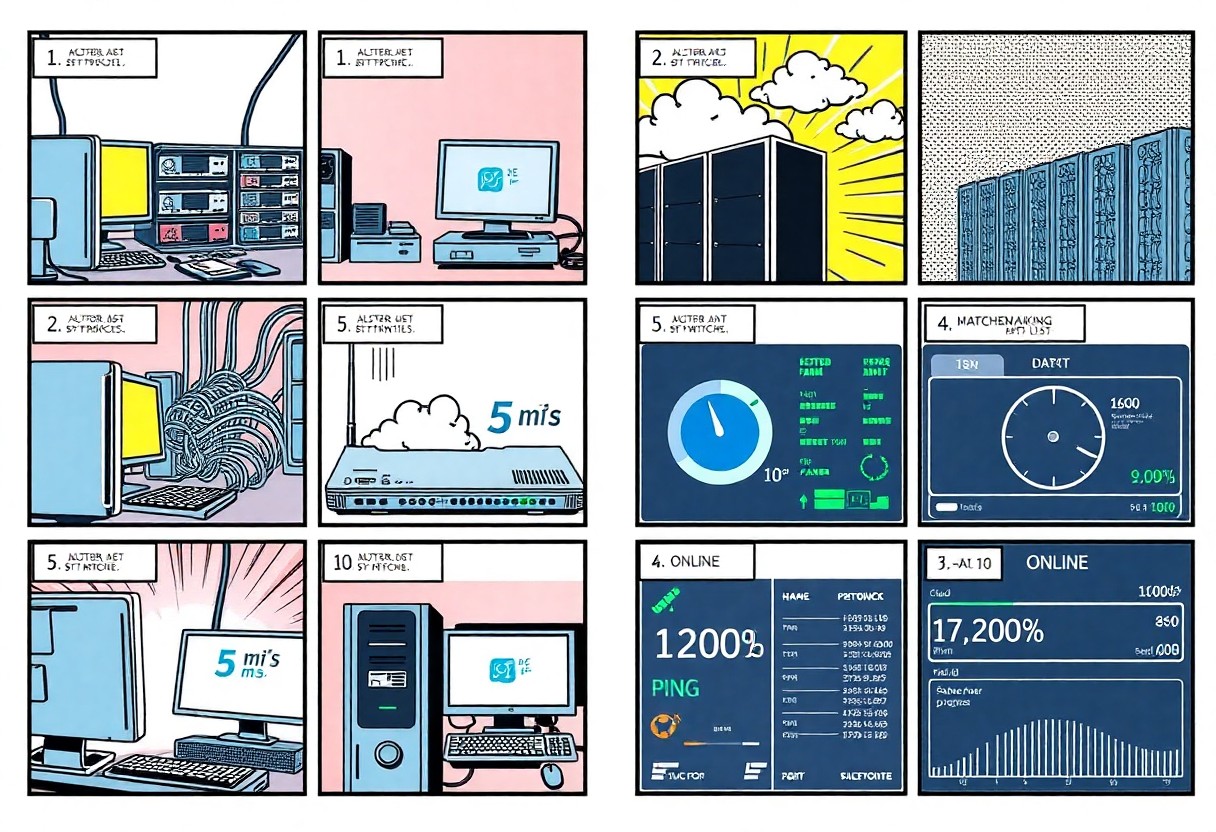
Many gamers recognize distinct experiences when choosing between online and LAN play. This post examines ten significant differences that affect gameplay, connectivity, and player interaction, providing insights for those deciding which mode suits their gaming style best.
Connection Latency and Ping
LAN Offers Zero Lag
LAN gaming operates on a local network, ensuring immediate data transfer between devices. This proximity results in minimal to no latency, allowing players to react quickly and without delay. The stability of a dedicated connection eliminates the interference often seen in broader internet traffic.
Gameplay in LAN settings often feels smoother and more responsive. Players experience true timing, creating an environment ideal for competitive gaming where every millisecond counts. The absence of external factors guarantees a consistent performance across all participants.
Online Has Network Delay
Online gaming introduces inherent latency due to various factors such as distance, server load, and network traffic. Each online action requires data to travel to the server and back, increasing the potential for delays. The variability of internet connections further compounds these delays.
Factors contributing to network delay include server response times, routing complexities, and the quality of the player’s internet connection. While many services strive to optimize data speed, fluctuations can significantly impact gameplay experience, resulting in noticeable lags, especially in fast-paced scenarios. Understanding these delays highlights why LAN gaming is preferred for competitive matches.
Physical Proximity and Presence
LAN Requires Being Together
LAN gaming necessitates physical presence, bringing players into a shared space. This setup fosters social interaction, creating an atmosphere of camaraderie. Players often experience enhanced communication and teamwork, developing friendships in a way that online play seldom replicates.
Online Allows Remote Play
Online gaming enables players to connect from various locations, breaking geographical barriers. This accessibility allows friends and families to engage in gameplay without the need for physical proximity, broadening the player base. Communication methods such as voice chat or messaging enhance the online experience, promoting interaction even across distances.
Remote play offers the convenience of participating in gaming sessions regardless of location. Players can easily join games with friends or strangers worldwide, creating diverse gaming communities. This flexibility accommodates busy schedules and varying time zones, making it appealing for many. The digital environment also adapts to include a wider range of gaming styles and preferences, catering to every taste.
Internet Connection Necessity
LAN Works Without Internet
LAN play can operate entirely offline, allowing players to connect through a local network without needing internet access. This setup encourages a more immediate, personal gaming experience among participants in close proximity. Many LAN events focus on fostering community interaction, often leading to stronger camaraderie among players.
Games designed for LAN play often include features that accommodate local connections, such as split-screen options and system link capabilities. This reduces reliance on external services, making LAN a practical choice for gaming parties and tournaments.
Online Requires Active Web
Online gaming necessitates a stable internet connection to access servers and play with others across various locations. Without an active web connection, players cannot join or host online matches. This dependency shapes the gaming experience, introducing elements like matchmaking and online leaderboards, which enhance competition.
Online platforms often feature updates, downloadable content, and community events. The requirement for continuous connectivity also necessitates a reliable internet speed, directly impacting the gameplay experience. Connections that are slow or unstable can lead to lag and disconnection, compromising the enjoyment of online play.
Security and Cheating Risks
LAN Prevents External Hacks
LAN gaming provides a secure environment by limiting connections to players within the same network. This isolation reduces exposure to online threats, as the lack of external servers minimizes potential entry points for hackers. Players can enjoy games without the fear of remote attacks or unauthorized access.
Private networks not only limit the risk of hacking but also discourage cheating through external software. Players are less likely to encounter modified clients or hacks, leading to a more level playing field and enhancing the overall gaming experience.
Online Faces Software Threats
Online gaming introduces multiple software vulnerabilities, as players connect through the internet. Various cheats and hacks can be deployed by malicious users, compromising gameplay integrity. Detection systems must continuously adapt to emerging threats, making it a constant battle against software exploitation.
Common threats include aimbots, wallhacks, and other cheating programs that can severely undermine fairness in online games. These tools often circulate among players, leading to an ever-evolving cat-and-mouse game between game developers and cheaters. As online games attract larger audiences, the incentive for cheating and hacking increases, necessitating heightened security measures and vigilant monitoring.
Server Control and Management
LAN allows local hosting
LAN gaming enables players to host servers directly on their network. This setup provides complete control over server settings, mods, and gameplay experiences. Players can easily manage server resources and performance, adapting to their needs for a tailored experience.
In a LAN environment, latency is minimized, contributing to smoother gameplay. Players can connect without the delays often associated with online play, as data transfers occur over a localized network. Dedicated hardware can enhance performance, but players must maintain their servers for optimal operation.
Online relies on providers
Online gaming depends on third-party servers managed by service providers. Players connect to these external servers, where companies control settings, stability, and security. This setup can limit customization and demands a strong, stable internet connection for the best experience.
Provider-hosted servers may offer scalability and maintenance that players can’t achieve with LAN setups. However, reliance on internet service can introduce latency issues and potential downtime beyond player control. Game-specific features and updates are often managed by these providers, which can streamline experiences but may also create restrictions based on their policies and infrastructure.
Global Player Accessibility
Online Connects the World
Online gaming allows players from diverse backgrounds and locations to connect effortlessly. With just an internet connection, individuals can join friends or compete against others globally, breaking geographical barriers. This accessibility leads to enriched gaming experiences and community building across continents.
LAN Limits Nearby Friends
Local Area Network (LAN) gaming restricts participation to nearby players, typically requiring everyone to be physically present. This invites challenges in coordinating schedules and travel, making it less versatile than online play. Limited reach confines the social interaction to a smaller group.
LAN setups often require more planning, as players need to gather in a single location with necessary hardware. This physical attendance can hinder casual play, particularly when busy lives complicate logistics. The focus on friends nearby can be enjoyable but misses the thrill of meeting gamers worldwide.
Hardware and Cable Requirements
LAN Needs Physical Switches
LAN gaming requires an established network where players connect via a physical switch. This switch acts as a hub, allowing multiple devices to communicate efficiently. Each participant must connect their device using Ethernet cables, ensuring minimum latency and maximum speed.
Choosing the right switch is important for larger gaming setups. Options range from basic 5-port switches to advanced switches that support multiple bandwidths and features, such as Quality of Service (QoS) for prioritizing gaming traffic.
Online Uses Standard Routers
Online gaming typically requires a standard router for connecting devices to the internet. This router serves as the gateway to online servers, allowing players to join games hosted elsewhere. A stable and fast broadband connection is crucial for smooth gameplay, as it minimizes lag and packet loss.
Standard routers come equipped with features like NAT (Network Address Translation) and DHCP (Dynamic Host Configuration Protocol), which manage IP assignments for users. While many modern routers offer dual-band or tri-band capabilities for improved performance, gaming-specific routers might include optimizations tailored for online gaming traffic.

Network Stability and Jitter
LAN Eliminates Packet Loss
LAN connections provide a stable environment for gaming, minimizing packet loss significantly. The direct wired connection ensures that data travels quickly with minimal interruptions, allowing for real-time feedback during gameplay. This stability enhances the overall experience, making LAN play more reliable for competitive settings.
This absence of packet loss protects against lag spikes and disconnections that can frustrate gamers. LAN setups often include lower latency, ensuring that players have precise control, which is especially important in fast-paced games.
Online Suffers from Interference
Online gaming often encounters interference from various sources, leading to inconsistent performance. Factors such as distance from the server, network congestion, and varying internet speeds can all contribute to increased latency. This instability may lead to frustrating lag and jitter, affecting gameplay quality.
Interference can manifest in many forms, including Wi-Fi signal disruption from other devices or even weather conditions. These variables create an unpredictable gaming experience, making online play less stable compared to LAN environments. Players frequently find themselves struggling with latency issues that can hinder their enjoyment and performance in games.
Competitive Environment Intensity
LAN Increases Emotional Pressure
LAN events create an intense competitive atmosphere with participants physically present. This proximity amplifies the sense of rivalry, often resulting in heightened emotional stakes. Players absorb the reactions and energy of their opponents and spectators, intensifying every pivotal moment.
The pressure to perform increases significantly in this setting. Facing immediate peer judgment fosters a sense of urgency, impacting decision-making and strategy. Adrenaline surges can lead to both outstanding performances and critical mistakes, illustrating the fine line between triumph and defeat.
Online Offers Casual Comfort
Online play provides a more relaxed setting, allowing participants to compete from the comfort of their homes. This distance often reduces the psychological pressure associated with face-to-face competition. Players can engage without the immediate scrutiny of in-person opponents, which can alleviate stress.
Online environments encourage experimentation with strategies in a less intimidating context. Comfort with one’s setup and surroundings allows gamers to focus more on improving their skills rather than the intensity of competition. Many players find that the lack of physical presence promotes a more relaxed mindset, enabling enjoyable gameplay even in competitive scenarios.
Financial Costs of Participation
LAN Involves Travel Expenses
Participating in LAN events often requires travel, which can lead to significant costs. Attendees must consider transportation, accommodation, and food expenses. These costs accumulate, especially for players traveling long distances or staying for multiple days. Group arrangements or sponsorships may alleviate some financial burdens.
Budgeting for these expenses becomes vital for potential participants. Proximity to events can determine affordability, pushing some to seek local tournaments to minimize costs. Understanding expenses in advance helps players better prepare financially for LAN gaming experiences.
Online Needs Subscription Fees
Online gaming typically requires subscription fees for access to gaming platforms and servers. Services like Xbox Live, PlayStation Plus, and others charge monthly or yearly fees, which can accumulate over time. Players seeking competitive play or exclusive content must factor these costs into their gaming budget.
Subscription models vary, with some offering free trials or bundles with additional services. Evaluating which subscriptions provide the most value is important for gamers investing in online experiences. Optional add-ons, like downloadable content, further enhance costs for dedicated players.
Matchmaking and Lobby Speed
Online Finds Games Fast
Online gaming platforms utilize sophisticated matchmaking algorithms, connecting players quickly based on skill levels and preferences. This efficiency allows gamers to enter matches in a matter of seconds, regardless of their location. Companies invest heavily in server infrastructure, ensuring minimal latency and optimal performance during peak hours.
Dedicated matchmaking services enable players to join games with minimal hassle. Players can simply log in, and within moments, they can find a suitable match, enhancing the gaming experience and keeping engagement high. This rapid setup is a significant advantage of online gameplay.
LAN Requires Manual Setup
LAN gaming involves physical proximity, requiring players to gather in one location. Setting up a LAN game can be time-consuming, often demanding individual configurations or IP address adjustments. Ensuring all devices are connected properly adds layers of complexity that online platforms avoid.
Manual setup for LAN play necessitates additional technical knowledge, particularly for troubleshooting issues like network conflicts or connectivity problems. Players often need to revisit network settings or refine configurations, which can delay the gaming session. Unlike online matchmaking, this method lacks the immediacy that many gamers expect, making it less appealing for casual players.
Privacy and Data Safety
LAN Keeps Data Local
LAN play confines data within a local network, enhancing security. Players communicate directly through connected devices, limiting exposure to outside threats. This localized setup minimizes the risk of data breaches since information doesn’t travel over the internet.
Without external servers, potential vulnerabilities are significantly reduced. The reliance on a local infrastructure means that players have more control over their data, fostering a safer gaming environment.
Online Tracks User Information
Online gaming often requires users to share personal information for account creation. This data can include email addresses, usernames, and in some cases, payment details, making privacy more challenging to maintain. Developers and publishers may collect and analyze player data for various purposes.
Tracking user behavior, online games often generate detailed profiles, which can be used for targeted advertising or in-game enhancements. This data collection raises concerns about user privacy and long-term data management, as players may not always be aware of how their information is utilized.
Many online platforms implement data collection to improve user experience and game performance. While these practices can lead to personalized content, they also provoke concerns related to data security and potential misuse. Players should be aware that their information may be sold or exposed, increasing the importance of reviewing privacy policies before engaging with online games.
Software Version Consistency
LAN Requires Manual Updates
In a Local Area Network (LAN) setup, players must manually ensure that everyone is using the same software version. This process can be time-consuming, particularly if different participants have varying update schedules. Compatibility issues often arise when one player runs an outdated version, leading to potential game crashes or mismatches.
Manual updates require coordination among players to verify and synchronize their game copies. A lack of standardization can fragment the gaming experience, making it necessary for dedicated gamers to frequently check for updates and address any discrepancies in software versions before gameplay.
Online Updates are Automatic
Online gaming platforms typically feature automatic updates, allowing players to access the latest software versions without intervention. This eliminates version inconsistencies, enabling players to jump straight into games without delay. Automatic updates streamline the gaming experience by minimizing setup time and ensuring that all players are on the same page.
Players on online platforms benefit from automatic updates that occur in the background, providing a hassle-free gaming experience. Updates are pushed to players when they connect to the service, so software remains current without requiring manual checks. This feature maintains consistency, reduces the likelihood of technical difficulties, and enhances user engagement by automatically implementing new features and fixes.

Differences between Online and LAN Play Explored in a Top 10
LAN Features Live Crowds
Live crowds create a dynamic atmosphere during LAN events. The energy of in-person spectators can amplify the excitement of matches, turning gameplay into a shared experience. Players often react to the audience’s energy, enhancing the competition’s intensity.
Audience engagement in LAN settings involves real-time reactions, cheers, and boos, which add layers of drama and unpredictability. Face-to-face interactions also encourage spontaneous celebrations and fan involvement, fostering a sense of community among attendees.
Online Uses Digital Streams
Digital streams open up competition to global audiences, allowing viewers from anywhere to engage with the gameplay. Online platforms provide various features like chat options, live commentary, and interactive polls. These tools enhance viewer participation, making online play a more interactive experience.
Streaming platforms often feature chat rooms where fans can discuss matches in real-time, creating a virtual gathering space. High-quality streams enable viewers to enjoy the action without geographical limitations, expanding engagement beyond physical venues. This broad accessibility allows for diverse audience interaction, fostering connections among fans worldwide.
Equipment Portability Factors
- LAN requires physical hardware transport
- Online gaming utilizes existing home setups
- LAN setups often require extensive cabling
- Movement for LAN events can be cumbersome
- Online play allows for consistent environments
LAN Requires Moving Hardware
LAN gaming necessitates transporting multiple PCs or consoles to a specific location. This often means packing gaming hardware, monitors, routers, and other peripherals into vehicles, which adds logistical challenges. Players may also need to set up and take down their equipment multiple times during an event.
This process can become time-consuming and stressful, especially when coordinating with friends or fellow gamers. A well-organized strategy is crucial to ensure all equipment remains functional and accessible at the destination.
Online Stays at Home
Online gaming eliminates the need for any hardware movement since players operate from their own homes. Setups remain untouched, allowing for a more relaxed gaming experience. Players can examine their favorite titles without the hassle of transporting equipment or finding a venue.
The convenience of online play means that gamers have the freedom to customize their setups according to personal preferences. This permanence creates a more comfortable environment, devoid of packing or setup stress, allowing for immediate access to games whenever desired. After logging in, players can instantly engage with their communities and enjoy seamless gameplay without any logistical concerns.
Troubleshooting and Technical Support
LAN needs onsite fixes
LAN setups often require immediate, hands-on troubleshooting. Issues like hardware malfunctions or connectivity problems usually necessitate physical access to the equipment. This means players must be present at the location to diagnose and fix the problem, adding a layer of complexity.
This reliance on physical presence may slow down problem resolution. Technical support may involve checking cables, resetting routers, or configuring network settings on-site, which can take time, especially during peak gaming hours.
Online uses remote patches
Online gaming allows developers to release remote patches, which can fix bugs or enhance performance without requiring player intervention. Problems can be addressed swiftly via updates pushed directly to the game server, ensuring minimal disruption to the gaming experience.
This method streamlines technical support and allows players to enjoy an improved gaming experience without the need for onsite assistance. While remote updates can be convenient, they may occasionally lead to new issues or require additional downloads, which can frustrate some users.
Remote patches in online gaming often include automatic updates that require minimal user input. Players benefit from continuous enhancements and timely fixes without needing to interrupt their gameplay. This system provides developers with the agility to address issues as they arise, improving user experience and maintaining player engagement.
Background Noise and Audio
LAN is physically loud
LAN gatherings often feature a high level of ambient noise, stemming from multiple participants. Conversations, laughter, and the clattering of keyboards create a vibrant, chaotic atmosphere. This communal environment can enhance social interaction but may detract from gameplay focus.
The shared space leads to distractions that can impact performance. Players might find it challenging to concentrate on crucial in-game elements due to the surrounding chatter or competitive banter. Such dynamics contribute to an experience that is both lively and potentially chaotic.
Online allows digital muting
Online gaming offers the advantage of digital muting, allowing players to customize their audio experience. Players can mute background noise, distractions, and other players’ voices, leading to a more focused environment. This control is particularly beneficial during intense gameplay moments.
The ability to mute unwanted sounds fosters a personalized auditory experience. Players can enhance in-game audio, such as sound effects and music, while eliminating distractions from chat or external noises. This control enables a better immersion level and can improve overall gameplay performance.

Game Library and Longevity
LAN Supports Legacy Titles
LAN play allows gamers to enjoy older titles that may no longer be supported online. Many beloved classic games were designed for local multiplayer, making them ideal for LAN setups. Enjoying these games with friends fosters a sense of nostalgia and community.
With the ability to set up a LAN party, players can resurrect forgotten favorites without reliance on online servers. This accessibility to legacy titles ensures a broader gaming experience, allowing players to explore a rich history of video games.
Online Needs Active Servers
Online gaming heavily relies on active servers for functionality. If a game’s servers are shut down, the multiplayer experience is lost. This dependence on server status can limit the longevity of online titles, creating concerns among players who invest in games for long-term use.
Once servers go offline, dedicated communities can struggle to revive the gameplay experience. For many players, this means that once-popular online titles may become obsolete, while LAN-compatible games can continue to thrive in local settings.
Bandwidth and Network Traffic
LAN has dedicated speeds
LAN environments have dedicated speeds that ensure minimal lag. Each device connected to the local network benefits from high-speed connections, often ranging from 100 Mbps to 10 Gbps. This consistency in bandwidth allows for smooth gameplay, especially important for fast-paced games requiring real-time actions.
A stable connection is maintained without interference from outside sources. Local devices communicate over short distances, reducing latency and providing an optimized gaming experience. High-speed LAN setups let players engage without worrying about fluctuations in performance.
Online shares public bandwidth
Online gaming operates over shared public bandwidth, which introduces variability in performance. Internet Service Providers (ISPs) distribute available bandwidth among multiple users, leading to potential congestion, especially during peak hours. This situation can result in latency spikes and packet loss, affecting gameplay and player experience.
Competition for bandwidth among users in a household or geographical area can hinder online performance. With other devices consuming bandwidth, such as streaming services or downloads, gaming may suffer from interruptions. Understanding this aspect highlights the importance of a stable internet connection for optimal online play.
Online gaming inherently involves fluctuations due to shared resources. Disturbances from other users often lead to unpredictable speeds and potential lag. Players might experience less reliability during intense moments, affecting competitive performance. Awareness of these factors can guide gamers in choosing optimal conditions for online play.
Final Words
As a reminder, online and LAN play offer distinct experiences. Online gaming relies on internet connectivity and can introduce latency, while LAN play ensures low latency thanks to direct connections. Players often find LAN matches to be more immersive due to local interaction, while online gaming provides greater accessibility and variety in opponents.
Understanding these differences helps gamers choose the best environment for their preferences. LAN play enhances the social aspect, while online play maximizes convenience and accessibility. Careful consideration of each option can lead to a more satisfying gaming experience.
Q: What are the primary latency differences between online and LAN play?
A: Latency in LAN play is typically lower due to the direct connection between devices, resulting in quicker response times. Online play often experiences higher latency because of data traveling through the internet, which can lead to delays in gameplay.
Q: How does player interaction differ in online versus LAN play?
A: LAN play allows for immediate, face-to-face interaction among players, enhancing communication and teamwork. Online play relies on voice chat or text, which can introduce communication barriers and diminish the social experience.
Q: What are the technical requirements for online play compared to LAN play?
A: Online play requires a stable internet connection, while LAN play mainly needs a local network setup. Bandwidth and network stability significantly affect online gaming quality, whereas LAN setups usually provide a more stable connection with minimal configuration.