








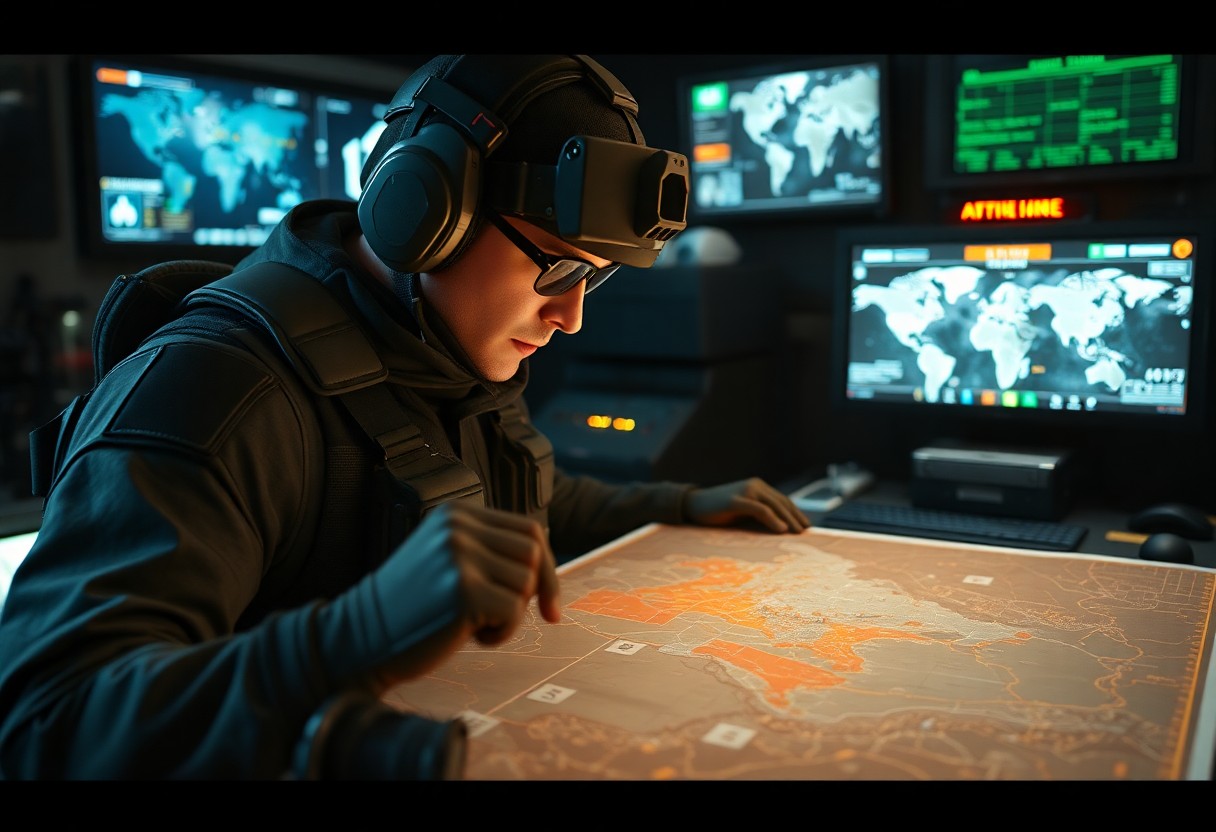
Mastering map knowledge is your strategy to elevate your gameplay in Rainbow Six Siege. Understanding every nook and cranny of each map empowers you to position yourself effectively, anticipate enemy movements, and leverage sightlines to your advantage. Whether you’re defending or attacking, your familiarity with key locations and potential choke points can turn the tide in your favor. In this guide, we’ll explore effective techniques and tips to enhance your map awareness, enabling you to secure more rounds and dominate your opponents.
Understanding the Importance of Map Knowledge
The depth of your understanding of each map in Rainbow Six Siege can significantly influence your performance. In a tactical shooter where positioning, strategy, and teamwork are paramount, being well-versed in the layout of the various maps allows you to make informed decisions quickly. You can navigate efficiently, identify key entry points, and utilize environmental features to your advantage, ultimately leading to more successful rounds and a stronger team dynamic.
Why Map Knowledge is Important for Success
If you want to excel in Rainbow Six Siege, knowing your maps inside and out is non-negotiable. This knowledge not only aids in your personal gameplay but also enhances your contribution to team strategies. By understanding where common enemy positions are and how to navigate your surroundings effectively, you mitigate your chances of being caught off-guard. This awareness allows you to anticipate threats and act proactively rather than reactively, enabling your team to maintain the upper hand during engagements.
The Impact of Map Familiarity on Teamplay
There’s no doubt that familiarity with the map can significantly enhance your team’s ability to communicate and coordinate effectively. When all players understand the map layout, only then can they leverage their collective strengths and strategize based on their positional advantages. This teamwork, coupled with map awareness, enables you and your teammates to execute coordinated strikes or defend key areas more effectively, leading to a better overall performance as a unit.
Teamplay flourishes when each member is confident in their knowledge of the map. You can propose tactical maneuvers like flanking or setting up crossfires that exploit the map’s features. Moreover, when you’re all on the same page regarding your surroundings, it minimizes confusion and reduces mistakes, leading to a smoother, more cohesive approach to both attacking and defending.
Differences Between Attacking and Defending Maps
To maximize your effectiveness in Rainbow Six Siege, you must recognize that maps serve different purposes depending on whether you are attacking or defending. Each side requires a unique tactical mindset. When attacking, you need to spot potential entry points, helpful looting locations, and vantage spots for drones. Conversely, when defending, your focus should be on choke points, fortifying positions, and knowing hiding spots to counter attackers efficiently.
For instance, certain maps may provide strongholds or obstacles that are advantageous for defenders, while others might favor aggressive, mobile attacks. By understanding the specific advantages and limitations of different maps in context to your role—whether on offense or defense—you can fine-tune your strategies accordingly and make the most of your gameplay experience.
Utilizing the In-Game Tools for Map Mastery
All players in Rainbow Six Siege have access to a variety of in-game tools that can significantly enhance your map knowledge and performance. By effectively utilizing these tools, you can gather valuable information about your surroundings, anticipate enemy movements, and eliminate threats with greater efficiency. Understanding how to navigate and utilize these resources can give you the upper hand during matches, allowing you to contribute more meaningfully to your team’s success.
The Role of the Map Overview Screen
Screen time spent looking at the Map Overview can greatly influence your strategy and approach to each round. This tool provides a detailed layout of each playable map, showing entry points, objective locations, and key areas that you need to familiarize yourself with. It’s advisable to routinely check this screen before a match to strengthen your understanding of the map dynamics and your potential routes as an attacker or defender. Take note of common engagement zones, as their knowledge can aid you in making informed decisions during critical moments.
Additionally, the Map Overview allows you to spot potential environmental hazards and strategic positions that can be utilized during gameplay. Zooming in and out can reveal more nuanced details such as breachable walls, hatches, and windows, which are necessary for planning your tactics effectively. By maximizing your time on the overview screen, you can ensure that you approach each round with a solid game plan based on the map’s layout.
Leveraging the Attackers and Defenders’ Gadgets
Clearly, the gadgets available to both attackers and defenders play a vital role in shaping the battlefield. Attackers have tools such as drones, breaching charges, and placement charges, designed to gather intel or breach defenses. Understanding how to use these gadgets effectively means you can create opportunities for your team by exploiting weaknesses in enemy setups. On the other hand, defenders possess gadgets like cameras, barbed wire, and traps, which allow them to monitor and control the flow of the game. Mastery of these gadgets, along with their locations on different maps, will allow you to predict enemy movements and structure your own play appropriately.
Utilizing your gadgets wisely can portray you as a tactical player who can handle various situations. For instance, employing your drones to gain intel before entering an objective can help you avoid ambushes and secure victory. Similarly, placing down traps and barricades at critical points can drastically delay attackers and provide vital information to your team. The strategic use of these gadgets not only enhances your effectivity but can also serve as a learning tool that complements your map knowledge.
How to Use Drones for Gathering Intel
Tools such as drones serve as your eyes on the ground, making them indispensable for gathering intel and maintaining awareness of your surroundings. When playing as an attacker, deploying your drone can provide you with a real-time view of enemy placements and movements, enabling you to plan your approach strategically. Always prioritize scouting for traps and cameras beforehand to minimize your risks during an actual push. An effective way to use your drone is to triangulate the information you gather with your teammates so that they can also make informed decisions based on your findings.
Role-playing your drone correctly can help you scout ahead and relay target information to your team. As you maneuver your drone through the map, consider the layout and what areas are most often occupied by enemies. By keeping an eye on often-defended objective sites or common entry points, you can effectively predict enemy strategies and adapt your gameplay accordingly. Understanding the importance of drones not only enhances your personal gameplay but also elevates your entire team’s tactical cohesion.
Communication and Callouts
Not all rounds can be won by sheer skill alone; effective communication plays a significant role in securing victories in Rainbow Six Siege. When you and your teammates can share information swiftly and clearly, you are better positioned to coordinate strategies, make quick decisions, and adapt to the unpredictable nature of the game. A well-executed strategy often depends on how well team members relay critical information about enemy positions, potential threats, and changes in objectives.
Importance of Effective Team Communication
If you want to elevate your team’s performance, prioritize establishing a culture of open communication. This means being vocal about your actions and intentions while encouraging your teammates to do the same. Whether it’s calling out an enemy’s location, informing about your plans to breach a wall, or notifying others about your health status, every little detail can make a difference in the heat of battle.
Fostering clear communication can also create a more cohesive team dynamic. When you effectively share information and callouts, you help reduce miscommunication and confusion, which can often lead to avoidable mistakes. Establishing a common language through consistent callouts allows each member to understand and react quickly, setting the stage for effective teamwork.
Common Callouts for Popular Maps
Assuming you are submerging into the intricacies of map knowledge, you’ll want to familiarize yourself with common callouts; this will provide you and your team with a strategic advantage. Each map in Rainbow Six Siege has designated areas with specific names, such as “Kitchen” or “Master Bedroom.” Referring to these locations using standardized terminology can streamline communication and ensure that everyone is on the same page.
Focusing on well-known maps, studying and practicing the callouts can greatly enhance your coordination in-game. For instance, on the map Bank, if a teammate spots an enemy in the “Lobby,” they can quickly relay that information to the rest of the team without wasting precious time trying to describe the location. This proficiency not only helps in quick tactical adjustments but also fosters a sense of trust and reliability among team members.
How to Create Your Own Team’s Callout System
Callouts should be tailored to your team’s preferences and play style. Start by discussing with your teammates what areas you think should have specific callouts based on your gameplay experiences. Collaboratively decide on names that make sense to everyone and are easy to remember. It’s important to ensure that everyone feels comfortable using these terms in the heat of the moment.
Team input is imperative when it comes to creating a viable callout system. You might want to test your group’s callouts during practice rounds to see how effective they are in real-time situations. This will provide valuable feedback, allowing you to refine your callout system further. Ensure that your chosen callouts are practical and reflect the unique characteristics of the maps you frequently play.
The Role of Sound in Map Navigation
Unlike many first-person shooters, Rainbow Six Siege places a significant emphasis on sound as a tactical element in gameplay. Sound is often the difference between life and death, making it crucial for you to not only be aware of your surroundings but to master how sound can aid your navigation through the map. By understanding audio cues, you’ll be able to determine enemy positions, locate objectives, and even coordinate with your team more effectively.
Understanding Sound Cues When Moving Around the Map
Now, when you move around the map, every footstep, reload, and door breach produces distinct audio cues. These sounds can give you vital information regarding your opponents’ locations and intentions. For example, demonstrated through sound design, certain surfaces will produce different levels of noise; running on soft surfaces will be quieter than on hard ones. Being aware of this can help you choose your path more wisely – opt for quieter routes when you want to maintain stealth.
Additionally, you should take note of environmental sounds, such as destructible walls or operator-specific gadgets being activated. Each of these sounds contributes to a larger auditory landscape that can inform your strategy. By actively listening to the various sounds around you, you can effectively map out a plan and anticipate threats as they happen.
Using Sound to Predict Enemy Movements
Navigation becomes more sophisticated when you can use sound to predict enemy movements. Sound isn’t just a passive element; it can be an active tool that allows you to determine where enemies are likely headed. Doors opening, windows breaking, or even the subtle sounds of shifting footsteps can all provide actionable insights that you can use to your advantage during a match.
To enhance this aspect of your game, pay attention when you hear the telltale signs of operators moving through the environment. If you hear the sound of someone breaching a wall or reinforcing a surface, you can deduce their location and actions, giving you valuable time to set up your countermeasures or plot your next move. The ability to interpret these sounds in real-time can reshape your approach to each round, making it a vital skill to develop.
How to Manage Your Own Noise Levels
If you want to excel in Rainbow Six Siege, managing your own noise levels is just as important as monitoring your enemies’. Being able to move stealthily can significantly enhance your chances of success. Keep in mind that running and jumping make noise, which can easily alert opponents to your presence. Prioritize walking quietly when you’re near potential enemy locations, especially when you’re not sure of their positions.
Using sound manipulation techniques, such as crouching or slow walking, can vastly improve your stealth. By adopting these quieter movements, you can reduce the risk of revealing your position and create opportunities for surprise engagements. Additionally, using gadgets that help screen out noise, or coordinating with your team to distract enemies can further provide you with the upper hand.
Adapting Strategies Based on Map Knowledge
For players of Rainbow Six Siege, the ability to adapt your strategies based on map knowledge can significantly improve your performance and increase your chances of victory. Knowing the intricacies of each map allows you to make informed decisions tailored to the unique environment of the match. Whether you’re attacking or defending, understanding the layout, sightlines, and potential hiding spots can provide an edge that leads to more successful rounds.
Situational Awareness: Adapting to Changing Circumstances
Some situations in Rainbow Six Siege can shift rapidly, so maintaining situational awareness is vital. This means being mindful not only of the static features of the map but also the dynamic aspects, such as player positions and objectives. Each round demands that you adjust your strategy based on the current state of play. By keeping your ears tuned for audio cues and your eyes on drone feeds or teammate calls, your capacity to adapt becomes sharper.
Some players may find that their natural reflexes kick in when they hear gunfire or spot an enemy, but processing this information and altering your strategy accordingly will set you apart. Utilizing your map knowledge to anticipate where enemies may position themselves can lead to more strategic engagements and advantageous plays. Keeping track of your surroundings allows for seamless transitions between offense and defense, enhancing your team’s overall coordination.
Overcoming Obstacles: When to Avoid Certain Areas
An effective strategy in Rainbow Six Siege includes knowing when to avoid certain areas of the map. Some locations may present high risks with little reward, especially if they are known to be frequent strongholds for the enemy team. By identifying these zones, you can adjust your approach to either reinforce your defenses or launch an attack strategically, reducing the chances of an ambush. Understanding structural weaknesses and likely enemy spawn points allows you to navigate the map more efficiently, avoiding unnecessary firefights.
Knowledge of historical player behavior on different maps can further reinforce your decision-making process. Certain locations may become hotspots where enemies frequently gather, and identifying these trends can inform when to steer clear and when to flank around. Rather than engaging in drawn-out battles in unfavorable terrain, you can instead direct your focus on taking advantageous positions that dictate the flow of engagement.
Predicting Enemy Actions Based on Map Knowledge
Changing your approach based on your knowledge of the map also allows you to predict enemy movements more effectively. By understanding common routes, likely ambush locations, and objective placements, you can anticipate where your opponents are headed. This foresight enables you to set traps or fortify positions in preparation for their arrival, making you a formidable force on the battlefield.
It’s crucial to observe the enemy’s patterns and incorporate that understanding into your strategy. For instance, if you notice that opponents frequently use a specific staircase or doorway, mark that in your mind, so you can prepare accordingly. By staying vigilant and analyzing their behavior, you can exploit weaknesses and capitalize on errors, ultimately enhancing your gameplay experience in Rainbow Six Siege.
Practicing Map Knowledge with Custom Games
After understanding the importance of map knowledge in Rainbow Six Siege, you may wonder how best to acquire and practice it. One of the most effective methods is by utilizing custom games. Custom games offer you a controlled environment where you can familiarize yourself with map layouts, callouts, and various locations without the pressure of a live match. By setting up these games, you can take your time and dissect each area thoroughly, giving you an edge in actual gameplay scenarios.
Setting Up Custom Games to Learn Maps
Any player can easily set up a custom game by navigating to the game mode selection menu and choosing the custom option. Here, you can select any map you wish to focus on and tailor the parameters to suit your practice needs. You could set the round time to unlimited and choose to play as both attackers and defenders, allowing you to explore the unique aspects of each role. Additionally, consider turning off enemy players to eliminate distractions and to concentrate solely on map features and specific strategies.
Effective Drills for Improving Map Familiarity
Learn to adopt effective drills that focus on different aspects of map knowledge. One great exercise is to practice navigating the map while keeping a keen eye on key locations such as bomb sites, spawn points, and important pathways. Set goals for yourself, like moving from one bomb site to another under a specific time limit or attempting to memorize all callouts for different areas. Such targeted drills will make you cognizant of distances, angles, and cover options during real matches.
Familiarity with the maps often leads to quicker reactions and improved decision-making in the heat of the battle. In your custom games, try not only to memorize layout features but also to visualize how you would approach engagements from various positions. Practice using operators with different abilities to understand how they can leverage specific map areas to their advantage. Regularly engaging in these drills will allow you to quickly recall crucial information when you’re in live matches.
Practicing with Friends vs. Solo Play
Setting up custom games with friends can enhance your learning experience significantly. When you play with teammates, you can share insights, compare strategies, and even implement team tactics more efficiently. This collaborative practice allows for effective communication and encourages an environment where you can learn from each other’s strengths and weaknesses, making it easier to adapt your gameplay to suit team dynamics.
A well-rounded practice routine might involve both playing solo and team sessions. Solo play offers you the freedom to focus on your individual skills and map navigation without waiting for others or being influenced by external strategy discussions. Balancing between solo and cooperative sessions allows you to develop your personal understanding while also benefiting from the collective knowledge gained through group play.
Recognizing Common Map Preferences Among Players
Many players have specific tendencies when it comes to choosing operators and strategies based on different maps. Understanding these preferences can provide you with a significant advantage in Rainbow Six Siege, as you can better anticipate enemy movements and counter their playstyle. For instance, certain maps might favor specific operators due to the layout, such as those with many vertical elements where a defender like Jäger can excel. Adapting to these common choices will help optimize your team’s setup and execution during the match.
Popular Strategies and Meta Updates Related to Each Map
Preferences among players can shift over time, particularly as new meta strategies are developed or adjusted following game updates. Each map often showcases its own unique set of strategies that players gravitate towards, which can include favored bomb sites or potential sight lines. Keeping track of these evolving tactics allows you to adapt your gameplay accordingly; for example, if you notice attackers frequently rush a particular site on a map, strategizing your defensive layers to counter that rush will increase your chances of winning rounds.
Furthermore, being aware of the map-specific trends can guide your operator selection and team composition effectively. Familiarizing yourself with new updates to maps can also help in gaining an edge, as they might alter existing strategies or establish new choke points. By maintaining a close eye on how the meta evolves, you can refine your approach and exploit the weaknesses created by shifting player preferences.
Understanding the Most Common Flanks and Angles
Commonly accessed flanks and angles can significantly influence the outcome of your matches. Flanks are pathways typically used by players to gain an unexpected advantage over enemies, while angles are the vantage points where you can spot and engage opponents without exposing yourself to excessive risk. By learning these vital locations on each map, you can better anticipate enemy movements and effectively cut off routes, reducing enemy options and creating opportunities for your team.
As you explore different maps, take note of where your opponents tend to rotate and the angles they favor while holding defensive positions. This awareness will help you position yourself more advantageously during matches. Not only can you utilize this knowledge for offense, but you can also use it defensively to counter-position yourself against common attacker strategies.
How Player Preferences Can Affect Game Dynamics
On the battlefield, player preferences have a direct impact on how the game unfolds. If you’re aware of your opponents’ typical choices, you can create counter-strategies to exploit their tendencies. For example, if a player consistently chooses a specific operator known for open engagement, you might want to position your team to dominate those engagements or force them into unfavorable situations. Understanding these nuances allows you to shift the dynamics of the match in your favor.
Additionally, player preferences can create a rhythm to the game, affecting how you and your teammates approach various situations. Your choice of operators can signal intent, inform strategy, and influence the tempo of the match. If your team tends to adopt a more aggressive style, it may prompt defenders to make hasty decisions, allowing you to capitalize on their mistakes.
Popular strategies often revolve around how players feel comfortable playing. Knowing your teammates’ tendencies and preferences not only allows you to play off one another’s strengths, but also helps to create a cohesive unit that can outmaneuver and outthink opponents. With strong map knowledge paired with an understanding of how to leverage player preferences, you’ll be well on your way to winning more rounds in Rainbow Six Siege.
Analyzing Map Changes and Updates
Once again, understanding the dynamics of map changes in Rainbow Six Siege can significantly elevate your game. Map updates and patches occur regularly, bringing new challenges and opportunities for players. By paying close attention to these changes, you can better position yourself to capitalize on advantageous new elements and avoid pitfalls that could lead to your team’s downfall. Whether it’s a subtle shift in wall structure or a complete rework of an area, staying informed will give you the upper hand against your opponents.
Staying Informed About Map Patches
Clearly, the first step in mastering map changes is to stay informed about updates and patches. Ubisoft typically announces these changes through patch notes, which examine into everything from minor adjustments to significant overhauls. By regularly checking these announcements, you not only remain aware of the new layouts but also how they impact various operators and strategies. You should make it a habit to review patch notes after every update, as even small tweaks can influence your gameplay and choice of operators.
In addition to official patch notes, following community forums and content creators dedicated to Siege can provide you with further insights. Engaging with discussions about the latest updates on Reddit, YouTube, or Twitch can offer practical tips and strategies that may not be addressed in the patch notes. By gathering diverse perspectives on map changes, you’re equipping yourself to make more informed decisions while playing.
Understanding Why Certain Changes are Made
Changes to maps in Rainbow Six Siege are often made with specific design goals in mind. Developers may alter a layout to balance gameplay, prevent exploitative strategies, or enhance the overall player experience. Understanding the reasoning behind these modifications not only helps in your immediate adaptation but also enables you to anticipate future adjustments. This comprehension can provide layers of depth to your understanding of the game and keep your strategic approach ahead of the curve.
A closer look at why certain features are adjusted or removed can reveal trends in gameplay mechanics that developers want to emphasize. For instance, if an area becomes too defensive or impenetrable, developers may make it easier for attackers by opening new avenues of approach or adding additional windows. This analysis can give you insight into the designers’ focus, allowing you to approach strategies with a more informed mindset.
Adapting Your Strategy After Map Updates
Clearly, being aware of map changes allows you to adjust your strategies accordingly. After a patch, revisit your approach on affected maps. Evaluate if your previously favored tactics remain effective or if new routes and spots have become the norm. This evaluation may lead you to discover new angles for smart ambushes or revise your defensive setups to counter new challenges introduced in the updates. Flexibility in your strategy is vital for capitalizing on new opportunities that come with map patches.
With constant evolution in the game, ensuring that your strategies are adaptable will enhance your chances of winning more rounds. As you become more familiar with the updated layouts and mechanics, you will start to develop fresh tactics that take advantage of the changes. Experimenting with new tactics in casual matches will enable you to refine your strategies before facing off against more competitive opponents, ensuring that you remain one step ahead in the battle for victory.
Map-Specific Operator Choices
Despite the importance of individual skill and teamwork in Rainbow Six Siege, the success of your rounds can often hinge on your understanding of map-specific operator selections. Each map in Siege presents unique layouts, sightlines, and objectives that can influence which operators will thrive in specific scenarios. By tailoring your operator choices to the map you’re playing, you can create significant advantages for yourself and your team.
Choosing Operators Based on Map Layout
On each map, certain operators blend seamlessly with the environment covering various angles, utility spots, and entry points. Familiarizing yourself with the layout allows you to choose operators that can maximize their effectiveness. For instance, operators with strong vertical play options like Ash or Buck can be invaluable on maps featuring multiple levels, enabling you to capitalize on high-ground opportunities. Meanwhile, operators like Jäger or Bandit provide necessary defensive capabilities and can control critical chokepoints, ensuring that your team maintains strong positioning throughout the round.
Strengths and Weaknesses of Key Operators per Map
Little do many players realize that understanding the strengths and weaknesses of operators in the context of specific maps can significantly enhance your gameplay. Operators like Mira are excellent on maps with tight corridors and limited entry points, as they can provide substantial intel and create sightlines for defenders. However, they may struggle in more open maps where mobility becomes key. Conversely, Roamers like Jäger or Vigil can excel in more expansive areas but might not be as effective in tight, enclosed spaces where they can easily be cornered.
Operators such as Sledge or Thermite possess distinct advantages based on the map’s construction materials and sightlines. For example, in maps with destructible walls, Thermite excels at creating new paths for your team to exploit, while Sledge can dismantle vertical barriers to control sightlines effectively. Understanding the nuances of how operators function in relation to specific maps can offer you a critical edge in coordinating tactics with your squad.
How to Diversify Your Operator Pool for Each Map
On your journey to mastering map knowledge, it’s important to diversify your operator pool to accommodate different map dynamics and team strategies. Having a selection of operators who can fulfill multiple roles allows for flexibility and responsiveness during the game. This adaptability not only helps you fit into your team’s strategy but also allows you to counter the operators your enemies choose. For instance, if your opponent relies heavily on barricades, you might want to play operators like Ash or Thermite to disrupt their defenses.
Operator mixes should consider not only the strengths of individual operators but also how they support teamwork. A balanced group with both attackers and defenders allows for strong offensive and defensive strategies, accommodating various map layouts effectively. By practicing a range of operators, you enhance your versatility and can adapt to your teammates’ playstyles and the unique challenges that each map presents.
Operators can also have a significant impact when play styles shift depending on the map you are on. For instance, adapting to particular operators has advantages that can either surprise your opponents or reinforce your team’s strengths. By embracing a diverse operator pool, you remain prepared to switch your role on the fly, ensuring you contribute positively to your team’s overall strategy regardless of the battlefield. Ultimately, adjusting your operator choices based on map layout, key strengths, and weaknesses significantly enhances your chances of winning rounds in Rainbow Six Siege.
Learning From Others: Watching Pro Players
To elevate your understanding of map knowledge in Rainbow Six Siege, you should take the time to watch professional players. Their gameplay often showcases a level of map awareness and strategic thinking that can greatly benefit your own playstyle. By observing how they navigate different maps, you can identify key areas to hold, common sightlines, and optimal paths for both attacking and defending. Your ability to comprehend these subtleties can help you make faster and more informed decisions during your matches.
Studying Pro Gameplay for Map Insights
Even the most seasoned players can glean valuable lessons from professional gameplay. When you watch streams or recordings from elite players, focus on how they utilize the map to their advantage. Take note of where they place their drones, how they gain information, and the routes they take to outmaneuver their opponents. It’s not just about the kills they make but the way they exploit the environment to gain a strategic upper hand. This perspective will help you understand common tactics that you can apply to your own games.
Analyzing Competitive Matches for Tactical Approaches
Tactical nuances in Rainbow Six Siege are often on full display during competitive matches. While watching these games, pay close attention to how professional players set up their defenses or execute their attacks. Look for patterns in their positioning, the operator choices they make, and their approach to certain objectives. These insights can be instrumental in shaping your own strategies as you practice and play more rounds.
Gameplay analysis can reveal how specific operators can be effectively used in different maps, as well as the timing of their abilities. For instance, following when to deploy gadgets or how to utilize certain operators can improve your tactical depth. This way, you will not only enhance your individual gameplay but also contribute to cohesive team strategies, ultimately creating a more effective unit in your matches.
Understanding the Importance of Adaptation in Gameplay
There’s an inherent need for flexibility in your gameplay when you’re gaining insights from pro players. Adapting your strategies based on what you observe can make a significant difference in how you perform. Whether it’s switching operator roles or altering your attack patterns, being able to adjust to your opponents’ moves is crucial for success. The variability that comes with each match means you should always be prepared to pivot your approach as new information surfaces.
From your observations of professional players, you can adopt a mindset that values adaptation and improvisation. Learning when to stick to a plan and when to break away from it is key to becoming a resilient player. By internalizing these dynamic tactics, you will develop the tools necessary to outsmart your opponents, thus increasing your chances of winning more rounds in Rainbow Six Siege.
Creating a Personal Map Knowledge Guide
Now, as you begin on your journey to enhance your gameplay in Rainbow Six Siege, it’s imperative to develop a personal map knowledge guide. This guide will serve as your roadmap to becoming more familiar with the intricacies of each map, the best strategies for engaging with the environment, and the information needed to outsmart your opponents. You can tailor this guide to fit your unique playstyle and preferences, transforming it into an invaluable resource for your tactical approach.
Keeping a Diary of Map Observations and Strategies
Even the most seasoned players can benefit from documenting their experiences and observations on different maps. By keeping a diary, you can log your insights about various locations, common hiding spots, and the flow of play in each round. Write down the strategies that worked for you and those that didn’t, as this reflective practice will help you refine your approach and enhance your tactical decision-making in future matches.
This diary can also be a great way to track the ever-evolving meta of the game. As maps receive updates and as new operators are added, the flow of play shifts, opening up new strategies and routes. Regularly revisiting your diary not only cements your knowledge but also prepares you for adapting to these changes efficiently.
Building Your Own Callouts and Map Layouts
Diary entries can be greatly enhanced by creating customized callouts and personal map layouts. These callouts, which serve as shorthand for specific locations on maps, will help you communicate effectively with your teammates. By developing a system that works for you, you ensure that everyone involved in your matches can swiftly understand their surroundings, facilitating better teamwork and strategic execution.
For instance, you might choose to label key areas based on their characteristics or notable landmarks. Incorporating your own shorthand into your callouts not only makes them intuitive for you but also enhances clarity with teammates, promoting coordinated plays. You can also sketch out the layout of maps by marking entry points, reinforcement zones, and common sightlines, helping to visualize tactical advantages during gameplay.
Continuous Learning: Keeping Your Map Knowledge Updated
Continuous improvement is key in mastering map knowledge. Engaging actively with the game’s evolving dynamics through consistent play and analysis will keep your strategies fresh and effective. Make a habit of reviewing previous match footage to pinpoint areas for improvement or tactics that can be further optimized. Each new experience on the battlefield contributes to your understanding of how to navigate it more efficiently.
Knowledge of the maps not only enhances your skills but allows for a more in-depth understanding of opponents’ likely movements and maneuvers. Regular updates, patches, and community discussions provide fresh insights and interpretations. Staying involved in forums and community groups can help you gather new strategies and tips that other players are discovering. This ongoing pursuit of knowledge will ensure that your map familiarity remains sharp and adaptable as changes occur.
Final Words
Upon reflecting on your journey to mastering map knowledge in Rainbow Six Siege, it’s clear that this skill can significantly impact your performance in each round. By familiarizing yourself with various layouts, entry points, and vantage spots, you enhance your ability to strategize with your team, anticipate enemy movements, and make informed decisions during gameplay. This foundation allows you to navigate maps with confidence, positioning yourself advantageously whether you are attacking or defending. The more you immerse yourself in each environment, the sharper your instincts will become, leading to victories that turn the tide of the match in your favor.
Your success in Rainbow Six Siege hinges not just on reflexes or aim but also on how well you leverage the map knowledge you’ve accrued. Engage consistently with the terrain, utilize training modes to practice angles, and analyze your past games to pinpoint areas for improvement. As you invest time and effort into this aspect, you’ll find that your rounds become more informed, strategic, and ultimately successful. Embrace every opportunity to learn, and watch as your capacity to win increases significantly through this imperative skillset.