






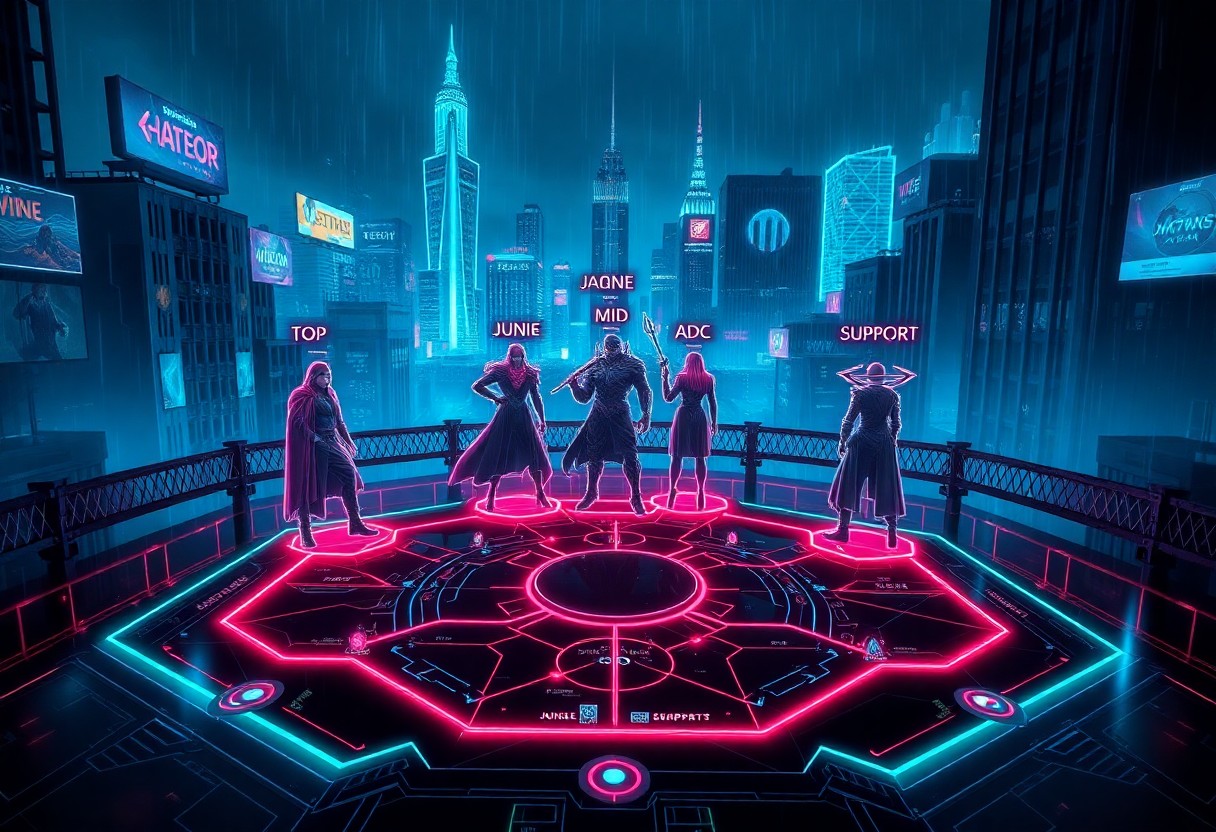
Many players underestimate the importance of team composition and synergy in League of Legends. Understanding how different champions interact can significantly influence game outcomes, shaping strategies and enhancing teamwork. This guide covers the necessarys of building effective team compositions and achieving optimal synergy for success on the Rift.
The Core Archetypes of Team Compositions
| Poke | Utilizes ranged champions to chip away at the enemy’s health from a distance. |
| Siege | Focuses on structuring pushes to destroy enemy structures while maintaining safety. |
| Hard Engage | Relies on initiation champions to force skirmishes and capitalize on enemy positioning. |
| Wombo Combo | Combines multiple ultimates and abilities for a devastating teamfight outcome. |
| Split Push | Disperses pressure across the map, often requiring a dedicated champion to draw attention. |
Poke and Siege: Controlling the Map through Attrition
Poke and siege compositions excel at dealing consistent damage while remaining safe. These teams focus on outlasting opponents, leveraging champions with long-range abilities to whittle down enemy health bars and structures before committing to more aggressive plays.
Hard Engage and Wombo Combo: The Art of the Decisive Teamfight
Hard engage compositions thrive on initiating fights rapidly, often catching opponents off-guard. This style favors champions that can close distances quickly and disrupt enemy formations, creating high-impact moments in decisive teamfights.
Utilizing champions with crowd control abilities, hard engage setups can decisively shift the momentum of a match. Successful execution hinges on teamwork, as coordination between the initiator and damage dealers leads to overwhelming enemy forces before they can react.
Split Push and 1-3-1: Applying Global Map Pressure
Split push strategies focus on applying pressure in multiple lanes simultaneously, forcing opponents to react. This approach allows teams with strong split pushers to secure objectives, take towers, and create advantageous maps.
Effective split push and 1-3-1 compositions maximize map control by spreading the enemy thin. By constantly threatening regions of the map, teams can secure vision control and objectives, creating openings for larger fights or tower pushes when opponents regroup.
After understanding these archetypes, teams can select champions that not only suit their strategy but also synergize with each other to maximize effectiveness.
Essential Roles and Their Strategic Contributions
The Frontline: Tanks and Divers as Space Creators
Tanks and divers serve as the backbone of any team composition, absorbing damage and initiating fights. Their ability to create space allows damage dealers to operate freely, positioning them effectively to contribute to team engagements.
Primary Damage Dealers: Carry Positioning and Resource Allocation
Carrying responsibilities fall to damage dealers who excel in positioning and resource management. They must maintain a balance between dealing damage, avoiding threats, and utilizing their abilities efficiently during skirmishes.
Positioning for damage dealers is critical; they must stay at the backline to minimize risk while maximizing damage output. Resource allocation enhances their effectiveness, requiring careful management of cooldowns, health, and mana to maintain pressure and secure kills during team fights.
Utility and Enchanters: Force Multipliers and Protection
Utilizing enchanters effectively can turn the tide of battles. Their abilities provide not only protection but also empowerment for allies, granting them increased survivability and damage potential. This synergy allows teams to thrive during extended fights, making utility champions indispensable for victory.
Understanding Champion Synergy and Interaction
Ability Layering: Chaining Crowd Control and Burst Damage
Chaining crowd control abilities can maximize team damage output by ensuring enemies remain vulnerable. For instance, coordinating a stun with a high-damage skill results in significant burst potential. Teams that master this technique create opportunities to eliminate champions quickly during crucial moments.
Complementary Power Spikes: Balancing Early Game and Scaling
Balancing champions that excel in the early game with those that scale well into late-game ensures consistent performance throughout the match. Selecting early-game aggressors paired with late-game powerhouses provides the flexibility to pressure opponents while remaining formidable as the game progresses.
Maximizing power spikes requires a strategic approach to champion selection. Early-game champions can establish map control and dominance, leading into a late-game transition with champions that become stronger as the match continues. This balance prevents opponents from capitalizing on a single phase, allowing for sustained pressure and control across all stages of the game.
Drafting for Lane Synergy: Bot Lane Duos and Jungle Presence
Creating effective bot lane duos involves selecting champions that harmonize in their abilities and playstyles, supported by jungle presence. Champions with complementary skills amplify each other’s strengths, leading to superior lane control and impact during skirmishes.
Successful drafting in bot lane means recognizing champion affinities that enhance overall synergy. Pairing a support with engage potential alongside a high-mobility marksman results in devastating combinations, especially when synchronized with jungle ganks. This strategic approach unleashes powerful early pressure, dictating lane dynamics and facilitating objectives across the map.
Counter-Picking and Adaptability in the Draft Phase
Identifying and Neutralizing Enemy Win Conditions
Winning teams often rely on specific champions or tactics to secure their victories. Pinpointing these elements during the draft phase allows players to counter-pick effectively, disrupting the enemy’s strategy. Recognizing patterns in champion selections can provide the foresight needed to alter the outcome of the game.
Flex Picks and Denying Critical Synergy Components
Flex picks serve as versatile options that can adapt to various team compositions. Denying these picks to the enemy team not only limits their strategic choices but can also dismantle critical synergy between champions. Mastering this aspect of drafting can shift the balance in your favor before the game even begins.
Flex picks often bridge the gaps in team composition by fulfilling multiple roles, allowing for unexpected strategies. By prioritizing these champions in the draft phase, teams can create uncertainty for opponents, forcing them to either ban these picks or adjust their own selections. This tactic can effectively nullify specific synergies, causing the enemy to move away from their preferred strategies, which may lead to a win for the more adaptable team.
Objective Control and Map State Management
Neutral Objective Priority: Dragons, Baron, and Rift Herald
Understanding the significance of neutral objectives like Dragons, Baron, and Rift Herald can greatly influence match outcomes. Securing these objectives not only grants powerful buffs and advantages but also shifts map pressure, allowing teams to capitalize on their strengths and outmaneuver opponents.
Vision Control: The Foundation of Strategic Execution
Establishing vision control is necessary for effective map management. Placing wards in strategic locations allows a team to gather crucial information about enemy movements, potential objectives, and gank routes, enabling more informed decision-making throughout the game.
Vision control shapes the battlefield, dictating where teams can safely operate and when they should engage. Effective ward placement helps to deny the enemy critical information while maximizing your team’s awareness of potential threats. Combining vision with timely rotations creates opportunities for successful ambushes and objective steals, ultimately leading to a favorable map state.
Execution and Common Pitfalls in Team Coordination
Communication and Target Focus during Skirmishes
Effective communication during skirmishes is key to winning fights. Teams should establish clear target focus, designating primary and secondary targets to ensure everyone is on the same page. Clear callouts can help avoid confusion and maximize damage output, leading to favorable trades and objectives.
Over-complicating the Win Condition in Solo Queue
Simplifying the win condition often leads to more success in solo queue games. Players should aim for straightforward strategies that focus on key objectives rather than convoluted plans. Overthinking can result in hesitation, missed opportunities, and ultimately failures when trying to execute complex plays.
Simplistic strategies are often more effective in solo queue due to the unpredictability of teammates. Focusing on securing objectives, farming efficiently, and maintaining vision can yield better results than trying to orchestrate intricate team plays. Striving for clarity and simplicity in communication encourages individual players to perform their roles effectively without getting lost in confusing tactics.
Summing up
Considering all points, effective team composition in League of Legends relies on balancing roles and ensuring synergy among champions. Understanding each champion’s strengths and weaknesses enables players to create a cohesive strategy that maximizes potential in both offense and defense. Proper execution of these basics enhances overall performance and increases the likelihood of winning matches.
Q: What is team composition in League of Legends?
A: Team composition refers to the specific roles and champions chosen by players to create a balanced team. A well-rounded team typically includes a mix of damage dealers (AD and AP), tanks, and support characters. Each role plays a distinct role during the game and contributes to the overall strategy and synergy.
Q: How does synergy affect team performance?
A: Synergy involves how well champions work together to enhance their strengths. Complementary abilities can create powerful combos, such as a tank initiating a fight followed by damage dealers focusing on targets. Teams with strong synergy can outplay opponents even if their individual skills are on par, as coordinated teamwork leads to greater effectiveness.
Q: What are some key roles in a balanced team composition?
A: A balanced team composition generally includes five key roles: Top Laner (tank or bruiser), Mid Laner (burst or control mage), AD Carry (ranged damage dealer), Support (protects and enhances others), and Jungler (roams and secures objectives). Each role should complement others to ensure team cohesion and adaptability throughout the match.