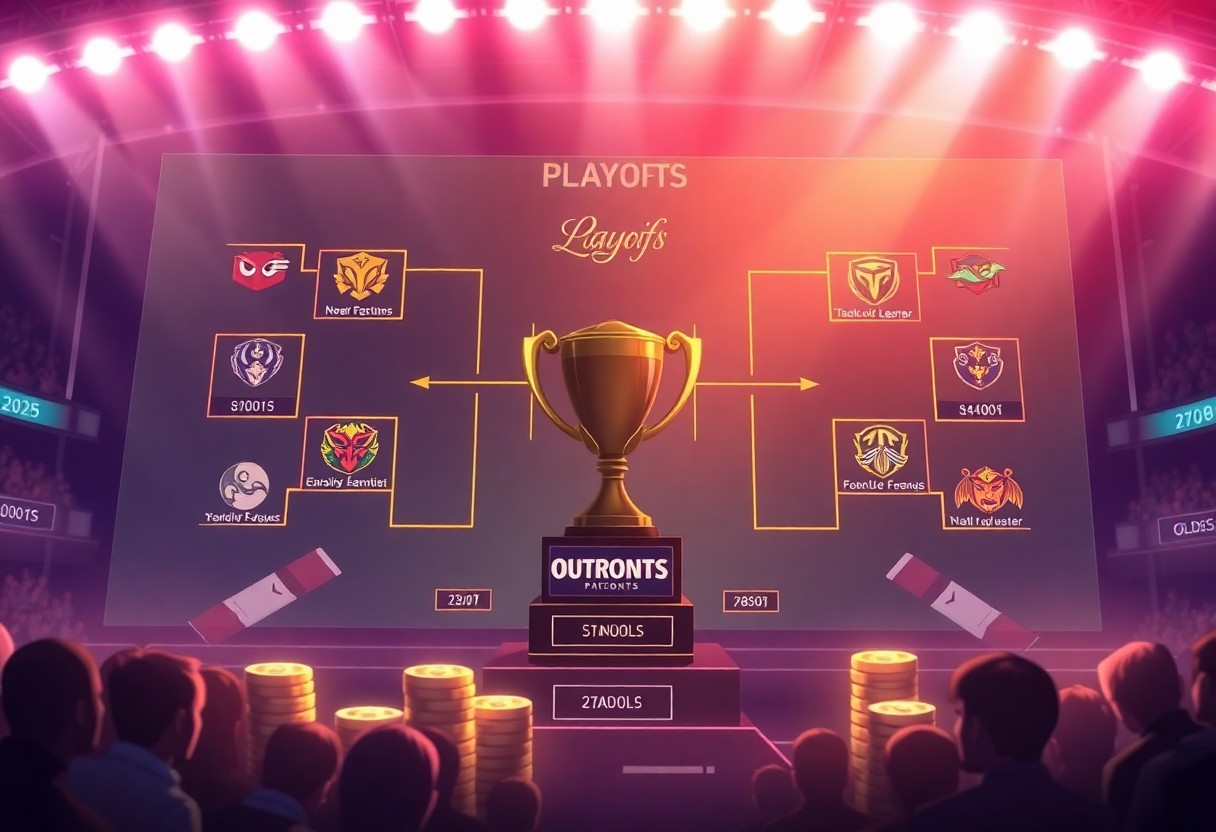
You can analyze how the playoff bracket influences outright betting odds in League of Legends. The structure and matchups significantly affect team performance and public perception, directly impacting betting markets and strategies.
Structural Mechanics of Modern League of Legends Playoff Brackets
Double Elimination and the Strategic Value of the “Second Life”
Double elimination formats offer teams a safety net, allowing them to recover from an early loss. This structure enhances the strategic depth of matches, as teams can afford to experiment and adapt without the immediate pressure of elimination.
Strategically, the “second life” creates opportunities for underperforming squads to analyze their weaknesses. Adjustments made post-loss can lead to a dramatic turnaround in subsequent matches, increasing the unpredictability of outcomes in later rounds.
Single Elimination: The Volatility of One-Off Series
Single elimination formats present a high-stakes environment where every match can determine a team’s fate. The absence of second chances amplifies pressure, often resulting in unpredictable results influenced by nerves, preparation, and adaptability in crucial moments.
Pressure builds uniquely in single elimination, as the “win or go home” mentality can lead to surprising underdog victories or sudden upsets. Factors such as teamwork cohesion and individual performance become paramount, highlighting the fragility of success in this format.
The Strategic Weight of Seeding and Bracket Placement
Seeding and bracket placement play a critical role in the trajectory of teams throughout the playoff stage. Higher seeds typically face lower-seeded opponents in the initial rounds, allowing them to capitalize on their advantages and build momentum. This advantage can influence betting odds, as fans and analysts assess the likelihood of upsets or clean sweeps based on these matchups. Evaluating each team’s past performance against potential opponents provides valuable insights into expected outcomes.
Side Selection Priority and its Correlation with Win Rates
Side selection can heavily influence match outcomes, as teams often perform better when on their preferred side. Win rates have shown that certain teams thrive on blue or red side advantages, impacting their strategies and champion picks. Analyzing past playoff statistics reveals a discernible pattern where favored sides consistently outperformed their counterparts, especially in crucial matches.
Analyzing the Advantage of First-Round Byes for Top Seeds
First-round byes present a strategic edge; top seeds gain additional time to rest and analyze potential opponents. This break facilitates adjustments, allowing teams to refine strategies based on early match results. Statistically, teams benefiting from byes have advanced further in the playoffs, as the opportunity to prepare mitigates fatigue and stress.
Teams that secure a first-round bye have more than just additional rest; they obtain a psychological advantage. Facing opponents who have already gone through the rigors of an initial match can lead to increased confidence and focus as they enter the fray. Furthermore, this advantage can skew betting markets, as analysts adjust projections based on perceived strength and readiness. Properly assessing these factors can provide sharper insights into potential outrights for the tournament.
The Lower Bracket Run Phenomenon and Momentum
Lower bracket runs have become a captivating aspect of competitive League of Legends playoff scenarios. Teams often harness the pressure of elimination to fuel their performances, demonstrating resilience and adaptability. The journey through the lower bracket can transform strategies and ignite newfound synergy, as players focus on survival rather than the weight of expectations.
Analyzing Stage Warmth versus Tactical Exhaustion
Stage warmth refers to a team’s rhythm and confidence, gained from recent victories. Higher momentum can be crucial for maintaining a competitive edge during playoffs. Tactical exhaustion, however, arises from the mental and physical strain of back-to-back matches, which can hinder decision-making and execution.
Striking a balance between the two is important. Teams must capitalize on their stage warmth while effectively managing fatigue to avoid detrimental performance dips. This dynamic often determines how far a team can push through the playoffs.
Fatigue Factors in Compressed Playoff Schedules
Compressed playoff schedules often exacerbate fatigue, impacting player performance. Intense match sequences can lead to diminished focus, poorer coordination, and increased mistakes. Recognizing these factors is crucial for teams aiming for long-term success.
- Fatigue affects both physical and mental agility.
- Rest and recovery are often limited in tight schedules.
- Strategic adjustments become necessary to manage player stamina.
After addressing these fatigue factors, teams can seek strategies to mitigate their impact. Rotation of player roles, focused recovery practices, and rigorous training protocols can help maintain performance levels during playoffs. Prioritizing mental health and ensuring sufficient recovery time between matches becomes important for sustained success.
- Historical trends show that some teams excel despite facing fatigue.
- Identifying these patterns can provide insights into potential playoff outcomes.
- Preparing for fatigue-related challenges is crucial in playoffs.
Historical Precedents of Miracle Runs to the Grand Finals
Miracle runs, where lower bracket teams defy odds to reach the finals, have become legendary in League of Legends lore. Notable examples highlight how momentum built through elimination can cultivate unexpected successes. These stories inspire teams and fans, showcasing the unpredictable nature of competitive esports.
Examining past performances reveals common threads among these miracle runs: adaptability, unwavering teamwork, and a strong mental game. These attributes become important for teams hoping to replicate such remarkable feats within the unpredictable playoff environment.
Meta Evolution and Tactical Adaptation Throughout the Bracket
Draft Evolution and Information Leakage in Early Rounds
Draft strategies evolve as teams observe opponents’ preferences and performance. Early rounds often reveal key champions, allowing squads to refine their approach based on shared information. This leakage not only influences the current meta but also sets the stage for future matchups.
Predictions become more accurate as teams gather insights from opponents’ reactions. Effective adaptations often hinge on prioritizing counter-picks and adjusting strategies according to the evolving draft pool. Exploring these dynamics early can lead to significant advantages later in the bracket.
Adapting to Patch Nuances During Multi-Week Tournaments
Patches introducing balance changes challenge teams to adjust strategies quickly. Early adaptation can yield significant in-game advantages, particularly as the meta shifts. Understanding which champions gain traction allows teams to tailor their picks and bans effectively.
Observation of patch notes and community consensus often shapes team preparations. This continuous adaptation throughout the tournament enables squads to excel, overcoming the stiff competition as they implement nuanced strategies in response to evolving gameplay elements.
The Impact of Pocket Picks in Elimination Scenarios
Pocket picks can serve as game-changers during elimination matches. These champions, often kept hidden until critical moments, can catch opponents off guard and disrupt established strategies. This unpredictability can give a team a significant advantage in high-stakes situations.
Maintaining surprise elements through pocket picks allows teams to shift the dynamic of a match. Their effectiveness stems from the unpredictability and the psychological edge they provide, making them an vital consideration in elimination scenarios.
Regional Discrepancies in Playoff Execution
LCK and LPL: High-Stakes Depth in Eastern Gauntlet Formats
LCK and LPL playoffs showcase intense competition through their gauntlet formats, where teams face elimination from the very start. This high-stakes environment demands exceptional performance, as minor mistakes can lead to quick exits. Teams must adapt swiftly, further heightening the strategic depth as they counter various playstyles.
LEC and LCS: Structural Influences on Western Performance
Market Implications and Outright Betting Strategies
Real-Time Odds Volatility Following Bracket Upsets
Odds can shift dramatically following bracket upsets, impacting outright betting perspectives. Unexpected victories often lead to a re-evaluation of team strength, resulting in fluctuating prices that savvy bettors must analyze closely.
Tracking these changes provides insights into value opportunities. Timely entry post-upset can capitalize on inefficient market reactions, offering a chance to secure favorable odds before they stabilize.
Hedging Strategies for Long-Term Outright Positions
Implementing hedging strategies can protect profits while reducing overall risk. By placing counter bets on remaining teams, bettors can safeguard their initial investments against unfavorable outcomes.
Investors often consider betting against their outright selections as the playoffs progress. This method enables securing a profit regardless of which team ultimately captures the championship.
Identifying Value in “Warm” Lower Bracket Contenders
Spotting value in lower bracket teams proves beneficial, particularly those that exhibit recent momentum. Teams bouncing back from early losses may possess underappreciated talent, enhancing their championship prospects.
Scouting these contenders involves assessing their performance metrics and adaptability. A team’s ability to rebound can indicate potential for upsetting higher-seeded opponents.
To wrap up
As a reminder, the League of Legends playoff bracket significantly impacts outright betting odds. Teams that perform well in early matches often see their odds shorten, reflecting increased confidence from bettors. Conversely, underperforming teams may see their odds lengthen, making them less appealing to wager on.