








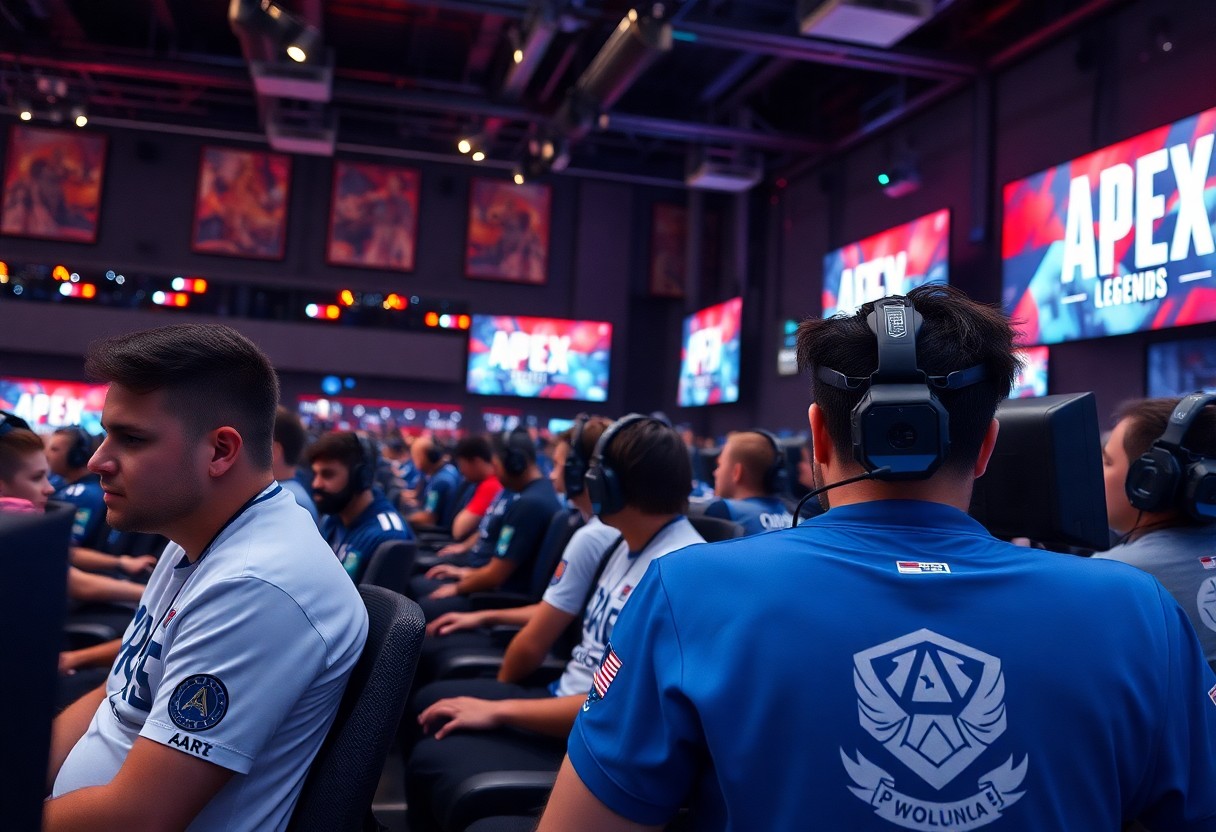
Ranked play in Apex Legends has emerged as a focal point for competitive players, driving the development of unique team compositions that suit the evolving meta. This mode not only allows players to showcase their skills but also significantly influences professional gameplay strategies. As the community analyzes performance, effective team compositions involving legends with complementary abilities have become crucial for securing victories in Apex’s intense matches.
One of the primary factors that contribute to the success of a team in ranked play is the selection of legends that work harmoniously together. Pros often analyze the strengths and weaknesses of legends in order to maximize their overall synergy. For instance, many competitive teams tend to favor compositions featuring a balance of offensive and defensive capabilities, as well as mobility and utility. Legends such as Wraith, Caustic, and Gibraltar frequently appear in pro compositions, demonstrating the effectiveness of blending different tactical roles.
Wraith’s ability to reposition quickly and escape dangerous situations makes her a valuable asset to any team. Her Dimensional Rift ultimate can facilitate quick rotations between locations, ensuring safe passage or allowing teams to ambush unsuspecting opponents. On the other hand, Caustic’s traps can deter aggressive pushes, forcing foes to reconsider their approach. Remarkably, Gibraltar’s defensive dome shield provides protection during firefights, enabling teams to heal, revive teammates, or regroup even under heavy pressure.
In the context of ranked play, understanding map dynamics plays a significant role in shaping team compositions as well. Different maps often encourage diverse tactics, resulting in adaptations that pro teams will integrate into their gameplay. For example, on maps with diverse terrain such as World’s Edge or Storm Point, legends that offer vertical mobility—like Valkyrie—gain more prominence. Her ultimate allows for aerial repositioning, making it easier for teams to evade danger while scouting out enemy positions from above.
Moreover, the competitive nature of ranked play incites teams to experiment with unconventional compositions. While the traditional “meta” that arises can dominate for a period, innovations often arise as players explore new strategies, further diversifying the approaches taken by pro teams. For example, some squads may rely on a recon legend like Bloodhound or Seer, which can provide crucial information about enemy locations, thus allowing teams to plan their engagements strategically.
Additionally, player skill and synergy are critical in ranked play, often affecting team compositions. As players become more familiar with their chosen legends and the dynamics of their teammates, they develop specific playstyles that further tailor the effectiveness of a composition. This understanding allows teams to create combinations that suit their individual strengths, translating into more efficient teamwork in competitive matches.
Hence, the impact of ranked play on pro team compositions in Apex Legends is evident through the continuous evolution of strategies and meta shifts. With shifting dynamics and the need for adaptability, professionals remain observant of both individual legend capabilities and team synergy. This ever-changing landscape keeps the competitive scene alive, challenging teams to innovate and refine their approaches, ultimately shaping the future of Apex Legends esports.


