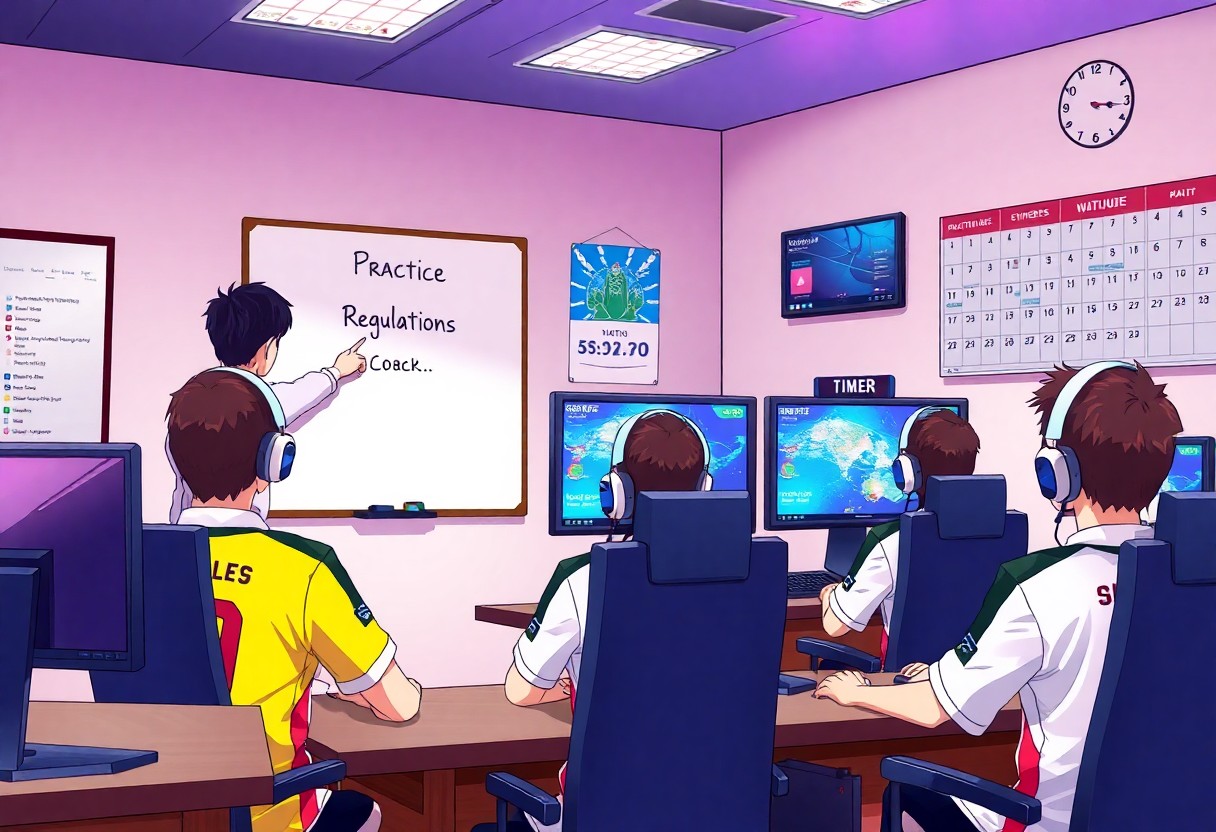
It’s necessary for esports teams to establish clear practice regulations and scrim rules to ensure effective team dynamics and performance improvement. Strict adherence to these guidelines helps optimize training sessions and fosters a competitive edge during tournaments.
Core Practice Philosophies and Training Schedules
Defining the Daily Grind: Structured vs. Free-Form Practice
Structured practice sessions provide a clear framework for players, focusing on specific skills, strategies, and teamwork. Coaches often design these sessions to target weaknesses identified in previous games, fostering improvement through repetition and drill-based learning.
On the other hand, free-form practice encourages creativity and spontaneity, allowing players to explore different roles and strategies without strict oversight. This approach can enhance adaptability and help players discover new tactics, ultimately contributing to a more dynamic team play style.
Mandatory Warm-up Rituals and Mechanical Optimization Drills
Consistency in warm-up routines maximizes performance potential before competitive play. Rituals may include focused aim training, reflex exercises, and teamwork drills that ensure players are mentally and physically prepared.
Mechanical optimization drills specifically target individual skills such as aiming and movement consistency. These practices not only sharpen mechanics but also build confidence, resulting in effective execution during high-stakes matches.
Incorporating structured warm-up rituals leads to better overall performance, as players familiarize themselves with their mechanics. By dedicating time to these necessary drills, teams can ensure that all members begin practice and matches at peak performance, minimizing inconsistent gameplay.
Balancing Individual Solo Queue Requirements and Team-Based Training
Finding harmony between solo queue progress and team practices is necessary for player development. Solo queue often allows individual players to improve unique skills, while team training ensures that those skills integrate effectively within coordinated gameplay.
Addressing this balance requires careful scheduling, allowing players to engage in solo efforts without detracting from team cohesion. Implementing dedicated time slots ensures players refine their personal skills alongside collective strategies.
Balancing individual and team training promotes versatility in players, enabling them to shine in solo environments and excel in team settings. This dual focus cultivates well-rounded gamers equipped to adapt to varying competitive scenarios.
Communication Protocols and In-Game Comms Standards
Standardized Callouts and Map-Specific Terminology Frameworks
Standardized callouts enhance clarity during gameplay, ensuring all team members quickly understand positions and strategies. By adopting a comprehensive map-specific terminology framework, teams can minimize miscommunication and streamline coordination during intense matches.
Utilizing consistent language for map locations equips players with an efficient means of communication. When each member knows the specific terms associated with different areas, strategic discussions become more effective and timely, ultimately improving performance.
Managing Comms Clutter and Information Hierarchy During High-Stress Engagements
Managing comms clutter is necessary during high-pressure situations, as players often face an influx of information. Establishing an information hierarchy prioritizes critical calls, allowing team members to focus on what matters most in fast-paced encounters.
Effective communication frameworks require pre-defined roles and responsibilities for each player. By clearly delineating who conveys specific types of information, teams can reduce noise and enhance their tactical responses under stress.
Clear communication during high-stress engagements hinges on making split-second decisions. When chaos ensues, concise directives from a focused leader help eliminate confusion, ensuring the team remains aligned on strategy. Implementing specific phrases for urgent scenarios can further streamline communication and empower players to respond effectively.
The Role of the In-Game Leader (IGL) in Directing Tactical Focus
The In-Game Leader (IGL) serves as the linchpin in tactical decision-making, guiding the team through gameplay dynamics. By understanding both the strengths of teammates and the opponent’s strategies, the IGL can effectively orchestrate game plans that maximize team efficiency.
Commanding the battlefield requires the IGL to maintain clarity in communication, delivering precise instructions under pressure. This role enriches team cohesion, as players look to their leader for tactical direction and reassurance, fostering a collective strategic mindset.
An effective IGL not only sets the pace but also adapts tactics based on real-time match conditions. This adaptability enhances the team’s overall performance while reinforcing the importance of clear, purposeful communication. Recognizing these dynamics allows teams to respond agilely to evolving game scenarios, ultimately leading to greater success.
Technical Requirements and Hardware Standardization
Minimum System Latency Standards and Peripheral Consistency
Establishing minimum system latency standards is vital for competitive fairness. Teams must adhere to a predetermined latency threshold to ensure all players experience similar performance levels. Latency discrepancies can skew gameplay and affect outcomes, making standardization imperative.
Peripheral consistency also plays a significant role in creating a level playing field. Teams should agree on specific hardware setups, including mice and keyboards, to eliminate variability that could advantage or disadvantage individual players. Uniformity in peripherals enhances team synergy and performance reliability.
Software Optimization and Prohibited Third-Party Applications
Optimizing software environments is necessary for peak performance. Teams should define approved software configurations and ensure they are executed uniformly across all devices. This minimizes technical issues during competitions.
Prohibited third-party applications can introduce unnecessary risks and inconsistencies. Identifying and banning software that may alter gameplay or provide unfair advantages is critical. Rigorous checks should be in place to enforce these regulations and maintain the integrity of practice and competition.
Further clarity on software optimization involves specifying acceptable applications and configurations. Teams should conduct regular audits to confirm compliance with these guidelines. By prioritizing uniform software setups, organizations can mitigate technical glitches and ensure a consistent experience for all players.
Internet Redundancy and Connection Stability Mandates for Remote Practice
Connection stability is non-negotiable for effective remote practice sessions. Mandates must require teams to implement redundant internet connections to minimize downtime. Without reliability, practice efficiency and gameplay quality suffer significantly.
Having multiple internet sources safeguards against outages, allowing uninterrupted training and gameplay. Teams should also establish protocols for swiftly switching connections in case of issues, ensuring that practice can continue without major disruptions.
Further emphasis on internet redundancy highlights the necessity of advanced setups. Teams should ideally employ wired connections complemented by backup solutions, such as mobile hotspots. This proactive planning ensures that even in adverse conditions, the team can maintain competitive training schedules without compromise.
Scrimmage Etiquette and Professional Conduct
Punctuality and Lobby Management Protocols for Professional Scrims
Punctuality is non-negotiable in professional scrimming, as it reflects a team’s dedication. Teams should arrive in the lobby at least ten minutes prior to the scheduled time to address any technical issues and ensure a prompt start.
Maintaining Competitive Integrity: Anti-Trolling and “Limit Testing” Regulations
Limit testing should be approached with caution to avoid disrupting team dynamics. Engaging in intentional trolling undermines practice objectives and creates a negative atmosphere. Teams should formulate clear definitions of acceptable limit testing to maintain focus.
All participants must understand the importance of competitive integrity. Establishing strict anti-trolling regulations will safeguard the professionalism expected during scrims, promoting a constructive environment for team growth.
Anti-trolling regulations serve to uphold a balanced gameplay experience. Clear expectations regarding acceptable behavior must be outlined at the beginning of each scrim, protecting both team morale and the integrity of practice sessions.
Post-Scrim Decorum and Professional Networking with Opposing Teams
After scrimmages, professionalism should extend beyond the match itself. Teams are encouraged to engage in light, constructive discussions about gameplay with opponents, fostering a spirit of collaboration.
Networking opportunities arise naturally after scrims. Building relationships with rival teams can yield valuable insights and enhance future collaborations, leaving a positive impression that benefits the entire esports community.
Strategic networking can lead to fruitful exchanges about tactics and gameplay. Cultivating these connections not only enriches teams’ knowledge but also creates a supportive environment in the competitive sphere, promoting growth for all players involved.
Data Collection and VOD Review Methodologies
Systematic Archiving of Scrim Recordings and Replay Files
Implementing a structured system for archiving scrim recordings and replay files streamlines the review process for esports teams. Each match should be meticulously labeled and stored in an easily accessible format to facilitate quick retrieval during analysis sessions.
Organizing recordings by date, opponent, and game type enhances data management. This systematic approach allows teams to track their progression over time and identify patterns in play that can inform strategies moving forward.
Analytical Frameworks for Identifying Macro and Micro Execution Errors
Utilizing analytical frameworks plays a significant role in pinpointing both macro and micro execution errors within gameplay. By categorizing mistakes into broader strategic failures and specific execution missteps, teams can develop a more nuanced understanding of their performance.
Focusing on these two levels of analysis equips players with actionable insights, promoting targeted improvements that address specific weaknesses in their gameplay. This dual approach enhances overall team coherence and efficiency.
Comprehensive analysis requires dissecting gameplay into elements of strategic oversight (macro) and execution details (micro). Employing metrics, like decision-making speed and team coordination, aids coaches in developing bespoke training regimens tailored to skill gaps identified during reviews.
Collaborative Review Sessions: Constructive Criticism vs. Blame Culture
Establishing a culture of constructive criticism during review sessions fosters a supportive environment for improvement. Teams benefit from focused discussions that emphasize learning rather than assigning blame, leading to more effective communication and collaboration.
Regularly scheduled collaborative sessions encourage players to share insights openly, creating a safe space where feedback can be both given and received without fear of retribution. This practice cultivates a team mentality centered on growth and development.
In practice, setting clear guidelines for feedback during collaborative sessions helps prevent negative interactions. By framing discussions around shared goals and collective performance, teams cultivate a mindset that values progress over perfection.

Roster Management and Internal Competition
Substitute Integration and Bench Rotation Policies
Integrating substitutes effectively requires clear policies that define their roles during practice and matches. Teams benefit from regular rotation, allowing bench players to gain experience while maintaining healthy competition. This approach helps sustain motivation and engagement across the entire roster, ensuring no player feels sidelined.
Implementing a structured rotation system also allows team leadership to assess players in various situations. Doing so identifies strengths and weaknesses, creating opportunities for potential adjustments in key match situations. Transparency in these policies reinforces trust among team members.
Internal Scrims and Sister-Team Developmental Scenarios
Internal scrims create an environment where teams can refine strategies and mechanics without external pressure. By scrimmaging against sister teams, organizations foster competitive scenarios that simulate tournament conditions, enhancing overall performance. This practice builds synergy and develops players’ adaptability.
Training against sister teams accelerates growth, as players can experiment with various tactics while maintaining a familiar setting. This developmental framework encourages collaboration and sharing insights, ultimately strengthening the organization’s competitive edge.
Internal scrims serve as a critical tool for evaluation and improvement. Regular practice against sister teams cultivates an atmosphere of healthy competition, motivating players to elevate their game. By balancing challenge and support, teams can better prepare for external competitions while maintaining a strong internal culture.
Performance-Based Roster Adjustments and Trialing Procedures
Performance metrics guide roster adjustments and trialing procedures effectively. Regular assessment of player output during matches and practices allows coaching staff to make informed decisions based on data and gameplay performance. This analytical approach helps spotlight underperforming members and encourages continuous improvement.
Trialing procedures enable a structured process for evaluating potential new roster additions. By analyzing both current players and prospects in competitive scenarios, teams ensure that any adjustments benefit overall synergy and strategic alignment. Consistency in performance evaluation fosters a culture of excellence.
Performance-based adjustments prioritize skill development and competitive readiness. Trialing new players against existing roster members under real-time conditions allows coaches to gauge fit and chemistry, ensuring that every team member aligns with the organization’s objectives.
Health and Wellness: Physical and Mental Conditioning
Ergonomic Standards and Repetitive Strain Injury (RSI) Prevention
Proper ergonomics are important for esports athletes to prevent injuries common in long gaming sessions. Chairs should support the back while allowing for proper arm placement. Monitors should be positioned at eye level to reduce neck strain. Regular breaks and stretches can significantly improve long-term health.
Implementing ergonomic assessments frequently can help teams identify individual player needs. Tools like wrist rests and adjustable desks enhance comfort, providing a foundation for sustained performance while minimizing the risk of RSI.
Sleep Hygiene and Nutritional Guidelines for Peak Cognitive Performance
Optimal sleep hygiene plays a crucial role in cognitive performance. Establishing a routine sleep schedule, minimizing screen time before bed, and creating a dark, quiet sleeping environment can enhance rest quality. Aiming for 7-9 hours is important for maintaining focus and processing speed during gameplay.
Nutritional guidelines should include a balanced diet rich in whole foods. Regular meal timings and hydration support mental clarity, improving reaction times and decision-making abilities. Incorporating brain-boosting nutrients like Omega-3s can further enhance cognitive function.
Sufficient sleep and proper nutrition form the backbone of peak cognitive performance. Consistent sleep schedules improve concentration, while nutrient-dense foods fuel the brain, ensuring players are alert and ready for high-pressure situations. Recognizing the synergy between diet and sleep enhances overall gameplay experiences.
Mental Health Support Systems and Burnout Mitigation Strategies
Support systems for mental health are crucial in the esports arena. Open conversations about stress, anxiety, and performance pressures help build a culture of wellness within teams. Providing access to professional counseling can address these issues effectively.
Implementing structured downtime and promoting hobbies outside gaming can prevent burnout. Encouraging team bonding activities fosters resilience and creates a supportive environment, enabling players to thrive in a competitive landscape.
Effective mental health support systems address the complexities of competitive gaming. By actively engaging with mental health professionals and creating a balanced roster of activities, teams can significantly mitigate burnout, ensuring players remain motivated and connected to their passion for gaming.
Strategic Confidentiality and Information Security
Non-Disclosure Agreements (NDAs) Regarding Strategy and “Pocket Picks”
Non-Disclosure Agreements (NDAs) function as crucial tools in safeguarding team strategies and individual “pocket picks.” Teams often experience significant competitive advantages by preventing the unauthorized sharing of sensitive information. Enforcing NDAs ensures that all members understand the repercussions of leaking strategic insights to outsiders.
Establishing clear communication about the importance of confidentiality under these agreements helps maintain team integrity. Players must recognize that their unique strategies can be replicated by opponents if disclosed, underscoring the necessity of discretion in all aspects of gameplay.
Secure Sharing of Playbooks and Tactical Theory-Crafting Documents
Sharing playbooks and tactical documents securely is paramount to fostering a competitive edge. Utilizing encrypted platforms for these materials protects against unauthorized access and potential leaks. Team managers should implement strict access controls to ensure only relevant members can view sensitive documents.
Encouraging regular updates to these documents further enhances security and keeps strategies relevant. By prioritizing secure sharing methods, teams can innovate and refine tactics without fear of external exposure.
Employing specialized tools for document sharing facilitates both security and collaboration. Teams can use platforms designed for confidentiality, allowing for controlled edits and version tracking while preventing unauthorized distribution.
Managing Public Streams and Personal Social Media Presence During Practice
Managing public streams and personal social media presence during practice aids in maintaining team security and integrity. Players should refrain from discussing strategies or game plans while streaming, as this information can quickly reach opponents. Monitoring social media accounts ensures that no sensitive content slips through the cracks.
Encouraging players to adopt a unified social media approach serves to protect the team’s image as well. By keeping content focused on non-strategic aspects, the team can engage with fans while safeguarding its competitive intelligence.
Employing clear guidelines for content shared online creates a safer environment for discussion and engagement. Teams can provide specific examples of acceptable behavior, reinforcing the importance of maintaining confidentiality across all platforms.
Performance Metrics and Key Performance Indicators (KPIs)
Quantitative Assessment: Statistical Tracking and Efficiency Ratings
Statistical tracking provides objective insights into individual and team performance. Metrics such as kill/death ratios, objective control percentages, and match win rates help quantify a player’s contributions and efficiency. By analyzing these numbers, teams can identify strengths and areas for improvement.
Efficiency ratings offer a comparative analysis among players within a team or across the entire competitive scene. Utilizing these ratings allows for clear benchmarks and performance expectations, helping coaches tailor training to enhance skills based on statistical evidence.
Qualitative Assessment: Team Synergy, Communication, and Adaptability
Evaluating team synergy hinges on shared understanding and collaboration during gameplay. Effective communication ensures that players are aligned in their strategies, which directly impacts decision-making and execution. Observing interactions during scrims reveals how well teammates support each other under pressure.
Adaptability plays a crucial role in competitive success. Teams that can swiftly adjust strategies based on game conditions or opponents’ tactics demonstrate higher resilience. Assessing adaptability involves observing how players respond to shifting dynamics during matches, showcasing their tactical versatility.
Analyzing team synergy, communication, and adaptability uncovers hidden strengths and weaknesses. Conducting regular reviews with a focus on these qualitative aspects enhances team cohesion. Gathering feedback from both teammates and coaches delivers insights into interpersonal dynamics, leading to actionable strategies for improvement and collaboration.
Monthly Performance Reviews and Individual Growth Development Plans
Monthly performance reviews provide structured evaluations of both team and individual contributions over a designated period. These reviews facilitate targeted discussions between players and coaches, ensuring a clear understanding of expectations and improvements needed.
Individual growth development plans are crafted based on insights gained from performance reviews. These plans outline specific objectives for players, promoting personal accountability and encouraging dedicated skill development. Tailoring these plans fosters a sense of ownership and motivates players to strive for their goals.
Implementing monthly performance reviews coupled with individualized growth plans helps track progress over time. Regular check-ins allow for adjustments based on recent performance, ensuring that players stay on course. This systematic approach not only enhances individual skills but also strengthens team performance as shared goals evolve through collaboration and reflection.
Coaching Staff Authority and Feedback Loops
Defining the Chain of Command: Head Coach, Analysts, and Managers
The hierarchy within an esports team is crucial for establishing clear roles and responsibilities. The head coach typically sets the overall strategy, while analysts focus on data to inform gameplay decisions. Managers handle logistical aspects, ensuring that the team functions smoothly. Each member plays a crucial role in shaping the team’s success.
This chain of command ensures that communication remains efficient, allowing players to understand who to turn to for specific needs. Clarity within this structure mitigates confusion during critical moments, especially in high-pressure situations like tournaments.
Real-Time Coaching Interventions vs. Post-Match Debriefing
Real-time coaching interventions occur during live matches. Head coaches or analysts can provide immediate feedback, ensuring that strategic shifts are implemented on the fly. These moments can significantly affect the team’s performance.
Post-match debriefing, on the other hand, allows for comprehensive analysis of gameplay. This setting promotes reflective discussions, helping teams analyze mistakes and successes, which is crucial for improvement in future matches.
Both real-time coaching and post-match debriefing serve distinct yet complementary purposes. Immediate interventions focus on tactical adjustments, while post-match sessions emphasize strategic learning. Balancing these approaches helps optimize player performance and enrich the overall training process.
Implementing Structural Changes Based on Analytical Findings
Implementing structural changes is crucial when the data reveals specific areas needing improvement. Coaches and analysts must collaborate to identify patterns and make informed decisions regarding gameplay strategies or team compositions. Such adjustments can greatly enhance the team’s competitive edge.
Data-driven insights enable teams to shift their focus on particular skills or strategies, adjusting training regimens accordingly. This method ensures that the team evolves in response to both internal performance metrics and external opposition trends.
When analytical findings indicate a need for change, swift action is crucial. Structural adjustments, whether in player roles or team dynamics, should be carefully studied and executed. Continuous adaptation based on analytics creates a culture of growth, leading to sustained competitive success.
Disciplinary Actions and Conflict Resolution
Code of Conduct Violations and Tiered Penalty Systems
Violations of the code of conduct can lead to a structured disciplinary approach within esports teams. Implementing a tiered penalty system ensures that consequences escalate appropriately, depending on the severity and frequency of the offenses. Minor infractions may result in warnings or temporary restrictions, while serious violations can lead to suspension or even termination.
Team leadership plays a pivotal role in enforcing these regulations, balancing fairness with accountability. By establishing clear guidelines, teams motivate players to adhere to standards, fostering a healthier competitive environment.
Mediating Interpersonal Friction and Ego Management Within the Roster
Addressing interpersonal conflicts requires skillful mediation to maintain team cohesion. Open communication channels encourage players to express concerns early, preventing issues from escalating. Regular team-building exercises also help mitigate ego clashes and enhance mutual understanding.
Actively managing egos involves recognizing individual strengths while promoting collective goals. Acknowledgment of each player’s contributions fosters a supportive atmosphere, which is critical for peak performance.
Conflict often arises from competition for roles and recognition. Facilitating discussions among team members allows them to articulate feelings and resolve misunderstandings, leading to stronger bonds. Team leaders must emphasize collaboration and create an environment where players feel valued, ultimately enhancing performance and morale.
Formal Appeals Processes and Behavioral Rehabilitation Programs
A formal appeals process offers players a structured avenue to contest disciplinary actions. Such transparency builds trust in the system, providing an opportunity for reflection and learning. Incorporating behavioral rehabilitation programs further reinforces this approach, equipping players with tools for personal growth.
Teams benefit significantly from these programs, as they not only address immediate issues but also contribute to long-term development. This dual approach ensures players have the necessary support to understand and rectify their behavior.
Travel and Boot Camp Regulations
On-Site Logistics: Housing, Transport, and Equipment Calibration
Proper housing arrangements play a significant role in an esports team’s performance during boot camps. Teams should prioritize comfortable accommodations to ensure adequate rest and focus. Transportation needs are equally crucial; reliable travel plans minimize stress and maximize practice efficiency.
Calibration of equipment must be meticulously handled before any matches. Aligning settings on all relevant hardware guarantees that players experience consistent performance throughout their training. Thorough checks can prevent technical issues that disrupt practice and diminish competitive readiness.
High-Intensity Boot Camp Schedules and Specific Strategic Objectives
Structured boot camp schedules focus on both skill refinement and strategic development. Each day should include a combination of scrimmages, team meetings, and individual practice, all tailored towards improving gameplay and synergy. Establishing specific objectives enhances clarity and purpose during these intensive periods.
Regular evaluations of performance metrics allow teams to adapt their strategies throughout the boot camp. Setting targeted goals-like mastering new tactics or improving communication-drives consistent progress. This strategic focus not only strengthens skills but also builds team cohesion.
Cultural Sensitivity and Professional Conduct During International Events
Understanding diverse cultures is crucial when teams participate in international events. Being aware of local customs fosters respect and positive interactions with fans and competitors alike. This cultural awareness can enhance team reputation and contribute to a supportive esports environment.
Professional conduct extends beyond gameplay; behaviors off the stage can impact team relationships and public perception. Teams are often ambassadors of their regions, showcasing not just skills but also attitudes. Courteous communication and respectful engagement create a better atmosphere for everyone involved.
Sponsor Obligations and Media Integration
Product Placement and Brand Representation During Practice Hours
Sponsorship agreements often require teams to incorporate brand visibility into their daily routines. Players may wear branded apparel or use sponsored equipment during practice, ensuring that brand presence is maintained at all times. This integration not only creates familiarity but also reinforces the relationship between the team and the sponsor.
Mandatory Content Creation Windows and “Behind the Scenes” Access
Content creation windows are set as part of sponsorship agreements, allowing teams to produce promotional material. During these designated times, players might participate in interviews, social media takeovers, or even recorded practice sessions, showcasing their personalities alongside the brands they represent.
“Behind the scenes” access plays a pivotal role in fostering fan engagement. Viewers appreciate glimpses into players’ lives, enhancing connection and loyalty. Consistent, high-quality content not only satisfies sponsors but also builds a profound relationship between players and their audience.
Clear guidelines around content creation ensure all sponsors receive equal attention. Scheduled windows allow teams to prioritize content while balancing their competitive demands. This structured approach results in more engaging material and keeps the community invested in the players’ journeys.
Balancing Commercial Duties with Competitive Integrity and Focus
Managing commercial obligations alongside competitive focus presents a challenge for esports teams. Players must concentrate on their performance while juggling sponsor-related activities, which can lead to distractions if not handled properly. Effective communication between players and management is important to navigate this complex landscape.
Strategic planning helps mitigate conflicts between practice and promotional responsibilities. When teams implement robust schedules that prioritize both play and obligations, they can retain a high level of performance without compromising brand commitments.
To wrap up
To wrap up, practice regulations and scrim rules are foundational for the success of esports teams. These guidelines ensure players develop consistent gameplay, enhance teamwork, and maintain discipline. By adhering to established protocols, teams can focus on improving their performance while minimizing conflicts.
Clear communication of rules during scrims is vital for maximizing learning opportunities. Structure and accountability contribute to a competitive environment where all players can refine their skills and strategies effectively. Understanding and implementing these practices leads to improved team cohesion and overall success in competitive gaming.
FAQ
Q: What are the main practice regulations for esports teams?
A: Practice regulations for esports teams typically include scheduled hours for team practices, mandatory participation by all members, and adherence to specific training routines. These regulations ensure consistency, improve team synergy, and enhance overall performance.
Q: How are scrim rules structured in esports competitions?
A: Scrim rules often dictate the format of practice matches, including team compositions, match durations, and communication guidelines. Teams usually agree on gameplay conditions beforehand to simulate competitive environments, allowing for effective strategy development and teamwork assessment.
Q: What are common penalties for violating practice or scrim rules?
A: Penalties for violating practice or scrim rules can range from fines to reduced playtime in future matches. Teams may implement internal disciplinary actions such as additional training sessions or warnings, aimed at maintaining a focused and committed team environment.