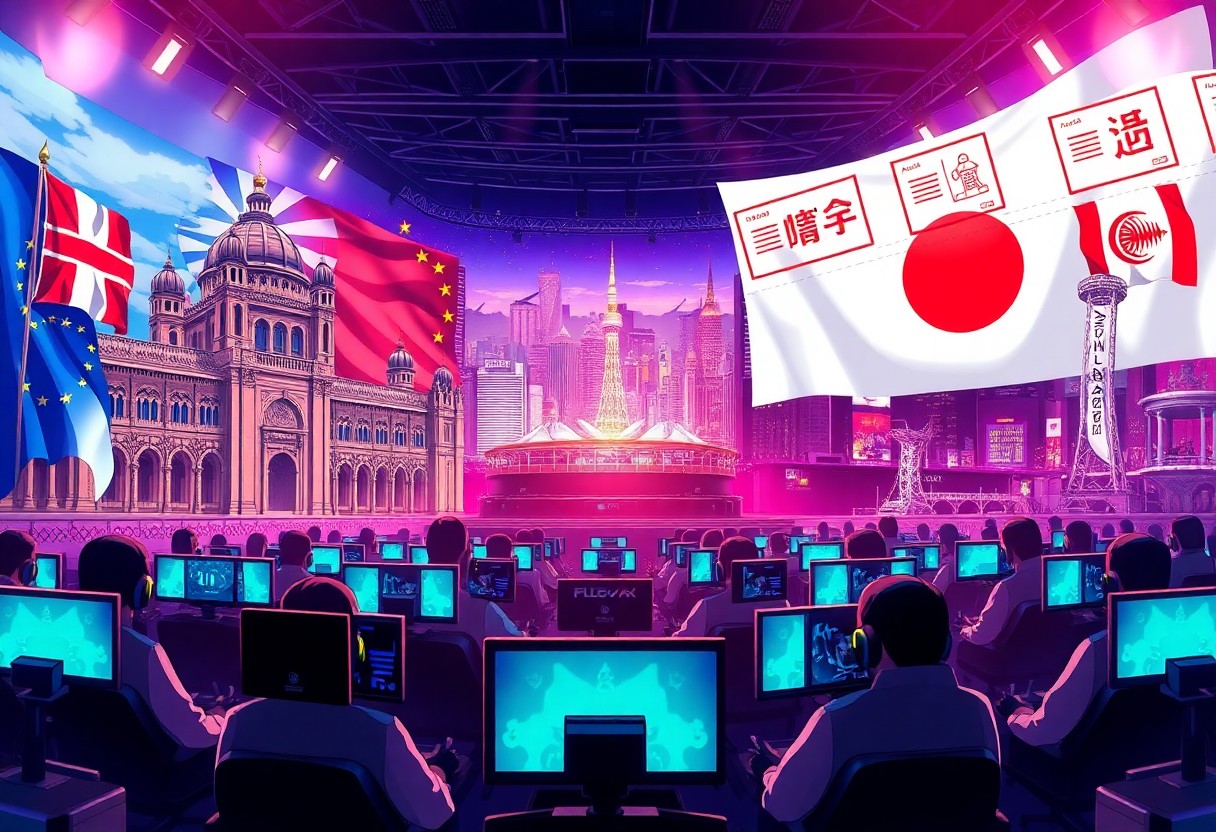
With rapid growth in esports, regulatory frameworks are evolving across Europe and Asia. This post explores recent developments, highlights key policies, and examines their impact on stakeholders, ensuring a comprehensive understanding of the changing dynamics in these regions.
Defining the Esports Ecosystem: Legal Classifications and Jurisdictional Challenges
Distinguishing esports from traditional sports and gambling frameworks
Esports operates in a unique legal territory that often diverges significantly from traditional sports. Unlike conventional athletic events, esports competitions predominantly involve digital platforms, which creates distinct legal implications and challenges. Definitions around esports are often vague, complicating efforts to classify them under existing sports and gambling laws.
Gambling regulations vary widely across jurisdictions, making it difficult to apply a standard framework to esports. Legal ambiguities surrounding betting on esports events can render participants vulnerable to inconsistent enforcement of rules, which complicates the integrity of competitions and the safety of operators.
The central role of game publishers as primary intellectual property holders
Game publishers wield significant influence in the esports ecosystem through their status as primary intellectual property holders. Copyright laws and licensing agreements empower publishers to control how their games are used in competitions, impacting everything from tournament organization to sponsorship deals.
With their ownership of game mechanics, branding, and content, publishers can dictate terms that affect all stakeholders. This level of control can both enhance and limit opportunities within the esports sector, requiring players, teams, and organizers to align closely with publisher policies.
Navigating cross-border regulatory conflicts in international competitions
International esports competitions often face challenges rooted in differing regulatory frameworks across countries. Conflicts can arise when countries impose regulations that may not align, complicating issues like participant eligibility and prize distribution. This discord can stifle growth and create confusion for participants and organizers alike.
Coordinated efforts among stakeholders is imperative for harmonizing regulations. Establishing standard practices can help minimize legal disputes and allow for smoother operational execution during international events.
The European Union Framework: Harmonization vs. National Sovereignty
Analysis of the European Parliament’s 2022 resolution on esports and video games
The European Parliament’s 2022 resolution has spotlighted the necessity for a unified approach to esports regulation across member states. Emphasizing the growth of the esports industry, the resolution advocates for standardized rules to enhance competitiveness and protect players.
Implications of the Digital Services Act (DSA) and Digital Markets Act (DMA)
The Digital Services Act (DSA) and Digital Markets Act (DMA) are set to transform the regulatory environment for esports. These legislations aim to create a safer online space while promoting fair competition among digital platforms, directly impacting how esports companies operate across Europe.
The combined effects of the DSA and DMA will necessitate esports companies to adapt rapidly, ensuring compliance while maintaining innovation. Companies must consider these regulations in their business strategies to foster user trust and long-term sustainability.
Consumer protection standards and data privacy across the Single Market
Consumer protection standards within the Single Market are becoming increasingly stringent, directly influencing the esports sector. Stricter data privacy laws will require companies to adopt comprehensive measures to safeguard user information, aligning with the General Data Protection Regulation (GDPR) mandates.
Adherence to these consumer protection standards will need to be embedded in the operational frameworks of esports organizations. Companies that prioritize data privacy will likely gain a competitive edge, as audience trust becomes vital for sustainable growth in an increasingly regulated environment.

France: A Pioneer in National Esports Legislation
The “Loi pour une République numérique” and its legal impact
The “Loi pour une République numérique,” enacted in 2016, marked a significant step in codifying the legal framework for esports in France. This legislation provided crucial guidelines for digital sports, placing emphasis on consumer protection and intellectual property rights, thereby creating a more secure environment for players and organizations alike.
Visa requirements and labor laws specifically tailored for professional players
Visa regulations in France have adapted to accommodate esports players, reflecting the growing recognition of gaming as a legitimate profession. Specific visas allow international players to compete in local tournaments, simplifying the process for established teams and emerging talent.
Labor laws have also been updated, giving professional players the same rights as traditional athletes. By formalizing employment contracts and standards, the industry can ensure fair compensation and job security, enhancing the overall appeal of a career in esports.
Regulation of prize pools and competitive integrity standards
Regulations concerning prize pools have been established in France to maintain competitive integrity. Governing bodies set guidelines for prize distribution and allowable amounts, ensuring fairness among players and teams other events within the scene.
These regulations are crucial in promoting transparency and accountability in esports competitions. Compliance with integrity standards protects the interests of all participants and fosters a trustworthy environment for both players and fans, ultimately enhancing the industry’s reputation.
Germany: Integration into the Traditional Sports Infrastructure
The role of the German Esports Federation (ESBD) in policy advocacy
The German Esports Federation (ESBD) plays an important role in shaping policies that promote esports at all levels. Through collaboration with government agencies and stakeholders, the ESBD advocates for recognition and integration of esports within the traditional sports framework.
Engagement with various regional and national entities allows the ESBD to influence legislation that directly impacts esports organizations, players, and events. By working to draft comprehensive guidelines, the federation helps establish a foundation for sustainable growth in the esports sector.
Dedicated esports visas and recent immigration policy shifts
Germany’s introduction of dedicated esports visas marks a significant step in addressing the challenges faced by international gamers and professionals. This policy shift facilitates player mobility and supports local teams in attracting global talent.
Recent adjustments in immigration policies highlight the country’s commitment to fostering a more inclusive esports environment. By easing restrictions, Germany positions itself as an attractive destination for esports events and talent, further integrating the industry within the broader sports ecosystem.
Dedicated esports visas streamline the process for foreign professionals, allowing them to work in Germany without extensive bureaucratic hurdles. This shift not only encourages international competitions but also boosts local economies through hosting major events and tournaments, reinforcing Germany’s status as a leading hub in the esports sector.
Youth protection laws and the application of age rating systems (USK)
Youth protection laws in Germany are increasingly pivotal in regulating esports participation among minors. The Unified Software Classification (USK) system provides a framework for age ratings, helping parents make informed decisions about game content.
Efforts to apply these laws consistently across various gaming platforms ensure that minors are safeguarded from inappropriate content. Stakeholders, including publishers and developers, must adhere to these regulations to maintain compliance while promoting a responsible gaming culture.
Youth protection laws in Germany play a crucial role in maintaining the integrity of the esports industry. The USK ratings guide not only help in monitoring content suitability but also enhance public awareness, fostering a responsible environment for young gamers and their families.
The United Kingdom: Post-Brexit Regulatory Outlook
Evolution of the Video Games Tax Relief (VGTR) and Financial Incentives
VGTR continues to adapt, offering increased support to developers within the UK. Financial incentives are designed to attract both domestic and international projects, ensuring that the UK remains competitive in the global gaming market.
Changes to VGTR regulations aim to streamline processes, making it easier for studios to access funding. These modifications help to nurture innovation and boost job creation in the gaming sector.
Gambling Commission Oversight on Loot Boxes and Skin Betting
Regulations around loot boxes and skin betting are tightening under the Gambling Commission. Emerging concerns about gambling-related harm have prompted calls for clearer guidelines to protect consumers.
This oversight targets illicit activities and ensures that gaming operators maintain transparency. Stricter rules could reshape how loot boxes are implemented in games, redefining player engagement.
The Gambling Commission’s scrutiny focuses on ensuring fair play and transparency in loot box mechanics. Operators may face regulatory actions if they fail to comply with new standards, leading to a potential shift in how these in-game purchases are integrated into the gaming experience.
Integrity and Anti-Doping Initiatives within the UK Competitive Scene
Anti-doping measures are becoming important to maintain integrity in the UK’s esports realm. Organizations are implementing strict policies to deter substance abuse and promote fair competition among players.
Collaboration between esports governing bodies and anti-doping authorities fosters a culture of accountability. Continuous education and outreach programs aim to inform athletes about the risks associated with doping.
Combatting doping includes regular testing and the establishment of guidelines to ensure compliance across tournaments. Such initiatives reflect the commitment of the UK esports community to uphold ethical standards and protect the integrity of competitive gaming.

South Korea: The Global Standard for Institutionalization
The influence of the Korea e-Sports Association (KeSPA) on governance
KeSPA plays a pivotal role in shaping esports governance in South Korea. As the primary regulatory body, it sets standards for player conduct, tournament organization, and industry growth. This centralized authority ensures consistency across the esports ecosystem, helping to legitimize competitive gaming both domestically and internationally.
Trust in KeSPA enables partnerships between teams, sponsors, and developers, fostering a collaborative environment. By establishing guidelines and promoting fair play, the association drives player professionalism and enhances the overall integrity of the esports industry in South Korea.
Mandatory military service considerations and athlete welfare policies
Mandatory military service significantly impacts South Korean esports athletes’ career trajectories. Most young males are required to serve, leading to interruptions in professional gaming careers. To address these challenges, recent policies aim to support athlete transitions and welfare during their service.
Uniform regulations now consider esports as a viable career path, allowing for certain exemptions or delays in military service based on competitive achievements. This shift highlights a growing recognition of esports as a legitimate professional field, prioritizing athlete welfare and long-term development.
Policy changes reflect an understanding of the unique pressures facing esports athletes. Support systems are evolving to ensure that players can maintain their training and career prospects while fulfilling military obligations, ultimately benefiting the industry’s sustainability.
Evolution of the “Shutdown Law” and playtime regulations for minors
The “Shutdown Law,” enacted in 2011, aimed to restrict online gaming for minors during designated hours. This legislation has faced criticism for stifling youth engagement in esports and limiting player development. As discussions evolve, regulators are reevaluating the impact of such measures on young gamers.
Recent reforms have shifted focus from outright bans to healthier gaming habits. Strategies now encourage balanced playtime management, allowing minors to participate in competitive gaming while ensuring adequate downtime for their overall well-being.
Adjustments to the “Shutdown Law” reflect an evolving understanding of the gaming culture. These regulatory changes seek to find a balanced approach, allowing for responsible gaming while fostering the next generation of esports talent in Korea.

China: State-Led Governance and Stringent Oversight
Recognition of esports as an official profession by the Ministry of Human Resources
The Ministry of Human Resources has officially recognized esports as a legitimate profession in China, paving the way for industry growth. This recognition allows players and industry professionals to benefit from labor rights and regulations typically afforded to traditional careers.
Implementation of strict curfews and playtime restrictions for underage gamers
In an effort to combat gaming addiction, China has instituted strict curfews and playtime limits for underage gamers. These regulations restrict online gameplay during certain hours, aiming to promote healthier habits among youth.
Such measures reflect the government’s commitment to protecting minors, though the enforcement presents challenges for gaming companies. Compliance will require significant adjustments in game design and player engagement strategies.
Content censorship and licensing requirements for domestic and foreign titles
Chinese authorities impose stringent content censorship and licensing requirements on both domestic and foreign video games. This regulation seeks to ensure that all games adhere to the political and cultural standards set by the state.
Facing thorough scrutiny, many developers must significantly alter their content to meet these requirements. Games without approval may face bans or restrictions, limiting their potential market presence within China.
Content censorship significantly affects both local and international developers aiming to enter the Chinese market. Adhering to state guidelines has led many to modify storylines, visuals, and gameplay mechanics, often sacrificing creative expression for compliance. As the government tightens its grip, understanding these restrictions becomes important for all involved in China’s esports scene.
Japan: Overcoming Historical Legal Barriers
Amending the Act against Unjustifiable Premiums and Misleading Representations
Amendments to the Act against Unjustifiable Premiums and Misleading Representations have played a pivotal role in legitimizing esports in Japan. By modifying this act, the government has begun to establish clearer guidelines for prize distribution in competitive gaming, which previously faced numerous restrictions.
Changes to the law enable better monetization opportunities for esports events, allowing for increased prize pools and improved recognition of gaming as a legitimate form of competition. Such alterations signal a progressive shift in legal perspectives on esports.
The emergence and authority of the Japan eSports Union (JeSU)
The Japan eSports Union (JeSU) has emerged as a key authority overseeing the esports ecosystem in Japan. Established to promote and standardize professional gaming, JeSU aims to create a framework that supports both players and organizers.
In its efforts, JeSU has implemented certification programs for professional gamers, ensuring that all participants adhere to established standards. This organization plays a critical role in shaping regulations and fostering growth within the industry.
JeSU is instrumental in engaging stakeholders, conducting training, and advocating for policy changes beneficial to the broader esports community. Its influence can be seen in the rising number of collaborations with local authorities and sponsors, further legitimizing esports in the public eye.
Professional licensing systems and the removal of prize money caps
Establishing professional licensing systems has transformed the competitive gaming scene in Japan. These systems provide players with the formal recognition needed to pursue esports as a viable career, while also fostering accountability within the community.
Removal of prize money caps has further enhanced opportunities for growth. By allowing larger prize pools, the government and related organizations can attract international tournaments, elevating Japan’s status in the global esports arena.
These licensing systems and changes in prize money policy are not just regulatory shifts; they serve as catalysts for Japan’s burgeoning esports scene, compelling players to invest in their careers and pursue competitive gaming without financial limitations.
Southeast Asia: Emerging Regulatory Hubs in Singapore and Vietnam
Singapore’s Global Esports Federation (GEF) and strategic positioning
Singapore has established the Global Esports Federation (GEF) to unify and promote esports on a global scale. This initiative positions the city-state as a premier hub for esports competitions and events, attracting international attention and investment.
Partnerships with educational institutions enhance Singapore’s strategic initiatives, ensuring a skilled workforce for the evolving esports industry. Resources and infrastructure support further solidify the city’s reputation as a leader in this space.
Regulatory frameworks for the proliferation of mobile esports
Countries in Southeast Asia are rapidly developing regulatory frameworks to support mobile esports. These guidelines aim to create a safe and secure environment for gamers while encouraging investment and development.
With mobile gaming’s explosive growth, regulations are important for consumer protection and industry sustainability. Governments are working to standardize practices and address issues like gambling and in-game purchases, ensuring a balanced ecosystem.
Regulatory frameworks designed for mobile esports focus on child protection, intellectual property rights, and fair play. These elements help create a trustworthy environment, encouraging more players and organizations to engage in mobile esports activities without fear of exploitation or unfair practices.
Government-backed investment and digital infrastructure development
Government initiatives in Singapore and Vietnam emphasize investment in esports and digital infrastructure. By promoting public-private partnerships, both countries seek to attract significant capital and boost technological advancements in gaming.
Infrastructure projects, such as high-speed internet and venues for competitions, enhance the esports ecosystem, making it more accessible and appealing to participants and audiences alike.
Investment in digital infrastructure includes upgrading telecommunications networks and creating dedicated esports arenas, ensuring that both countries can support large-scale events and cater to increasing demands from gamers. This commitment fosters a thriving esports culture and positions them as attractive destinations for international competitions.
Integrity and Anti-Corruption: Match-Fixing and Doping Regulations
The role of the Esports Integrity Commission (ESIC) in global enforcement
Established to uphold fair play, the Esports Integrity Commission (ESIC) plays a pivotal role in regulating esports integrity worldwide. By developing guidelines and conducting investigations, ESIC addresses issues such as match-fixing and corruption, ensuring a transparent competitive environment.
Collaboration with various stakeholders, including esports organizations and tournament operators, enhances ESIC’s enforcement efforts. Through engaging educational initiatives, the commission raises awareness about integrity issues, fostering a culture of compliance within the esports community.
Implementation of anti-doping protocols in major international tournaments
Major international tournaments have begun adopting anti-doping protocols to eliminate any performance-enhancing drug use. Organizations like ESIC and the World Anti-Doping Agency (WADA) are collaborating to develop standardized testing procedures, ensuring a level playing field for all participants.
Testing during events involves both random sampling and targeted screening based on intelligence gathered, contributing to a comprehensive approach to maintaining competitive integrity in esports.
Protocol implementation requires rigorous oversight, including testing and results management. Major tournaments are investing in educational resources, helping players understand the implications of doping regulations and penalties associated with violations, enhancing overall compliance within the esports environment.
Criminalization of match-fixing in European and Asian jurisdictions
Legislation surrounding match-fixing is gaining traction in Europe and Asia, with several countries now criminalizing the act to protect sport integrity. These legal measures aim to discourage corrupt practices by imposing significant penalties on offenders.
Adopting specific laws has resulted in heightened enforcement efforts, enabling authorities to investigate and prosecute match-fixing cases more effectively. Increased cooperation among governments and international organizations also strengthens the crackdown on such corrupt activities in the esports sector.
Several countries have enacted laws targeting match-fixing, aligning with the global push for integrity in sports. Legal frameworks not only define penalties but also establish reporting mechanisms, empowering whistleblowers to come forward and discourage potential corruption in esports.
Intellectual Property and Licensing: The Publisher-Centric Model
End-User License Agreements (EULA) and Broadcast Rights Management
End-User License Agreements (EULAs) play a pivotal role in defining the relationship between players and publishers. These legally binding contracts dictate how players may use games, often specifying restrictions that impact content creation and broadcasting.
Broadcast rights management is increasingly complex as esports gain prominence. Publishers typically reserve the right to control how their intellectual property is used in streaming platforms, influencing revenue streams and content distribution across different regions.
Copyright Protections for Tournament Organizers and Content Creators
Copyright protections serve as a foundation for tournament organizers and content creators, allowing them to secure their intellectual contributions. By registering their works, they can prevent unauthorized use and maintain their creative control.
Strategies for enforcing these protections can vary by jurisdiction, impacting tournament organizers differently across Europe and Asia. Clarity in these laws empowers organizers to promote their events while safeguarding their brand identity and generated content.
In various regions, copyright laws differ significantly, presenting challenges for organizers who host international tournaments. Securing copyright protection in one country does not guarantee the same coverage elsewhere, making it necessary for organizers to adopt a comprehensive legal strategy that addresses multiple jurisdictions.
Trademark Disputes in Team Branding and Merchandising Across Borders
Trademark disputes have become increasingly prevalent as esports teams expand globally. Issues often arise over similar branding, creating conflicts that can hinder merchandise sales and sponsorship deals.
Legal frameworks governing trademarks vary considerably, leading to brand confusion and potential litigation. Teams must be vigilant in protecting their intellectual property while navigating the complexities of international trademark law.
Many teams face difficulties due to differing regulations on trademark registration and enforcement. A lack of uniformity means that a brand protected in one country may not have the same status in another, highlighting the need for esports organizations to ensure their branding is legally secure across multiple territories.
Labor Rights and Player Welfare in a Globalized Market
Standardizing Player Contracts and Minimum Age Requirements
Lawmakers across Europe and Asia are focusing on standardizing player contracts to ensure fairness and transparency. Minimum age requirements are also being established, which can help protect younger players from exploitation and enhance their development within the industry.
Proposed regulations aim to create uniformity in contract terms, addressing issues related to salary, bonuses, and termination clauses. Establishing age limits will not only safeguard minors but also promote responsible practices in esports organizations.
Collective Bargaining and the Rise of Independent Player Associations
Independent player associations are emerging as key players in negotiations with esports organizations. These associations advocate for fair wages, improved working conditions, and stronger player rights.
Recognizing the value of collective bargaining, players are uniting to voice their demands, leading to more equitable agreements. This trend signifies a shift toward greater representation within the esports industry, highlighting the need for cooperative governance.
The rise of independent player associations reflects a growing awareness of labor rights within esports. These organizations provide a platform for players to engage in negotiations and address their concerns directly with management, fostering a more equitable environment for all stakeholders.
Mental Health Support and Post-Career Transition Planning
Increased attention is being paid to mental health support for esports players, recognizing the pressures of competition. Organizations are beginning to implement programs that offer psychological resources for mental well-being.
Post-career transition planning has also gained traction, as many players face uncertainties after retiring from professional gaming. Initiatives that assist in career mapping and skill development are necessary for smoother transitions into alternative careers.
Mental health support programs are crucial for addressing the unique challenges that esports players encounter. Incorporating workshops and counseling services can significantly improve player well-being, while dedicated transition planning helps ensure that their skills remain relevant beyond gaming, enhancing their future career prospects.
Financial Regulations: Taxation, Sponsorships, and Betting
Taxation of International Prize Winnings and Cross-Border Income
Tax implications for international prize winnings can vary significantly across jurisdictions, leading to complexities for players and organizers alike. Different countries impose unique tax rates and regulations on esports earnings, affecting how much an athlete ultimately retains from their successes.
Cross-border income may also attract further scrutiny, with governments aiming to ensure proper taxation on earnings sourced from foreign competitions. This additional layer complicates financial planning for professional gamers, who must navigate multiple tax obligations.
Regulatory Oversight of Cryptocurrency and NFT Integration in Esports
Recent developments in cryptocurrency and NFTs have prompted regulatory bodies to refine their oversight. Major esports organizations are exploring blockchain technology for fan engagement and monetization, yet compliance with existing financial regulations remains crucial.
Challenges arise in terms of maintaining transparency and addressing potential fraud risks associated with digital assets. Therefore, organizations must stay informed about evolving regulations to ensure legal compliance while capitalizing on innovative technologies.
Restrictions on Betting Sponsorships and Advertising in Different Regions
Betting sponsorships face varying restrictions across Europe and Asia, reflecting diverse attitudes toward gambling. Some jurisdictions impose strict limitations on advertising, while others embrace sponsorships as a revenue stream for esports events.
These discrepancies create challenges for teams and organizations seeking multi-regional partnerships. Understanding local laws regarding betting advertisements is crucial to avoid potential penalties and leverage sponsorship opportunities effectively.
Conclusion
Conclusively, regulatory developments significantly impact esports across Europe and Asia, shaping how the industry operates. New frameworks address issues like player rights, fair competition, and intellectual property, ensuring a more structured environment for growth.
As governments adapt regulations to this rapidly evolving sector, stakeholders must remain vigilant and engaged. Compliance will not only enhance the legitimacy of esports but also pave the way for sustainable development and broader acceptance in mainstream entertainment.
Q: What are the recent regulatory changes impacting esports in Europe?
A: Recent regulations in Europe have focused on player protection, financial transparency, and age restrictions. Countries like France and the UK have implemented measures to ensure fair play and combat match-fixing. The European Commission is also examining the legality of esports betting, which may lead to standardized regulations across member states.
Q: How is Asia regulating esports differently from Europe?
A: Asian countries often prioritize government oversight and integration with traditional sports. Nations such as China have strict guidelines governing content, broadcasting, and sponsorship within esports. This differs from Europe, where regulations tend to emphasize player rights and consumer protection more heavily.
Q: What are the challenges esports organizations face due to these regulatory developments?
A: Esports organizations confront challenges such as compliance with varying laws across different countries, potential fines for non-compliance, and the need for legal expertise. Ensuring fair treatment of players while adapting to these regulations can strain resources and operational capabilities.