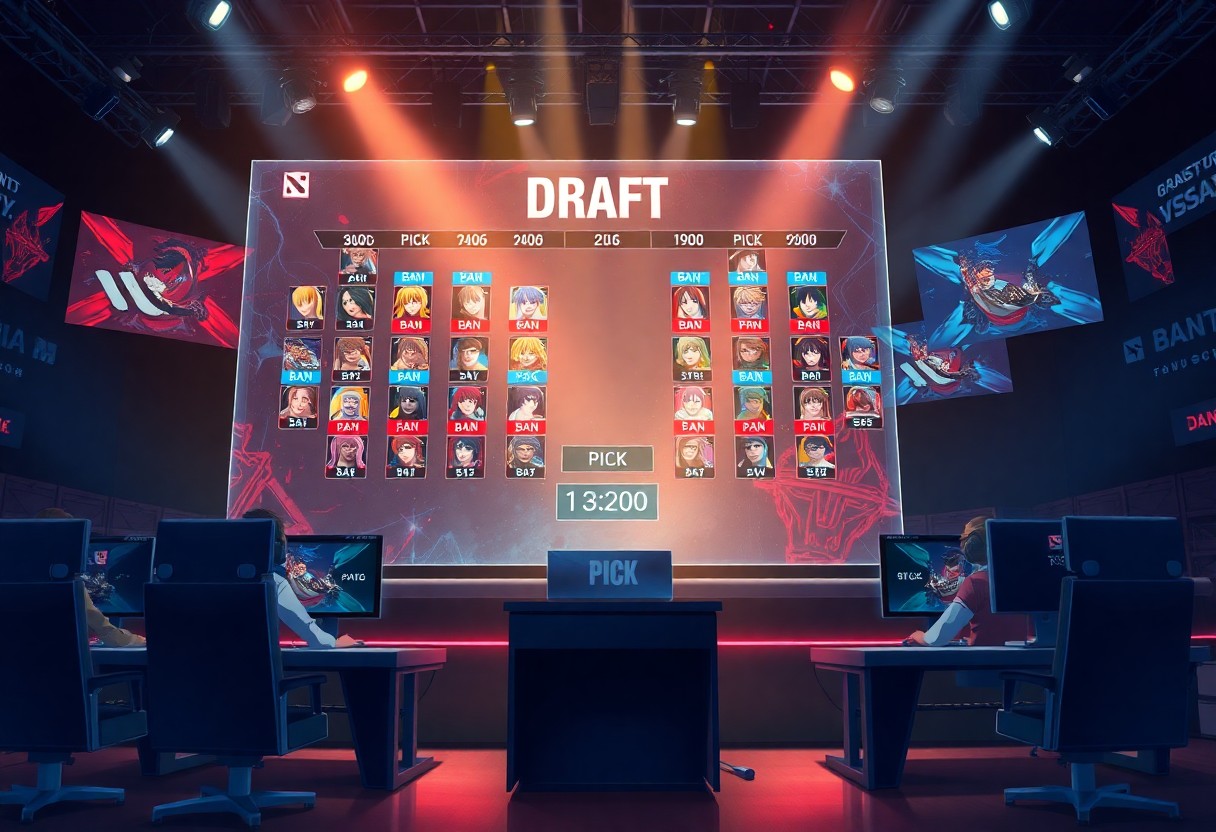
There’s a strategic depth to hero pick and ban mechanics in Dota 2 competitions that significantly influences match outcomes. Understanding these dynamics involves examining team compositions, counter-picks, and psychological tactics that shape the competitive environment.
The Evolution of Captain’s Mode
Transition from Classic to Modern Drafting Rules
Classic drafting rules focused primarily on a simple pick-and-ban format, limiting strategic depth. The introduction of modern drafting complexities transformed how teams approached team composition, enabling more intricate strategies.
Shifts to the current Captain’s Mode emphasized balance and competitive integrity. Recent changes have ensured that the drafting process accommodates diverse hero choices while maintaining counter-play opportunities.
Historical Shift in Ban Counts and Sequence
Initially, teams had limited bans, often restricting their ability to counter opponent strategies effectively. This changed as the competitive scene evolved, promoting a higher number of bans to enhance tactical flexibility.
Modern formats typically allow for multiple bans and a strategic picking order, which has played a crucial role in shaping the dynamics of professional matches, leading to more engaging gameplay.
Teams now have the opportunity to plan their drafting strategies around a greater number of bans, fostering more variety within hero selection. This evolution reflects a response to competitive demands, allowing teams to adapt and innovate their strategies in real-time.
The Impact of Hero Pool Expansion on Competitive Integrity
Expansion of the hero pool has significantly influenced competitive integrity, with more heroes allowing for diverse strategies and counterplays. As heroes are continually introduced, the meta evolves, forcing teams to adapt or risk obsolescence.
This dynamic environment encourages constant innovation, as teams must strategically utilize both common and niche picks. Increased hero availability minimizes predictability in matches, enhancing viewer engagement and excitement.
Hero pool expansion challenges teams to explore unconventional strategies, ultimately leading to a richer competitive experience. Such variety forces teams to stay versatile, keeping the gameplay fresh and engaging for both players and spectators alike.
Phase 1: The Opening Ban and Pick Salvo
Identifying and Neutralizing Meta-Defining Power Spikes
Teams analyze the current meta to pinpoint heroes that dominate. Understanding these power spikes means recognizing which heroes can swing the game in favor of one team. Consequently, targeted bans can effectively dismantle an opponent’s strategy.
Balancing bans between high-value heroes forces opponents to adapt. This often leads to the disruption of established strategies, paving the way for creative picks that capitalize on newly exposed weaknesses.
The Strategic Trade-off Between First Pick and Side Selection
Choosing between first pick and side selection presents a pivotal dilemma for teams. First pick grants immediate access to powerful heroes, but it can also reveal a team’s strategy early in the draft.
Side selection, while lacking immediate hero access, offers advantages such as map control and response capabilities. Weighing these factors heavily influences the overall draft strategy.
First pick can lead to stronger initial strategies, forcing opponents to react. In contrast, opting for side selection allows for a broader response to meta trends and enemy picks, facilitating diverse tactical approaches as the game progresses.
Establishing the Core Identity with Initial Hero Selections
Initial selections play a pivotal role in defining a team’s strategy. The heroes chosen during this phase set the tone for the entire match, offering insights into potential playstyles and win conditions.
Teams often select heroes that align with their overall identity, whether focusing on aggression, control, or utility. This initial strategy forms the backbone of the team’s approach, influencing subsequent picks and bans.
Core identity stems from the composition and synergy between selected heroes. Establishing a cohesive strategy during the opening phase allows teams to execute their game plan effectively, laying the groundwork for further developments in the draft.
Phase 2: Mid-Draft Adjustments and Counter-Banning
Reacting to Opponent Lane Assignments and Utility Needs
Adjustments during the mid-draft phase hinge on the opponent’s lane assignments. Teams analyze the picks made and respond accordingly, ensuring that they have the appropriate heroes to counter specific matchups. This strategic maneuvering can significantly affect the outcome of early game skirmishes and overall momentum.
Utility needs also play a pivotal role. Recognizing gaps in the opponent’s lineup enables teams to pick heroes that not only provide strong lane presence but also adapt later in the game. Effective communication within the team is necessary to meet these shifting needs.
The Art of the Denial Ban: Removing Synergistic Partners
Focusing on removing heroes that synergize well with the opponent’s key picks can disrupt their strategy. This denial ban tactic blocks combinations that would otherwise enable strong team fights or push strategies, forcing opponents into less optimal picks.
Strategically, this maneuver demands foresight. Teams must identify not only the strongest heroes in the draft but also assess potential combos that could create significant issues in the later game. Such advanced planning can shift the balance of power in the draft itself.
Understanding the synergy between heroes can lead to a powerful advantage. Denying a synergy pick not only hampers the opponent’s strategy but also opens the door for alternative picks that may be less effective without their usual partners. This forces a re-evaluation of their draft, often leading to suboptimal choices that can be exploited.
Balancing Support Roles with Semi-Core Flexibility
Balancing support roles with semi-core potential is necessary during the mid-draft phase. Heroes who can fulfill multiple roles allow for greater adaptability against opponent strategies. Selecting supports that can transition into core responsibilities can confuse opponents and create opportunities for unexpected plays.
Flexibility extends beyond initial picks; adjustments to item builds and positioning can make all the difference. Teams that leverage these strategies can create dynamic compositions that are difficult for opponents to anticipate, leading to innovative strategies that capitalize on enemy weaknesses.
Support heroes with semi-core potential allow for a dual purpose in the draft. By securing these versatile picks, teams maintain the capacity to shift game plans fluidly, enhancing both early game viability and late-game impact. This adaptability is critical when countering tailored strategies from the enemy.
Phase 3: The Closing Strategy and Last Pick Advantage
The “Cheese” Pick: Utilizing Unconventional Heroes for Maximum Impact
Surprising opponents with unconventional heroes, often termed “cheese” picks, can disrupt established strategies. Eschewing typical selections allows teams to exploit weaknesses not accounted for in the drafting phase.
Finalizing the Win Condition and Objective Control
Understanding game objectives is paramount to closing out a match effectively. Securing Roshan, pushing lanes, and controlling high ground become focal points in executing the final stages of gameplay.
Teams must maintain focus on their win conditions while adapting to any evolving threats. Coordination and communication are critical as they strategize the best methods to secure victory, solidifying their lead through effective objective control.
Securing objectives like towers or Roshan directly influences a team’s ability to finalize victory. Strong coordination ensures that all team members contribute to pushing lanes or defending high ground, translating individual efforts into a collective win. Identifying timings for engagements or objectives fosters confidence, allowing teams to maintain pressure and close out the match decisively.
Mitigating Exposure to Hard Counters in the Final Phase
Countering the enemy’s strategy is vital in the closing stage. By anticipating potential hard counters, teams can structure their gameplay to minimize vulnerability and maximize their own strengths.
Adjusting positioning, item builds, and even hero roles helps teams deal with specific threats. Countering hard counters requires adaptability, ensuring that strategies remain fluid as the game progresses toward its climax.
Carefully analyzing opponents’ picks allows teams to adjust their strategies proactively. Identifying and mitigating hard counters provides a tactical layer in the late game, reducing risk and increasing the likelihood of achieving their goals. Continuous adaptation and strategic foresight are necessary to navigate the complexities that emerge as the competitive landscape evolves.
The Role of the Captain and Draft Communication
Command Structure and Decision-Making Under Pressure
In high-stakes competitions, the captain acts as the primary decision-maker during the drafting phase. Clear communication is vital to ensure that all team members understand the chosen strategy and their roles. Each player’s input is encouraged, yet the captain must synthesize these ideas under pressure, making swift decisions that can shape the outcome of the match.
Adaptability becomes key when unexpected enemy picks or bans arise. Quick recalibration of the draft strategy is necessary to exploit opportunities or counter threats. The captain’s ability to maintain composure while steering discussions greatly influences team morale and effectiveness during this critical phase.
Integrating Player Comfort Levels with Strategic Necessity
Finding the balance between player comfort and team strategy is vital for success. Each player has specific heroes they excel with, and a captain should prioritize these comfort picks when drafting. This approach can maximize individual performance and instill confidence, which is often translated into better in-game execution.
However, rigid adherence to comfort can be detrimental if it clashes with the team’s overall strategic requirements. Effective captains recognize when to prioritize individual preferences while ensuring that the draft remains cohesive and aligned with the game plan.
Integrating player comfort levels with strategic necessity requires constant communication and an understanding of each player’s strengths. Strong captains create a supportive environment where players feel empowered to express preferences, yet also educate them on the bigger picture. This balance ultimately allows teams to adapt their preferred styles while adhering to the demands of the match at hand.
The Influence of the Coach During the Drafting Phase
The coach plays a pivotal role in shaping the draft strategy by providing insights and analyses that inform decisions. Their understanding of meta trends and rival team tendencies can greatly enhance the captain’s strategy. Regular collaboration between the coach and captain ensures a unified approach to tackling the drafting phase.
Coaches also assist in observing player behavior during practice, which helps identify strengths and weaknesses. This information is crucial for creating a well-rounded draft that aligns with both player capabilities and team objectives.
Coaches serve as the strategic backbone during the drafting phase, allowing captains to focus on communication and decision-making. Their expertise can point out overlooked hero synergies or potential vulnerabilities. Coaches empower teams with data-driven insights that refine draft choices, ensuring a more coherent strategy that aligns with both comfort and competition demands.
Strategic Archetypes: Fast-Push, Greedy, and Teamfight
- Fast-Push: Focuses on early tower damage and gaining map control quickly.
- Greedy: Prioritizes hero farming, aiming for late-game strength.
- Teamfight: Emphasizes coordination in combat engagements, requiring precise execution.
- Hybrid: Balances farming and fighting potential for versatility.
- Split-Push: Aims to create pressure on multiple lanes simultaneously.
Drafting for Early Game Dominance and Tower Pressure
Focusing on strong laners and early damage-dealing abilities can help solidify an aggressive strategy. Heroes that can quickly take objectives and apply pressure force opponents to react, often disrupting their plans.
Choosing heroes that excel in skirmishes and can chain together kills provides a clear pathway to early dominance. Securing early towers not only grants gold but also opens the map for subsequent objectives.
The Risk-Reward Ratio of Late-Game Scaling Lineups
Opting for late-game heroes means investing in a strategy that requires patience and precise execution. While these lineups can yield outstanding power spikes, they make teams susceptible to early aggression.
Without appropriate defensive measures, such teams can easily fall behind and lose control of the match. Risk mitigation becomes imperative when scouting for opportunities to secure farm safely.
Any team choosing a late-game scaling approach must weigh the consequences of their slower start against the potential for unbeatable late-game team fights. Balancing farm and survival while ensuring the right conditions for power spikes is critical.
Constructing High-Execution “Wombo Combo” Compositions
Building a “Wombo Combo” requires a specific synergy among heroes, where skills can be chained together for maximum impact. Coordination in execution during fights leads to dramatic swings in momentum and often guarantees team wipe opportunities.
Selecting heroes with ultimate abilities that complement one another is key. The effectiveness of these compositions hinges on timing and positioning, demanding a high level of mastery from players involved.
Any team aspiring to create a high-execution “Wombo Combo” composition must invest time in practice. Mastering the intricacies of timing, initiation, and follow-through can lead teams to victory in critical moments during competitions.
The Impact of the Reserve Time Mechanic
Tactical Allocation of Bonus Time Across Drafting Phases
Teams must strategically allocate their bonus time during each phase of the drafting process. Selecting heroes involves not only understanding team composition but also anticipating opponents’ picks. A well-timed use of reserve time allows teams to formulate counter-strategies and make informed choices, increasing their overall chances of success.
Utilization patterns can heavily influence the final compositions. By saving time for later stages, teams can respond more dynamically as the draft progresses. This careful management allows players to assess critical hero synergies, altering their approach based on the evolving landscape of the competition.
The Psychological Toll of Depleted Reserve Time
Depleted reserve time can lead to heightened stress levels within a team. As time runs low, players may feel pressured to make snap decisions, often resulting in suboptimal picks. This pressure can disrupt communication and lead to mistakes, diminishing a team’s cohesion.
Psychological strain becomes even more pronounced during high-stakes matches. Players may second-guess their choices, fearing the repercussions of a rushed decision. This mental fatigue can manifest in gameplay, affecting performance long after the draft concludes.
Teams experiencing a time crunch often find their ability to think critically impaired. Stress introduced by limited reserve time not only hampers decision-making but can also sow discord among players. Cohesion diminishes as individuals struggle with the pressure, eventually leading to misalignment in strategy during critical phases of the match.
Managing Information Overload During High-Stakes Intervals
Information overload frequently occurs during intense drafting periods. Teams must sift through countless hero options and counter-picks, creating a cognitive burden. Effective communication becomes paramount as players strive to streamline their focus amidst the chaos.
Establishing clear roles during the draft can help alleviate cognitive strain. Assigning specific responsibilities allows team members to concentrate on their areas of expertise, fostering more efficient discussions. By maintaining clarity in communication, teams can prioritize crucial information and enhance their decision-making process.
Addressing information overload requires teams to create a structured dialogue during drafting. By developing organized communication protocols, players can efficiently exchange ideas without overwhelming each other. This approach minimizes misunderstanding and chaos, ultimately leading to a more cohesive strategy and improved performance in-game.
Flex Picks and Draft Deception
Obfuscating Lane Assignments to Force Suboptimal Bans
Teams often employ flexible heroes to create uncertainty around lane assignments. By manipulating drafts, they can leave opponents second-guessing their own bans, leading to less optimal choices. This strategy not only confuses competitors but also opens doors for securing powerful picks later in the draft.
Multi-Role Heroes and Their Utility in Early Draft Phases
Multi-role heroes provide teams with versatile options that can adapt to various situations. Picking these heroes early can create an air of uncertainty that disrupts the opponent’s drafting strategy. This flexibility keeps rivals guessing about potential lane setups and matchups, complicating their ban decisions.
Teams thrive on the unpredictability these heroes introduce, often leading opponents into unfavorable draft scenarios. Utilizing multi-role heroes effectively can transform initial drafts into tactical advantages, as opponents may waste bans countering perceived threats that never materialize.
Baiting the Opponent into Over-Committing to Counter-Picks
Bait strategies can manipulate opponents into overreacting with their counter-pick selections. By presenting seemingly strong options, teams can steer rivals into committing resources to address threats that may not exist, weakening their overall draft flexibility. This tactic leads to an uneven balance of power in the final composition.
Setting up these bait scenarios requires keen awareness of both the current meta and the opponent’s tendencies. As rivals scramble to counter perceived threats, the initiating team can secure advantageous picks while effectively sowing confusion in the drafting process.
Meta-Game Influence and Patch Cycle Volatility
Adapting to Map Changes and Economy Rebalancing
Major map changes can dramatically shift hero viability, prompting teams to reassess their strategies. Adjustments to creep camps, neutral items, and tower placements force players to rethink their approach, often leading to the resurgence of previously overlooked heroes.
Economy rebalancing also influences hero selection. Changes in gold gain and item costs can render certain heroes more favorable, reshaping strategies and affecting ban priorities during competitions.
The Emergence of Signature Heroes Within Specific Patches
Specific patches often herald the rise of signature heroes that fit the new game dynamics. These heroes become emblematic of a team’s strategy, exemplifying their strengths in synergy with the patch changes.
Iterations in balance changes allow some heroes to dominate while others fade into obscurity. Identifying these signature picks can become a defining characteristic of a team’s identity in tournaments.
Analyzing the “Pocket Strat” Phenomenon in Major Tournaments
“Pocket Strats” are unique strategies hidden until critical matches, surprising opponents and showcasing team creativity. Teams often develop these plans to exploit specific meta weaknesses or counter particular opponents, adding depth to the draft phase.

Regional Drafting Styles and Cultural Preferences
The Discipline and Aggression of the Chinese Competitive Scene
Chinese teams showcase a unique blend of discipline and aggression in their hero drafting. A focus on strategic hero picks often emphasizes control and resource management, reflecting the region’s strong adherence to calculated gameplay. Iconic heroes are frequently prioritized, with a tendency to prioritize teamfight capabilities and late-game scaling.
Aggressive playstyles emerge through efficient counter-picks and early-game pressure, allowing for decisive map control. This strategy creates a high-stakes environment where meticulous planning and execution can be a team’s greatest asset.
Western European Innovation and Experimental Lineups
Innovation defines Western European teams, as they often incorporate unconventional heroes and strategies that shake up standard drafting practices. Experimentation with various roles and hero synergies allows for dynamic and unpredictable gameplay, keeping opponents guessing. Teams take pride in pushing boundaries, leading to a diverse meta that evolves rapidly.
This willingness to adapt and innovate often results in success at major tournaments, as they gather insights from international competitions and refine their strategies based on emerging trends.
Success in Western Europe stems largely from a collective understanding of the game’s mechanics, which encourages teams to experiment with hybrid lineups. By combining traditional strengths with unconventional hero choices, they develop surprising strategies that challenge the established meta. This fusion not only secures victories but also influences the global competitive scene by encouraging other regions to rethink their drafting methodologies.
Southeast Asian Fluidity: Prioritizing High-Mechanical Skill Caps
Southeast Asian teams exhibit remarkable fluidity in their drafting style, often reflecting a priority on high-mechanical skill heroes. This focus allows for aggressive, fast-paced gameplay that emphasizes individual player skill, enabling impactful plays and high-stakes fights. Flexibility in hero roles ensures adaptability throughout matches, catering to the strengths of each player.
Creative draft choices are common, with teams regularly playing unorthodox heroes in unexpected roles. This unpredictability keeps their rivals on edge, making it difficult to develop counter-strategies.
Mechanical skill strongly influences Southeast Asian teams’ choices, emphasizing heroes that can produce game-changing moments. By prioritizing those with high skill caps, they create opportunities for flashy plays and spectacular comebacks. The result is a competitive environment where players often shine as individuals, contributing to a thrilling spectator experience that showcases their talents during matches.
Hero Counters and Synergy Calculus
Direct Mechanical Counters and Lane Matchup Optimization
Mechanical counters involve heroes specifically designed to exploit the weaknesses of opposing heroes. These matchups can be pivotal; for example, an Anti-Mage can effectively handle a Medusa by capitalizing on her mana dependency. Lane optimization with these counters increases a team’s chances of gaining an early advantage, leading to a stronger mid-game presence.
Understanding the specifics of lane mechanics often determines competitive outcomes. Selection of heroes based on their matchup strengths allows teams to outmaneuver opponents in the early stages. A well-calibrated draft, focusing on these direct counters, ensures a solid foundation for later strategies.
Synergistic Pairings: The Force Multiplier Effect
Synergistic pairings elevate a team’s effectiveness through complementary abilities and game plans. For instance, combinations like Magnus and Kunkka not only amplify damage but also enable fluid team fights. These partnerships create overwhelming pressure, allowing coordinated assaults against enemy positions.
Teaming heroes that enhance each other’s strengths fosters a dominant presence on the battlefield. Abilities working in tandem can create game-changing scenarios, forcing opponents to address multiple threats simultaneously. This tactical cohesion can shift the balance in a match, converting potential conflict into decisive victories.
Drafting Against Global Presence and Mobility-Based Lineups
Countering teams that excel in global presence requires a strategic approach to hero selection. Heroes with instant mobility, such as Zeus or Pugna, can disrupt opponents’ plans, making coordination challenging. Crafting a lineup that can respond effectively to these threats ensures stability throughout the game.
Identifying strong crowd control and vision-wielding supports can neutralize these agile tactics. Teams should incorporate heroes like Disruptor or Nyx Assassin to mitigate the effectiveness of highly mobile compositions. The goal is to force engagements in a manner that minimizes the enemy’s advantage in mobility.
Data Analytics and Pre-Match Scouting
Utilizing Historical Draft Data to Predict Opponent Tendencies
Historical draft data serves as an invaluable tool in understanding opponent behavior. Analyzing past matches reveals patterns in hero selections and bans, offering insights into preferred strategies and meta adaptations. Teams can identify which heroes are frequently picked or banned by their opponents, providing a tactical advantage during the drafting phase.
Such analysis goes beyond mere statistics; it personalizes match preparation. By correlating data with situational contexts, teams can anticipate likely reactions from opponents, allowing for informed decision-making and preemptive strategies during hero selection.
Identifying Hero Comfort Zones and Player-Specific Bans
Identifying comfort zones for each player reveals preferred heroes that yield consistent performance. Scouting reports focusing on individual player statistics can shed light on which heroes should be banned to disrupt their rhythm. Targeting these comfort picks can hinder the overall team synergy.
Analyzing matches where players excel or struggle with certain heroes offers further insight into potential bans. This tailored approach ensures bans are not just generic but specifically aimed at undermining opponent strengths.
Further deep analysis into player-specific bans shows that each player’s historical performance with certain heroes can influence match outcomes significantly. Highlighting these preferences not only informs ban strategies but also aids in optimal draft compositions tailored to exploit weaknesses. Teams can combine individual player tendencies with overall team dynamics for strategic drafting.
The Role of Statistical Probability in Ban Prioritization
Statistical probability plays a crucial role in informing ban priorities. By employing advanced analytics, teams can assess the likelihood that specific heroes will be picked based on past trends. This probability informs strategic decisions, allowing teams to create focused ban lists that target high-impact heroes rather than simply eliminating popular ones.
Utilizing probability models helps in optimizing the ban phase, where even subtle changes can sway game dynamics. The precision of data-driven decisions enhances team strategies and can shift the balance in competitive matchups.
In-depth exploration of statistical models uncovers nuanced insights into hero viability. Probability calculations not only assess hero efficacy but also account for opponent adaptability, making them a key consideration in pre-match preparations. Such evaluations ensure teams approach the draft with a mix of caution and strategic foresight.
Hero pick and ban mechanics in Dota 2 competitions
Using Respect Bans to Destabilize Individual Player Confidence
Respect bans serve as powerful psychological tools, aimed at undermining opponents’ morale. By targeting heroes favored by key players, teams can instill doubt, disrupting their confidence and overall synergy. This tactic not only limits options but often leads to hesitance in subsequent picks.
Opponents may find themselves overthinking choices, as the weight of a banned hero becomes a mental burden. Disrupting a player’s usual strategies can create an unsettling atmosphere, pushing them to second-guess their decisions throughout the draft.
The Fast-Click Pick: Projecting Confidence and Preparedness
Fast-click picks communicate a sense of preparedness and decisiveness. Players who swiftly select heroes often project confidence, which can be intimidating for opposing teams. This tactic signals to rivals that a team has done their homework and is ready to execute their strategy flawlessly.
Such speed not only imposes psychological pressure but also can throw opponents off their game plan. Rapid selections force rivals to adapt quickly, potentially leading to mistakes and miscalculations that can be exploited in later stages.
The fast-click pick showcases not only strategic readiness but also psychological dominance. When a team shows confidence through quick selections, it can disrupt the opponent’s rhythm and sow seeds of doubt. As rivals scramble to react, the team employing fast-click picks gains an upper hand, making it harder for the opposition to maintain composure.
Recovering from a Lost Draft Through In-Game Adaptation
Adjustment strategies during matches can effectively counteract poor draft outcomes. Teams that adapt dynamically to initial disadvantages showcase resilience, often turning the tide despite suboptimal hero selections. Effective communication and flexibility become necessary as players shift focus to in-game conditions.
Responding to the unfolding dynamics allows teams to capitalize on opponents’ mistakes, demonstrating that a lost draft can still lead to victory. Key to this process is maintaining a level head, ensuring strategies are fluid and rooted in real-time observations.
In-game adaptation requires players to analyze and respond quickly to the live situation, shifting roles and strategies as needed. Leveraging overall game awareness enables teams to identify opportunities, fostering a modus operandi that prioritizes flexibility over rigidity. Players must focus on executing plays that exploit opponents’ weaknesses, emphasizing teamwork and coordination to reclaim control despite draft challenges.
Summing up
Taking this into account, hero pick and ban mechanics play a strategic role in Dota 2 competitions. They shape match dynamics, influencing team compositions and gameplay strategies. Teams must analyze opponents’ strengths and tendencies while also highlighting their own preferred heroes.
The iterative nature of the pick and ban phase reflects team priorities and can often dictate the outcome of a match. Understanding these mechanics provides insight into competitive strategies and enhances overall audience engagement with the game.
Q: What is the hero pick and ban phase in Dota 2 competitions?
A: The hero pick and ban phase is the initial stage of a Dota 2 match where teams strategically choose or ban heroes. Teams alternate turns, with each side able to ban a set number of heroes, followed by selecting their own heroes. This phase is imperative for gaining a tactical advantage, preventing opponents from selecting powerful or synergistic heroes.
Q: How many heroes can teams ban during the pick phase?
A: In official Dota 2 tournaments, each team typically bans three heroes during the ban phase. This allows for a strategic approach to eliminate key heroes that may be crucial to the opposing team’s strategy. The remaining heroes that are not banned are available for selection.
Q: What impact does the pick and ban phase have on the overall game strategy?
A: The pick and ban phase significantly influences the game strategy by allowing teams to shape their lineups according to their strengths and the weaknesses of their opponents. By selecting heroes that synergize well with their game plan and countering the enemy’s picks, teams can establish early momentum and dictate the flow of the match.