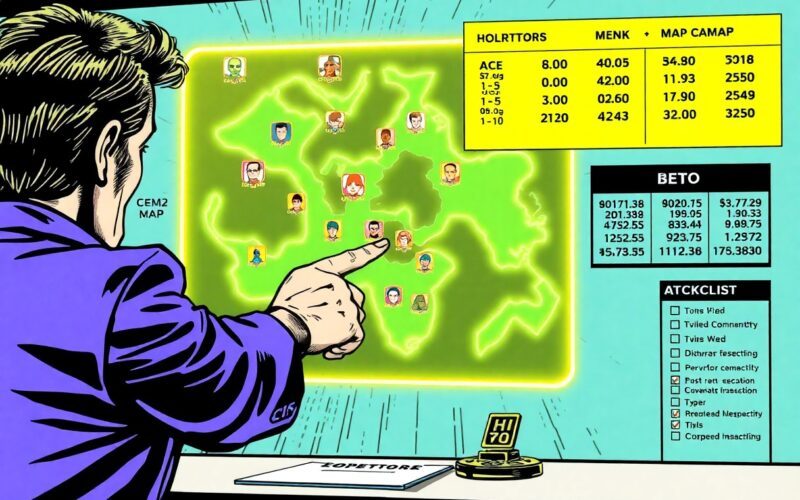







Just understanding CS2 anti eco round volatility offers insights into market dynamics that fluctuate in real-time. This analysis focuses on how anti eco rounds impact market stability, player strategies, and overall economic implications in competitive gaming environments.
The Mechanics of the Anti-Eco Round in Counter-Strike 2
Economic Disparity and Loadout Advantages
Economic disparity defines the anti-eco round, with teams leveraging financial advantages to secure strong weaponry and utility. Dominance in buy rounds allows favored teams to invest heavily, amplifying their firepower while opponents struggle with budget constraints.
This economic imbalance facilitates clear loadout advantages. Stronger weapons grant players a higher probability of winning engagements, and the use of grenades-often absent in eco rounds-enables strategic plays that can devastate ill-prepared opponents.
The Evolution of Pistol Lethality in the Source 2 Engine
Pistol lethality has seen notable changes in the Source 2 engine, affecting anti-eco strategies significantly. Balancing adjustments have rendered certain pistols more viable, prompting players to rethink their eco-round tactics.
Simplified mechanics allow for more intuitive aiming and responsiveness, equipping players with the tools to capitalize on vulnerable opponents. With these enhancements, underfunded teams maintain a fighting chance, reshaping expectations in these crucial rounds.
Analyzing Live Market Fluctuations During Low-Buy Rounds
Real-Time Odds Adjustments and Pre-Round Bias
Fluctuations in live betting odds can reflect team performance biases that manifest before rounds with limited economic investment. Bookmakers adjust their odds based on perceived strengths and weaknesses, which leads to volatility as last-minute information becomes available. Such adjustments often stem from player form, historical matchups, and in-game occurrences.
Betting patterns also influence these real-time adjustments. As more gamblers place bets, the odds may shift significantly, creating potential value gaps. These movements mimic the emotional and strategic implications of each round, highlighting the unpredictable nature of betting on lower-buy scenarios.
Impact of Early Entry Frags on Win Probability Models
Early frags can dramatically alter winning odds in low-buy rounds. Securing initial kills not only boosts a team’s confidence but also destabilizes the enemy’s strategy, causing immediate shifts in win probability models. Data illustrates that first kills are disproportionately pivotal in determining round outcomes.
Research into past matches shows that teams which score initial frags maintain higher win rates, particularly during low-budget rounds. The psychological effect of those early engagements influences player decision-making, resulting in cascading advantages that further skew the odds in favor of the leading team.
Key Variables Influencing Round Volatility
Map Geometry and Close-Quarters Combat Zones
Map geometry plays a fundamental role in determining round volatility in CS2. Complex layouts and varying sightlines can create unpredictable engagements, particularly in close-quarters combat zones where players are forced to make split-second decisions. Narrow corridors and tight angles amplify the potential for chaotic exchanges, often resulting in surprising outcomes.
Combat scenarios within these areas demand rapid tactical adjustments. Players must consider not only their positioning but also movement patterns of opponents, adding layers of complexity that can significantly alter the trajectory of a round.
Utility Management and the Dry-Peek Risk Factor
Effective utility management directly impacts round volatility. Utilizing grenades and smoke effectively can manipulate map control, forcing opponents into unfavorable scenarios. Poorly timed utility, however, can lead to significant setbacks, particularly when players attempt risky dry-peek maneuvers without sufficient support.
Dry-peeking without adequate utility can expose players to extensive crossfire, leading to swift eliminations and unpredictable round outcomes. The interplay between employing utility and analyzing risks adds strategic depth, making every decision pivotal.
Balancing utility usage with the risk of dry-peeking contributes greatly to round volatility. Challenges arise when players lack coordination, leading to wasted resources and misplaced aggression. Forcing engagements without proper cover or support can create openings, swinging momentum unexpectedly in favor of the defending team.
Individual Player Proficiency with Secondary Sidearms
Individual player proficiency with secondary sidearms can heavily influence round outcomes. Competence in utilizing sidearms allows players to maintain pressure, even when primary weapons are unavailable or impractical. This proficiency can make the difference in tense skirmishes where precision and timing are crucial.
Several factors come into play, including familiarity with each sidearm’s mechanics and situational judgment. When players optimize their secondary weapon usage, they enhance their team’s tactical options, creating opportunities that can shift round dynamics in unforeseen ways.
Mastery of secondary sidearms often dictates engagement strategies, allowing skilled players to capitalize on critical moments. Firearm accuracy and quick reaction times can convert disadvantageous situations into advantageous ones, underscoring the importance of training with these alternate weapons.
Strategic Indicators of a Potential Eco-Upset
The Hero Buy and Glass Cannon Distributions
Hero buys often represent a strategic pivot in eco rounds, particularly when teams recognize an opening to shift momentum. Invariably, players focus on acquiring crucial firepower, which can turn the tide against opponents, even under dire economic conditions.
Glass cannon distributions highlight the risk-reward ratio in these scenarios. Players opt for lighter armor and high-powered weapons, gambling on high-impact plays that can upset the economic balance, reflecting a willingness to embrace volatility for potential gains.
Stack Maneuvers and Information Denials
Stack maneuvers indicate a coordinated effort to maximize economic potential against opponents’ anti-eco rounds. Strategically grouping players can amplify firepower, allowing teams to overcome numerical disadvantages and disrupt enemy strategies.
Information denials play a critical role here, as obscuring team movements can confuse opponents and create openings for unexpected engagements. Observing enemy patterns becomes difficult, heightening the potential for a successful economic upset.
Effective execution of stack maneuvers relies on precise communication and timing. Teams sharing information about enemy positions can synchronize their movements, ensuring that any engagements are advantageous. When properly orchestrated, these maneuvers can lead to devastating results for opponents, effectively dismantling their anti-eco strategies and flipping the economic tide in favor of the attackers.
Data-Driven Insights into Professional Circuit Performance
Historical Upset Correlation in Tier 1 vs. Tier 2 Events
Data analysis reveals distinct patterns in upsets between Tier 1 and Tier 2 events. Metrics indicate that Tier 2 teams often capture unexpected victories against top-tier opposition. Contextual factors, such as recent performance and previous matchups, contribute significantly to these occurrences, highlighting the unpredictability in competitive play.
Comparative performance metrics illustrate how underdogs leverage strategies that exploit weaknesses in their higher-ranked opponents. Scrutinizing match statistics, analysts find correlations with player form and tactical adaptations, underscoring the dynamic nature of tournament environments.
Economic Reset Consequences and Momentum Cascades
Economic resets lead to abrupt shifts in team dynamics and strategies. As budget constraints tighten, even top-tier teams may pivot to a more conservative approach, impacting their play styles. During these periods, teams frequently struggle to maintain momentum, resulting in unexpected losses.
Cascading effects often emerge as teams experience rising pressure, leading to further performance declines. Data shows that a single upset can ripple through a tournament, causing higher seeds to falter as confidence wavers.
Economic resets not only modify individual team strategies but also alter the competitive spirit of the entire event. Teams that have performed well previously find themselves re-evaluating their economic strategies under pressure. Frequent changes in momentum often reveal deep-rooted vulnerabilities that can drastically affect outcomes, leading to unexpected shifts in the tier structure of competitive play.
Live Betting Execution and Risk Management
Identifying Value in Mid-Round Market Overreactions
Observing market reactions during rounds reveals significant opportunities. Often, sudden shifts in betting odds stem from a single play, causing disproportionate market responses. Recognizing these anomalies allows for strategic positions that capitalize on overreactions.
Betting on teams after an unexpected loss or a strong play can yield favorable odds. By analyzing player performance and team dynamics in real-time, bettors can pinpoint moments to enter or exit positions with enhanced returns.
Hedging Against High-Volatility Force Buys
High-volatility force buys can lead to unpredictable market swings. Establishing a hedge strategy before these scenarios emerges is important. This involves setting up offsetting bets to mitigate losses during sudden price movements.
Crafting a liquidity plan alongside your betting strategy helps cushion against abrupt market changes. By placing smaller, reflexive bets in opposition to force buys, you can protect your bankroll while maintaining exposure to potential gains.
To wrap up
Now, CS2 anti-eco round volatility in live markets presents significant challenges for teams. Fluctuating strategies and unpredictable player behavior can lead to unexpected outcomes, impacting match dynamics. Understanding these variations helps in anticipating shifts in gameplay, enabling better preparation and response plans.
Proficient tracking of anti-eco round performance provides key insights into economic management and tactical adjustments. Effective analysis contributes to a team’s ability to adapt, ensuring they stay competitive and relevant in the ever-changing environment of CS2 matches.