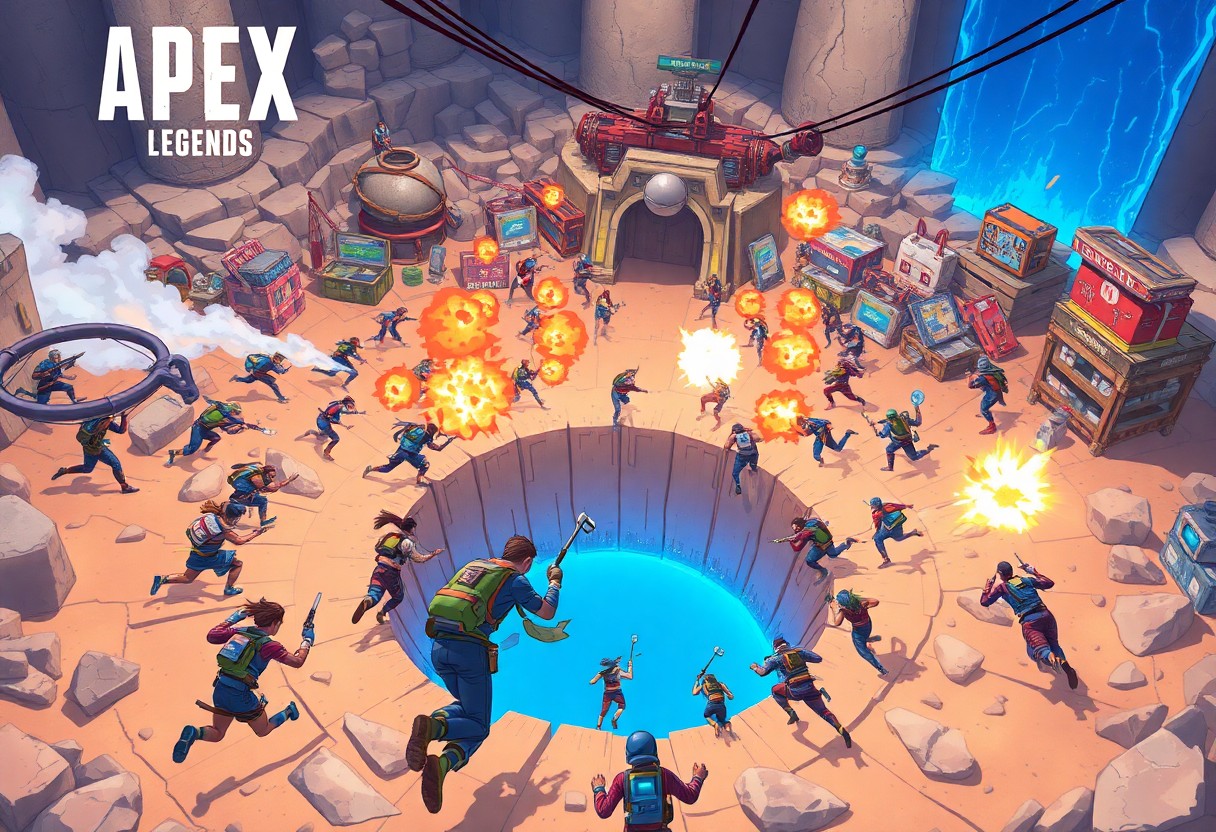
Apex players often find themselves at the mercy of unpredictable zone pulls, affecting strategy and gameplay. This blog post explores how these pulls influence decision-making and the common overreactions players exhibit, offering insights into improving performance and understanding game dynamics.

Apex Legends Zone Pulls and Overreaction Trends
Deciphering Ring Console Logic and Survey Beacon Data
Understanding ring pulls in Apex Legends requires an analysis of both the ring console logic and data obtained from survey beacons. Each match follows a hidden algorithm that dictates ring behavior, impacting player strategies. Survey beacons can provide valuable insight into potential play zones, allowing for better tactical planning based on the ring’s tendencies.
Survey beacon data highlights patterns that players can leverage for strategic advantages. While randomness plays a role, familiarizing oneself with the mechanics of ring pulls helps players make informed decisions, anticipate movements, and adapt in a fast-paced environment.
Predictable Variance: Differentiating Hard Pulls from Center Shifts
Players often encounter hard pulls, where the next ring drastically shifts away from the previous location, contrasting with center shifts that typically keep players within a set area. Hard pulls force teams to make immediate reassessments and can result in chaotic engagements, whereas center shifts usually allow for a more predictable transition.
Understanding these distinctions is crucial for survival. Recognizing whether a ring pull is a hard shift allows players to adjust their positioning and tactics promptly. This knowledge helps avoid unnecessary risks and optimizes team cohesion.
Hard pulls present unique challenges, creating a sense of urgency that can lead to hasty decisions. In contrast, center shifts offer players a moment to breathe and strategize. Differentiating between these two types of pulls enables teams to react effectively, fostering more strategically sound gameplay throughout each match.
Apex Legends Zone Pulls and Overreaction Trends
The “God Spot” Fallacy and the Risks of Premature Commitment
Players often fall into the trap of chasing the so-called “God Spot,” a seemingly perfect position that may not be sustainable. Committing too early to a location can lead to vulnerability, especially if the zone pull shifts unexpectedly. This fallacy highlights how assumptions about optimal strategies can cloud judgment in dynamic scenarios.
Overestimating the safety of a chosen spot can result in players neglecting their surroundings. When teams become fixated on the ideal position, they often disregard changing circumstances, leaving them exposed to ambushes or miscalculations from adversaries capitalizing on their indecisiveness.
Panic Rotations: Why Teams Abandon Viable Cover
Panic induces rapid, often irrational decision-making, leading teams to abandon solid cover when under pressure. The instinct to reposition quickly can override logical assessments of the battlefield, prompting hasty rotations that compromise team strategy. This reactionary behavior can create openings for enemies to exploit.
Decisions made in panic frequently ignore beneficial advantages. Teams that initially have strong defensive positions may feel the urgency to move, believing that any static position could become a liability. Ironically, this approach often leads to worse positions and increased risk of elimination in crucial moments.
Tactical Evolution of Zone Rotations
The Edge-Play Paradigm vs. Early Interior Positioning
Edge-play strategies focus on occupying the periphery of the zone, allowing players to monitor movements while minimizing exposure. This approach often gives teams critical intel before committing to engagements, which can be decisive in high-stakes environments. By utilizing natural cover along the edges, squads build a tactical advantage against foes who are forced to rotate inwards.
In contrast, early interior positioning prioritizes securing strategic locations within the zone quickly. Teams capitalizing on early interior spots can control the flow of engagements and effectively dictate the pace of the game. By establishing dominance in key areas, squads can pressure enemies into unfavorable fights, transitioning the early-game advantage into a late-game win.
Navigating Chokepoint Congestion During Late-Game Shifts
Congested chokepoints become significant hurdles as the game progresses. Players often find themselves squeezed between zones and enemies, making decision-making under pressure critical. Understanding the timing of rotations and enemy movements can allow for successful exits from these tight areas, transforming potential traps into advantageous scenarios.
Examining the dynamics of chokepoint congestion reveals various tactics for survival. Utilizing area denial, such as grenades or defensive legends, can shift the balance. Employing low-risk rotations, particularly with legends equipped for mobility, offers teams a way to bypass heavy firefights. These strategies help maintain momentum and often lead to favorable positioning in the closing moments of a match.
Influence of Legend Meta on Zone Perception
Evolving metas in Apex Legends significantly shape how players view and react to zone pulls. The introduction of new legends or reworks can alter strategies, compelling players to adjust their expectations about what zones are favorable. Notably, different legends bring unique abilities that influence positional advantages, shifting the overall perception of risk versus reward in zone engagements.
Controller Class Dominance and the Value of Foresight
Controller legends excel in zone control, allowing teams to leverage their strong area denial capabilities. These legends enhance the value of foresight by providing greater awareness and strategic options during rotations. Foresight becomes imperative when anticipating enemy movements, ensuring that players can effectively plan their approach to zones.
Success often hinges on preemptive strategizing. With Controllers, teams can dictate the pace of engagements and force opponents into less advantageous positions. Adjusting tactics based on the zone’s location, combined with effective use of legend abilities, empowers teams to maintain upper hands throughout the match.
Skirmisher Utility in Mitigating Poor Rotational Timing
Skirmisher legends serve as a vital asset for teams struggling with rotational timing. Their abilities facilitate quick repositioning, allowing players to adapt on the fly and exploit openings while eliminating the pressure of poor timing. This utility becomes especially critical in the final zones, where pace and decision-making can determine the outcome.
Utilizing Skirmishers can dramatically change a team’s approach to rotations. Rather than adhering strictly to planned routes, these legends provide flexibility that can rescue teams from unfavorable situations. Their abilities enable rapid assessments of zone pressures, allowing for optimized positioning and ultimately enhancing survival rates during late-game scenarios.
Data-Driven Analysis of Final Circle Probability
Mapping High-Frequency End-Game Locations across Storm Point and World’s Edge
Analyzing the data from numerous matches reveals high-frequency end-game locations that players should target. Certain areas consistently serve as final circles, offering strategic advantages such as cover and loot distribution. Charting these spots can inform players where to position themselves as the game progresses, increasing their survival chances.
Storm Point and World’s Edge showcase distinct patterns, with each map exhibiting unique geographic features influencing end-game probabilities. Understanding these features allows players to anticipate enemy movements while securing advantageous terrain for late-game confrontations.
Identifying Confirmation Bias in Mid-Game Decision Making
Bias often clouds players’ judgment, leading to suboptimal choices in the mid-game phase. Relying on previous experiences creates a skewed perspective, causing players to ignore viable alternatives. Recognizing situations where this bias occurs is imperative for improving decision-making.
Many players fall victim to confirmation bias when they favor information that reinforces their decisions while dismissing contradicting evidence. This tendency can lead to repetitive mistakes in positioning and engagement choices during mid-game encounters, ultimately affecting their performance in the final circle.
Apex Legends Zone Pulls and Overreaction Trends
Maintaining Inventory Economy Under Zone Pressure
Players must prioritize inventory management to stay ahead under constant zone pressure. A streamlined inventory allows for quick decision-making during critical moments. Gathering crucial items while discarding the unnecessary can maximize efficiency and enhance survivability in competitive situations.
Understanding when to sacrifice equipment for resources is equally important. Constantly assessing your team’s needs can prevent fatal shortages during engagements. Encourage communication about what items are crucial and what can be spared, promoting a balanced approach to resource management.
The “Deathball” Effect: Countering Aggressive Third-Party Momentum
The “Deathball” effect often arises when teams aggressively pursue kills, diminishing their awareness of surrounding threats. This hyper-focus can result in easy pickings for opportunistic squads. Awareness of the potential for third-party engagements should shape your team’s strategy from the outset.
Applying pressure while remaining vigilant can disrupt opponents’ momentum. Instead of recklessly pushing into fights, consider flanking or playing defensively to draw other teams into engagements. This tactic can create confusion and open opportunities for counterattacks.
The “Deathball” effect places teams in precarious situations where aggressive plays attract unwanted attention. By prioritizing defensive positioning and maintaining map awareness, squads can effectively minimize risk while maximizing the potential for counter-engagement. Recognizing when to hold back during skirmishes can preserve valuable resources and team cohesion.
Resetting Team Mental Fortitude After a Disadvantageous Shift
Falling behind during a zone pull can significantly impact team morale. Acknowledging setbacks quickly and shifting focus to recovery can counteract negative emotions. Communication becomes crucial during these moments to reset strategies and regain composure.
Identifying individual strengths and redistributing roles can provide a sense of purpose. Encouraging teamwork and maintaining a forward-thinking mindset helps re-establish confidence even in trying circumstances.
Resetting team mental fortitude requires a proactive approach to failure. Reflecting on past performances to extract lessons fosters growth, maintaining a positive atmosphere. Encouraging open dialogue about challenges and focusing on small, achievable goals can help teams recover and perform effectively under pressure.
To wrap up
From above, Apex Legends’ zone pulls and player reactions illustrate both strategic depth and emotional investment in gameplay. Understanding zone dynamics is vital for survival and success, with players often overreacting to sudden shifts, which can lead to rash decisions and unfavorable outcomes.
Analyzing these trends reveals insights into player psychology. Overreactions can stem from the high-stakes nature of competitive play, affecting teamwork and strategy. Recognizing these patterns allows players to hone their gameplay, potentially improving their performance in the face of pressure.