Many players seek to understand the ranked leagues in Apex Legends, as they influence competitive gameplay and advancement. This post outlines the league structure, including tiers and promotion requirements, providing necessary insights for players aiming to enhance their rank in the game.
Foundational Hierarchy of the Ranked Tiers
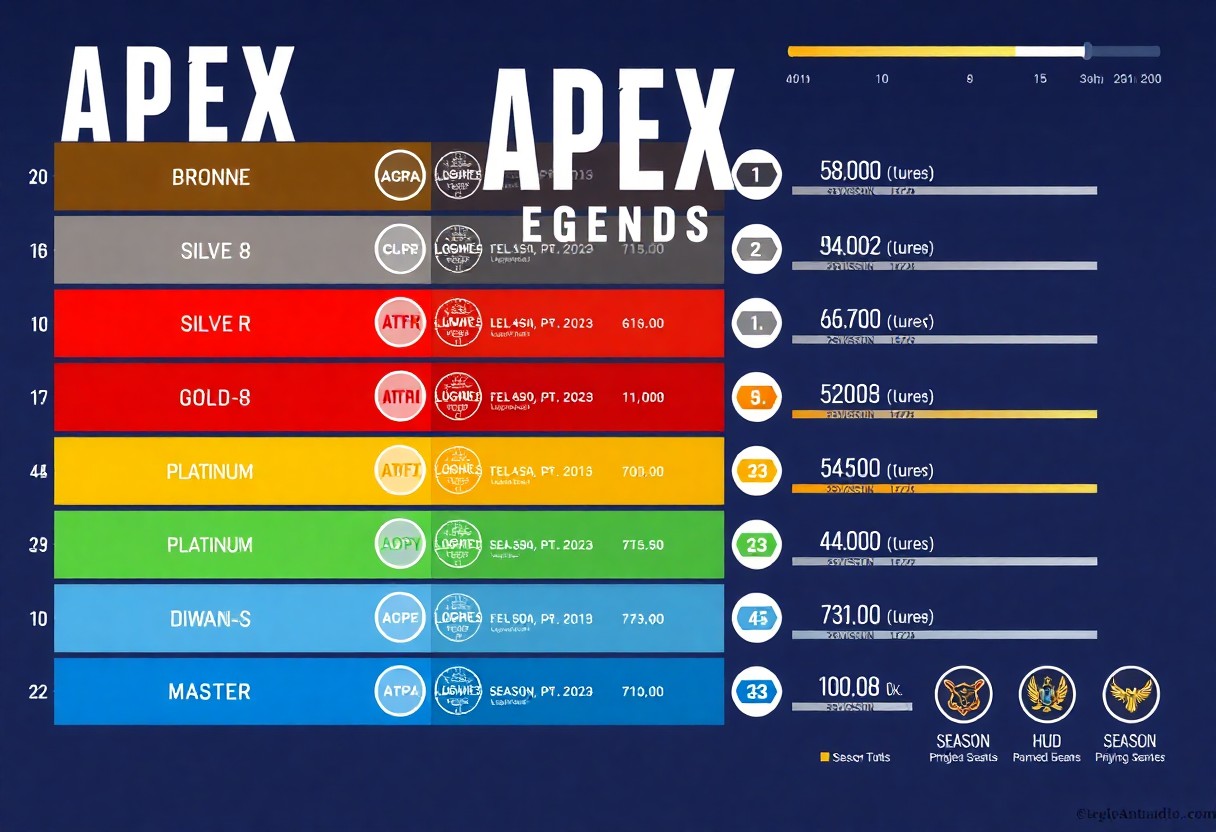
Breakdown of Tiers from Bronze to Diamond
Each ranked tier in Apex Legends encapsulates a player’s skill and experience. Starting from Bronze, players advance through Silver, Gold, and Platinum, ultimately reaching Diamond. Each tier offers distinct challenges and showcases the varying capabilities of players.
Within these tiers, further divisions exist, providing a more granular progression system. This tiered structure allows players to improve their skills progressively, with each higher rank demanding greater strategic understanding and teamwork.
The Prestige of Master and Apex Predator Status
Master and Apex Predator tiers serve as the ultimate recognition for top-tier players. Achieving the Master rank requires skill and consistent performance, while the Apex Predator status represents the elite of the elite, limited to the top 750 players in each region.
Attaining these ranks signifies not only skillful gameplay but also a strong commitment and determination. Players who reach these heights enjoy a sense of prestige and are often respected within the community.
Possessing Master or Apex Predator status opens doors to exclusive in-game rewards and recognition, enhancing the overall gaming experience. These ranks symbolize hard work and dedication, making them aspirations for many players.
Division Increments and Tier Thresholds
Division increments mark the steps within each tier, providing players with clear objectives. Each tier consists of multiple divisions-typically four-allowing for a more nuanced ranking experience, with specific thresholds needed to progress.
Understanding these thresholds is necessary for strategic advancement. Players must not only win games but also focus on performance metrics like kills and damage to ensure they meet the requirements for advancement.
Tier thresholds dictate the number of points needed for progression, emphasizing the importance of both individual skill and teamwork during matches. Achieving these milestones fosters a strong sense of accomplishment as players recognize their growth.
Apex Legends Ranked Leagues Structure and Progression Requirements
Minimum Account Level and Security Requirements
To participate in Ranked Leagues, players must reach a minimum account level of 10. This ensures a foundational understanding of game mechanics and character abilities. In addition, having two-factor authentication enabled is mandatory for account security, safeguarding against unauthorized access.
Players who meet these requirements gain access to the Ranked mode. This requirement not only promotes fair play but also encourages players to become familiar with different legends and game modes before entering competitive play.
Legend Unlocks and Roster Diversity
Access to multiple legends is necessary for building a versatile roster in Ranked Leagues. Players must unlock at least 12 legends to ensure effective team composition and strategy. Such diversity allows for various tactical approaches to gameplay, accommodating different playstyles and strategies.
In competitive play, selecting legends that complement one another can significantly enhance a team’s chances of success. Players are encouraged to embrace various legends to adapt to situational demands, promoting a balanced and dynamic team environment.
Cross-Platform Participation Guidelines
Ranked Leagues support cross-platform play, acknowledging the growing trend of gamers across different consoles. Players can compete with or against others on PlayStation, Xbox, and PC, expanding matchmaking opportunities and enhancing competitive experiences.
While cross-platform gameplay is permitted, players should understand that performance statistics may vary across platforms. Staying aware of these differences can provide insight into team dynamics and competition strategies.
Apex Legends Ranked Leagues Structure and Progression Requirements
Entry Cost Scaling Based on Current Rank
Entry costs increase as players move up the ranks, reflecting the competitive environment’s intensity. For instance, entering Bronze requires minimal RP, while Ascending to Diamond and above demands a higher investment. This scaling ensures that only dedicated players ascend the ranks, maintaining a balanced competitive atmosphere throughout the league.
Higher ranks also see a larger entry fee, which serves as a deterrent against casual play. As players progress, the cost acts as both a challenge and a motivational factor, pressuring players to improve their skills and performance consistently to offset the increased expense.
Performance-Based Accumulation Mechanics
Ranking up is heavily influenced by individual performance, rewarding players based on their contributions in matches. Each game played contributes to RP gains or losses calculated on various metrics, including kills, damage dealt, and placements. Success in these areas directly correlates to the ability to retain or gain ranks.
Average players may find consistency vital to their progression, as high placement without kills might yield lesser RP than an aggressive playstyle. This duality in performance metrics emphasizes both survival and combat proficiency, challenging players to excel in all aspects of gameplay.
Detailed tracking of performance allows players to identify areas for improvement, encouraging a focus on both survival tactics and aggressive engagements. Adapting to this mechanics fosters a dynamic and competitive atmosphere, aligning rewards with player contributions effectively.
Bonus RP for Skill and Kill Participation
Gaining additional RP through kills and high-stakes gameplay rewards players who actively contribute to their team’s success. Points awarded for each elimination incentivize aggressive playstyles, creating a more engaging game experience. High kill participation further amplifies RP rewards, making it necessary for players looking to climb the rankings quickly.
Players with strategic skill in securing kills and assists often see a significant boost in their RP totals. Achieving this requires not just marksmanship but also teamwork and positioning, highlighting the multifaceted nature of success in Ranked mode.
Focusing on skill and kill participation becomes an integral part of climbing the ranks, encouraging players to engage with enemies rather than solely relying on passive strategies. This emphasis showcases a player’s overall combat effectiveness, rewarding those willing to take risks and actively shape each match’s outcome.
Scoring Dynamics: Placement vs. Elimination
The Mathematical Weight of Survival Time
Survival time plays a significant role in ranking scores. Players earn points simply by staying alive, encouraging strategic play that prioritizes longevity over aggressive tactics. This mechanism rewards teams that effectively manage engagements and avoid unnecessary risks.
Rewards increase substantially as players progress deeper into the match. As the circle shrinks, the tension mounts, and the points awarded for placement rise, reinforcing the idea that surviving to the end is imperative for climbing ranks.
Kill Point (KP) Multipliers and Diminishing Returns
Kill Points (KP) are awarded for each elimination and are integral to boosting overall scores. The first few eliminations yield higher points, incentivizing aggressive gameplay. However, as players accumulate eliminations, the rewards start to diminish.
This diminishing returns mechanic shifts gameplay dynamics. With reduced KP for multiple kills, players face the challenge of balancing aggression with survival, as maximizing eliminations can become less rewarding than focusing on placement.
Players initially gain substantial KP, but the decrease in rewards for consecutive kills encourages strategic choices. Overemphasis on kills can lead to lower placement points, pushing teams to find innovative ways to balance offensive and defensive play throughout the match.
Team Participation and Assist Credit Systems
Teamwork is paramount in Apex Legends, reflected in the way points are awarded for participation. Assists are credited when a player contributes to an enemy’s elimination without securing the kill themselves. This system promotes collaborative strategies, enhancing overall team scores.
Increasing engagement in fights not only boosts individual player scores but also solidifies team synergy. This approach emphasizes that every contribution matters, encouraging players to support each other and maximize their collective performance throughout matches.
The assist credit system effectively underlines the importance of teamwork. By rewarding players for their active participation in engagements, it fosters a culture where collaboration leads to higher scores, making team dynamics integral to success in ranked play.
The Matchmaking Rating (MMR) System
Hidden Skill Metrics and Fair Play Algorithms
Understanding the MMR system goes beyond visible ranks. Hidden metrics track player performance, incorporating factors like kills, assists, and survival rate. These elements contribute to a comprehensive skill profile that affects matchmaking.
Fair play algorithms ensure that players receive appropriate matchmaking experiences. Such algorithms analyze player behavior, penalizing toxicity and rewarding teamwork, further refining the overall quality of matches.
Balancing Queue Times with Match Quality
Queue times are a critical aspect of the player experience. Balancing the desire for shorter wait times with the need for high-quality matches poses a constant challenge for developers.
Adjustments to matchmaking can influence wait times and match outcomes. Striking the right balance ensures players remain engaged without compromising competitive integrity.
Impact of Solo vs. Premade Squad Matchmaking
Solo players face different challenges compared to premade squads. Matchmaking takes into account team compositions, often leading to disparities in perceived skill levels between solo and group players.
Team dynamics significantly affect gameplay. Premade groups can leverage coordinated strategies, while solo players may struggle to find synergy, impacting match outcomes and individual experiences.
Balancing the experience between solo and premade squads remains complex. While premades can exploit communication and strategy, solo players must adapt quickly to changing situations, creating a unique dynamic that influences overall match quality and enjoyment.
Promotional Trials and Advancement Hurdles
Specific Challenges for Tier Promotion
Promotional Trials introduce unique obstacles that players must conquer to advance to the next tier. Each trial requires a team to showcase not just individual skill but also effective teamwork, as cooperation often determines success. Challenges can involve a mix of combat performance, strategic plays, and survival skills, pushing players to adapt their gameplay.
Meeting these challenges often tests players’ ability to handle pressure. A single misplay or lack of coordination can hinder a team’s chances, making precision and synergy necessary. Those who excel during these trials often stand out in the competitive atmosphere of Apex Legends.
Trial Duration and Re-entry Requirements
Trials typically span multiple matches over a set timeframe, adding a layer of urgency. Players need to perform well consistently, as only a limited number of games contribute to a promotional series. Re-entering these trials after failing isn’t straightforward; players must meet specific criteria before attempting again.
Each trial usually has a cooldown period, preventing immediate retries and encouraging players to reflect on their performance. Waiting times can range from a few days to longer, impacting motivation and strategy planning.
During the cooldown, players often take the opportunity to analyze their previous matches and improve their skills. This adjustment phase is crucial, as it allows for a better understanding of weaknesses and enhances overall game strategy when they resume trials.
Penalties for Failing Promotional Series
Failure in a promotional series results in immediate penalties, affecting a player’s rank and morale. These setbacks can lead to a loss of ranked points, making future promotions even more challenging. Players may find themselves struggling to regain lost ground, which adds stress to their gaming experience.
Such penalties discourage reckless gameplay, pushing teams to focus more on consistent performance rather than risky solo plays. The need for collaboration becomes even more pronounced, shaping a competitive environment where teamwork can mitigate the fears of failure.
Demotion Mechanics and Loss Forgiveness
Tier Demotion Protection Thresholds
Players enjoy a protective buffer against tier demotion after reaching certain ranks. This tier demotion protection applies once you achieve a designated skill level within your rank, effectively allowing you to maintain your standing despite a couple of losses. Notably, this system encourages competitive play without the imminent threat of dropping tiers after a few poor matches.
Understanding these thresholds helps players strategize their gameplay. Accumulating sufficient Points within the protection range ensures a safety net that allows for learning and improvement without immediate consequences to rank.
Loss Forgiveness for Disconnects and Leavers
Compensation measures exist for players who experience unexpected disconnects or leave matches prematurely. When such incidents occur under specified conditions, players may not receive penalties that impact their rank Points. This system is designed to promote fair play and reduce frustration from unfortunate technical issues.
Players are encouraged to maintain a stable connection to maximize their gameplay experience. However, the forgiveness mechanism provides reassurance that unforeseen circumstances won’t necessarily result in punitive rank losses.
When disconnects or intentional game exits happen such that players meet the criteria, rank Points stay intact. This feature alleviates the pressure on those who experience external issues, allowing them to return without a significant setback.
Mid-Season and Seasonal Rank Resets
Mid-season and seasonal resets contribute to the evolving nature of ranked play. These resets help balance skill levels and provide an opportunity for players to climb once again from a fresh starting point. Although reset mechanics may alter players’ ranks, they serve to encourage continuous engagement and competition.
With the introduction of these resets, players need to adjust their strategies regularly. Seasonal adjustments can significantly impact overall rankings, allowing newer or less experienced players to compete on equal footing with veterans.
Map Rotation and Environmental Strategy
Curated Map Pools for Competitive Play
Curated map pools are important for maintaining a balanced competitive experience in Apex Legends. Each season, the developers rotate maps, ensuring that teams face diverse environments and strategies. This rotation forces players to adapt, honing their skills across different terrains and layouts.
Selecting maps with varied geographical features promotes tactical diversity, challenging players to design strategies tailored to each unique setting. Frequent map changes also keep the competitive scene fresh, preventing stagnation and encouraging innovative gameplay techniques.
Zoning Strategies and High-Tier Positioning
Effective zoning strategies are crucial for dominating Apex Legends matches. Securing high-tier positions enables teams to control critical areas, giving them a strategic edge over opponents. Players must prioritize locations that offer both visibility and safety, making informed decisions based on the evolving ring and enemy movements.
Establishing these positions early in the match enhances survival chances and promotes better resource management. High ground often dictates engagements, so teams that successfully obtain and maintain these locations often dictate the flow of the game.
Understanding when to transition from passive zoning to aggressive positioning plays a significant role in high-stakes match scenarios. Timing movements with the ring’s progression allows teams to capitalize on enemy vulnerabilities while minimizing exposure to fire from multiple angles.
Adapting to Map-Specific Meta Shifts
Meta shifts are an inevitable aspect of Apex Legends as maps evolve. Players must stay informed about changes in gameplay dynamics and adapt their strategies accordingly. Identifying emerging patterns or favored routes based on the current map rotation significantly enhances a team’s effectiveness.
Awareness of map-specific tips, like resource locations or high-traffic areas, can provide a competitive edge. Adapting quickly to these shifts often separates top-tier teams from their competition.
Apex Legends Ranked Leagues Structure and Progression Requirements
Essential Roles: Recon, Support, and Skirmisher
Recognizing crucial roles is key for team effectiveness. Recon legends, like Bloodhound and Seer, provide critical information about enemy movements, allowing teams to plan strategically and avoid ambushes. Support roles, exemplified by Lifeline and Loba, facilitate healing and resource management, ensuring the team remains combat-ready.
Skirmishers, including Wraith and Octane, excel in aggressive engagements, quickly flanking or repositioning foes. Balancing these roles strengthens overall team performance, enabling players to adapt to any fight scenario or strategy employed by the enemy.
Synergy and Ability Combos for High-Rank Grinds
Optimal synergy among legends can significantly enhance team success. Combining abilities, such as Lifeline’s Drone of Compassion with a defensive legend like Gibraltar’s Dome Shield, creates survivable scenarios during intense fights. Teams that exploit these combos can effectively control the battlefield.
Synchronizing movement abilities also plays a role. For instance, using Wraith’s portal for repositioning while a teammate throws a frag grenade can catch the opposition off-guard. Such collaborative strategies boost chances of securing victories in ranked matches.
Deep understanding of each legend’s abilities maximizes the potential for lethal combos. Pay attention to how legends can complement each other, like using Vantage’s Mark to assist with damage from long-range supports. During high-stakes encounters, these well-timed ability combinations can tip the scales in favor of your team.
Adapting to Patch Notes and Character Balance
Rapid adjustments in character balance often reshape the meta. The latest patch notes can introduce significant changes that alter the effectiveness of certain legends, making it imperative for players to stay informed. Adjusting strategies based on current strengths ensures competitive advantage in ranked play.
Staying aware of buffs and nerfs helps players identify which legends to prioritize or avoid. Teams that adapt quickly often outperform peers who rely on outdated strategies, maintaining their standing in ranked leagues.
Keeping abreast of patch notes ensures that players can pivot their strategies in response to gameplay shifts. As each season progresses, adapting to current character strengths and weaknesses not only enhances personal performance but also improves overall team dynamics during ranked matches.
Rewards and Seasonal Incentives
Dynamic Dive Trails and Cosmetic Badges
Rewards for ranked play include unique dive trails that visually showcase a player’s rank during matches. These dynamic trails provide a striking flair, allowing players to demonstrate their achievements on the battlefield. Cosmetic badges further enhance this, appearing on player profiles as recognition of their ranked accomplishments.
Players can proudly display these badges to signify their ranking journey, fostering a sense of accomplishment within the community. Customization options for dive trails and badges motivate players to push for higher ranks, enhancing their competitive experience.
Weapon Charms and Holospray Distribution
Unlockable weapon charms and holosprays serve as additional incentives for players venturing into the ranked leagues. Each season features exclusive cosmetics that players can earn through ranked progression, offering a personalized touch to their gameplay. This unique character expression enhances the personalization of loadouts.
In-game distribution of these items occurs as players achieve specific ranks or milestones, creating ongoing motivation to improve. These cosmetic items are not only visually appealing, but also symbolize dedication to the ranked system.
For players aiming to leave their mark, the distribution of weapon charms and holosprays adds an engaging layer to gameplay. Earning these rewards acts as a continuous reminder of progress and commitment, appealing to those who thrive on competition and stylistic representation in matches.
Exclusive Rewards for Apex Predator Finishers
Apex Predators receive exclusive rewards to honor their status as the top players in the league. This recognition includes special skins and emblems that are not available to other ranks, reinforcing the achievement’s significance. The allure of these exclusive rewards drives competition and encourages players to strive for the highest tier.
Beyond skins, Apex Predators may also gain access to seasonal events or exclusive in-game experiences. These bonuses not only recognize their skills but also create a compelling narrative around their ongoing journey within the game.
Achieving Apex Predator status offers players the chance to enjoy a range of exclusive rewards that highlight their skill and dedication. From unique skins to special in-game events, these incentives solidify their position at the pinnacle of ranked play, encouraging others to aspire to that elite level.
Competitive Integrity and Fair Play Standards
Anti-Cheat Software and Reporting Protocols
Proactive measures against cheating are necessary for maintaining the integrity of ranked leagues. Anti-cheat software continuously monitors gameplay, identifying suspicious activities and taking appropriate actions against offenders.
Players can report suspected cheaters through an in-game reporting system, ensuring all concerns are addressed swiftly. This process helps cultivate a fair environment where skill takes precedence over unfair tactics.
Policies Regarding Boosting and Smurfing
Prohibitions against boosting and smurfing are critical to maintaining competitive fairness. Boosting undermines the integrity of rankings, while smurfing disrupts the experience for lower-skilled players, creating mismatched gameplay.
Effective enforcement of these policies involves monitoring player behavior and account activity. Immediate action will be taken against those found engaging in these practices, thereby preserving the ranking system’s credibility.
Players seeking to enhance their rank must adhere strictly to competitive guidelines. Engaging in boosting or creating smurf accounts not only jeopardizes individual standing but also affects the overall enjoyment of the game for others, leading to penalties that can include account suspension.
Behavioral Standards and Communication Guidelines
High behavioral standards are enforced to ensure respect and good sportsmanship among players. Abusive language and unsportsmanlike conduct are not tolerated and can lead to disciplinary action.
Communication guidelines promote constructive interactions within the community. Players are encouraged to share strategies and provide feedback while maintaining a respectful tone, contributing to a positive gaming atmosphere.
Establishing a culture of sportsmanship enhances the overall experience for all players. Adhering to communication protocols fosters teamwork and positive engagement, necessary for enjoying competitive play in Apex Legends.
Apex Legends Ranked Leagues Structure and Progression Requirements
Advanced Combat and Positioning Tactics
Mastering combat and positioning is imperative for climbing the ranks in Apex Legends. Implementing effective tactics can significantly influence match outcomes and player survival rates in various scenarios.
- Early Game Contestation
- Mid-Game Rotations
- End-Game Circle Management
Early Game Contestation and Drop Spot Strategy
Choosing optimal drop locations sets the groundwork for a successful game. Analyzing high-tier loot zones can give your squad an immediate competitive edge upon landing.
Open areas with few enemies provide a safe space to gather resources and heal. Scouts should prioritize landing zones, ensuring they align with your strategy for early-game engagement or stealth.
Mid-Game Rotations and Resource Management
Mid-game rotations play a crucial role in maintaining team strength. Ensure your squad moves together to gather loot and resources effectively during this phase.
Resource management becomes increasingly important; balancing ammo, health items, and shields can determine match longevity. Properly communicating about remaining supplies can prevent unnecessary scrambles later.
Staying aware of the ring’s position and timing rotations can provide advantageous high ground or cover in engagements. Success depends on well-timed movements and resource allocation while prioritizing team safety.
End-Game Circle Management and Final Fights
End-game scenarios require strategic positioning and anticipation of enemy moves. Focusing on high ground and natural cover can enhance your team’s survivability in this crucial phase.
Utilizing abilities to scout enemy locations and deny sight lines proves vital. Coordinated attacks during final fights can immobilize opponents, ensuring your team can control engagements effectively.
Prioritizing position over aggression can lead to decisive advantages, alongside maintaining high awareness of the safe zone. Solid communication during these moments can turn potential losses into victory.
Hardware and Connectivity Optimization
Server Selection and Ping Considerations
Selecting the right server can greatly affect your gameplay experience. Lower ping values result in more responsive controls, enabling you to perform better in high-stakes situations.
Check your ping regularly to ensure you’re connected to the optimal server. A stable connection with low latency can make the difference between victory and defeat.
Frame Rate Optimization for Competitive Edge
Maximizing your frame rate can significantly enhance your gaming performance. Higher frame rates result in smoother gameplay, allowing more precise movements and reactions.
Optimize your graphics settings to strike a balance between visual fidelity and frame rates. Reducing texture details or disabling unnecessary visual effects can yield a more fluid gaming experience.
Investing in a higher refresh rate monitor also contributes to improved performance. Monitors with refresh rates of 144Hz or higher can make aiming and movement feel more intuitive, giving you a competitive advantage during intense matches.
Peripheral Configurations and Input Settings
Choosing the right peripherals can shape your gameplay effectiveness. Keyboards, mice, and headsets designed for gaming often provide faster response times and better accuracy.
Adjusting your mouse sensitivity and DPI settings can also enhance your gameplay. Optimal settings allow smoother aiming, letting you react quicker in close-quarters combat.
Developing a consistent control scheme tailored to personal preferences is necessary. Customized keybinds for critical actions can streamline gameplay, enabling you to focus on strategy without fumbling with controls.
Summing up
Now, Apex Legends’ ranked leagues offer a structured environment for competitive players. Progression requires consistent performance, with ranks determined by match placements and kills, providing a clear pathway for skill evaluation.
Advancement through tiers emphasizes individual achievements and teamwork. Players must adapt strategies to succeed in ranked matches, ensuring ongoing engagement and growth within the competitive community.
Q: What are the ranks in Apex Legends ranked leagues?
A: The ranked leagues in Apex Legends consist of several tiers: Bronze, Silver, Gold, Platinum, Diamond, Master, and Apex Predator. Players progress through these tiers by earning RP (Ranked Points) based on their performance in matches.
Q: How does RP gain and loss work in ranked matches?
A: Players gain RP by achieving placement points based on their final position in a match and by eliminating opponents. Losing RP occurs when players finish in lower positions or if they fail to earn enough points to offset losses, particularly if they are in higher ranks.
Q: What are the requirements for promotion to the next rank?
A: To promote to the next rank, players must reach a certain threshold of RP specific to each tier. For instance, reaching at least 4,000 RP is necessary to move from Gold to Platinum. Maintaining consistent performance and eliminating opponents is key to gathering enough RP for promotion.